I’ve arrived in foreign countries missing my toothbrush, my adapter, and — once, memorably — my own shoes. Okay, not my own shoes exactly. I packed one shoe from each of two different pairs, which is somehow worse. That was years ago, on my third international trip, and I can still picture the hotel-room floor: one black sneaker, one brown loafer, staring at me like a personal failure.
This is the packing checklist I wish someone had handed me before that trip — the real version. What actually matters, what goes where, what people always forget, and what to leave behind. I’ve stood in airport security lines on four continents, and this is the system I use now.
Before You Pack: 3 Things to Check First
Packing starts before the suitcase comes out. These three checks take about twenty minutes and will save you more grief than anything you put in the bag.
1. Visa and entry requirements. This is the big one people skip. Some countries let you walk in with just a passport. Others need a visa applied for weeks in advance — and a few require proof of onward travel, vaccination records, or a passport with enough blank pages and validity left. Check the official government travel site for your destination, not a random blog. Entry rules change, and last year’s experience doesn’t count. I’ve seen a traveler turned away at check-in over a visa technicality. The airline doesn’t care that you already paid for the hotel.
2. Your power situation. Look up your destination’s plug type and voltage before you pack a single charger. A universal adapter costs very little at home and an absurd amount at an airport shop. If you’re bringing anything with a heating element (hair dryer, straightener), check voltage too — many of these are single-voltage and will fry on a 220V system. My honest take: skip the hair tools entirely unless you know yours is dual-voltage. Most hotels have a dryer.
3. Travel insurance. I resisted buying travel insurance for years because nothing had ever gone wrong. Then something went wrong — a canceled flight that stranded me for two days, and a hotel I couldn’t cancel. Now I buy it for every international trip. It’s a small fraction of the trip cost, and the one time you need it, you’ll be glad you have it.
Documents — The Non-Negotiables
Everything in this section goes in your carry-on. Nothing here goes in checked luggage. Ever. Checked bags get delayed and lost; documents don’t get a second chance.
Here’s the list:
- Passport — valid, with blank pages, and valid well past your return date. Some countries require six months of validity beyond your trip. If you don’t have one yet, read my step-by-step guide to applying for a passport before you do anything else — the process takes longer than people expect, and rushing it is expensive.
- Visa paperwork — printed approval, e-visa confirmation, whatever your destination requires. Have it on paper, not just on your phone. Phones die at the worst moments.
- Boarding passes and booking confirmations — hotel, rental car, tours. Screenshots work, but I keep a paper folder too.
- Travel insurance policy — the policy number and the emergency assistance phone number, printed on one page.
- Copies of everything — photocopy or photograph your passport’s ID page, visa, and insurance. Keep one set in a different bag from the originals, and email a set to yourself. If your passport is lost or stolen, those copies turn a nightmare into an inconvenience at the nearest embassy.
- Prescriptions and medical letters — if you carry prescription medication, bring the prescription and a doctor’s letter, especially for controlled substances. Some countries are strict about what crosses their border, even in your personal pill organizer.
- Emergency contacts — written down, not just in your phone. Your embassy’s number for your destination is worth saving too.
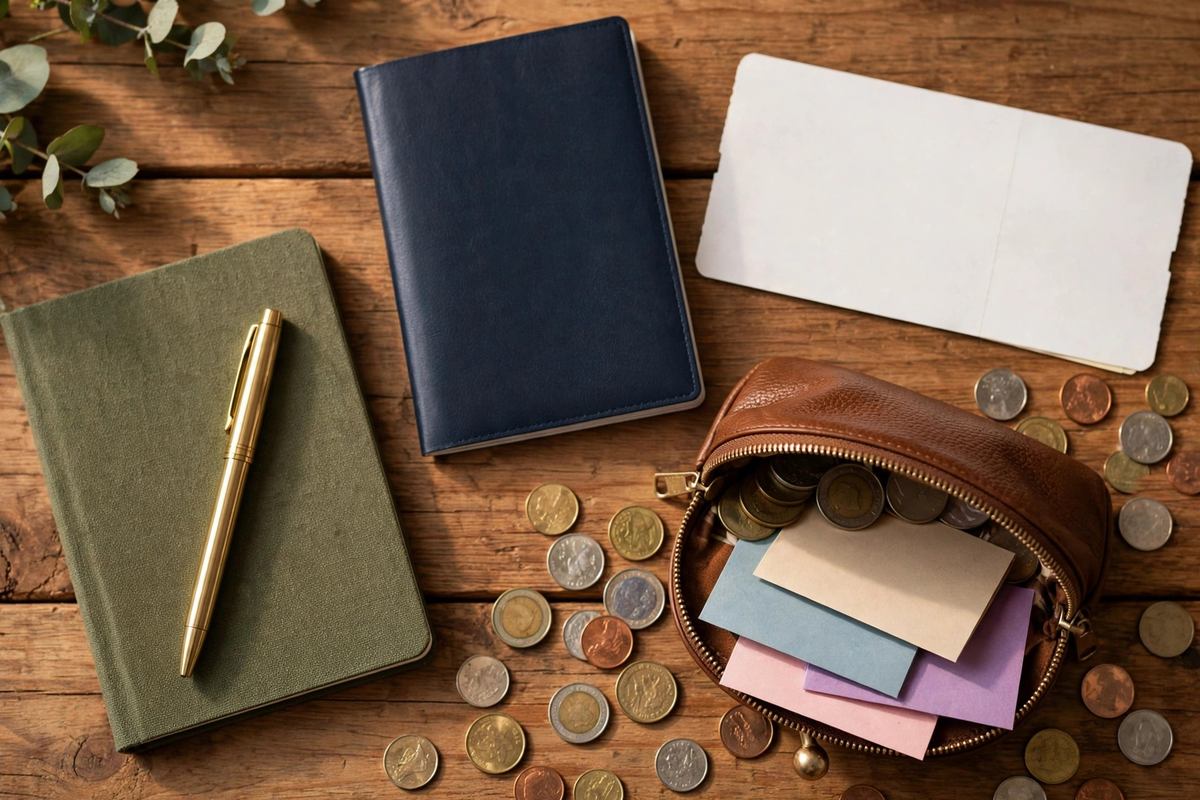
The rule I live by: originals on your person or in your personal item, copies somewhere else.
Money: Cards, Cash, and Backup Plans
Here’s what I do for money abroad, refined over a lot of trips: I bring two different credit cards from two different networks (one Visa, one Mastercard), one debit card for ATM withdrawals, and a small amount of local currency — enough for a taxi and a meal on arrival.
Credit cards are your primary tool. Use one with no foreign transaction fees; otherwise you’re paying a surcharge on every purchase, which adds up fast over a week or two. A good travel rewards card can genuinely save you money on flights and hotels — and if your credit isn’t where you want it, here’s how to improve your credit score before you apply for one. Call your banks before you leave and tell them your travel dates and destinations. Nothing kills a travel day like a frozen card at a foreign checkout counter.
ATMs beat currency exchanges. Airport exchange counters and hotel desks have the worst rates you’ll find anywhere. A local ATM with your debit card gets you far closer to the real exchange rate. Use bank ATMs, not the standalone tourist-trap machines in lobbies. Always withdraw and pay in the local currency — the ATM’s conversion offer is a markup in disguise.
Cash still matters. Cards don’t work everywhere — small vendors, markets, rural areas, tips. But don’t carry your whole trip’s cash at once. I keep a day’s worth in my wallet and the rest split between my bag and the hotel safe. And keep your cards in two places too: if your wallet is stolen, you want a backup card in your luggage.
One more thing: check whether your destination is cash-heavy or card-heavy before you go. Some places are nearly cashless; others run on cash. A quick search saves you either carrying too much or scrambling on day one.
Tech and Electronics
The mistake people make with tech is bringing too much of it. Here’s the honest packing list:
- Phone and charger — obviously. Load it before you go: offline maps of your destination, your airline’s app, a translation app, and your bookings.
- Universal power adapter — one good one, not three cheap ones.
- Portable battery pack — fully charged. Long travel days drain phones fast, and not every train, bus, or café has an outlet.
- Earbuds or headphones — for the flight and for noisy hotels. Noise-canceling ones are worth every penny on a long-haul flight. I didn’t believe this until I tried them; now I won’t fly without them.
- E-reader or a book — optional but lovely on long flights.
- Camera — only if you actually use one. Phone cameras are excellent now, and a camera you leave in the hotel is dead weight.
What I stopped bringing: a laptop (unless I’m working), a tablet “just in case,” and multiple chargers for devices I barely touch. Every extra gadget is something to charge, something to lose, and something to worry about.
Health and Medications
Nobody thinks about this section until they need it, and then it’s the only section that matters.
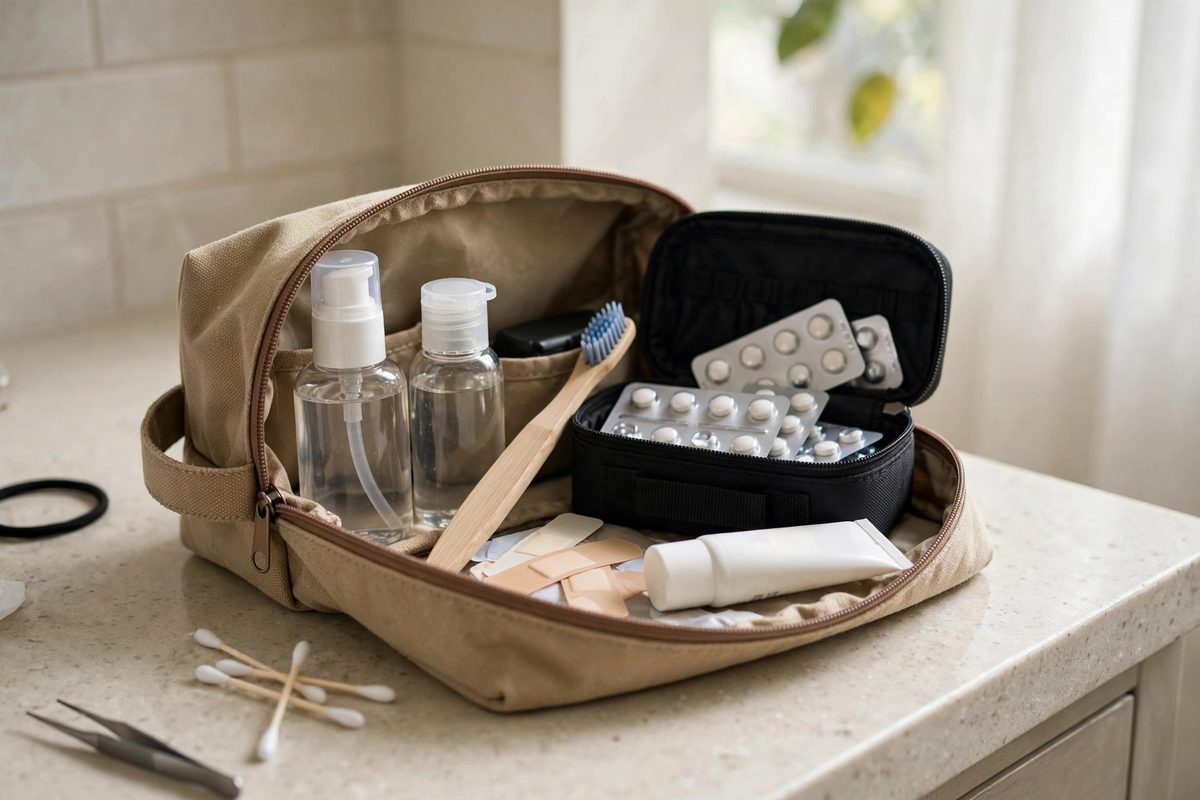
Bring your prescription medications in their original labeled containers, with enough for the whole trip plus a few extra days in case of delays. Keep them in your carry-on — never in checked luggage. If a bag goes missing, you can buy a toothbrush anywhere; you can’t buy your prescription.
My travel health kit, which lives in my carry-on on every trip:
- Pain relievers and any personal medications
- Anti-diarrhea tablets and rehydration salts — unglamorous, essential
- Motion sickness tablets if you’re prone (ferries and mountain roads will find you)
- Band-aids, antiseptic wipes, and blister pads
- Sunscreen — good sunscreen is hard to find or expensive in some destinations
- Insect repellent, if you’re going anywhere with mosquitoes
- Hand sanitizer and a small pack of tissues
Check whether your destination requires or recommends any vaccinations, and do it early — some need multiple doses weeks apart. And if you wear glasses or contacts, pack a spare pair.
Clothing: Packing Light Without Regret
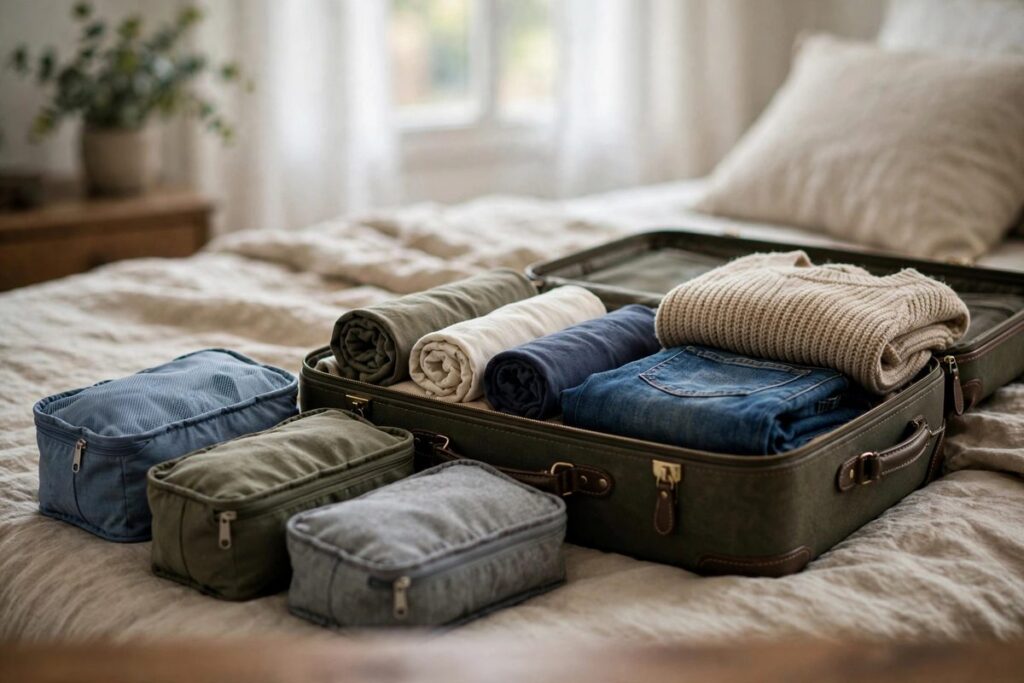
Here’s my system, and it works for almost any trip: pick a color palette (two neutrals plus one accent), pack pieces that all mix and match, and plan to do laundry once if the trip is longer than a week.
The formula for a week:
- 4–5 tops that all go with the same bottoms
- 2–3 bottoms (jeans or trousers, plus something lighter)
- 1 layer for warmth (sweater or fleece)
- 1 light rain jacket or windbreaker — weather apps lie, pack for the possibility
- Comfortable walking shoes (broken in — never, ever break in new shoes on a trip)
- 1 nicer outfit or pair of shoes if your plans include restaurants or events
- Underwear and socks for each day, plus two extra
- Sleepwear and swimwear if relevant
Lay everything out on the bed before it goes in the bag. Then remove one outfit. I’m serious — everyone overpacks on the first pass, me included. That “just in case” dress or third pair of jeans is the thing you’ll carry across three countries and never wear.
Roll soft clothes instead of folding them; it saves space and reduces wrinkles. Packing cubes are the single best packing invention of the last decade — they compress clothes, keep categories separate, and make repacking take five minutes instead of twenty. Shoes go heel-to-toe along the sides of the suitcase, with socks stuffed inside them. Dead space is the enemy.
Dress for your destination’s culture, not just its weather. Some places expect covered shoulders or knees at religious sites; some restaurants have dress codes. A lightweight scarf is the most versatile thing you can pack — it covers shoulders, works as a blanket on cold flights, and dresses up an outfit.
Carry-On vs Checked: What Goes Where
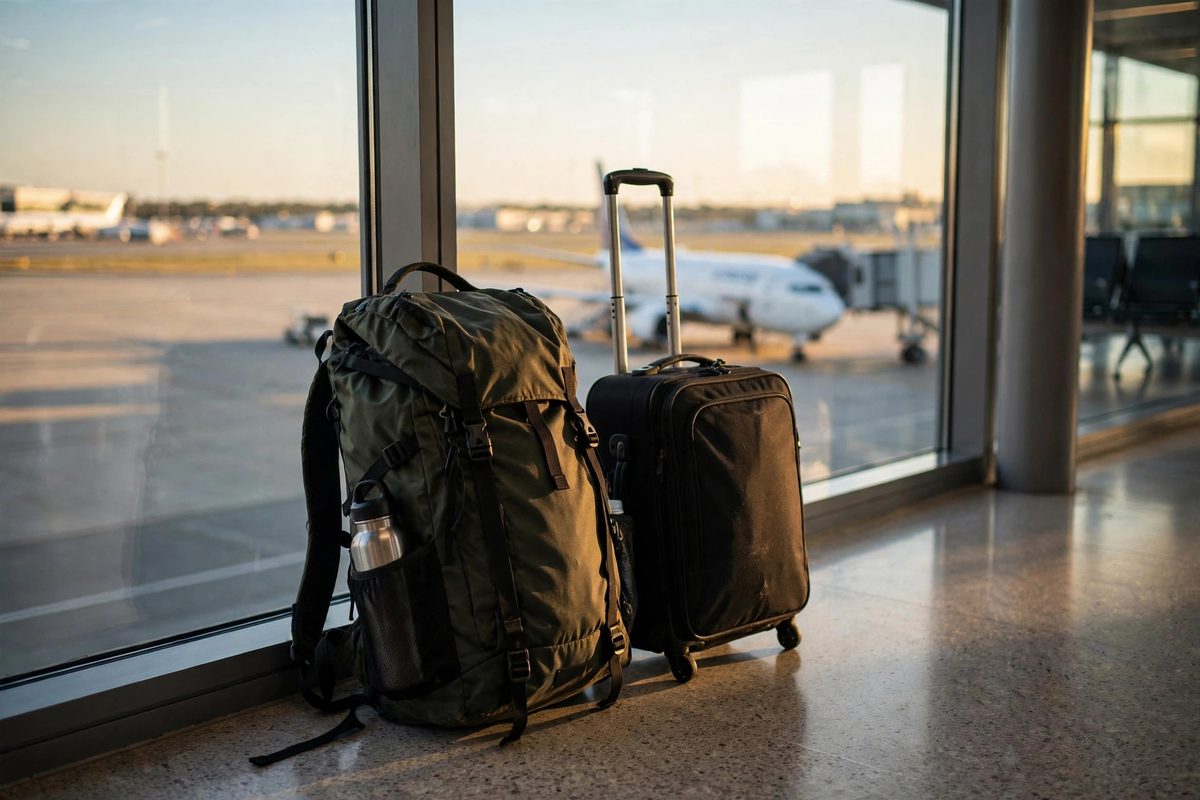
This is the part people get wrong most often. The rule is simple: your carry-on should contain everything you’d need to survive 48 hours if your checked bag vanished. Because sometimes it does.
Carry-on (never check these):
- All documents, money, and cards
- All medications
- Phone, chargers, battery pack, headphones
- A change of clothes and fresh underwear
- Basic toiletries (in the regulation-size clear bag)
- Anything valuable, fragile, or irreplaceable
- Snacks — airport food is overpriced and airplane portions are small
Checked bag:
- The bulk of your clothing
- Full-size toiletries (no liquid limits in checked bags)
- Shoes beyond the pair you’re wearing
- Souvenirs on the way home (leave space for them going out)
If you can travel carry-on only, do it. It forces you to pack light, and packing light makes everything about the trip easier — trains, stairs, taxis, cobblestones.
10 Things Everyone Forgets
Here is the hall of fame — the items people leave behind most often:
- Phone charger — the number-one forgotten item in existence. Pack it the night before, not the morning of.
- Power adapter — checked at home, forgotten at home.
- Medications — sitting on the bathroom counter where you “won’t forget them.”
- Sunglasses — you won’t find good ones cheaply at your destination.
- Sunscreen — see above. Buy it before you go.
- A pen — for customs and immigration forms. Everyone needs one; nobody has one.
- Reusable water bottle — empty through security, fill after. You’ll save money and plastic all trip.
- Snacks for the flight — the meal schedule on long flights has gaps.
- Swimsuit — forgotten constantly, expensive to replace at resort shops.
- The thing you use every day at home — your specific pillow, your vitamins, your contact solution. The mundane stuff is what you miss.
And if you’re packing for a wedding trip specifically, don’t miss our wedding-day emergency kit checklist.
My ritual the night before: everything on the bed, checklist in hand, bag packed, then I walk through my morning routine in my head — wake up, shower, dress, leave — and check that every item I’d touch is in the bag. It catches things every time.
What NOT to Pack
Packing well is as much about what you leave behind. Don’t bring:
- “Just in case” outfits — if you haven’t worn it in the last month at home, you won’t wear it abroad.
- Full-size toiletries — buy travel sizes, or fill reusable bottles. Full bottles are heavy and half of them leak.
- Valuable jewelry — leave the good stuff home. Bring one or two simple pieces if you must.
- Too many shoes — shoes are the heaviest, bulkiest things people pack. Two pairs on your feet and in the bag is plenty for most trips. Three max.
- A hair dryer — hotels have them. Yours probably isn’t dual-voltage anyway.
- Guidebooks — your phone does this better now, with maps that work offline.
- Towels and bedding — provided everywhere you’d stay. The one exception is a hostel trip, and even most hostels rent towels.
- Anything you’d be devastated to lose — if losing it would ruin the trip, it stays home.
If you’re driving to the airport or taking a road trip, get your car road-ready first — here’s how to clean car headlights so you can actually see the road at night.
Happy packing — and if you want more travel guides from places I’ve actually stood in, you’ll find them here.
At minimum: a valid passport with blank pages and enough validity left for your destination’s requirements, any required visa or entry authorization, boarding passes and booking confirmations, travel insurance details, and copies of everything stored separately from the originals. If you take prescription medication, bring the prescription and a doctor’s letter too. Keep originals on your person or in your carry-on — never in checked luggage.
Yes, but not much. Bring enough local currency for a taxi and a meal on arrival, then use local bank ATMs for the rest of the trip — they give far better rates than airport exchange counters or hotel desks. Cards work for most spending in cities, but cash still matters for markets, small vendors, tips, and rural areas. Keep a day’s worth in your wallet and the rest secured in your bag or hotel safe.
Your carry-on should hold everything you’d need for 48 hours if your checked bag disappeared: all documents, money, and cards, all medications, phone and chargers, a change of clothes, basic toiletries in a regulation-size clear bag, anything valuable or fragile, and snacks. The rule is simple — if losing it would ruin the trip, it flies with you, not below you.
For a week, pack 4-5 tops and 2-3 bottoms in one mix-and-match color palette, plus a warm layer and a light rain jacket. That’s genuinely enough — you can re-wear bottoms, and most destinations have laundry options for longer stays. Lay everything on the bed first, then remove one outfit; everyone overpacks on the first pass. Shoes are the real space-killer: two pairs is plenty, three at most.
Liquids, gels, and aerosols in your carry-on must be in containers of 100ml (3.4oz) or less, all fitting inside one clear quart-size resealable bag — one bag per passenger. This covers shampoo, toothpaste, sunscreen, contact solution, and similar items. Full-size toiletries can go in checked luggage with no such limit. Medications are generally exempt from the liquid limits but keep them labeled and in your carry-on.
Almost certainly yes. Plug shapes and voltage differ by country, so look up your destination’s plug type before you go and bring one good universal adapter rather than several cheap ones. If you use heat-styling tools, check they’re dual-voltage — single-voltage devices can be destroyed by 220V systems. Buy the adapter at home; airport shops charge several times the normal price.