A daycare name does a job no other business name does: it has to make a stranger feel safe leaving their baby with you. A plumber’s name needs to sound competent. A daycare’s name needs to sound warm, trustworthy, and professional — before the parent has met you, toured your space, or read a single review. I have watched great providers struggle with flat enrollment partly because their name sounded like an accounting firm.
Naming a daycare is a specialized craft. The psychology is different, the constraints are different, and the stakes are higher. Here are the rules that actually work, dozens of examples organized by style, and the legal checks that keep you out of trouble. If you are building the whole venture, start with how to start a daycare.
Table of Contents
- Why Daycare Names Are Different
- The 7 Rules of Daycare Naming
- Name Styles That Work (With Examples)
- Name Styles to Avoid
- Using Your Own Name: Pros and Cons
- The Legal Checks You Must Run
- Testing Your Name With Real Parents
- Frequently Asked Questions
Why Daycare Names Are Different
Most business naming advice optimizes for memorability and differentiation. Daycare naming optimizes for something else first: parental trust. The decision-maker is an anxious parent making an emotional high-stakes choice, often while sleep-deprived with a newborn. Your name is processed through that emotional filter.
Research on service branding consistently shows that warmth cues outperform competence cues for care businesses. A name that sounds nurturing will beat a name that sounds impressive, because parents are not buying excellence — they are buying safety with a smile. The general principles in what makes a good business name still apply, but the weighting shifts hard toward warmth.
There is also a practical difference: your name will be spoken by toddlers, written on cubbies, embroidered on smocks, and googled by grandparents. It needs to survive all of that.
The 7 Rules of Daycare Naming
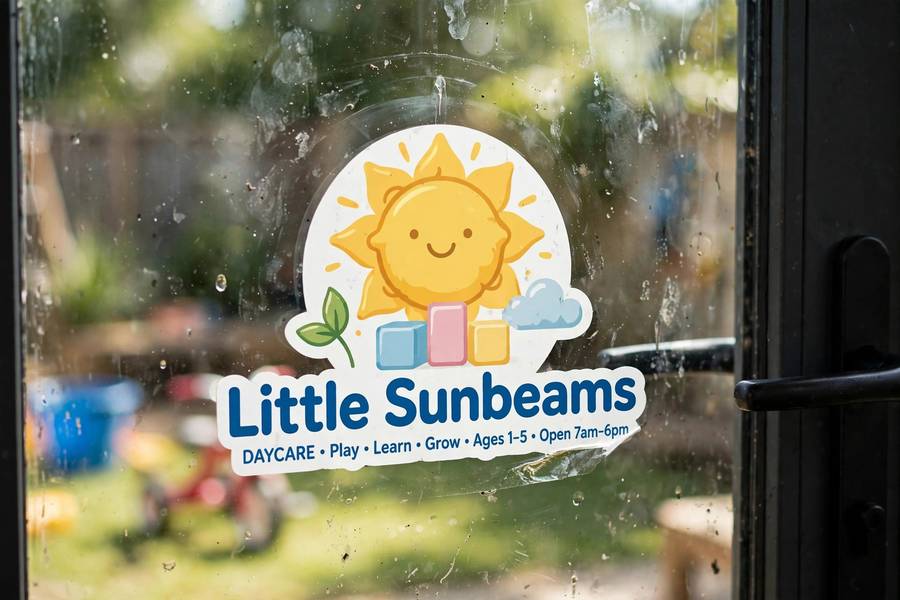
1. Lead with warmth, follow with professionalism. The name should feel like a hug and read like a business. “Sunshine” alone is warm but vague; “Sunshine Early Learning Center” is warm and credible. The descriptor words (Learning Center, Academy, Childcare, Preschool) do the professional heavy lifting.
2. Keep it short enough for a toddler to say. If a two-year-old cannot approximate your name, it is too complicated. Two to three syllables for the distinctive part is the sweet spot. This is also why alliteration works so well in this industry — “Busy Bees,” “Tiny Tots” — it is phonetically sticky.
3. Avoid anything that sounds institutional. “Child Development Facility #4” might be accurate, but no parent feels warmth reading it. Words like “facility,” “institution,” “corp,” and “enterprises” actively work against you.
4. Make the age range obvious (or deliberately broad). If you only take infants and toddlers, “Little Sprouts Infant Care” pre-qualifies your leads. If you might expand, keep it broad — renaming later is expensive and confusing.
5. Check the playground test. Imagine shouting it across a playground, seeing it on a t-shirt, hearing it in a voicemail. Names that feel awkward in any of those contexts will feel awkward to parents.
6. Think Google first. Parents search “daycare near me” and “[your town] childcare.” A name with a location keyword or a distinctive spelling that dominates search results for its own name is worth real enrollment dollars.
7. Leave room to grow. “Sarah’s Home Daycare” is perfect until you open a second location or sell the business. Names tied to one person or one address create ceilings. Build for the business you want in five years.
Name Styles That Work (With Examples)
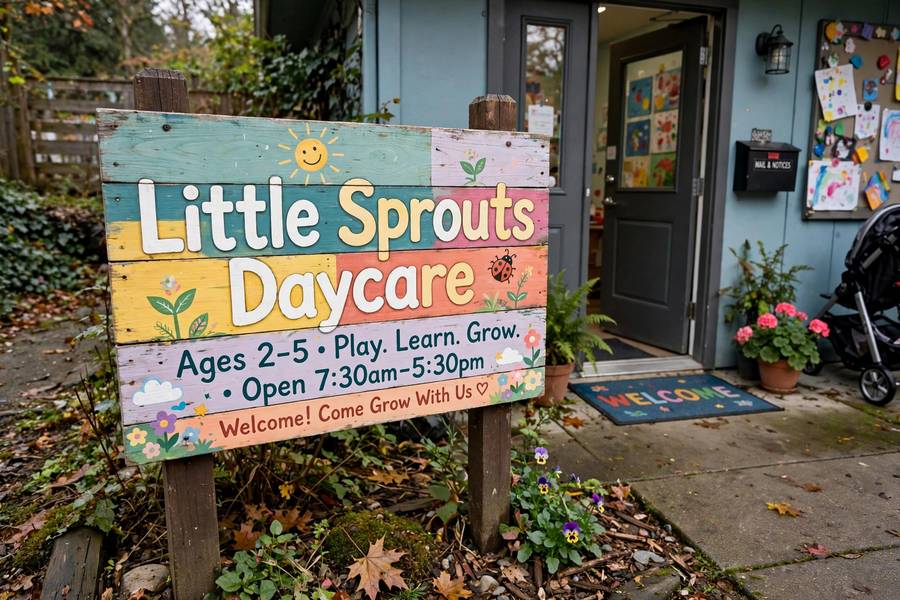
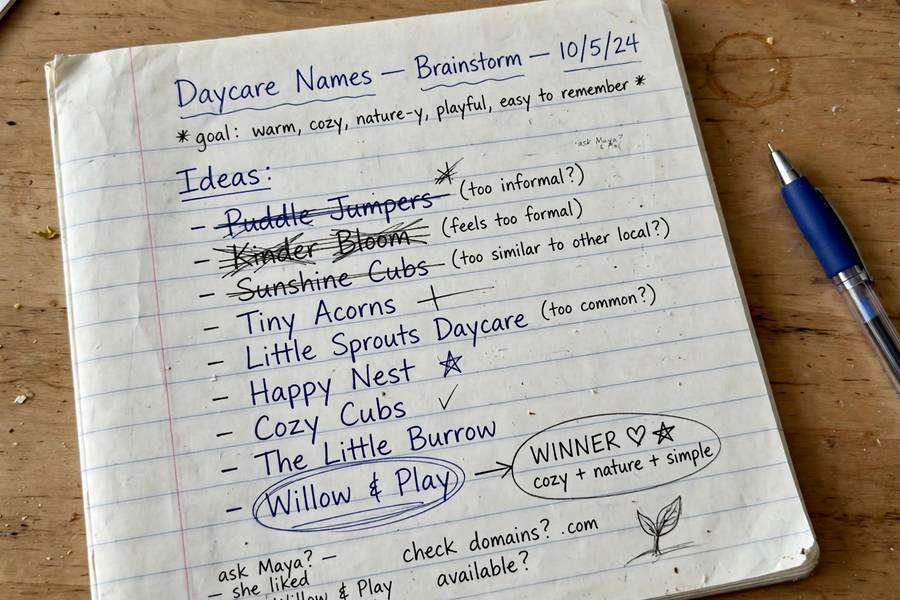
Nature and growth imagery. The most popular daycare naming family for a reason — growth metaphors map perfectly to child development: Little Sprouts, Seedlings, The Growing Tree, Willow Creek, Sunflower Patch, Acorn Academy, Blooming Buds, Fern & Feather
Warmth and light. Names that feel like sunshine: Sunshine Kids, Bright Beginnings, Little Lanterns, Sunny Days, The Cozy Corner, Warm Hearts, Giggles & Grins
Playful alliteration. Sticky, toddler-friendly, memorable: Busy Bees, Tiny Tots, Happy Hearts, Playful Pals, Wiggles & Giggles, Munchkin Meadows
Learning-forward. For parents who prioritize education (a growing segment): Bright Minds Academy, Little Scholars, The Curious Child, Discovery Depot, Think & Thrive, Milestone Academy
Community and belonging. Names that promise a village: The Neighborhood Nest, Our Little Village, Circle of Friends, Hometown Hearts, The Gathering Place
Calm and gentle. For infant-focused or Montessori-leaning programs: Gentle Beginnings, The Quiet Corner, Little Doves, Serene Start, Tender Years
Mix and match the distinctive word with the right descriptor: “Academy” signals education, “Learning Center” signals structure, “Childcare” signals full-service care, “Preschool” signals school readiness. The descriptor is doing quiet positioning work — choose it deliberately.
Name Styles to Avoid
Cutesy misspellings. “KidZ Korner” and “Lil Rascals Daykare” look unprofessional in print and confuse search engines. Parents googling your name will misspell it right back at you — into a competitor’s results.
Overly clever puns. “The Diaper Bank” might get a laugh and zero enrollments. Humor about the messy realities of childcare undermines the professionalism parents need to feel.
Generic + location. “Springfield Daycare Center” is forgettable and un-ownable. If there are three similar names in your market, parents will confuse you with all of them.
Trendy slang. Today’s cute slang is tomorrow’s dated embarrassment. Names should age at least as well as your lease.
Religious or ideological signaling (unless intentional). Unless you are specifically a faith-based program, names with religious overtones narrow your market without meaning to.
Anything hard to spell over the phone. You will spell your name for pediatricians, schools, and insurance companies weekly. If it requires a spelling story every time, it is costing you goodwill.
Using Your Own Name: Pros and Cons
“Maria’s Family Childcare” is the most common naming pattern in home daycare, and it has real advantages: it is personal, it is honest, and for a solo provider the business is you. Parents choosing home daycare often prefer the personal touch — they want to know whose home their child is in.
The downsides are structural. It does not transfer: if you sell, expand, or bring on partners, a personal name becomes a liability. It also caps perceived scale — “Maria’s” sounds like one caring person, which is perfect for six children and wrong for sixty. And if you ever have a staffing problem or a bad review cycle, your personal name is attached to all of it.
My rule: use your name if you plan to stay small and personal forever. Build a brand name if there is any chance you grow, sell, or franchise. Deciding later is always more expensive.
The Legal Checks You Must Run
Fall in love with a name after it clears these checks, not before:
State business name search. Check your Secretary of State’s business database for exact and confusingly similar names in childcare. This is free and takes ten minutes.
Trademark search (USPTO). Search the federal trademark database for the name in childcare/education classes. A state registration does not protect you from a federal trademark holder — and rebranding after a cease-and-desist is brutal.
Domain availability. Get the .com. Parents will type yourname.com; if that goes to a competitor or a parked page, you are donating enrollments. Also grab the obvious social handles.
Licensing name rules. Some states restrict words like “Academy,” “School,” or “Preschool” to programs meeting educational requirements. Verify before you print anything — I have seen providers forced to rebrand over a single regulated word.
DBA registration. If your legal entity name differs from your operating name, file the DBA (“doing business as”) with your county or state. Banks require it to open accounts in the business name.
Testing Your Name With Real Parents
Before you commit, run your top three names past actual parents — not friends, parents of young children in your market:
The voicemail test. Say it as if leaving a voicemail: “Hi, this is Jennifer from ___.” Does it sound professional? Write down how people mishear it.
The Google test. Search the exact name. What comes up? If a similarly-named daycare three states away dominates, that is manageable. If one in your metro does, pick another name.
The five-second trust test. Show the name (as a simple logo mockup) to ten parents for five seconds each, then ask: “What kind of business is this, and would you trust it with your child?” Their hesitations are data.
The kid test. Say it to a four-year-old and ask them to repeat it. If they can, you have passed the most important focus group in the industry.
Then commit fully — signage, website, listings, and how to market a new daycare all flow from the name. A name chosen well pays dividends every single day you are open.
Frequently Asked Questions
Good daycare names combine warmth with professionalism: a nurturing distinctive word (Sprouts, Sunshine, Nest) plus a credible descriptor (Learning Center, Academy, Childcare). Keep it short enough for a toddler to say, avoid cutesy misspellings, and make sure it passes trademark and domain checks.
Using your name works well if you’ll stay small and personal — parents like knowing whose home their child is in. But it limits growth, complicates a future sale, and ties your personal identity to the business reputation. Build a brand name if you might expand.
Sometimes — but several states restrict words like Academy, School, or Preschool to programs meeting specific educational requirements. Check your state’s licensing rules before using them; providers have been forced to rebrand over a single regulated word.
Run four checks: your Secretary of State’s business name database, the USPTO federal trademark database, domain availability (get the .com), and your state’s licensing rules for restricted words. Do all four before printing anything.
Avoid cutesy misspellings (KidZ Korner), puns about messy realities, generic-plus-location names, trendy slang, institutional-sounding words (Facility, Corp), and anything hard to spell over the phone. When in doubt, choose warmth and clarity over cleverness.