Car detailing has one of the lowest barriers to entry of any skilled trade business — which is exactly why so many people get the costs wrong. They price the buffer and the buckets, open for business, and discover the real expenses three months in: the water reclamation setup the city requires, the insurance that actually covers mobile operations, the second set of everything when the first set wears out.
I have advised detailing startups from solo mobile operators to multi-bay shops. The honest range: $2,000–$10,000 for a lean mobile operation, $10,000–$30,000 for a serious mobile setup with a wrapped van, and $30,000–$100,000+ for a fixed shop. Here is where every dollar goes. (For the full launch plan, see how to start a car detailing business.)
Table of Contents
- The Three Models and Their Price Tags
- Equipment: The Core Investment
- Chemicals and Consumables
- Vehicle Costs (Mobile Operators)
- Shop Costs (Fixed Location)
- Legal, Insurance, and Admin
- Marketing and Branding
- The Costs Nobody Budgets For
- Sample Startup Budgets
- Frequently Asked Questions
The Three Models and Their Price Tags
Lean mobile (you + basic kit): $2,000–$5,000. You work from your personal vehicle, carry water and power or use the client’s, and offer wash, interior, and wax services. This is the genuine minimum viable detailing business — and it works. Many successful shops started exactly here.
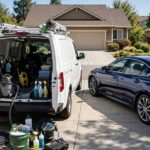
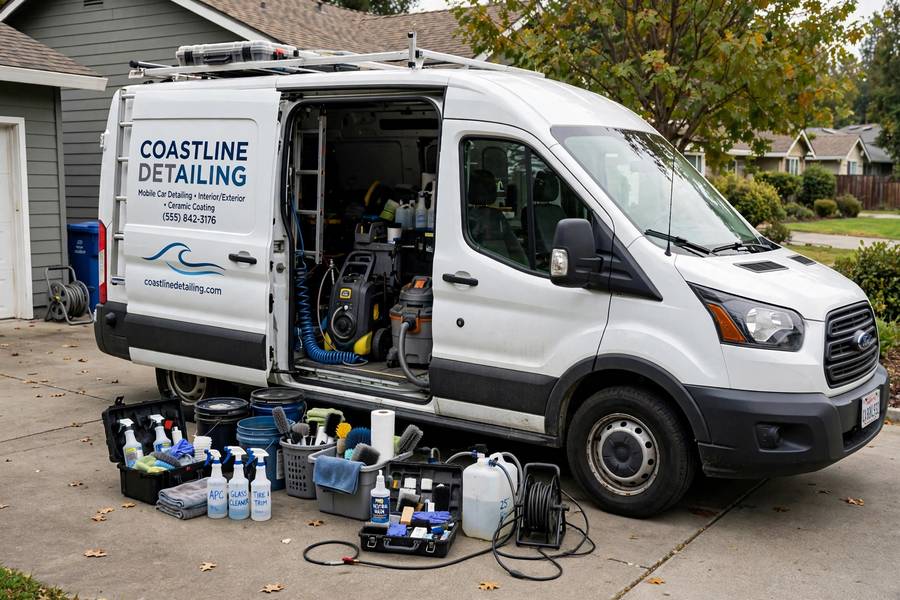
Professional mobile (dedicated rig): $10,000–$30,000. A used van or trailer outfitted with water tanks, generator or power system, full equipment, and professional branding. You look established, you work faster, and you can handle paint correction on-site.
Fixed shop (leased bay): $30,000–$100,000+. Lease deposits, build-out (lighting, drainage, ventilation), full equipment, waiting area, signage. The big leap — justified when you have the client base to fill bays, not before.
Start with the model your wallet supports, not the model your ego wants. I have watched too many founders lease a shop before they had customers, then detail cars at midnight to make rent.
Equipment: The Core Investment
Wash equipment: $300–$800. Pressure washer ($200–$400 — get one with adjustable pressure; too much pressure damages paint), foam cannon ($30–$80), two-bucket system with grit guards ($60), quality wash mitts and microfiber towels ($100–$200 — buy more towels than you think you need; running out mid-job is unprofessional).
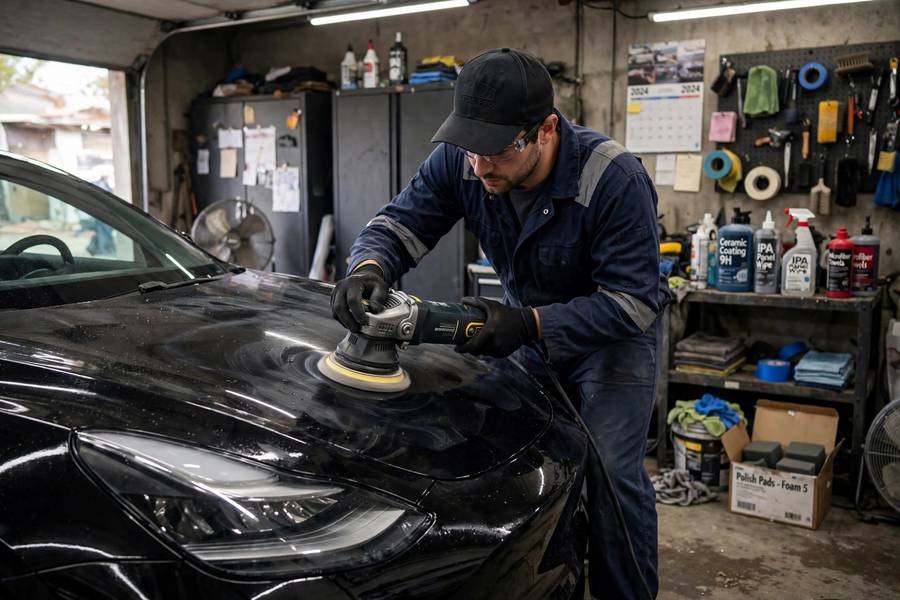
Polishers: $300–$800. A dual-action polisher ($150–$300) for beginners — it is nearly impossible to burn paint with one. A rotary polisher ($200–$400) for experienced paint correction. Pads: $100–$200 for a proper set across cutting, polishing, and finishing grades.
Vacuum and extraction: $400–$1,200. A serious wet/dry vacuum ($150–$300) plus a hot water extractor ($300–$900) for interiors. The extractor is what separates “cleaned” from “detailed” on interiors — it is worth every dollar.
Lighting: $100–$400. Paint correction is impossible without proper lighting. Swirl-finder lights and a well-lit work area reveal what ambient light hides. This is the most-skipped equipment category and the most regretted skip.
Air and power: $200–$600. Air compressor for blowing out crevices, extension cords, and power management. Mobile operators: a quiet inverter generator ($500–$1,200) or a serious battery power station.
Ladders, step stools, organizers: $100–$300. The unglamorous stuff that makes you efficient.
Realistic equipment total: $1,500–$4,000 for a complete starter kit. See best car detailing equipment for startups for specific recommendations.
Chemicals and Consumables
Chemicals are your recurring cost engine — budget them as such:
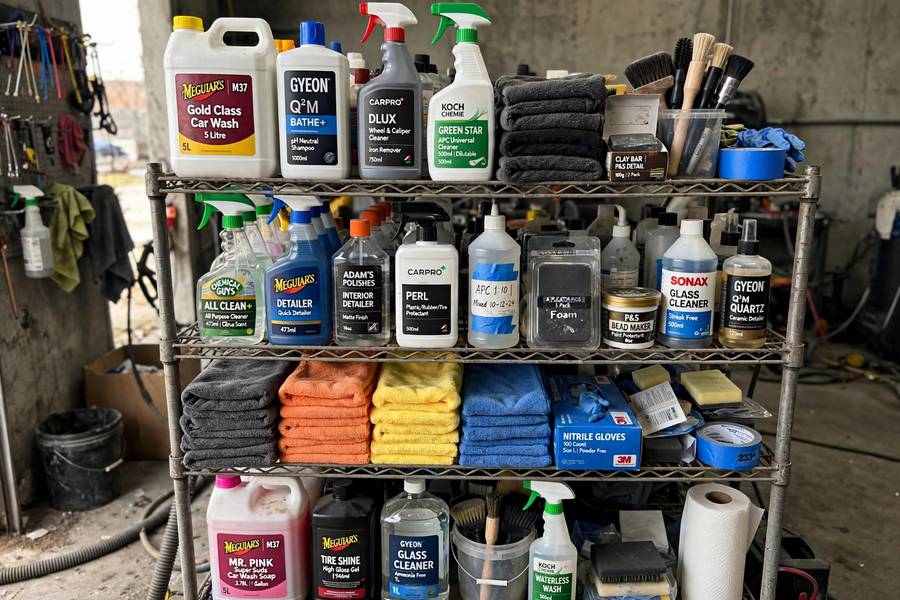
Initial chemical stock: $500–$1,500. Car shampoo, all-purpose cleaners, degreasers, iron removers, clay bars, compounds, polishes, waxes/sealants, interior cleaners, leather cleaners and conditioners, glass cleaner, tire dressings, odor eliminators. Buy professional concentrates where available — the per-job cost drops dramatically.
The consumable burn rate. Microfiber towels wear out ($200–$400/year replacing them). Pads wear out ($150–$300/year). Chemicals run $3–$8 in product cost per full detail — know this number cold, because it is your true cost of goods sold.
Ceramic coatings (if offered): $500–$2,000 initial stock. Consumer coatings run $50–$100 per application in product; professional coatings $100–$300. The service sells for $500–$2,000+, which is why coatings are the margin story of modern detailing — but only offer them when your paint correction skills justify the price.
Monthly chemical/consumable budget once operating: $200–$500 depending on volume.
Vehicle Costs (Mobile Operators)
Using your personal vehicle: $0 extra (initially). The lean start. Downsides: unprofessional appearance, limited capacity, and your personal car smells like degreaser forever.
Used van or truck: $8,000–$25,000. The professional mobile rig. Look for reliability over appearance — a clean $12,000 van with your branding beats a financed $40,000 van that eats your profits.
Trailer setup: $3,000–$10,000. Enclosed trailer with your equipment mounted, towed by your existing vehicle. Lower cost than a dedicated van, and you unhitch it at home.
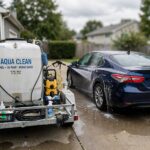
Water and power systems: $1,000–$3,000. Water tank (50–100 gallons), pump, hose reels, generator or battery bank, mounted in the van or trailer. Self-sufficiency — not needing the client’s water or outlets — is a genuine competitive advantage.
Branding/wrap: $1,500–$3,500. A wrapped van is a rolling billboard that generates calls. Partial wraps and quality magnets ($200–$500) work on a budget, but plan the full wrap as an upgrade.
Shop Costs (Fixed Location)
Lease deposits: $5,000–$15,000. First month, last month, security deposit on a 1,000–2,000 sq ft bay. Detailing needs less space than repair shops — two bays plus a wash area suffices to start.
Build-out: $10,000–$40,000. This is where shops bleed money. Proper lighting (non-negotiable for paint work), epoxy floors with drainage, ventilation for chemical fumes, water supply and reclamation, waiting area, bathroom. Get three contractor quotes and add 20%.
Signage: $1,000–$5,000. Channel letters or a quality monument sign. Your shop must be findable and look established from the road.
Furniture and waiting area: $1,000–$3,000. Seating, coffee station, WiFi, a clean bathroom. Customers waiting two hours for a full detail judge everything.
Legal, Insurance, and Admin
Business formation: $100–$800. LLC, same logic as any business — liability protection is not optional when you are working on $80,000 vehicles.
Insurance: $1,200–$4,000/year. General liability plus garage keeper’s liability — the specific coverage for damage to customers’ vehicles in your care. Standard business policies often exclude this; verify explicitly. Mobile operators need commercial auto coverage too.
Licenses and permits: $100–$500. Business license, plus check local rules on water runoff — many municipalities require water reclamation mats for mobile washers. Fines for illegal runoff start around $500 and go up fast.
Booking and payment systems: $300–$800/year. Online booking, card processing, invoicing. Customers expect to book and pay digitally; cash-only operations look amateurish now.
Accounting: $100–$300/month. From day one. Detailing has real cost-of-goods accounting (chemicals per job); clean books from the start make tax season painless.
Marketing and Branding
Brand basics: $300–$1,000. Logo, business cards, uniform shirts. A branded shirt and a professional invoice do more for perceived value than any equipment upgrade.
Website and Google Business Profile: $500–$2,000. Non-negotiable. “Detailing near me” searches are how customers find you. Before-and-after photos are your entire portfolio — invest in learning to photograph your work well.
Launch marketing: $500–$2,000. Social media ads targeted locally, introductory offers, partnerships with car dealerships and realtors (fleet and turnover details are recurring revenue gold).
Review engine: $0. Ask every happy customer for a Google review, every time. Fifty five-star reviews with before/after photos outperform $5,000 in ads.
The Costs Nobody Budgets For
Equipment replacement. Polishers burn out, extractors clog, pressure washers die. Budget 10–15% of equipment value annually for replacement. The first time your extractor dies mid-week with a full schedule, you will understand why backups matter.
Training. Paint correction on a black Porsche is not learned on YouTube alone. Budget $500–$2,000 for hands-on training. One burned clear coat costs more than the course.
Slow season. Detailing is seasonal in most markets — winter kills exterior work. Have 2–3 months of expenses saved, or develop interior/winter services (odor removal, interior details, coating maintenance).
Your own vehicle maintenance. Mobile operators put brutal miles on their rigs. The van is a business asset — maintain it like one.
Comeback jobs. Sometimes a coating high-spots or a stain reappears. Budget time and materials for the occasional redo. Handling comebacks gracefully is what builds the reputation that eliminates the need for advertising.
Sample Startup Budgets
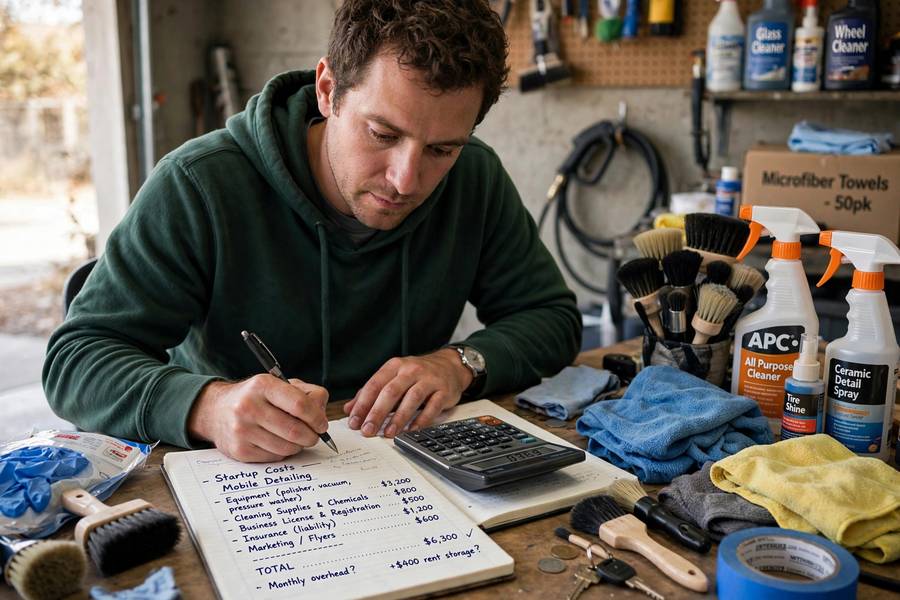
Lean mobile ($3,500): Equipment $1,800 | Chemicals $600 | Legal/insurance $600 | Branding/website $500. You, your car, and skill. Profit from job one.
Professional mobile ($18,000): Used van $10,000 | Water/power setup $2,000 | Equipment $2,500 | Chemicals $1,000 | Wrap $2,000 | Legal/insurance/admin $1,500. Established appearance, self-sufficient, efficient.
Fixed shop ($65,000): Deposits $10,000 | Build-out $25,000 | Equipment $8,000 | Chemicals $3,000 | Signage $3,000 | Waiting area $2,000 | Legal/insurance $4,000 | Marketing $5,000 | Working capital $5,000. Serious operation, serious overhead — only when demand justifies it.
The pattern: start lean, reinvest profits, upgrade when the work demands it. The most profitable detailing businesses I know started with under $5,000 and grew organically. If you are starting from zero experience, read how to start a detailing business with no experience before spending anything.
Frequently Asked Questions
A lean mobile detailing business costs $2,000–$5,000 to start (equipment, chemicals, insurance, basic branding using your personal vehicle). A professional mobile rig with a dedicated van, water/power systems, and wrap runs $10,000–$30,000.
A fixed-location detailing shop costs $30,000–$100,000+ to open. Major costs: lease deposits ($5,000–$15,000), build-out with proper lighting and drainage ($10,000–$40,000), equipment ($8,000), signage, and working capital. Only lease when existing demand justifies the overhead.
Essentials: pressure washer, foam cannon, dual-action polisher, wet/dry vacuum, hot water extractor, quality microfiber towels, proper lighting, and chemical stock ($1,500–$4,000 total). The extractor and lighting are the most-skipped and most-regretted items.
Yes — with low startup costs and service prices from $50 (wash) to $2,000+ (ceramic coating), margins are strong. Profitability depends on pricing correctly (know your $3–$8 chemical cost per job), managing the seasonal slowdown, and building recurring customers rather than chasing one-time jobs.
Absolutely. You need general liability plus garage keeper’s liability (covers damage to customers’ vehicles in your care — standard policies often exclude this) and commercial auto coverage. Expect $1,200–$4,000/year. Working on expensive vehicles without proper coverage is reckless.