Short answer: yes, in many places — but “legal” is doing a lot of heavy lifting in that sentence. Self-driving cars operate legally today in dozens of US states and several countries, under frameworks ranging from permissive (“go ahead, just don’t kill anyone”) to prescriptive (detailed safety cases, incident reporting, insurance minimums). The law has not caught up with the technology so much as it is jogging behind it, occasionally tripping.
The legal picture has three layers: can the vehicles operate, who is liable when they crash, and what rules govern their deployment. This guide covers all three, across the US, Europe, and beyond — with the caveat that these rules change fast and this is not legal advice. For the technology these laws govern, see my guide to how self-driving cars work.
Table of Contents
- The Short Answer, With Asterisks
- United States: A State-by-State Patchwork
- The Federal Role
- Liability: Who Pays When It Crashes
- Europe: Cautious and Centralized
- United Kingdom
- Asia: The Other Regulatory Laboratories
- What the Law Still Hasn’t Decided
- What This Means for You
- Frequently Asked Questions
The Short Answer, With Asterisks
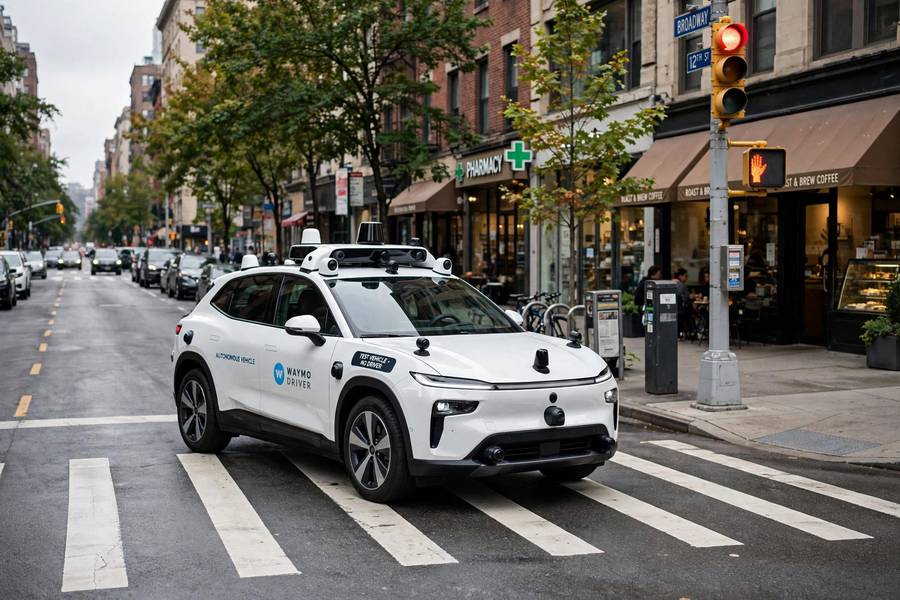
Are self-driving cars legal? In the United States, yes — most states explicitly permit autonomous vehicle testing and many permit deployment, including fully driverless operation. Waymo’s robotaxis operate legally in multiple states right now. In the EU, the framework exists but deployment is more constrained. In the UK, new legislation has created one of the world’s clearer legal regimes. In China, Japan, Singapore, and South Korea, regulated testing and limited deployment are legal and actively encouraged.
The asterisks: legality depends on the autonomy level, the jurisdiction, and whether a safety driver is present. Level 2 driver assistance (Tesla Autopilot, GM Super Cruise) is legal essentially everywhere cars are legal — the human driver remains fully responsible. Level 4 driverless operation is legal only where specifically authorized. Level 5 does not exist, so there is nothing to legalize.
United States: A State-by-State Patchwork
The US has no comprehensive federal autonomous-vehicle law. Instead, states have legislated independently, producing a patchwork:
The permissive leaders. Arizona pioneered the light-touch approach — minimal requirements, which attracted early testing (including Uber’s program). California built the most developed framework: the DMV issues testing permits and deployment permits separately, requires incident reporting (every “disengagement” where the safety driver takes over), and publishes the data. Nevada, Florida, Texas, and Pennsylvania are among the many states with explicit AV legislation.
What the laws typically cover: whether testing requires a safety driver, insurance minimums (often higher than for human drivers), incident and disengagement reporting, and — crucially — whether fully driverless operation is permitted. About half the states now allow driverless testing or deployment under some conditions.
The holdouts and the silent. A number of states have no AV-specific law at all — which generally means testing falls under existing traffic law, a gray area companies navigate with legal opinions rather than permits. No state outright bans autonomous vehicles, but the absence of a framework is its own barrier: companies prefer jurisdictions where the rules are written down.
The Federal Role
The federal government regulates vehicle safety standards (through NHTSA) while states regulate drivers and operation. Autonomous vehicles scramble this division — when the software is the driver, who regulates the driver?
NHTSA’s current posture: oversight through investigation and reporting rather than pre-approval. The standing general order requires manufacturers to report crashes involving driver-assistance and autonomous systems — the dataset behind much of what we know about self-driving incidents. NHTSA has opened investigations into Tesla’s Autopilot and issued recalls. It has the authority to set performance standards for automated driving systems but has moved slowly, preferring voluntary guidance.
The stalled legislation. Multiple AV bills have been introduced in Congress — most notably the SELF DRIVE Act (House, 2017) and the AV START Act (Senate) — and all have died. The sticking points are familiar: liability preemption (should federal law override state tort law?), safety standard stringency, and labor concerns. Until Congress acts, the federal role remains reactive: investigate crashes, issue recalls, publish guidance.
Liability: Who Pays When It Crashes
This is the legal question with the biggest economic consequences, and it remains substantially unresolved:
The current default: product liability and negligence law, applied case by case. If the autonomous system malfunctioned, the manufacturer faces product-liability claims. If the human driver misused a driver-assistance system, the driver bears responsibility — though courts are increasingly examining whether the design invited misuse (inadequate driver monitoring, misleading marketing).
The insurance industry is building new products: manufacturer liability policies for fleets, cyber-liability for hacking scenarios, and revised personal auto policies for cars with advanced assistance. Premiums for autonomous fleets are a closely watched number — if insuring robotaxis costs more than the driver wages they save, the business model breaks.
My read: liability will settle into a two-tier system — manufacturers liable for driverless operation, drivers liable for supervised assistance — with a decade of litigation defining the boundary. The accountability frameworks being built for AI generally will shape how courts think about machine-caused harm specifically.
Europe: Cautious and Centralized
The EU approach is characteristically thorough and characteristically slow:
Type approval. The EU has established type-approval rules for automated driving systems, including requirements for driverless operation in defined areas. UNECE regulations (which the EU follows) now cover Automated Lane Keeping Systems (ALKS) — Level 3 highway autonomy — with detailed technical requirements.
The AI Act overlay. The EU AI Act classifies autonomous driving systems as high-risk AI, imposing requirements for risk management, data governance, transparency, logging, and human oversight. This sits on top of vehicle regulations — AV companies in Europe must satisfy both automotive and AI law.
Member-state variation. Germany’s autonomous driving law is among the most advanced — permitting driverless vehicles in defined operating areas with a technical supervisor. France, the Netherlands, and Sweden have testing frameworks. But deployment at US scale has not happened in Europe; the regulatory bar is higher and the process slower.
Member-state variation. Germany’s autonomous driving law is among the most advanced — permitting driverless vehicles in defined operating areas with a technical supervisor. France, the Netherlands, and Sweden have testing frameworks. But deployment at US scale has not happened in Europe; the regulatory bar is higher and the process slower.
United Kingdom
The UK deserves its own section because it has moved furthest toward legal clarity:
The Automated Vehicles Act (2024) creates a comprehensive framework: it establishes the legal category of the “authorized self-driving entity” (the company responsible for the vehicle when it drives itself), sets up a safety authorization process, and — most importantly — clarifies liability. When the vehicle is driving itself, the company is responsible, not the “user-in-charge” (the human who may be sitting in the driver’s seat but is not driving).
Why it matters: the Act solves the liability question by statute rather than leaving it to decades of case law. It also creates an incident investigation regime modeled partly on aviation safety. The UK is explicitly positioning itself as the best-regulated place to deploy autonomy — clarity as competitive advantage.
Asia: The Other Regulatory Laboratories
China is arguably the most aggressive: multiple cities (Beijing, Shanghai, Shenzhen, Guangzhou) have established testing zones and permit commercial robotaxi operations. Shenzhen’s regulations explicitly address liability for autonomous vehicles. The regulatory philosophy is state-directed: designate zones, set rules, scale fast. Companies like Baidu’s Apollo Go operate large robotaxi fleets under these frameworks.
Japan amended its road traffic laws to permit Level 3 autonomy (Honda’s Traffic Jam Pilot was the world’s first certified Level 3 system) and is expanding frameworks for Level 4 in limited areas.
Singapore runs controlled testing with a clear regulatory sandbox — small country, precise rules, methodical expansion.
South Korea has designated testing zones and is developing commercial deployment rules.
What the Law Still Hasn’t Decided
Despite all this activity, fundamental questions remain open:
Data and privacy. AVs generate staggering amounts of data — precise location histories, video of public spaces, in-cabin recordings. Who owns it, who can access it, how long it is kept: the rules are embryonic. Europe’s GDPR applies, but AV-specific questions (can police access fleet video? can insurers demand driving data?) lack clear answers.
Criminal liability. If an autonomous vehicle kills someone through a software defect, is that manslaughter? Against whom — the programmer, the executive who approved deployment, the company? Criminal law assumes human agency; applying it to organizational AI decisions is genuinely novel legal territory. Prosecutors have charged safety drivers (Uber case) but not, so far, executives or companies with homicide for AV software failures.
Software updates as regulatory events. When an over-the-air update changes driving behavior overnight across a million cars, is that a new product requiring re-certification? Current frameworks mostly say no — but the question gets sharper with every update.
What This Means for You
Practical takeaways, depending on who you are:
If you are a consumer: driver-assistance features are legal everywhere; you remain the driver and legally responsible. Do not treat them as autonomy — the law certainly does not. You cannot buy a self-driving car yet, and when you can, its legality will depend on your jurisdiction.
If you ride robotaxis: they operate legally in their service areas under state authorizations. Your rights as a passenger are covered by a mix of transportation regulation and product liability — an area still being defined, but you are not in legal limbo.
If you build AV technology: jurisdiction-shop carefully, budget for compliance as a core cost (not an afterthought), and watch the UK and Germany — the clearest frameworks are competitive advantages for deployment planning. And read the AI policy picture beyond vehicles: the AI Act, incident reporting mandates, and governance requirements increasingly apply to your stack.
If you just want to know when this all settles: it will not, for years. The technology is moving faster than legislatures, and the fundamental questions (liability, ethics, privacy) are hard. Expect a decade of patchwork before anything resembling a settled global regime emerges. The law is jogging behind the technology — and the technology is sprinting.

Frequently Asked Questions
Yes, in most states. Dozens of states explicitly permit autonomous vehicle testing, and many allow deployment including fully driverless operation (like Waymo’s robotaxis). Rules vary by state — there is no comprehensive federal law — so legality depends on where you are.
It depends on the autonomy level. For driver-assistance systems (Level 2), the human driver is liable. For fully driverless operation, emerging frameworks (like the UK’s Automated Vehicles Act) place liability on the manufacturer or operator. Many details are still being decided in courts.
The EU has type-approval rules for automated driving and classifies AV systems as high-risk AI under the AI Act. Germany permits driverless operation in defined areas. Deployment is more constrained than in the US — Europe prioritizes comprehensive safety requirements before rollout.
No — not anywhere. Consumer vehicles max out at Level 2 driver assistance, where you remain the driver. Truly driverless (Level 4) vehicles exist only as commercially operated fleets in authorized areas. There is no Level 5 vehicle to buy.
No. In a fully driverless (Level 4) robotaxi, you are a passenger, not a driver — no license required. This is one of the technology’s key benefits: mobility for people who cannot drive, including the elderly and disabled.