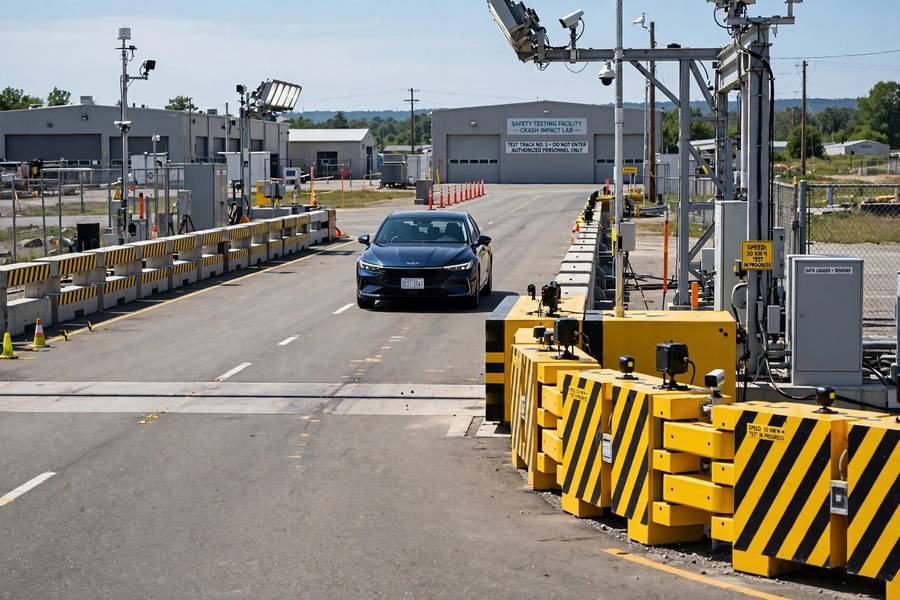
This is the article nobody wants to write and everybody needs to read. Autonomous vehicles have been involved in fatal crashes. People have died. Each death was investigated, each one taught the industry something, and each one is routinely misrepresented — by both the technology’s boosters (who minimize) and its critics (who sensationalize). What follows is the factual record: what happened, what the investigations found, how the numbers compare, and what changed.
A note on approach: I will describe crashes factually — what failed, mechanically and organizationally — without graphic detail. The point is understanding, not spectacle. For the technology context behind these incidents, my guide to how self-driving cars work explains the systems involved.
Table of Contents
- The Baseline: Human Driving Deaths
- The First Autonomous Fatality: Uber, 2018
- Tesla Autopilot Fatalities
- What the Investigations Found
- The Numbers Compared
- Why Comparisons Are Hard
- What Changed After Each Death
- The Standard Problem
- Frequently Asked Questions
The Baseline: Human Driving Deaths
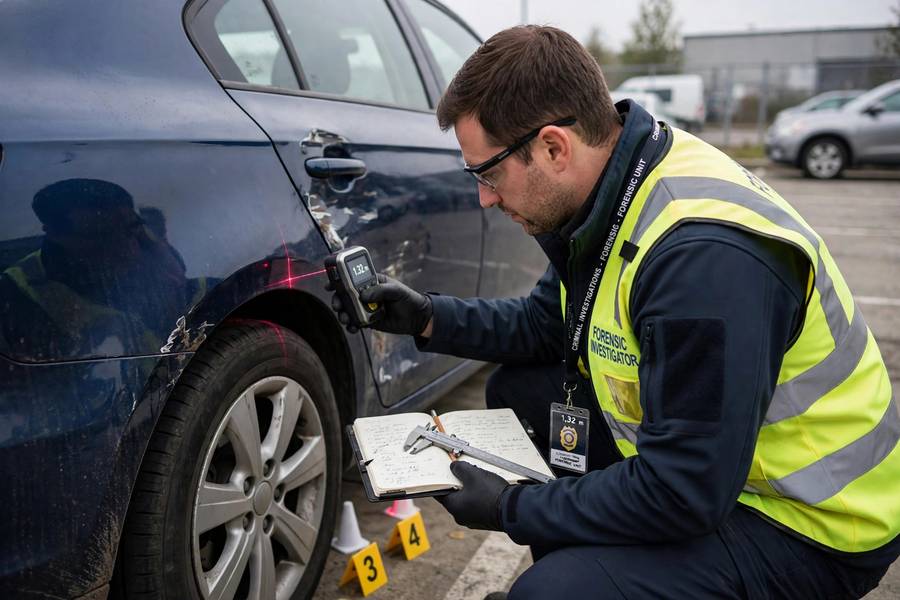
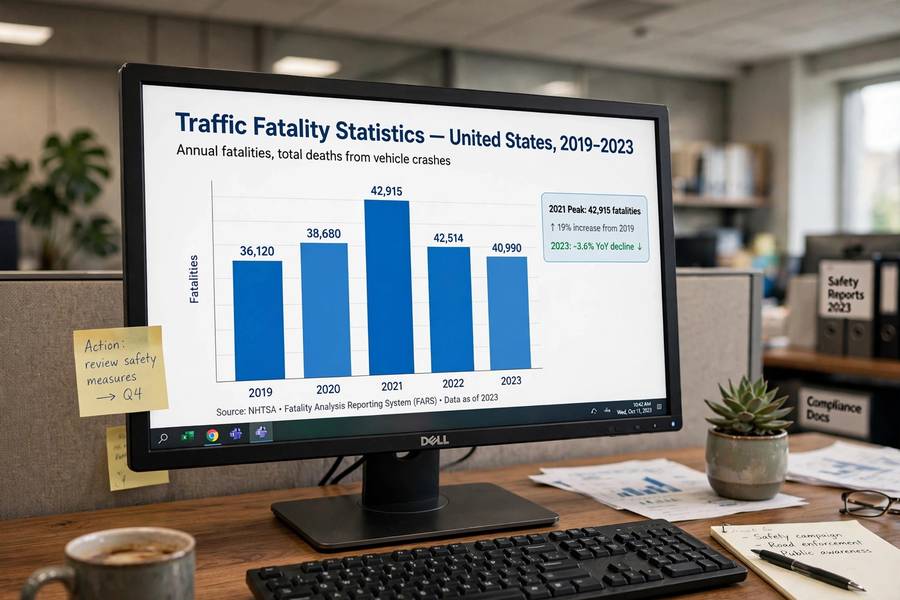
Any discussion of autonomous vehicle fatalities needs the denominator first. Roughly 1.3 million people die in road crashes worldwide each year; in the United States, the figure is around 40,000 annually — more than 100 per day. The leading causes are well established: impaired driving, distraction, speeding, and fatigue. Human error contributes to the vast majority of crashes.
This baseline matters for two reasons. First, it is the standard autonomous vehicles must beat — not perfection, but better-than-human. Second, it puts the absolute numbers in perspective: every autonomous fatality is a tragedy and a data point, but the technology is being judged against a status quo that kills over a hundred Americans daily. Keep both facts in your head simultaneously. The discourse usually manages only one.
The First Autonomous Fatality: Uber, 2018
In March 2018, an Uber self-driving test vehicle struck and killed a pedestrian in Tempe, Arizona. It was the first recorded pedestrian death involving a fully autonomous test vehicle, and it remains the most consequentially investigated.
The facts established by the NTSB investigation: the vehicle’s perception system detected the pedestrian — who was walking a bicycle across the road at night, outside a crosswalk — but classified her inconsistently, alternating between “vehicle,” “bicycle,” and “unknown object.” The system’s software had been tuned to suppress emergency braking during autonomous operation (to avoid false alarms), so it did not brake. The safety driver, who was supposed to monitor, was streaming video on her phone and did not intervene. The car struck the pedestrian at 39 mph.
The findings pointed at organizational failure more than technological impossibility: Uber’s self-driving program had disabled the Volvo’s factory emergency braking, set the system to require only one safety driver instead of two, and cultivated a safety culture the NTSB described as inadequate. The safety driver was charged with negligent homicide; Uber settled with the victim’s family. Uber later sold its self-driving division.
The lesson the industry took: the technology’s failures were compounded — arguably caused — by organizational choices. A perception system that hesitates is a problem; a company that disables the backup braking and understaffs oversight turned a problem into a death.
Tesla Autopilot Fatalities
The other major category involves Tesla vehicles operating with Autopilot or Full Self-Driving engaged. Several fatal crashes have been investigated by the NTSB and NHTSA. The pattern across the most-studied cases:
A recurring scenario: the vehicle, operating on Autopilot, failed to detect or respond to a stationary or crossing obstacle — a tractor-trailer crossing the highway, a concrete barrier, an emergency vehicle stopped on the roadside. In several cases, the driver had their hands off the wheel for extended periods despite system warnings, and in some cases was not watching the road at all.
The investigations consistently found two contributing factors: system limitations (the driver-assistance software’s difficulty with stationary objects and crossing traffic — a known radar-filtering and perception challenge) and driver inattention (operators treating Level 2 assistance as full autonomy). The NTSB’s findings repeatedly criticized Tesla’s driver-monitoring as inadequate — a system that allowed extended disengagement without ensuring the driver was watching.
NHTSA’s broader investigation into Autopilot crashes involving emergency vehicles led to a recall affecting over two million Teslas, requiring software updates to driver-monitoring and alert systems. The regulatory message was clear: the human-factors design — how the system keeps the driver engaged — is part of the safety system, and Tesla’s was insufficient.
A critical distinction: these were Level 2 driver-assistance systems, not driverless vehicles. The driver was always legally responsible. But when a product’s design, marketing, and naming (“Autopilot,” “Full Self-Driving”) invite overtrust, the line between driver error and design failure blurs — which is exactly what investigators and regulators concluded.
What the Investigations Found
Across the investigated fatalities, common threads emerge:
Perception edge cases. The fatal crashes cluster around scenarios the perception systems handled poorly: crossing vehicles against bright sky, stationary obstacles at highway speed, pedestrians outside expected contexts. These are the long tail of driving — rare, varied, and exactly where machine perception is weakest.
Disabled or inadequate redundancies. In the Uber case, factory safety systems were switched off. In Tesla cases, driver monitoring was too permissive. The pattern: the backup layer — human or machine — was weaker than the risk required.
Organizational culture. The NTSB’s Uber report explicitly faulted safety culture. Investigations of Tesla’s approach faulted the deployment philosophy: shipping driver-assistance to consumers and iterating, versus validating before deployment. Reasonable people disagree about which philosophy is right in general; in these specific cases, the investigations found the approach contributed.
No evidence of random machine failure. Importantly, the fatalities were not mysterious AI meltdowns. Each had an explicable causal chain: a perception limitation, a disabled safeguard, an inattentive human, or — usually — several of these combined. That is both reassuring (the failures are understandable) and damning (they were foreseeable).
The Numbers Compared
Here is what the data shows, with all appropriate caveats:
Waymo’s driverless operations have accumulated millions of fully autonomous miles. The company reports crash rates substantially below human benchmarks for comparable driving — including zero at-fault fatalities in driverless operation as of the latest published data. Independent researchers have broadly found the direction credible, while noting the comparison limitations (mapped areas, favorable conditions).
Tesla’s Autopilot crash statistics, as published by Tesla, show lower crash rates per mile with Autopilot engaged than without. But the methodology has been widely criticized: Autopilot miles are disproportionately highway miles (the safest road type), and the comparison groups are not matched. Regulators and independent analysts treat these figures skeptically.
Human drivers in the US: roughly 1.3 deaths per 100 million vehicle miles traveled (the figure varies by year and has worsened recently). This is the benchmark. Any autonomous system claiming to be safer must demonstrate a lower rate under comparable conditions — the italicized part being where most marketing claims fall apart.
The honest summary: the best autonomous systems (Waymo’s driverless fleet) appear safer than human drivers in their operating domains, based on the available data. The evidence for consumer driver-assistance systems is murkier. And the sample sizes — millions of autonomous miles versus trillions of human miles — mean the statistics are still young. Confidence intervals are wide. Anyone stating certainty is selling something.
Why Comparisons Are Hard
Comparing machine and human crash rates is genuinely difficult:
Different domains. Robotaxis drive in mapped urban areas in good weather; humans drive everywhere in everything. Restricting the human benchmark to comparable conditions is necessary and rarely done properly.
Different exposure. Millions of autonomous miles sounds like a lot until you compare it to trillions of human miles. Rare events (fatalities) need enormous samples for stable rates. A single additional crash swings the autonomous statistics significantly.
Reporting differences. Autonomous test fleets report everything; human crashes are underreported (minor crashes often go unrecorded). This biases comparisons in complex ways.
The moving target. Both the technology and the human baseline change over time. Human road deaths have risen in recent years (distraction, larger vehicles); autonomous systems improve with each software version. A comparison is a snapshot, not a verdict.
What Changed After Each Death
Fatalities have been the industry’s harshest — and most effective — teacher:
After Uber (2018): the industry moved toward two safety operators in test vehicles, strengthened safety-driver protocols, and regulators in Arizona and elsewhere tightened testing oversight. Uber’s program effectively ended; its assets went to Aurora. The NTSB’s recommendations pushed the entire industry toward formal safety management systems.
After the Tesla investigations: NHTSA’s standing order now requires manufacturers to report crashes involving driver-assistance systems — creating the first comprehensive incident dataset. The AI incident reporting frameworks emerging across the industry owe much to this mandate. Tesla strengthened driver monitoring (cabin camera enforcement, more aggressive alerts) via recalls and updates.
Across the industry: safety cases, third-party validation, and published safety reports became standard practice. Waymo’s transparency — publishing detailed safety data voluntarily — set a bar competitors are pressured to meet. The AI systems making the driving decisions now operate under scrutiny regimes that did not exist before these crashes.
The pattern is grim but real: each death produced specific, verifiable safety improvements. The industry learns from fatalities the way aviation learned from crashes — slowly, reluctantly, and effectively.
The Standard Problem
Here is the philosophical core: humans kill 100+ people daily on US roads, and society accepts it as background tragedy. A single autonomous fatality makes global headlines and triggers federal investigations. Is this fair?
Statistically, no — it is a wildly asymmetric standard. Psychologically, it is inevitable — we forgive human error as familiar and punish machine error as alien. Practically, it may even be correct: holding machines to a higher standard accelerates safety improvements and maintains public trust, which the technology needs to deploy at all.
My view: the asymmetric standard is justified during development — it forces rigor — but the long-term goal must be honest comparison against the human baseline. If autonomous vehicles become significantly safer than humans and we still reject them because of vivid single incidents, we will have chosen more deaths out of discomfort with the alternative. That would be the real tragedy: letting the perfect be the enemy of the much, much better.
The data will decide. It is still being collected — which is why honest reporting, transparent incident data, and investigations that follow evidence rather than narratives matter more than any single statistic.
Frequently Asked Questions
Yes. The most investigated cases include the 2018 Uber test vehicle fatality in Tempe, Arizona (a pedestrian), and several fatal crashes involving Tesla vehicles with Autopilot engaged. Each was investigated by federal authorities, and each led to specific safety changes.
The NTSB found the perception system classified the pedestrian inconsistently, emergency braking had been disabled by Uber, and the safety driver was distracted. The investigation faulted Uber’s safety culture and organizational choices as much as the technology itself.
The best data — from Waymo’s millions of driverless miles — suggests lower crash rates than human benchmarks in comparable conditions, with no at-fault driverless fatalities reported. But sample sizes are still small compared to trillions of human-driven miles, so the statistics remain young and comparisons are imperfect.
Investigations point to two recurring factors: system limitations with stationary obstacles and crossing traffic, and driver inattention — operators over-trusting Level 2 assistance. Regulators found Tesla’s driver monitoring inadequate, leading to recalls requiring stronger safeguards.
About 1.3 million people die on roads worldwide each year, around 40,000 in the US alone — over 100 daily, mostly from human error. Autonomous vehicle fatalities number in the single digits per year globally. The human baseline is the standard the technology must beat.