Nobody is born knowing how to paint-correct a black SUV. Every detailer you admire started exactly where you are: zero experience, a bucket of questions, and a suspicion this could be a real business. It can be. Detailing is one of the few trades where a beginner can charge $150-$300 per job within 60 days of starting — if they learn the right skills in the right order and sell before they feel ready.
I’ve watched dozens of service businesses launch from nothing. The pattern is always the same: the people who make it stop researching and start practicing on real cars — their own, then friends’, then paying customers. This guide is your shortcut through the part everyone overthinks. If you want the full picture, start with my pillar guide on how to start a car detailing business, then use this playbook for the no-experience fast track.
Table of Contents
- Why No Experience Is Not the Barrier You Think
- Learn the Core Skills in 30 Days
- Your 500 Dollar Starter Kit
- Practice Cars: Where to Get Your First 10 Details Free
- Pricing When You Are the New Guy
- Getting Your First Paying Customers
- The Mistakes Beginners Must Avoid
- Frequently Asked Questions
Why No Experience Is Not the Barrier You Think
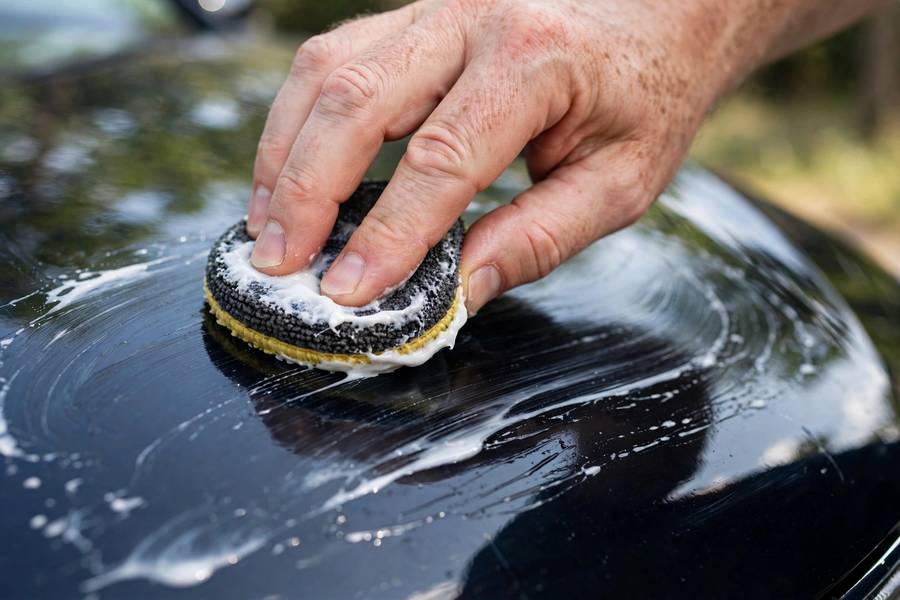
Customers do not pay for your resume. They pay for a clean car delivered on time. I’ve seen 19-year-olds with three months of practice outbook veterans, because the kid showed up, communicated well, and took great before-and-after photos.
Detailing has a forgiving learning curve at the entry level. Washing, interior vacuuming, window cleaning, trim dressing — these are skills you can learn to a paid standard in two to four weeks of deliberate practice. The advanced stuff (paint correction, ceramic coating) can wait. Your first $10,000 will come from basic details done well, not from machine polishing.
The real barrier is never skill. It’s the belief that you need permission, certification, or a shop. You don’t. You need a working technique, $500 in gear, and the nerve to ask for the first job.
Learn the Core Skills in 30 Days
Here’s the exact sequence I’d follow. One skill at a time, practiced until it’s automatic.
Week 1: The two-bucket wash. This is the foundation of everything. Learn the two-bucket method (one for soapy water, one for rinsing your mitt), grit guards, and proper drying with microfiber towels. Practice on your own car three times. Watch for swirl marks under direct light — that’s your feedback loop.
Week 2: Interiors. Vacuuming technique (slow passes, crevice tool, under seats), dashboard and console cleaning, door jambs, and streak-free glass. Interiors are where beginners win jobs, because most car owners neglect them and the transformation is dramatic.
Week 3: Wheels, tires, and trim. Wheel wells, tire dressing, exterior trim restoration. These are the details that make a car look “detailed” rather than “washed.”
Week 4: Speed and systems. Time yourself. A beginner full detail takes 4-5 hours; you need to get it to 2.5-3 without quality dropping. Build a checklist and follow it in the same order every time. Consistency is a skill.
Free resources: YouTube channels from working detailers (not product sellers), detailing forums, and one weekend practicing with a local detailer if you can find one. One day shadowing a pro teaches more than a month of videos.
Your 500 Dollar Starter Kit
Don’t buy the $3,000 pro setup. Buy what earns money now.
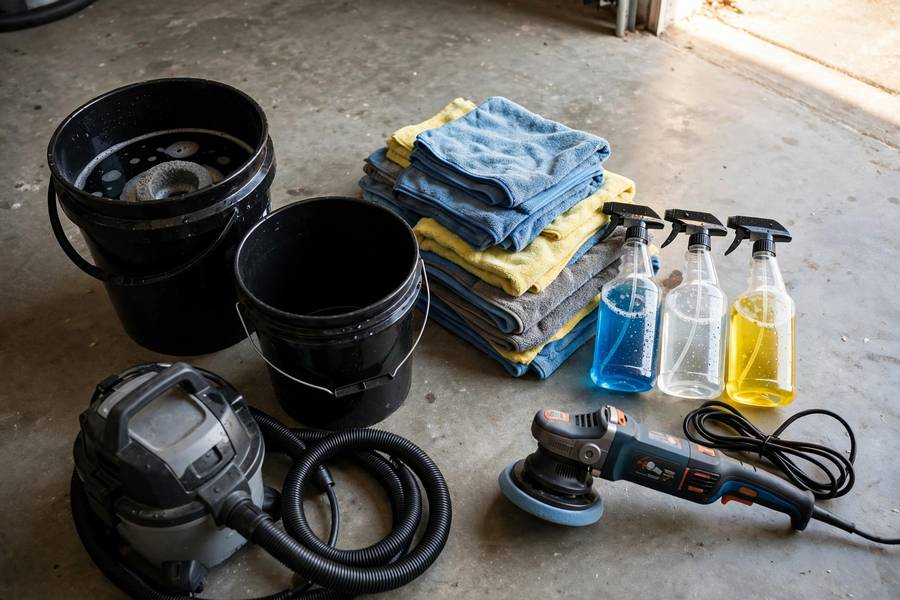
Wash and exterior (~$150): Two 5-gallon buckets with grit guards, quality car shampoo, 6-8 microfiber wash mitts, 10 large microfiber drying towels, wheel cleaner, tire dressing, spray wax.
Interior (~$150): Shop vacuum (a solid 4-5 gallon wet/dry vac), interior brushes (soft and stiff), all-purpose interior cleaner, glass cleaner, 20+ general microfiber towels, crevice attachments.
Chemicals and extras (~$100): Clay bar kit, trim restorer, odor eliminator, leather cleaner/conditioner if you want to offer it.
Business basics (~$100): Simple business cards or a QR code linking to a booking page, a basic website or Google Business Profile (free), and general liability insurance quotes — even a basic policy matters once you’re on other people’s driveways.
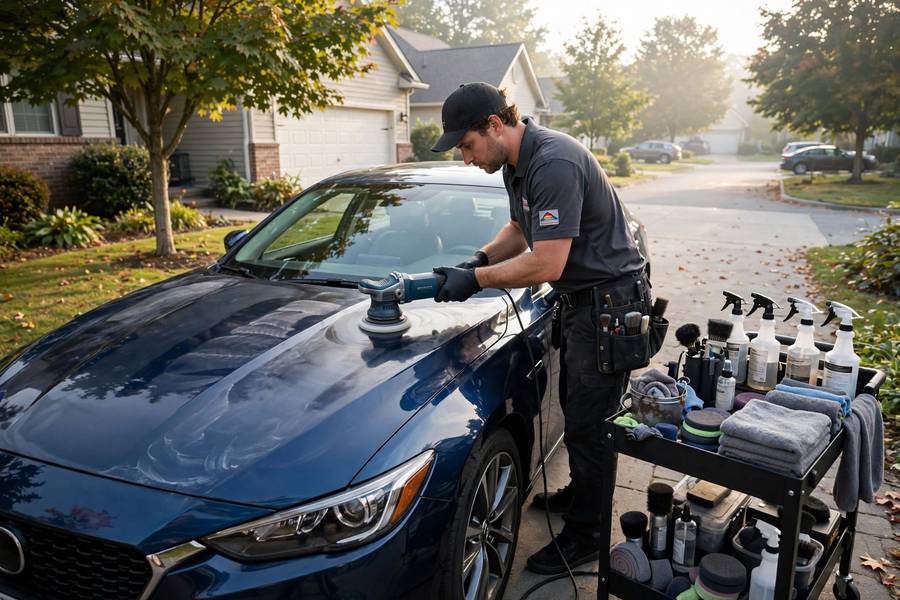
Total: roughly $500. Everything fits in a car trunk. This is your mobile unit. When you’re booked solid for a month straight, then upgrade.
Practice Cars: Where to Get Your First 10 Details Free
Do not charge for your first 5-10 details. Charge in reviews and photos instead.
Your car, repeatedly. Your own vehicle is practice car number one. Detail it until you can do it in your sleep.
Friends and family, with conditions. Offer free details in exchange for three things: honest feedback, permission to photograph before-and-afters, and a Google review when you launch. Be explicit about this deal upfront — free doesn’t mean unprofessional.
The “portfolio special.” Post in local Facebook groups: “Training to become a professional detailer — 5 free full details available this month in exchange for honest reviews and photos.” You’ll get more takers than you can handle. Pick cars that photograph well and owners who’ll actually review you.
Neighborhood hustle. Knock on doors in nice neighborhoods with a simple pitch: “I’m training as a detailer and doing free practice details — can I do your car this Saturday?” Ten percent will say yes. That’s enough.
By detail number ten, you’ll have photos, reviews, speed, and confidence. That’s the real curriculum. No course replaces it.
Pricing When You Are the New Guy
Beginners underprice out of fear, then get trapped. Here’s the framework.
Start 20-30% below market, not 70% below. If established detailers in your area charge $200 for a full detail, you charge $140-$160 — positioned as an “intro rate while building clientele.” This attracts price-sensitive first customers without branding you as the cheap guy.
Package it simply. Three packages maximum: Basic (wash + interior, ~$75-$100), Full Detail (~$140-$180), Premium/Deep Clean (~$220-$280). Simple menus sell; 12 options paralyze.
Raise prices at clear milestones. After 15 paying customers, raise 10%. After 30, raise again. After 50 reviews, you’re at market rate. Tell early customers their locked-in rate is a loyalty reward — it turns a price increase into a retention tool.
Never compete on price alone. Compete on convenience (mobile service), communication (text updates, before/after photos), and reliability (on-time, every time). These cost you nothing and matter more than $20.
For the broader business picture — legal structure, insurance, scaling — the entrepreneur fundamentals I wrote about apply here too.
Getting Your First Paying Customers
You’ve done 10 free details. You have photos and reviews. Now sell.
Google Business Profile first. It’s free, it’s where “car detailing near me” searches land, and 10+ reviews with photos make you look established. Set it up before you spend a dollar on ads.
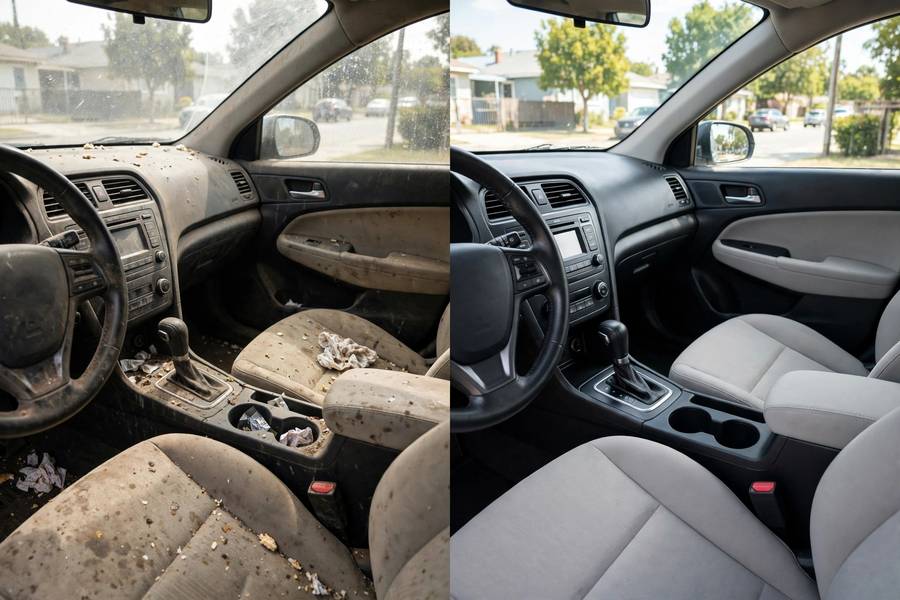
Before-and-after content. Post every transformation on Instagram, TikTok, and Facebook. Detailing is absurdly visual — a filthy interior turned spotless is content that sells itself. One viral transformation video can book you for a month.
The neighborhood blitz. After each job, leave 20 door hangers on the same street: “Just detailed your neighbor’s car at [address] — here’s what it looked like [QR to photos].” Social proof on the same street converts at a shocking rate.
Fleet and dealership work. Small used-car lots, rental offices, and corporate fleets need regular detailing at volume. One fleet contract for 10 cars a month at $80 each is $800 of predictable revenue — walk in, show your photos, offer the first car free.
Referral engine. Every customer gets: “I grow through referrals — send me a friend and you both get $20 off your next detail.” Paying customers from referrals close at the highest rate of any channel.
Target: 2-3 paying jobs per week in month one, 5-8 per week by month three. At $150 average, that’s $3,000-$4,800/month by quarter’s end — from zero experience.
The Mistakes Beginners Must Avoid
Buying pro gear before pro revenue. A $400 polisher doesn’t book jobs. Photos and reviews do. Upgrade from profit, not from savings.
Skipping the test spot. Always test chemicals on a hidden area first. One bleached headliner or stained seat costs more than the job paid — and the review that follows costs more than that.
No insurance. The day you scratch a $60,000 car, you’ll wish you’d spent the $40/month. Get general liability before your first paying job.
Working without a system. Winging each detail means forgotten steps and inconsistent quality. A checklist is the difference between a hobbyist and a professional.
Undercharging to “get experience.” Experience comes from reps, not from discounts. Price fairly from job one, and let the free practice cars be your training ground.
Ignoring the brand. Even solo operators need a name, consistent colors, and a professional presence. I break down what branding actually means for small operators — it matters more than most beginners think.
Frequently Asked Questions
Yes. The core skills — washing, interior cleaning, glass, wheels — can be learned to a paid standard in 2-4 weeks of deliberate practice. Do 5-10 free practice details to build skill, photos, and reviews before charging.
Around $500 covers a solid mobile starter kit: wash supplies, a shop vacuum, interior tools, chemicals, and basic business setup. Avoid expensive pro equipment until revenue justifies it.
Most beginners book their first paying job within 30-45 days if they do 10 free practice details first, set up a Google Business Profile, and post before-and-after photos consistently. Plan for 2-3 jobs per week in month one.
Start 20-30% below local market rates — typically $140-$180 for a full detail when pros charge $200. Offer three simple packages, then raise prices 10% after every 15-30 customers as reviews accumulate.
No certification is legally required in most places. Customers judge you on results, reviews, and professionalism. Certifications from detailing associations can help credibility later, but they are not a starting requirement.
Start mobile. It keeps startup costs near $500, eliminates rent risk, and customers love the convenience. Consider a fixed location only when you are consistently booked and turning away work.