Creative Business Name Examples: What Works and Why (2026)

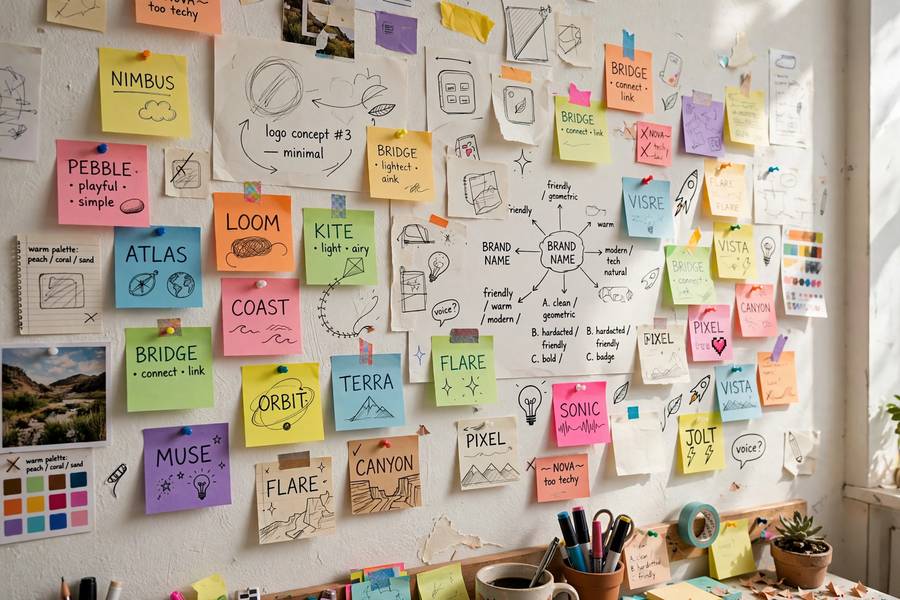
Don’t copy names from a list. Steal the patterns behind them. That’s the difference between founders who pick a decent name and founders who pick a name that does marketing work for a decade.
Below are creative business name examples across eight industries — each with a breakdown of WHY it works, so you can apply the pattern to your own naming. These are illustrative examples of effective naming patterns, not endorsements of specific businesses. Pair this with my full process in how to name a business and you’ll name better than 90% of founders.

The Pattern Method How to Read These Examples
Every great name runs on a pattern — a repeatable formula. Here are the six patterns behind most creative names, with a quick example of each:
1. Concrete + Unexpected: “Copper Fox” — a tangible noun paired with a surprising one. The brain remembers collisions.
2. Verb + Benefit: “ShineWorks” — tells you what happens and that it works. Service businesses live here.
3. Sensory Trigger: “Sizzle & Smoke” — you can almost smell it. Food and lifestyle brands weaponize the senses.
4. Founder Myth: Names that hint at a story — “The Daily Grind” suggests ritual, routine, craft. Customers buy into narratives.
5. Compressed Compound: “Snapcraft,” “Loopwork” — two ideas smashed into one word. Modern, ownable, domain-friendly.
6. Playful Twist: “Dough Re Mi” — a pun or familiar phrase bent toward the business. High memorability, but industry-dependent.
As you read the examples below, identify the pattern in each. Then in the final section, you’ll build your own using the same machinery.
Food and Beverage Names That Trigger Appetite
“The Salty Spoon” — Pattern: sensory trigger + concrete noun. “Salty” activates taste buds; “spoon” is humble and specific. Together they promise bold, unpretentious food. Works because it’s vivid without being vague.
“Crumb Culture” — Pattern: alliteration + founder myth. “Culture” does double duty: food culture and fermentation culture. A bakery name that signals depth and craft in two words.
“Broth & Barrel” — Pattern: concrete + concrete (the “&” construction). Two tangible nouns create instant imagery — you see the restaurant before you visit. The ampersand format is a proven workhorse: “Sip & Savor,” “Ink & Ember.”
“Taco Theory” — Pattern: playful twist. It treats tacos with mock-academic seriousness, which is funny and memorable. The humor signals a brand that doesn’t take itself too seriously — perfect for casual dining, terrible for fine dining.
“Golden Crust Co.” — Pattern: sensory + concrete. “Golden” is the color of perfectly baked food across cultures; “crust” is specific to baking. Appetite-triggering and instantly categorizable.
The takeaway for food: name the craving or the craft. If a hungry stranger can’t guess you serve food from the name alone, you’ve failed the first test.
Service Business Names That Build Instant Trust
Service names have the hardest job: they must be memorable AND trustworthy, because customers are handing over their home, car, or money.
“FixRight” — Pattern: verb + benefit, compressed. Two syllables, zero ambiguity, implicit guarantee (“we fix it right”). This is the platonic ideal of a service name.
“The Tidy Team” — Pattern: alliteration + human. “Team” is doing heavy lifting — it promises real humans, accountability, and scale beyond one person with a mop. Alliteration makes it stick.
“PipeDream Plumbing” — Pattern: playful twist on industry vocabulary. Every plumber knows “pipe dream”; bending the idiom into a business name is clever without being confusing. Customers remember it AND know it’s plumbing.
“VoltEdge Electric” — Pattern: compressed compound + industry signal. “Volt” categorizes instantly; “Edge” adds modernity. Sounds like the electrician who shows up on time with a tablet, not a clipboard.
“MoveMakers” — Pattern: verb + human, compressed. Active, confident, and people-centered. Compare to “ABC Moving LLC” — one is a commodity, the other is a brand. This is what branding actually means at the service level: the name pre-sells the experience.
The takeaway for services: combine clarity about the trade with one memorable twist. Trust first, creativity second — never the reverse.
Tech Names That Sound Like the Future
Tech naming rewards brevity and a hint of what the product does. The graveyard is full of random “-ly” and “-io” names that all blur together.
“Clickwise” — Pattern: verb + intelligence signal. “Click” is the universal digital action; “wise” promises smarts. Two syllables, instantly spellable, hints at a product that makes clicking smarter.
“DataNest” — Pattern: concrete + unexpected. Data is abstract and cold; “nest” is warm and safe. The collision makes data feel protected — perfect for storage, backup, or analytics.
“PixelForge” — Pattern: craft metaphor + domain noun. “Forge” brings weight and craftsmanship to pixels, which are weightless. Great for design tools — it promises serious creative work, not templates.
“Loopwork” — Pattern: compressed compound. “Loop” suggests automation, cycles, systems; “work” grounds it in productivity. Modern, ownable, and the .com-style brevity tech buyers expect.
“TaskTonic” — Pattern: alliteration + benefit metaphor. A “tonic” cures what ails you — positioning the product as the remedy for chaotic task management. Playful but professional.
The takeaway for tech: hint at the job-to-be-done in as few syllables as possible. If it sounds like every other startup, it will perform like every other startup — invisible.
Creative Studio Names That Are Portfolio Pieces
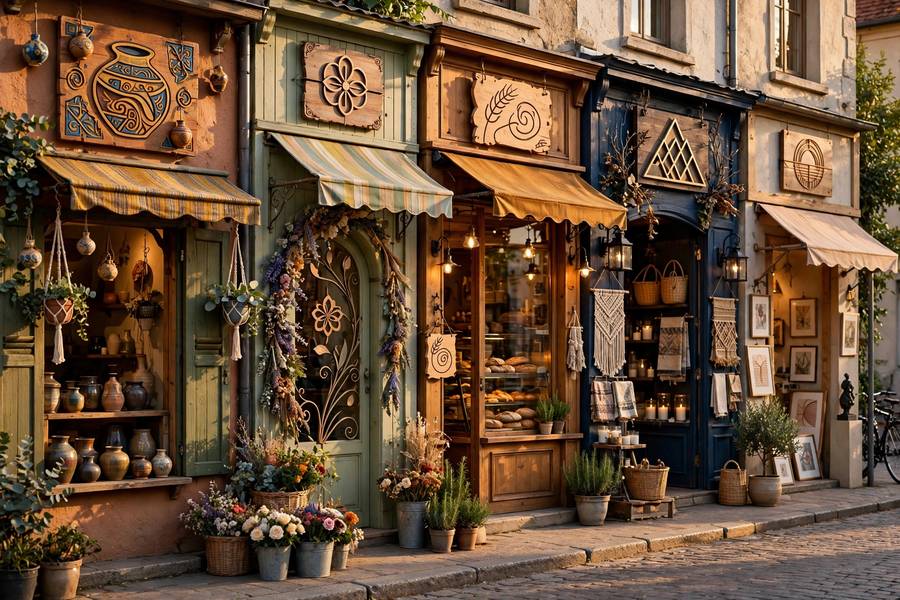
For designers, photographers, and makers, the name IS the first portfolio piece. It must demonstrate taste.
“Ink & Ember” — Pattern: the “&” construction with sensory nouns. Evocative, slightly dangerous, artistic. You can feel the studio’s aesthetic before seeing a single project.
“The Velvet Lens” — Pattern: texture + tool. “Velvet” promises a specific photographic style (soft, rich, intimate); “lens” categorizes. A photographer named this pre-qualifies their ideal client.
“Hue & Cry Design” — Pattern: playful twist on an idiom. “Hue and cry” (an old legal term for public outcry) bent toward color (“hue”). Clever, memorable, and signals a studio with wit — which is exactly what design clients buy.
“Thread & Thistle” — Pattern: concrete + concrete with natural imagery. For textiles or crafts, it promises handmade, botanical, artisanal quality. The alliteration is a bonus.
“Wildflower Studio” — Pattern: natural imagery + simple category. Unpretentious, organic, approachable. Works because it commits fully to an aesthetic instead of hedging.
The takeaway for creatives: your name should feel like your work looks. Mismatch — a brutalist name for a watercolor artist — confuses the exact clients you’re trying to attract.
Retail and Product Names That Pop Off the Shelf
Product and retail names need shelf-appeal: readable at a glance, memorable after one exposure.
“Moss & Stone” — Pattern: natural concrete pairing. For home goods, it promises organic, grounded, quality materials. Two nouns, zero confusion, strong shelf presence.
“Golden Hour Goods” — Pattern: sensory moment + category. “Golden hour” is universally loved — warm, beautiful, fleeting. Attaching it to “goods” makes everyday products feel special.
“Fern & Field” — Pattern: botanical pairing. Fresh, green, alive. For a plant shop or natural products line, the name does the positioning: this is where nature lives.
“True North Goods” — Pattern: directional metaphor + category. “True north” means authenticity and guidance — the brand promises to be your reliable standard. Confident without arrogance.
“The Curated Closet” — Pattern: alliteration + promise. “Curated” elevates secondhand or boutique clothing from used to selected. One word reframes the entire value proposition.
The takeaway for retail: name the feeling of owning the product, not the product itself. Nobody dreams about “apparel” — they dream about golden hour.
Fitness and Wellness Names With Energy
Fitness names must energize. Weak names (“Gentle Fitness Solutions”) actively repel the motivation buyers are shopping for.
“Iron & Oak” — Pattern: strength pairing. Iron (the weights) and oak (endurance, nature). Masculine without being aggressive; promises serious training with roots.
“Pulse Theory” — Pattern: body signal + intellect. Suggests science-backed training — heart rate, data, method. Attracts the analytical fitness buyer.
“The Daily Grind” — Pattern: founder myth (ritual). For a gym or coffee-adjacent wellness brand, it reframes effort as ritual. Rituals retain customers; workouts don’t.
“Summit Strength” — Pattern: alliteration + aspiration. A summit is the top — the name promises transformation, not just exercise. Aspiration outsells information in fitness.
“Flow State Fit” — Pattern: alliteration + psychology. “Flow state” is the coveted zone of peak performance. Naming the mental reward, not the physical one — smart positioning.
The takeaway for fitness: sell the identity transformation (“I am someone who trains”), not the activity (“exercise”). Names that promise who you’ll become beat names that describe what you’ll do.
How to Build Your Own From These Patterns
Now reverse-engineer. Here’s the 30-minute exercise:
Step 1: List your raw materials (10 min). Write 20+ words in four columns: industry nouns (what you do), sensory words (taste, texture, color), emotion words (how customers should feel), and unexpected words (animals, nature, objects you like). Don’t judge — volume first.
Step 2: Run the combinations (10 min). Pair words across columns using the six patterns: concrete+unexpected, verb+benefit, sensory trigger, the “&” construction, compressed compounds, playful twists. Generate 30+ candidates fast.
Step 3: Filter ruthlessly (10 min). Kill anything that fails the phone test (can’t spell it after hearing once), the stranger test (can’t guess the industry), or the five-year test (won’t fit when you 10x). You should have 3-5 survivors.
Step 4: Verify before loving. Trademark database, domain, social handles — in that order. Then sleep on the finalists.
The founders who name well aren’t more creative than you. They just have a method, and now you do too. And remember the distinction I draw in what a startup actually is: the name opens the door, but the business has to be worth walking into.
Frequently Asked Questions
The six proven patterns: concrete + unexpected pairings (Copper Fox), verb + benefit (ShineWorks), sensory triggers (Sizzle & Smoke), the “&” construction (Ink & Ember), compressed compounds (Loopwork), and playful twists (Dough Re Mi).
No — copy the pattern, not the name. Copying risks trademark infringement and makes you look derivative. Identify why a name works (alliteration, imagery, rhythm) and apply that formula to your own original words.
Yes, calibrate creativity to industry trust requirements. Playful names thrive in food, creative, and lifestyle businesses but undermine credibility in legal, financial, or medical services. Match the tone to what customers need to feel.
Generate at least 30 candidates before filtering. Volume matters because your first 10 ideas are usually obvious, the next 10 are interesting, and the winners hide in the last 10. Filter ruthlessly down to 3-5 finalists.
Not inherently. A creative brand name paired with clear website content (descriptive titles, service pages, local SEO) ranks fine. The name’s job is memorability; your website’s job is searchability. They work together, not against each other.
Run three tests: the phone test (can someone spell it after hearing it once), the stranger test (can they guess your industry), and the trademark/domain check. A name that passes all three is worth committing to.