I’ll be straight with you: the first time a client asked me about resistance bands, I laughed. Not at them — at myself, a few years later, when I realized I’d been wrong about those stretchy strips of rubber for a decade.
Here’s what I tell my clients now. Resistance bands aren’t a “lesser” version of real training. They are real training — they just look unimpressive hanging on a door hook. I’ve programmed band work for busy parents, traveling execs, lifters rehabbing cranky shoulders, and serious muscle-builders. The benefits of resistance band training show up in all of them — as long as bands get used like actual training tools, not warm-up toys.
In this guide, I’m breaking down exactly why bands work, what the research says, and how to squeeze real results out of them — no gym membership required.
What Resistance Bands Actually Do to Your Muscles
Forget the gimmick talk. A band is just a portable source of resistance, and your muscles don’t know whether the tension comes from iron, a cable stack, or latex. When you stretch a band, it pulls back — and your muscle fibers have to produce force to overcome that pull. Do that repeatedly, close enough to failure, and you trigger the same growth and strength signals as any other resistance training.
There is one genuine difference, and it’s actually an advantage: the resistance increases as the band stretches. At the bottom of a press, when your chest is stretched and weakest, the band is relatively slack. At the top, where your chest is in its strongest position, the band is pulling hardest. Coaches call this accommodating resistance, and it’s the reason band presses and squats feel so “right” — the load matches your strength curve instead of fighting it.
Benefit #1: You Can Build Genuine Muscle With Them
This is the big one, so let’s kill the myth first. “Bands are only for toning” is something people say when they’ve never trained hard with a heavy band. Muscle growth comes down to mechanical tension, effort, and progressive overload — not the equipment brand stamped on the handle.
Here’s what I tell my clients: pick a band (or band setup) that makes 8–15 clean reps genuinely hard, with the last two reps feeling like a fight. Do that for a few sets, a couple of times a week, add resistance or reps over time, and you will build muscle. I’ve watched clients add visible size to their shoulders, arms, and glutes with nothing but bands and a door anchor. The American College of Sports Medicine’s updated resistance training guidelines back this up — their review found that nontraditional tools like elastic bands and home-based routines yield marked benefits in strength, hypertrophy, and physical function. You can read their summary in the ACSM’s updated resistance training guidelines.
One honest caveat: if you’re already squatting double bodyweight, bands alone won’t replace your barbell forever. But for everyone from beginners to solid intermediates, they’re a legitimate muscle-building tool — not a consolation prize.
Benefit #2: They’re Kinder on Your Joints
Bands load your muscles hard while being noticeably gentler on tendons and joints. There’s no heavy slam at the bottom of a rep — tension ramps up gradually — and bands don’t force your joints into fixed paths the way machines do, so shoulders, elbows, and knees track the way they’re built to track.
I program band work for every client coming back from a shoulder or knee issue (once their physio clears resistance training). The classic move: band pull-aparts and face pulls for cranky shoulders. Light enough to be safe, heavy enough to actually strengthen the rotator cuff and upper back. Pair that with solid bodyweight basics — if your push-up form is shaky, fix it first with my guide on how to do push-ups — and you’ve got a joint-friendly upper-body session anywhere.
Benefit #3: Your Entire Gym Now Fits in a Drawer
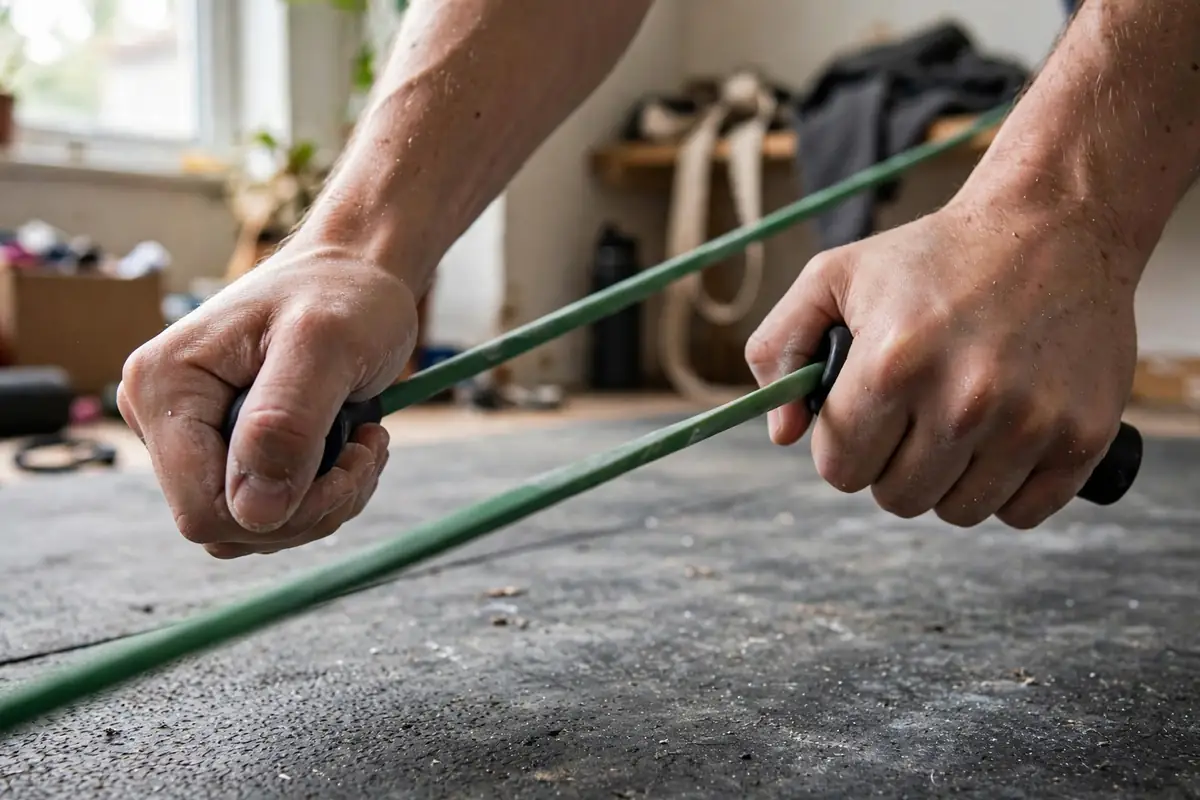
This is the benefit that actually changes behavior, and behavior is what gets results. A full set of loop bands and tube bands weighs less than a water bottle and costs less than a month of most gym memberships. I’ve trained clients in hotel rooms, office corners, parents’ living rooms, and one memorable airport lounge (don’t ask).
Think about what kills most training programs: friction. The commute, the crowded gym, the “I’ll go tomorrow.” When your gym lives in a drawer, the excuse budget shrinks to zero — and consistency beats perfection every single time.
Benefit #4: The Resistance Matches Your Strength Curve
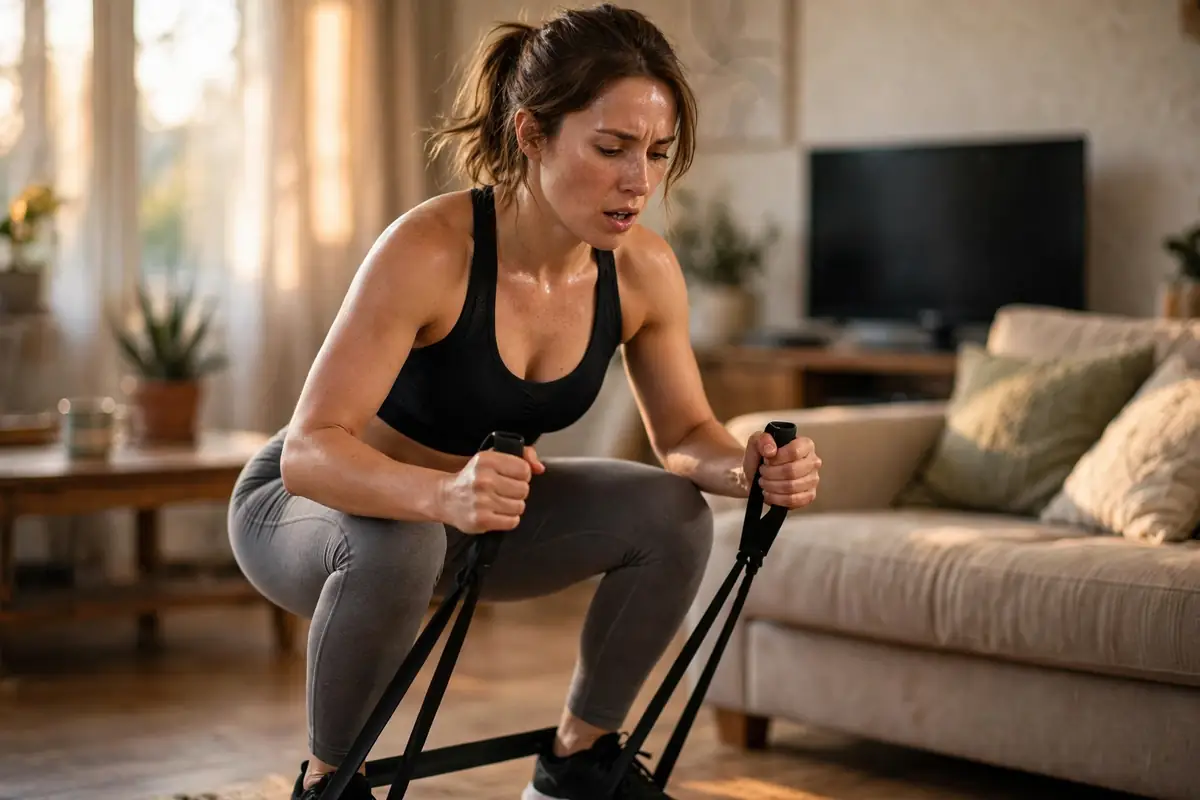
With free weights, the load is constant — but your muscles aren’t equally strong through the whole range of a rep. With bands, resistance climbs as the band stretches, so the hardest part lands where your muscles are strongest. Better activation at peak contraction, less grinding through the weak bottom range, and a pump that surprises first-timers. Try a band chest press to near-failure and tell me your chest doesn’t feel properly worked. I’ll wait.
Benefit #5: You Get More Exercise Variety Than You’d Expect
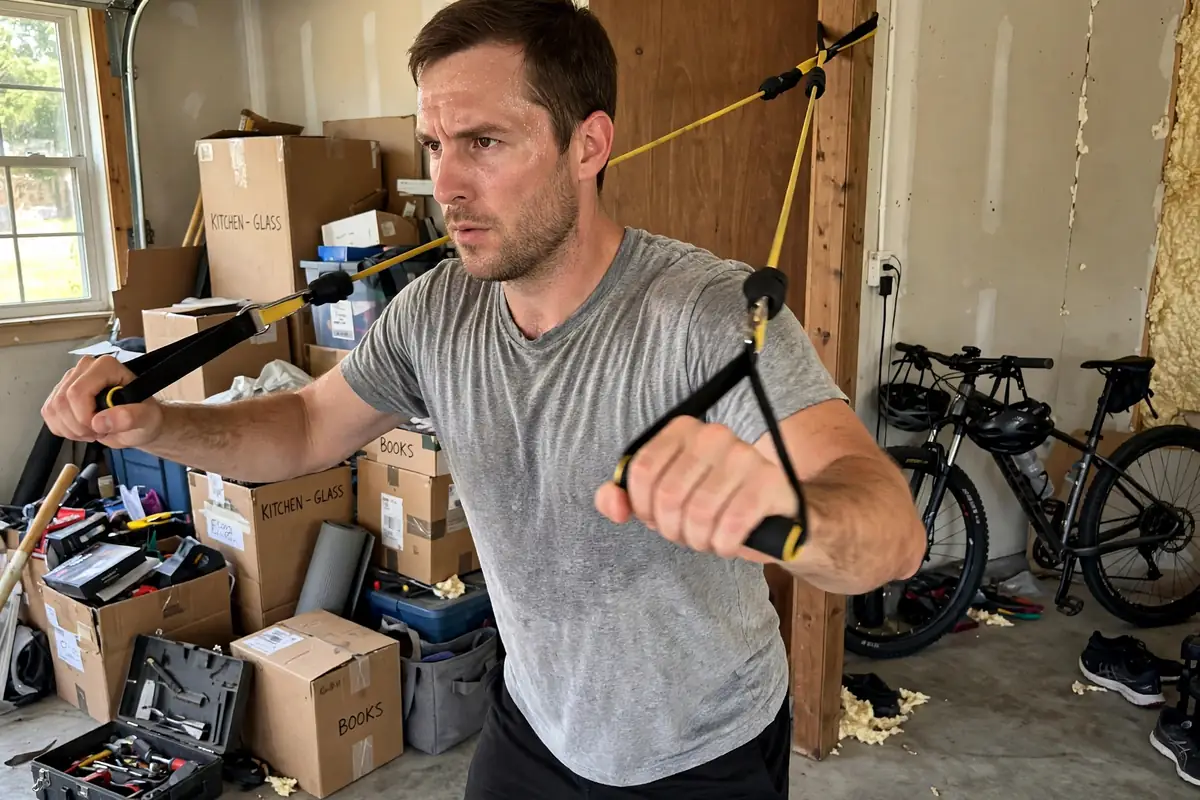
People assume bands mean bicep curls and not much else. Anchor a band to a door and you’ve got rows, chest presses, lat pulldowns, tricep pushdowns, face pulls, and Pallof presses. Step on a loop band and you’ve got squats, deadlifts, overhead presses, and lateral raises.
Here’s what I tell my clients: learn ten band exercises and do them well, and you can train every major muscle group with progressive overload. Build the bulk of your work around compound exercises — presses, rows, squats — and use isolation moves as finishers. That’s a complete program, not a compromise.
What the Science Says About Band Training
I’m a coach, not a lab coat, but I follow the research because my clients deserve better than my opinions. The picture is consistent: reviews find elastic resistance training produces strength gains comparable to conventional weights when effort and volume are matched, and the 2026 ACSM position stand explicitly validates bands, bodyweight, and home-based routines for strength, hypertrophy, and physical function. Their core message is one I repeat constantly: effort matters more than equipment. Training within a few reps of failure drives results whether the resistance comes from a barbell or a band.
Translation: the band isn’t the limitation. The effort is.
How to Get Real Results With Bands: My Rules
1. Pick a band that fights back
The number one mistake is using a band that’s too light. If you can breeze through 25 reps, it’s a warm-up band, not a working band. You want the last 2–3 reps of each set to feel genuinely hard. Most people need a set of 3–5 bands in different resistances, or one adjustable set. Spend the money once; it still costs less than two months at a commercial gym.
2. Slow the reps down
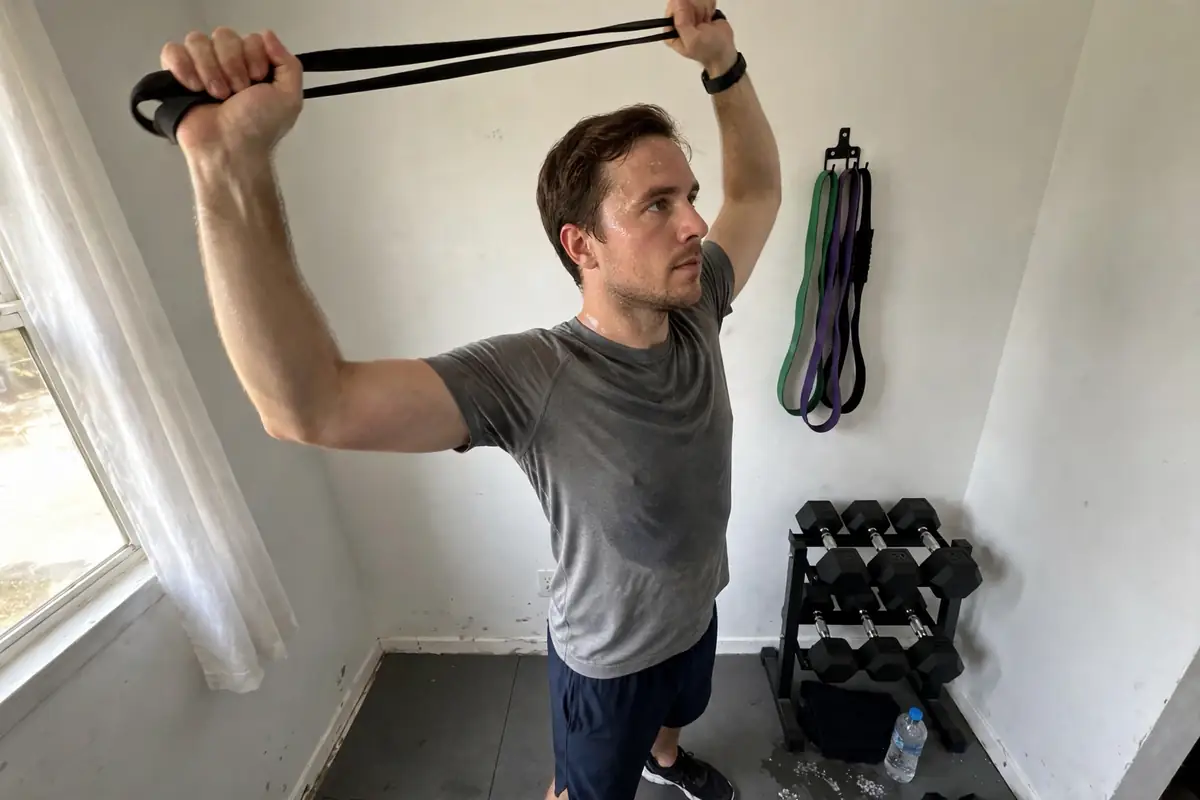
Bands reward control. Take about two seconds on the way out, pause for a beat at peak contraction, and take two to three seconds coming back. That pause at full stretch is where the magic happens — the band is pulling hardest right when your muscle is fully shortened. Rushing reps with bands is like sprinting through a museum: you were there, but you missed everything.
3. Progress like you would with weights
Progressive overload isn’t optional just because the equipment is rubber. Track your sets and reps. When you can hit the top of your rep range with good form, move to a heavier band, add a set, or slow the tempo further. I have clients keep the same training log they’d keep for barbells. Slot band sessions into a sensible workout split — upper/lower, push/pull, or full-body twice a week all work fine.
Mistakes I See Every Week
Using baby bands for everything. You need heavier options for legs and back, lighter ones for shoulders and arms — one light band isn’t a program.
Anchoring to sketchy objects. A door anchor costs ten bucks; your doorknob isn’t one. Anchor properly or don’t anchor at all.
Treating bands as “extra.” Three half-hearted add-on sets won’t do much. Programmed, progressive, tracked band sessions will.
Ignoring the eccentric. Letting the band yank your arms back is how shoulders get cranky. Control the return on every rep.
A Simple Starter Week (Steal This)
Two full-body sessions, 48 hours apart, with band tensions that make the last reps hard.
Session A: band squats 3×12, band chest press 3×10, one-arm band row 3×12/side, band overhead press 3×10, Pallof press 2×12/side.
Session B: band Romanian deadlifts 3×12, band lat pulldown 3×12, push-ups 3× near-failure, band curls 2×15, band lateral raises 2×15.
Rest 60–90 seconds between sets, write down what you did, and beat it next week — one more rep, a heavier band, or an extra set. That’s the whole secret. There is no other secret.
Frequently Asked Questions
Yes. Muscle growth responds to mechanical tension and effort, not the brand of equipment. If you train with bands close to failure, progress the resistance over time, and eat enough protein, you can build genuine muscle — research reviews find strength gains comparable to conventional weights when effort is matched.
Neither is universally better — they’re different tools. Bands win on portability, cost, joint-friendliness, and accommodating resistance. Free weights win on maximum load and precise progression at the top end. For most beginners and intermediates, bands can deliver the same results as weights for most goals.
Train each major muscle group two to three times per week, which for most people means two or three full-body band sessions weekly. That frequency lines up with current ACSM guidance and gives muscles enough stimulus plus recovery time to grow.
Quality bands last a long time, but all latex eventually wears. Replace a band if you see nicks, tears, discoloration, or thinning spots — a snapped band under tension can injure you. Store them out of direct sunlight and away from sharp edges to extend their life.
Bands are one of the best tools for beginners. They’re forgiving on joints, easy to scale by simply grabbing a lighter band, and they teach you to control resistance through a full range of motion. Start light, master your form, and progress the tension as you get stronger.
The bottom line: stop waiting for the perfect gym setup. Grab a set of bands, train hard, track your progress, and watch what happens over twelve weeks. The best training tool is the one you’ll actually use — and the one in your drawer beats the one across town every time.