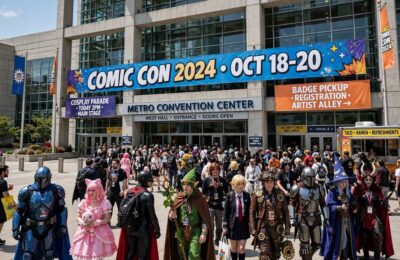

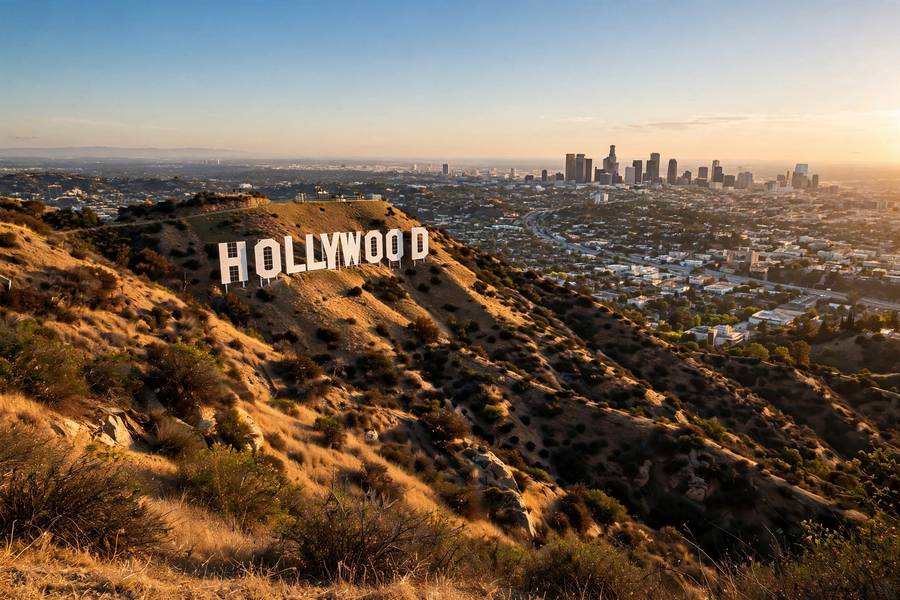
I’m Ava. “Hollywood” is three things at once: a neighborhood in Los Angeles, the American film industry it lends its name to, and a global idea — the dream factory, the place where nobodies become somebodies. People use the word to mean all three interchangeably, which is why conversations about Hollywood get confusing fast.
Let’s untangle them.
In This Guide
- Hollywood the Place
- Hollywood the Industry
- Hollywood the Idea
- How Hollywood Became “Hollywood”
- The Studio System: Then and Now
- Hollywood Today: Streaming and Change
- Visiting Hollywood: What’s Worth It
- Frequently Asked Questions
Hollywood the Place
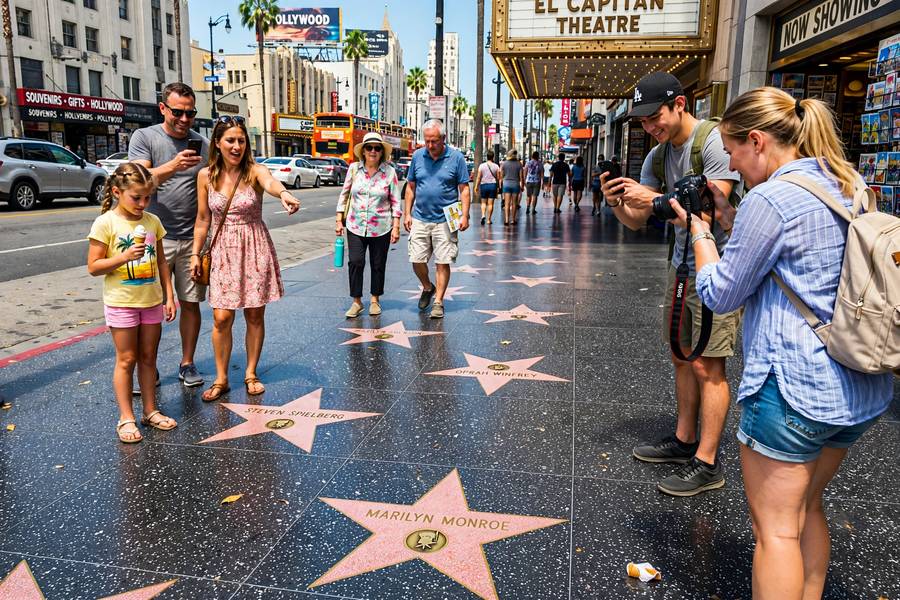
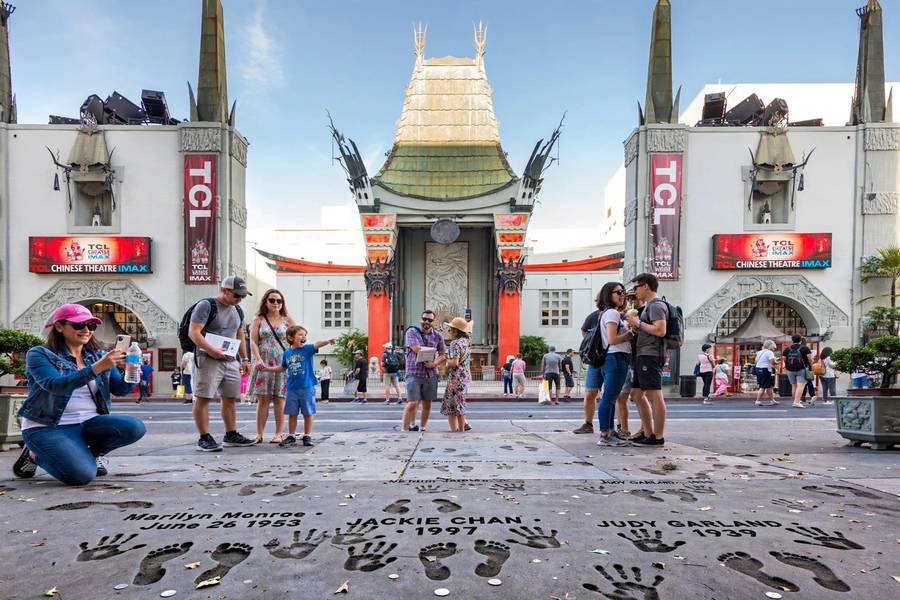
Hollywood is a district of Los Angeles, California — about 25 square miles northwest of downtown LA, home to roughly 90,000 residents. The Hollywood Sign sits in the hills above it. The Walk of Fame runs along Hollywood Boulevard. The TCL Chinese Theatre, the Dolby Theatre (home of the Oscars), the Capitol Records building — all here.
Here’s what surprises visitors: as a neighborhood, Hollywood is… ordinary. Parts are glamorous, parts are gritty, most is just urban Los Angeles — apartments, strip malls, traffic. The magic isn’t in the streets; it’s in what the name represents. Nobody goes to Hollywood the place expecting to find Hollywood the idea walking around — though every year, thousands arrive hoping exactly that.
Hollywood the Industry
When people say “Hollywood,” they usually mean the American commercial film and television industry — the studios, networks, streamers, agencies, and thousands of companies that produce most of the world’s most-watched entertainment.
The industry’s actual geography has spread: major studios operate in Burbank, Culver City, Century City, and increasingly Atlanta, London, and Vancouver. “Hollywood” the industry is a network of companies and people, not a zip code. A film “from Hollywood” might shoot in New Zealand, edit in London, and premiere in Los Angeles.
The industry’s structure: a handful of major studios and streamers (Disney, Warner Bros. Discovery, Universal, Paramount, Netflix, Amazon) greenlight and distribute most big-budget content, surrounded by an ecosystem of production companies, talent agencies (CAA, WME, UTA), guilds and unions (SAG-AFTRA, DGA, WGA), and countless service businesses. It’s simultaneously a creative community and a multi-hundred-billion-dollar business — and the tension between those two identities drives most of its drama.
For how the actual work gets done, my guide to how movies are made walks through production from script to screen.
Hollywood the Idea
The most powerful Hollywood is the idea: the global symbol of dreams coming true, of reinvention, of fame as the ultimate prize. This Hollywood lives in the collective imagination — the small-town kid on a bus to LA, the audition that changes everything, the star on the sidewalk.
This idea is Hollywood’s most successful product. It draws tens of thousands of aspiring actors, writers, and directors to Los Angeles every year. It powers tourism, award shows, celebrity culture, and a thousand movies about making movies. And it’s largely myth — the reality of breaking in is slower, harder, and less glamorous than the dream suggests.
But myths have power. The idea of Hollywood shapes what stories get told, who gets to tell them, and what millions of people aspire to. Understanding Hollywood means understanding that the dream is both the industry’s marketing and its raw material.
How Hollywood Became “Hollywood”
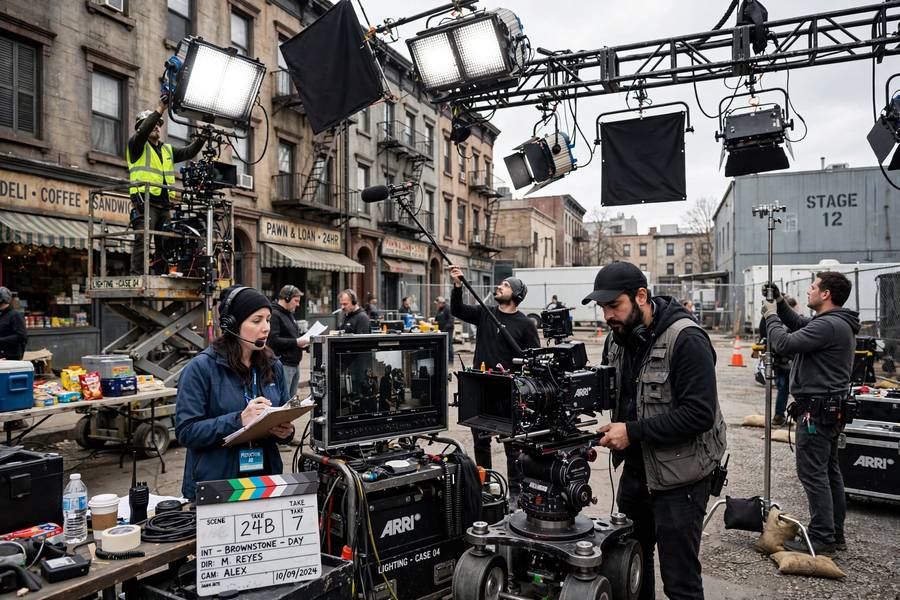
The film industry didn’t start in Hollywood — it started on the East Coast, where Thomas Edison’s patents gave his company control over early filmmaking. Independent filmmakers fled west for two practical reasons: California’s varied landscapes and year-round sunshine (crucial before powerful artificial lighting), and distance from Edison’s patent enforcers.
The first Hollywood studio opened in 1911. By the 1920s, the studio system had consolidated power: five major studios owned the production, distribution, and theaters — a vertical monopoly that controlled what America watched. The 1948 Paramount Decree broke up studio ownership of theaters, but Hollywood’s dominance was already global.
Why it stuck: once the talent, infrastructure, and money concentrated in one place, network effects kept it there. Everyone goes where everyone is. A century later, despite productions scattering worldwide for tax incentives, the decision-makers, agencies, and deal-making still center on Los Angeles.
The Studio System: Then and Now
The classic system (1920s–1950s): studios signed actors, directors, and writers to long-term contracts and controlled their careers completely — roles, publicity, even personal lives. Stars were studio property. It was a factory, efficient and ruthless.
The collapse: television, the Paramount Decree, and stars demanding independence broke the system. By the 1960s, power shifted to talent and their agents.
Today: a hybrid. Studios and streamers finance and distribute; talent operates as free agents with powerful representatives; franchises and IP dominate slates. The “package” — star + director + script assembled by an agency — replaced the contract player. And streaming upended the economics again: the theatrical window, the star salary structure, the very definition of a “hit” all changed in the 2010s–2020s.
What hasn’t changed: it’s still a relationship business where who you know matters enormously, and it’s still hit-driven — a few successes fund many failures.
Hollywood Today: Streaming and Change
The 2020s transformed Hollywood more than any decade since the 1950s:
- Streaming dominance: Netflix, Disney+, Max, and others shifted power from box office to subscriptions. Theatrical releases are now marketing for streaming libraries as much as revenue events.
- The content arms race, then the correction: years of infinite spending gave way to consolidation, layoffs, and ruthless cost-cutting. The “peak TV” era of 500+ scripted series is over.
- Labor reckonings: the 2023 WGA and SAG-AFTRA strikes — the first joint strike in 60+ years — were about streaming residuals and AI protections. They reshaped contracts and proved collective power still matters.
- Franchise fatigue and renewal: audiences grew tired of formulaic sequels, then rewarded original films again — the pendulum keeps swinging.
- Global competition: Korean dramas, Spanish thrillers, Indian blockbusters now compete directly for global audiences. Hollywood’s monopoly on “big entertainment” is over; its infrastructure advantage remains.
For aspiring creators navigating this landscape, practical craft knowledge matters more than ever — my filmmaking tips are written for exactly this environment.
Visiting Hollywood: What’s Worth It
If you go to Hollywood the place, manage expectations and prioritize:
- Worth it: the Griffith Observatory (best views of the sign and the city), a studio tour (Warner Bros. in Burbank is the gold standard), the Academy Museum, a show at the Hollywood Bowl or Greek Theatre.
- Fine once: the Walk of Fame (it’s a sidewalk — walk a few blocks, take the photo, move on), the Chinese Theatre handprints.
- Skip the hype: “celebrity homes” tours (you won’t see celebrities), the Hollywood & Highland mall area beyond a quick look.
Go for the history and the views, not for glamour spotting. The real Hollywood — the industry — is behind gates and in offices. The neighborhood is just where the sign is.
Hollywood is a neighborhood, an industry, and a dream — and the word means whichever one the speaker needs it to mean. The place is ordinary streets under a famous sign. The industry is a global business in historic transition. The idea is the most powerful myth in entertainment, still drawing dreamers a century on. Understand all three, and you understand why this one word carries so much weight.
Frequently Asked Questions
Hollywood is known as the historic center of the American film industry — home to major studios, the Walk of Fame, the Hollywood Sign, and the Academy Awards. The name has become global shorthand for the entertainment industry and the dream of fame itself.
Early filmmakers moved to the Hollywood district of Los Angeles in the 1910s for year-round sunshine, varied landscapes, and distance from Edison’s East Coast patent controls. As studios concentrated there, “Hollywood” became synonymous with the American film industry worldwide — even though production now spans the globe.
No — Hollywood is a district of Los Angeles, California, not an independent city. It covers about 25 square miles with roughly 90,000 residents. The entertainment industry called “Hollywood” extends far beyond the district, with major studios in Burbank, Culver City, and other LA areas.
Streaming transformed Hollywood’s economics in the 2010s–2020s: power shifted from box office to subscriptions, the “peak TV” content boom gave way to consolidation and cost-cutting, the 2023 writers’ and actors’ strikes reshaped labor contracts, and global competitors (Korean, Spanish, Indian productions) broke Hollywood’s monopoly on big entertainment.
With managed expectations, yes. Prioritize the Griffith Observatory, a Warner Bros. studio tour, and the Academy Museum. The Walk of Fame is worth a quick photo stop. Skip “celebrity homes” tours. Go for film history and views — the working industry operates behind closed doors.