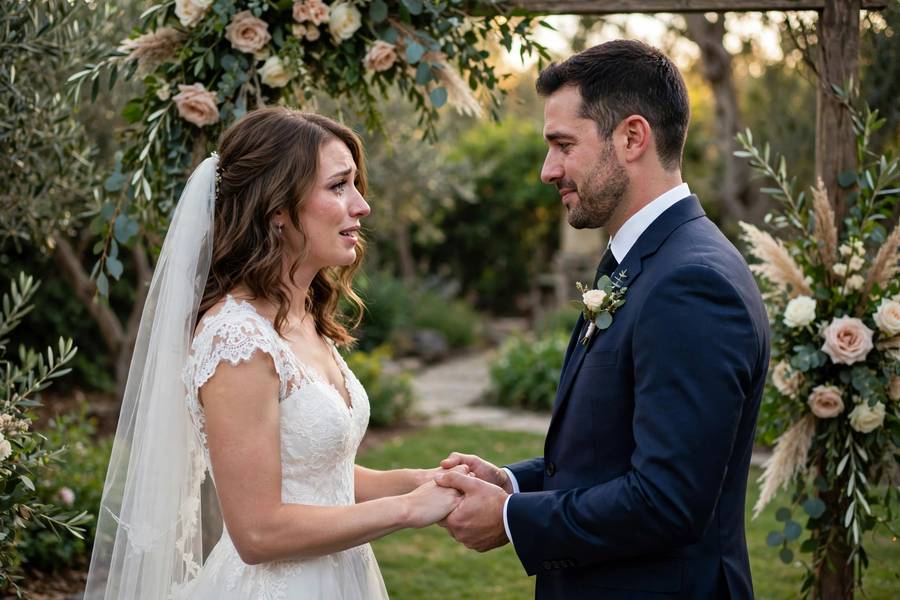
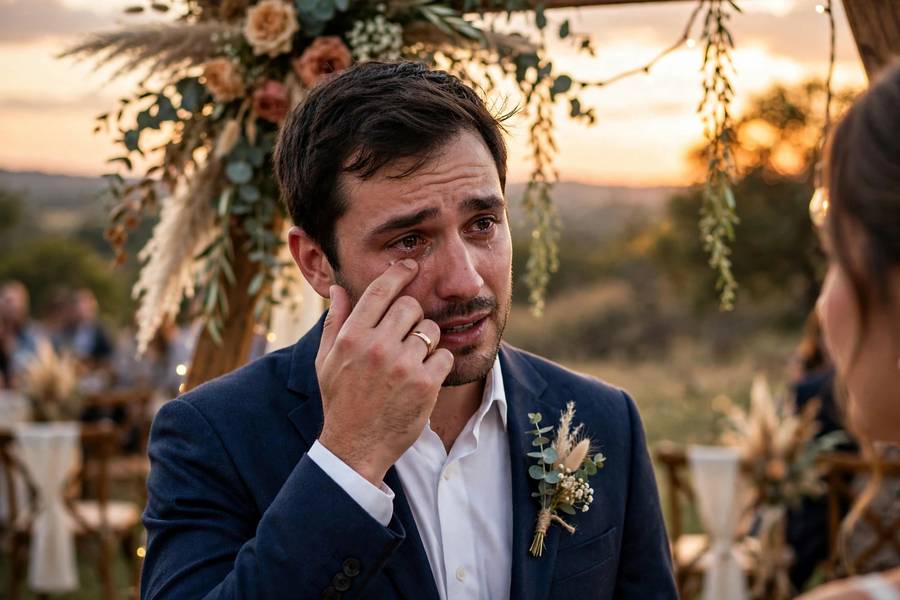
Personal wedding vows are the most memorable part of any ceremony I’ve ever planned. Guests forget the centerpieces; they never forget the groom who cried through his vows or the bride whose vows made the whole tent laugh and then cry.
I’m Jessica, and I’ve helped dozens of couples write vows. Here’s the process that works — including what to do when you’re staring at a blank page convinced you have nothing to say. (You do. Everyone does.)
Table of Contents
- Why Personal Vows Are Worth It
- The Simple Vow Structure
- Beating the Blank Page: 15 Prompts
- Tone: Finding Your Voice
- Length and Logistics
- Real Vow Examples (Steal the Structure)
- Delivery Tips for the Day
- Your Vow-Writing Timeline
- Frequently Asked Questions
Why Personal Vows Are Worth It
Traditional vows are beautiful, but they’re generic by design — the same words thousands of couples have said. Personal vows say your story: the specific, unrepeatable things that make your relationship yours.
The couples who hesitate usually worry about two things: “I’m not a writer” and “I’ll cry.” To which I say: you don’t need to be a writer — you need to be honest. And crying is fine. Some of the best vow moments I’ve witnessed involved a pause, a deep breath, and a shaky continuation. That’s not failure; that’s the point.
The Simple Vow Structure
Every great set of vows follows the same arc. Use this skeleton:
1. The opening — where you started. One or two sentences about how you got here. (“I knew on our third date, when you…”)
2. What you love — the specific things. Not “you’re amazing” — the particular amazing things. The way they make coffee exactly how you like it. How they always find your lost keys. Specificity is what makes vows moving.
3. The promises — the actual vows. This is the core: what you pledge. Aim for 3–5 promises, mixing the serious (“I promise to stand by you in…”) with the personal (“I promise to always let you have the window seat…”).
4. The closing — the future. One or two lines about what you’re choosing, today and going forward. (“Today I choose you, and I’ll keep choosing you.”)
That’s it. Opening, love, promises, closing. Everything else is decoration.
Beating the Blank Page: 15 Prompts
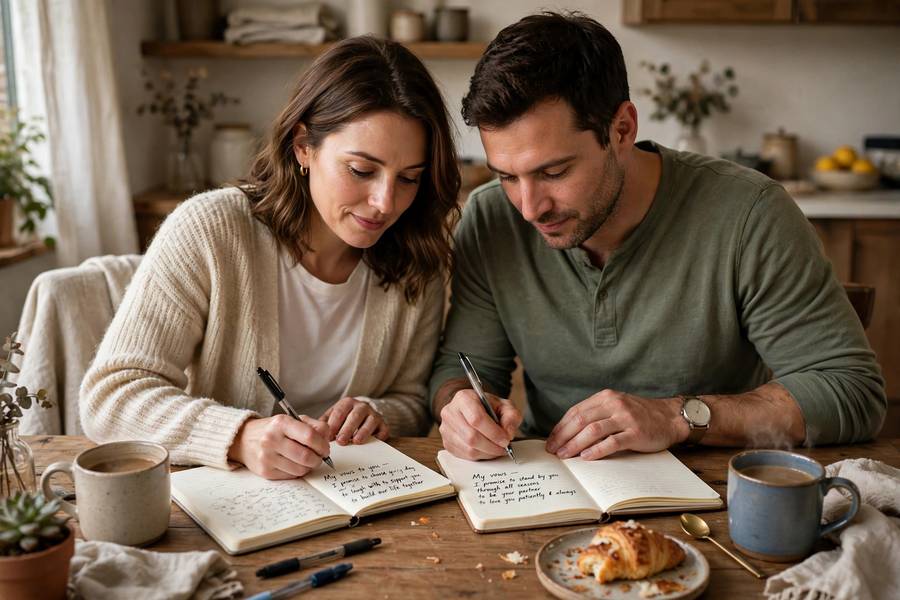
Answer these in a notebook — your vows are hiding in the answers:
- When did you know they were the one? What specifically happened?
- What’s your favorite everyday moment together?
- What do they do that always makes you laugh?
- What have they taught you?
- What’s the hardest thing you’ve been through together, and what did it show you?
- What do you admire most about them?
- What’s a small thing they do that nobody else notices?
- How have you changed since meeting them?
- What are you most looking forward to in your married life?
- What do you want to promise about the hard days, not just the good ones?
- What’s something only you two find funny?
- What would your friends say is the most “you two” thing about your relationship?
- What do you want your partner to remember on difficult days?
- If you had 30 seconds to explain why you’re marrying this person, what would you say?
- What does “home” mean to you now?
Write badly at first. Messy, rambling, too long — get it all down, then shape it with the structure above.
Tone: Finding Your Voice
Your vows should sound like you, not like a greeting card.
- Funny couples: Humor is wonderful — but anchor it with at least one genuinely sincere passage. Pure comedy vows can feel like a roast by the end.
- Serious couples: Earnest is beautiful. Just avoid drifting into abstract poetry that could apply to anyone — stay specific.
- Mixed: Most couples land here — heartfelt with moments of lightness. This is the sweet spot.
Coordinate loosely with your partner. You don’t need to share full drafts (most couples keep them secret), but agree on: approximate length, tone (both funny? both serious?), and whether you’re exchanging rings with traditional wording too. Mismatched vows — one partner’s two-minute comedy set followed by the other’s tearful sonnet — are awkward for everyone.
Length and Logistics
- Target: 1–2 minutes each when read aloud (roughly 150–250 words). Longer than that and guests’ attention drifts, no matter how beautiful the words.
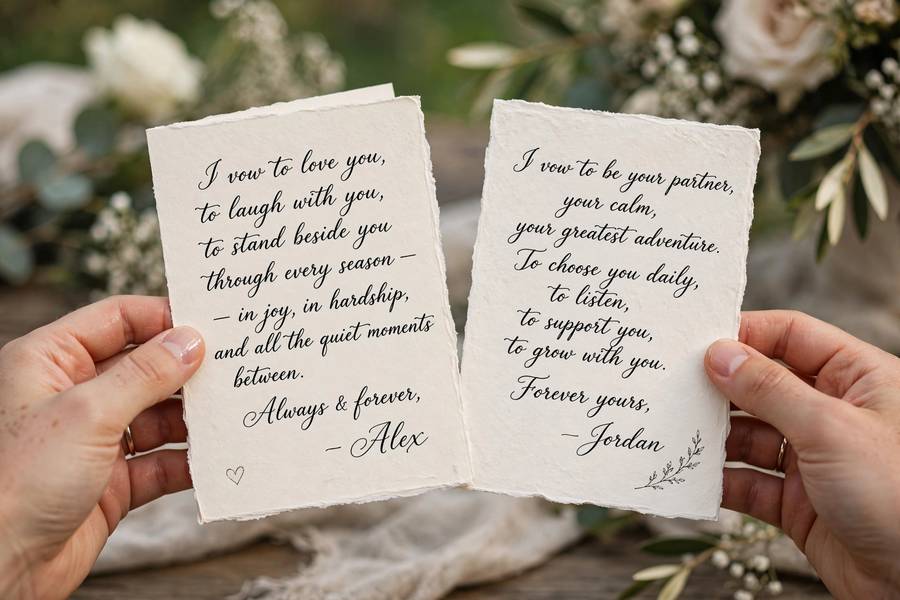
- Write them down. Do not memorize. Nerves erase memorized text; reading from a beautiful card is traditional and practical.
- Use vow books or nice cards — not your phone. Photos of you reading from a phone look terrible, and phones die.
- Print large. Nerves make small text swim. 14-point font minimum, double-spaced.
- Bring a backup copy and give it to your planner or maid of honor — vows left in the bridal suite are a classic crisis (your emergency kit should include them).
Real Vow Examples (Steal the Structure)
Example 1 — heartfelt with humor:
“Sam, I knew I was going to marry you the morning you drove 40 minutes in a snowstorm because I’d left my laptop at your place before a big presentation. You love me in verbs, not adjectives — you show up. I promise to show up for you: in the snowstorms and the easy Sundays, when you’re right and especially when you’re wrong. I promise to always laugh at your jokes, even the ones I’ve heard eleven times. Today I choose you — tomorrow and every day after.”
Example 2 — short and sincere:
“Maya, before you, I thought home was a place. You’ve taught me it’s a person. I love your courage, your terrible puns, and the way you dance while cooking. I promise to be your partner in every sense — to celebrate your wins like they’re mine, to carry half the weight on the hard days, and to keep choosing us. I love you, and I’m all in.”
Notice: specific details, real promises, personal closings. Steal the architecture, fill it with your story.
Delivery Tips for the Day
- Slow down. Nerves make everyone speed up. Consciously read slower than feels natural.
- Look up. Make eye contact at the emotional beats — the opening line, the promises, the closing. You don’t need to stare the whole time.
- Pause when you need to. If tears come, stop, breathe, sip water, continue. Nobody minds. Everybody understands.
- Hold the card with both hands — it hides shaking better than one hand.
- Speak to your partner, not the guests. Forget the audience exists. This is a conversation between two people that others happen to witness.
Your Vow-Writing Timeline
Don’t write vows the night before the wedding. Here’s the schedule I give every couple:
6–8 weeks out: Start thinking. Answer the 15 prompts above in a notebook. No pressure, no structure — just raw material. Ten minutes a day for a week beats one panicked evening.
3–4 weeks out: First draft. Shape your answers into the four-part structure. It will be too long and slightly clumsy. That’s what first drafts are for.
2 weeks out: Revise. Cut 30%. Read it aloud — timing yourself — and trim anything that doesn’t earn its place. Check the length against your partner’s (loosely coordinate; don’t share full texts if you want the surprise).
1 week out: Finalize. Print the final version in large type on your vow books or cards. Read it aloud twice more. Then stop tinkering — vows are done when they’re honest, not when they’re perfect.
Day before: Pack them. Vow books go in the emergency kit, with a backup copy held by your planner or wedding party. This is the step everyone forgets, so I’m saying it twice: pack the vows the day before.
Day of: Trust the work. You prepared. Now just read slowly, look up at the emotional beats, and let the words do what you wrote them to do.
Keep reading: if this helped, you’ll also like wedding seating chart ideas — I wrote them in the same plain-English style.
Frequently Asked Questions
Aim for 1–2 minutes each when read aloud — roughly 150–250 words. Longer vows lose the audience’s attention; shorter ones can feel rushed. Time yourself reading aloud during practice.
Four parts: an opening about how you got here, specific things you love about your partner, 3–5 promises (the actual vows), and a closing about the future you’re choosing together.
Share the logistics (length, tone, format) but keep the words secret if you like the surprise. The important coordination is matching tone and length — mismatched vows feel awkward.
Completely. Pause, breathe, sip water, and continue — guests find it moving, not embarrassing. Reading from a card (not memory) means nerves can’t make you lose your place.
Yes, if anchored with genuine sincerity. Humor that reflects your real relationship is wonderful — but include at least one heartfelt passage so the vows don’t feel like a comedy routine.
No — always read from vow books or nice cards. Nerves erase memorized text, and reading is traditional. Print in large type (14pt+, double-spaced) and bring a backup copy.