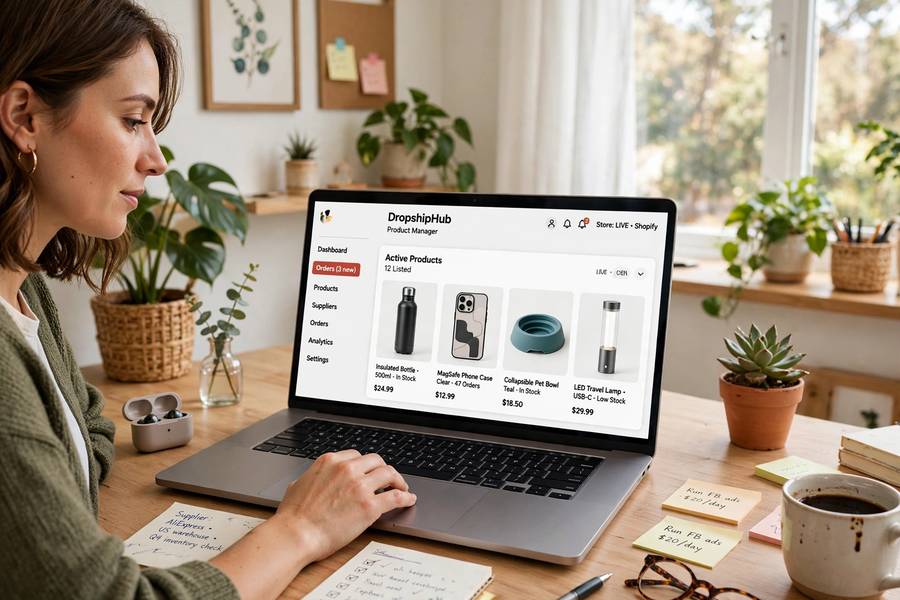
I’m Jonathan, and I need to be straight with you about dropshipping: it’s a real business model that real people make money with — and it’s also the most oversold “easy money” scheme on the internet. The gurus show you the revenue screenshots, never the ad spend, refund rates, or the 11 months of testing before anything worked.
Here’s the honest version: dropshipping is e-commerce without inventory. You sell products, a supplier ships them directly to your customer, and you keep the margin. Low startup cost, real challenges, genuine opportunity if you treat it like a business instead of a lottery ticket.
In This Guide
- How Dropshipping Actually Works
- The Honest Pros and Cons
- Step 1: Pick a Niche (Not a Product)
- Step 2: Find Reliable Suppliers
- Step 3: Build Your Store
- Step 4: Price for Actual Profit
- Step 5: Market Without Burning Cash
- Step 6: Handle Service Like Your Business Depends on It
- Mistakes That Kill Dropshipping Stores
- Frequently Asked Questions
How Dropshipping Actually Works
The mechanics are simple:
- You build an online store listing products you don’t own.
- A customer orders and pays you — say $40 for a product.
- You forward the order to your supplier, paying their wholesale price — say $15.
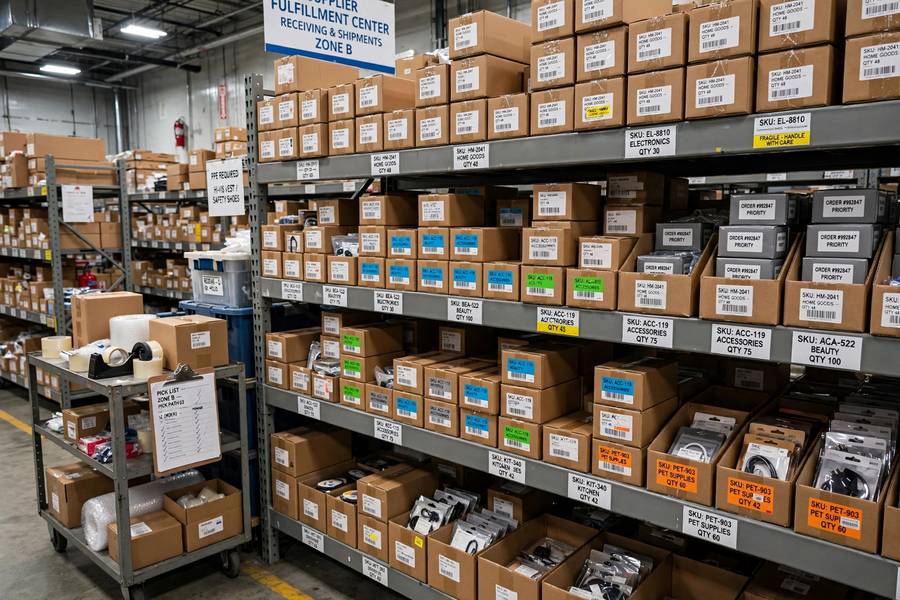
- The supplier ships directly to your customer, often with your branding on the packaging.
- You keep the difference minus your costs (ads, platform fees, refunds).
You never touch inventory. No warehouse, no packing boxes in your garage, no capital tied up in stock. That’s the appeal — and it’s genuine. But notice what you do own: the marketing, the customer experience, and all the risk when things go wrong. The supplier owns the product and fulfillment; you own everything the customer actually judges you on. A dropshipping store is still a startup — low capital doesn’t mean low effort, and the same fundamentals decide whether it survives.
Even if you never touch a product yourself, understanding inventory management helps you pick reliable suppliers and avoid stockouts.
If you’re new to online business generally, the fundamentals — validation, offer design, unit economics — apply doubly in dropshipping, since thin margins leave no room for sloppy basics.
The Honest Pros and Cons
Real advantages:
– Start for $500–$2,000 (store platform, domain, initial ad testing)
– No inventory investment or warehousing
– Test products quickly — list it today, know by next week if it sells
– Location independent, genuinely
– Scalable without operational complexity exploding
Real disadvantages:
– Thin margins — typically 15–30% after all costs, not the 300% gurus imply
– You don’t control product quality, shipping speed, or stock levels
– Brutal competition — anyone can sell the same products
– Customer service nightmares when suppliers mess up (and they will)
– Ad costs have risen steadily; profitable customer acquisition is the whole game
– Returns and chargebacks eat margins alive
The businesses that thrive in dropshipping aren’t the ones with the cleverest product — they’re the ones with the best marketing and customer experience around a decent product. Internalize that before spending a dollar.
Step 1: Pick a Niche (Not a Product)
Beginners pick products (“LED strip lights!”). Winners pick niches with repeat-purchase potential and passionate buyers: pet owners, hobbyists, new parents, fitness enthusiasts. A niche gives you an audience to market to repeatedly; a single product gives you one ad campaign that dies.
Niche criteria that work:
– Passionate audience with a clear identity (they describe themselves by the interest)
– Products in the $20–$80 range (high enough for margin, low enough for impulse buys)
– Lightweight and shippable (avoid furniture-sized items)
– Not dominated by Amazon on price and Prime shipping
– Room for bundling and upsells (one-time purchases are brutal in dropshipping)
Validate before building: check search demand, look at competitors’ stores, and confirm suppliers exist for the product category. Passion without purchasable products is just a hobby.
Step 2: Find Reliable Suppliers
Your supplier is your business partner in everything but name. Bad suppliers = bad reviews = dead store.
Supplier options, ranked by reliability:
1. Domestic wholesalers and distributors — faster shipping, better quality control, higher wholesale prices. Best for US/EU-focused stores.
2. Vetted platforms (Spocket, SaleHoo, Zendrop) — curated suppliers with quality checks, pricier than raw marketplaces.
3. AliExpress/Alibaba — cheapest, widest selection, longest shipping times, most variable quality. Viable for testing, risky as a foundation.
Vetting checklist: order samples yourself (non-negotiable — never sell what you haven’t held), test shipping times to your market, check communication responsiveness, confirm return/defect policies, and verify they can handle volume spikes.
One supplier failure mode I see constantly: the store scales, the supplier can’t keep up, shipping times triple, reviews tank, ad account gets flagged. Have a backup supplier for winning products before you need one.
Step 3: Build Your Store
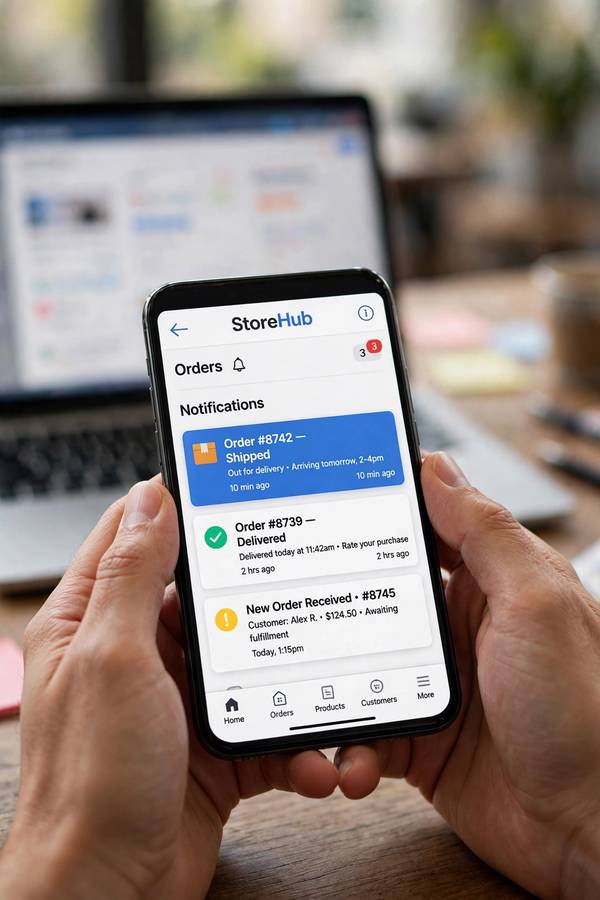
Shopify remains the default for good reason — it handles payments, checkout, and integrations cleanly. The store itself needs:
- Clean, fast design. One hero product or tight collection per page. Speed matters — every second of load time costs conversions.
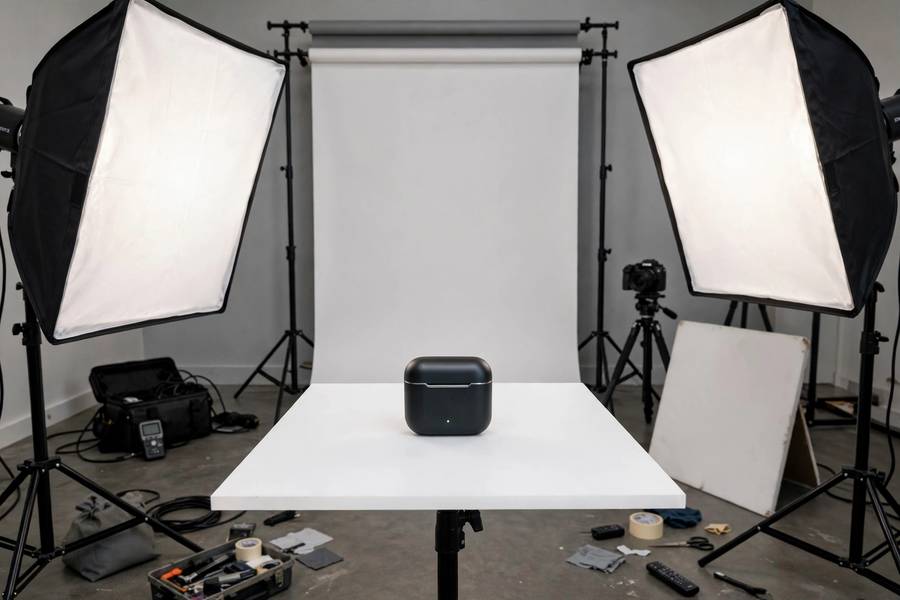
- Real product photography. Supplier photos are fine to start, but ordering samples and shooting your own photos (even with a phone and a $30 lightbox) dramatically lifts conversion.
- Trust signals. Real reviews (import carefully and honestly), clear shipping times, visible refund policy, an about page with a human story, contact information that works.
- Honest shipping expectations. If shipping takes 10–15 days, say so upfront. Surprises create chargebacks; honesty creates patience.
Your branding matters more in dropshipping than in most models — because the product itself is commoditized, your brand is the only differentiator. A store that feels like a real brand converts multiples better than one that feels like a product catalog.
Step 4: Price for Actual Profit
Do the real math, not guru math:
Per-order economics: selling price − product cost − shipping − platform fees (~3%) − ad cost per order − refund/chargeback reserve (~5%) = actual profit.
Example: $40 product, $15 cost, $4 shipping, $1.20 fees, $12 ad cost, $2 reserve = $5.80 profit. That’s a 14.5% margin — realistic for dropshipping. To make $5,000/month profit at that margin, you need ~860 orders/month.
Pricing rules: price at 3x your landed cost minimum (product + shipping), build bundles to raise average order value, and never compete on price alone — you’ll lose to someone with cheaper suppliers. Compete on brand, creative, and customer experience.
Step 5: Market Without Burning Cash
Paid ads (Meta, TikTok, Google) are the standard dropshipping channel — and the standard way beginners lose money. The disciplined approach:
- Start with organic content. TikTok, Instagram Reels, YouTube Shorts showing the product in use. Costs nothing but time; doubles as creative testing for later paid campaigns.
- Test paid with small budgets. $10–20/day per product test. Kill losers fast — if a product doesn’t show promise within $50–100 of spend, move on.
- Scale winners gradually. Increase budgets 20–30% at a time on profitable campaigns. Doubling overnight usually breaks performance.
- Build email from day one. Abandoned-cart flows and post-purchase sequences are nearly free revenue. Your list compounds while ad costs rise.
The unsexy truth: most profitable dropshipping stores are profitable because of email, retention, and creative testing discipline — not because they found a magic product.
Step 6: Handle Service Like Your Business Depends on It
It does. In dropshipping, customer service is the product experience you control.
- Answer fast. Under a few hours, not days. Speed forgives many sins.
- Proactive shipping updates. “Your order is on its way, tracking here” emails reduce “where is my order” tickets enormously.
- Generous refund policy. Fighting a $30 refund and getting a chargeback plus a 1-star review is terrible math. Refund quickly, learn from the cause.
- Turn problems into loyalty. A customer whose issue you resolved brilliantly often becomes more loyal than one who never had a problem.
Mistakes That Kill Dropshipping Stores
- Selling what everyone sells with identical supplier photos and no differentiation
- Unrealistic shipping promises — “3-day delivery” when your supplier needs 12
- No margin math — discovering after 500 orders that you lost money on each one
- Single-supplier dependency on a winning product
- Ignoring customer service until reviews destroy the store
- Scaling ad spend before the funnel works — amplifying a broken machine
- Treating it as passive income — successful dropshipping is an active, demanding business
Dropshipping works when you treat it as a real retail business with real marketing, real customer service, and real math — and fails when you treat it as a shortcut. Pick a real niche, vet suppliers ruthlessly, build a brand (not a catalog), know your numbers cold, and serve customers like your business depends on it. Because it does.
Frequently Asked Questions
Yes, but margins are realistic — typically 15–30% after product costs, shipping, ads, and fees — not the huge markups gurus advertise. Profitable stores win through strong marketing, branding, and customer service, not magic products. Rising ad costs mean unit economics must be calculated carefully before scaling.
Realistically $500–$2,000: store platform subscription, domain, product samples (essential), and initial ad testing budget. The biggest variable cost is advertising — budget at least a few hundred dollars for testing products before expecting profit.
No — that’s the core of the model. You list products you don’t own; when a customer orders, your supplier ships directly to them. You should still order samples of everything you sell to verify quality, but you never hold stock.
Options range from domestic wholesalers (fastest shipping, higher prices) to vetted platforms like Spocket or Zendrop, to AliExpress/Alibaba (cheapest, slowest, most variable). Always order samples, test shipping times, and confirm return policies before selling — and have a backup supplier for winning products.
Selling commoditized products with no differentiation, promising unrealistic shipping times, skipping the margin math, depending on a single supplier, neglecting customer service, and scaling ad spend before the funnel is profitable. Most failures come from treating it as passive income rather than an active retail business.