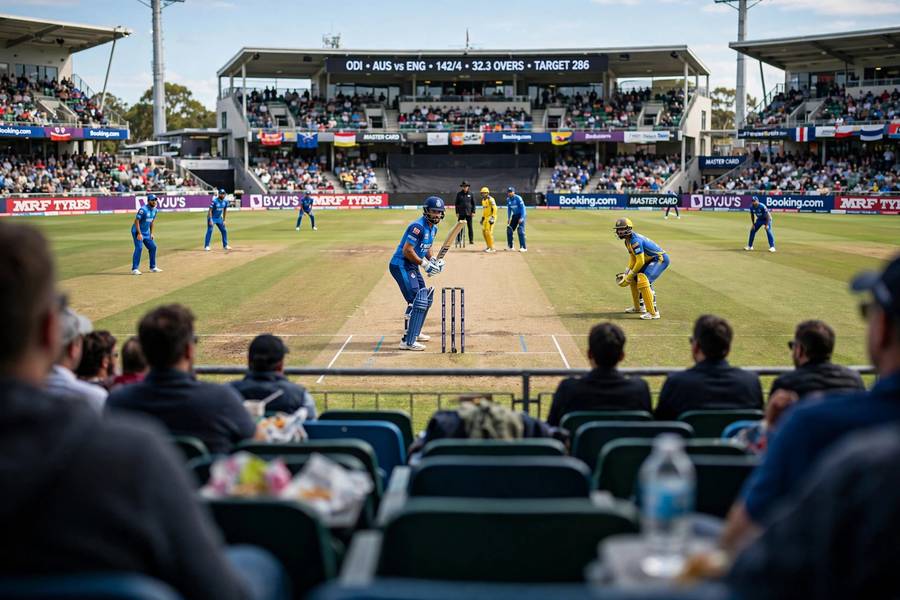
How to Play Cricket for Beginners: Skills, Gear & First Steps

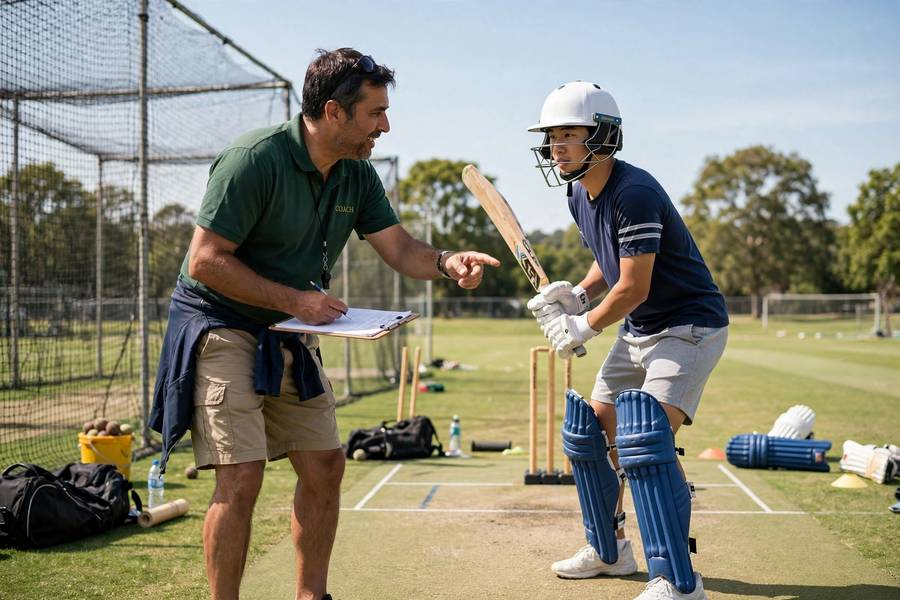
Playing cricket needs less than you think: a bat, a ball, something to use as wickets, and a bit of open space. You do not need whites, a manicured oval or eleven friends — some of the best cricket in the world is played with a tennis ball in a backyard. This guide gives you the basics — batting, bowling and fielding — plus the drills and mistakes that matter in your first few games, updated for 2026.
I’m Ryan. I learned cricket as an adult, which means I made every beginner mistake so you don’t have to. Here’s your starting guide.
Table of Contents
- What You Need to Start
- Batting Basics
- Bowling Basics
- Fielding Basics
- Backyard Cricket: The Best Way to Learn
- Joining a Casual Team or League
- Common Beginner Mistakes
- Solo Practice Drills
- Frequently Asked Questions

What Do You Need to Start Playing Cricket?
The absolute minimum: a bat, a ball, and something to aim at. A tennis ball and three sticks (or a trash can) work fine for learning the motions.
For casual games with friends:
– A cricket bat (or a tennis racket in a pinch — no judgment)
– A tennis ball (softer and safer than a leather cricket ball)
– Plastic or wooden stumps (or any target: cones, a chair, a backpack)
For joining a real club or league:
– Cricket bat, properly sized (stand the bat next to you — the top of the handle should reach your wrist)
– Cricket ball (leather, with seam)
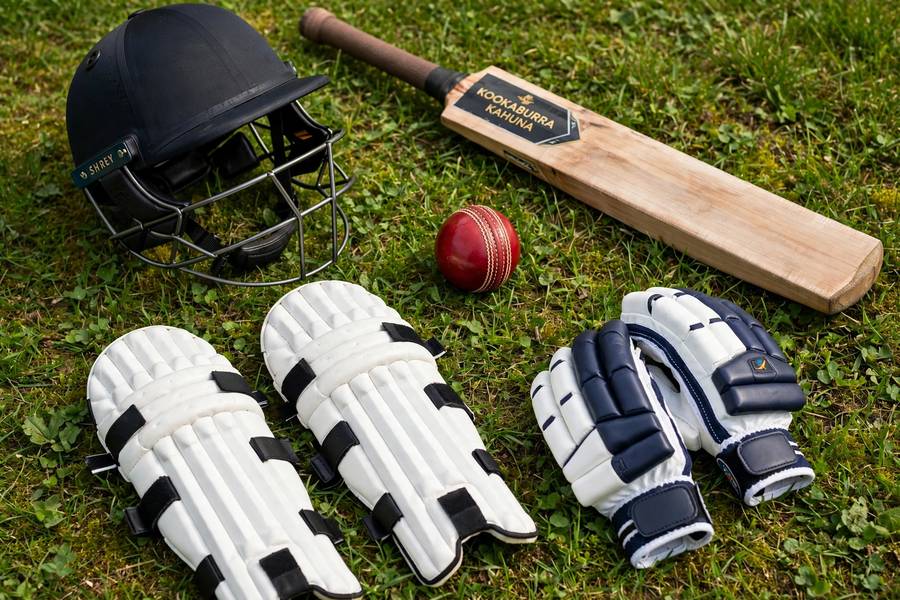
– Protective gear: batting pads, gloves, box (abdominal guard), and a helmet — non-negotiable with a hard ball
– Whites or team kit, depending on the league
Don’t buy top-end gear as a beginner. A mid-range bat and basic pads are plenty until you know you’re sticking with it.
What Are the Batting Basics?
Batting looks simple — hit the ball — but the technique has layers. Start with the foundation:
The stance: Stand sideways to the bowler, feet shoulder-width apart, knees slightly bent, bat grounded behind your back foot. Head still, eyes level. Most batting problems come from a bad stance, so get this right first.
The grip: Hands together on the handle, top hand (left for a right-handed batter) controlling the bat. The classic “V” grips: the Vs formed by thumb and forefinger of each hand should align down the back of the bat.
The forward defense: Your first shot to learn. Step toward the ball with your front foot, keep the bat straight, and block it into the ground. Boring? Yes. Essential? Completely. Defense keeps you at the crease; the crease is where runs come from.
Hitting: Once you can defend, learn the basic drives — hit through the line of the ball with a straight bat. Cross-bat slogs (swinging across the line like a baseball swing) are fun but get beginners out constantly. Straight bat first, fancy shots later.
Running: After hitting, sprint to the other end while your partner runs toward you. Cross — don’t collide. Call loudly: “yes,” “no,” or “wait.” Bad calling causes more run-outs than good fielding does.
What Are the Bowling Basics?
Bowling (pitching, in baseball terms) is cricket’s most technical skill. The key rule: your arm must stay straight — bending the elbow is throwing, and it’s illegal.
The run-up: Start with a short, smooth run-up (8–10 steps). Rhythm matters more than speed. Most beginners run in too fast and lose all coordination at the crease.
The action: As a beginner, aim for a simple side-on action: gather the ball with both hands near your chest, then rotate and release over the top with a straight arm. Don’t try to copy the pros’ elaborate actions yet.
Line and length: Forget pace. Your only goals as a beginner bowler:
– Line: Bowl at the stumps (or just outside off stump). Balls that would hit the stumps force the batter to play.
– Length: Pitch the ball so it bounces about 2–3 meters in front of the batter (“good length”). Too full and it gets driven; too short and it gets pulled.
A beginner who bowls straight at a good length will take wickets. A beginner who tries to bowl 80 mph will bowl wides all day.
Start with spin or seam? Most beginners start as medium-pacers (straightforward) or try simple off-spin (slower, turns the ball). Either is fine — pick whichever feels natural.
What Are the Fielding Basics?
Everyone fields, so learn it properly:
- Ready position: On the balls of your feet, knees bent, hands ready — before every single delivery. Fielders who stand flat-footed react late.
- Catching: Watch the ball all the way into your hands. Fingers up for high catches, fingers down for low ones. And never, ever take your eye off it to check where you’re throwing — catch first.
- Throwing: One smooth motion, over the top, at the stumps or the wicketkeeper. In casual games, just get it back to the bowler’s end quickly.
- Backing up: Always be moving to back up a throw. Most overthrows happen because nobody backed up.
Why Is Backyard Cricket the Best Way to Learn?
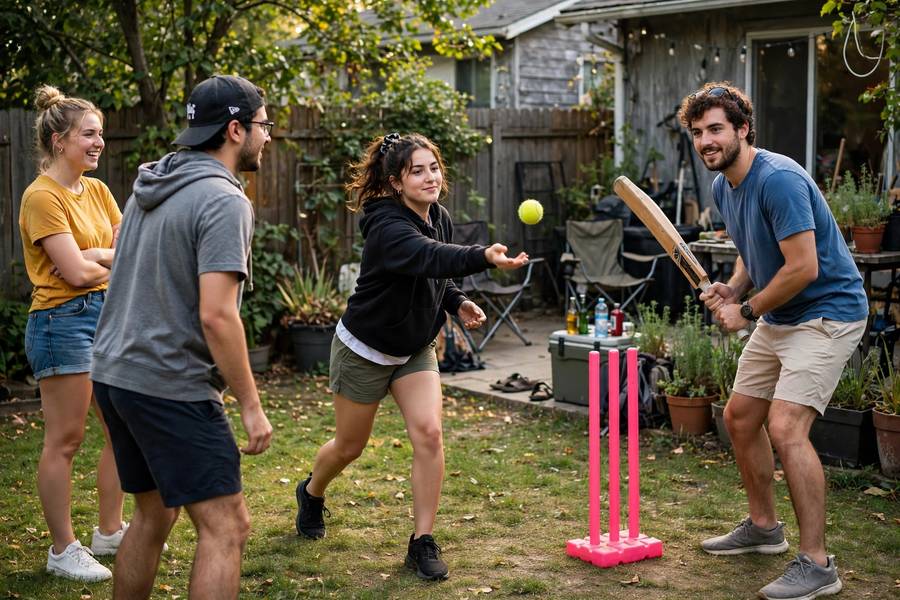
Forget formal rules for your first games. Backyard cricket (or “gully cricket”) is how most of the world’s players learned:
- Tennis ball instead of leather — safer, bouncier, more fun
- Plastic stumps or any target
- Simplified rules: Agree on basics — how many overs, what counts as out, whether there’s LBW (usually not)
- Everyone bats, everyone bowls — rotate so all skill levels participate
- Small teams — 4–6 a side works great in a yard or park
This is genuinely the fastest way to learn. You’ll face hundreds of balls in an afternoon, try every shot, and develop instincts no drill can teach. Some of the greatest players in history learned exactly this way.
How Do You Join a Casual Team or League?
When you’re ready for organized cricket:
- Search for local clubs — most cities have cricket clubs with beginner-friendly teams and net practice sessions. Many welcome complete newcomers.
- Try tennis-ball leagues first — faster, safer, and hugely popular in many communities. Great bridge to leather-ball cricket.
- Go to net practice — clubs hold practice sessions where you can bat and bowl in a low-pressure environment before playing matches.
- Start in a lower division — every club has social or developmental teams. Nobody expects a beginner to open the batting in the first XI.
Cricket clubs are famously welcoming — the sport runs on volunteers and camaraderie, and new players are the lifeblood. Just show up.
Playing Cricket in 2026: One Rule Change Worth Knowing
If you watch professional cricket in 2026 you may notice umpires being stricter about pace of play. Under the ICC Playing Conditions that took effect for international fixtures starting on or after 1 October 2026, batters who are not ready in time receive a warning, then a final warning, then five penalty runs to the fielding side for each further offence. It does not apply to backyard games — but it is a good habit to copy: be ready, keep the game moving, and everyone gets more cricket.
Common Beginner Mistakes
- Swinging across the line instead of playing straight. The #1 batting error.
- Bowling too fast, too soon. Pace without control is just wides.
- Not calling when running. “Mine!” and “yours!” prevent collisions and run-outs.
- Standing flat-footed in the field. Stay on your toes.
- Skipping protective gear with a hard ball. A 70 mph ball doesn’t care about your confidence.
- Trying to hit every ball for six. Singles win matches; patience wins innings.
What Solo Drills Help Beginners Most?
No partner? No problem. These drills need only a ball, a bat, and a wall:
Wall batting: Throw a tennis ball against a wall and play it back with your bat. Start with defensive blocks, progress to drives. The rebound is unpredictable — excellent reflex training. Twenty minutes of this does more for your batting than an hour of theory.
Target bowling: Set up a single stump (or a trash can) and bowl at it from 15–18 yards. Count how many out of 10 would hit. Track your score over weeks — watching the number climb is addictive, and accuracy is the beginner’s superpower.
Shadow batting: Practice your stance, backlift, and shot shapes without a ball — in front of a mirror if possible. It feels silly; it builds muscle memory that shows up when a real ball arrives.
Catching against a wall: Throw the ball high against a wall and catch it. Vary the height and angle. Dropped catches lose matches, and safe hands are a genuine selection criterion at every level.
The tennis-ball progression: Master everything with a tennis ball first. Move to a leather ball only when your technique is solid — the hard ball punishes bad habits (sometimes literally).
Keep reading: if this helped, you’ll also like pickleball rules, offside rule in soccer — I wrote them in the same plain-English style.
Frequently Asked Questions
How do beginners start playing cricket?
Start with backyard cricket: a tennis ball, any bat, and a makeshift wicket. Learn the basic batting stance, straight-bat defense, and simple bowling action through casual games before joining a club.
What equipment does a cricket beginner need?
Minimum: a bat, a ball, and a wicket target. For club cricket, add batting pads, gloves, an abdominal guard, and a helmet — protective gear is essential with a hard leather ball.
Is cricket hard to learn?
The basics are easy — hit the ball, run, try not to get out. Mastering technique (like the straight-arm bowling action) takes practice, but casual tennis-ball cricket is playable within an afternoon.
What is the easiest bowling style for beginners?
Medium-pace bowling with a simple action is easiest to learn. Focus on bowling straight (at the stumps) at a good length rather than trying for pace — accuracy takes wickets at every level.
Can adults learn cricket?
Absolutely. Many clubs have adult beginner programs and social teams. Tennis-ball leagues are especially beginner-friendly, and backyard cricket with friends requires zero experience to enjoy.
What is the difference between batting stance in cricket and baseball?
Cricket batters stand sideways to the bowler with the bat grounded behind them, and defend a wicket (stumps) behind them. Baseball batters face the pitcher more openly with no wicket to protect, and every hit is an attacking swing — cricket includes defensive shots.