

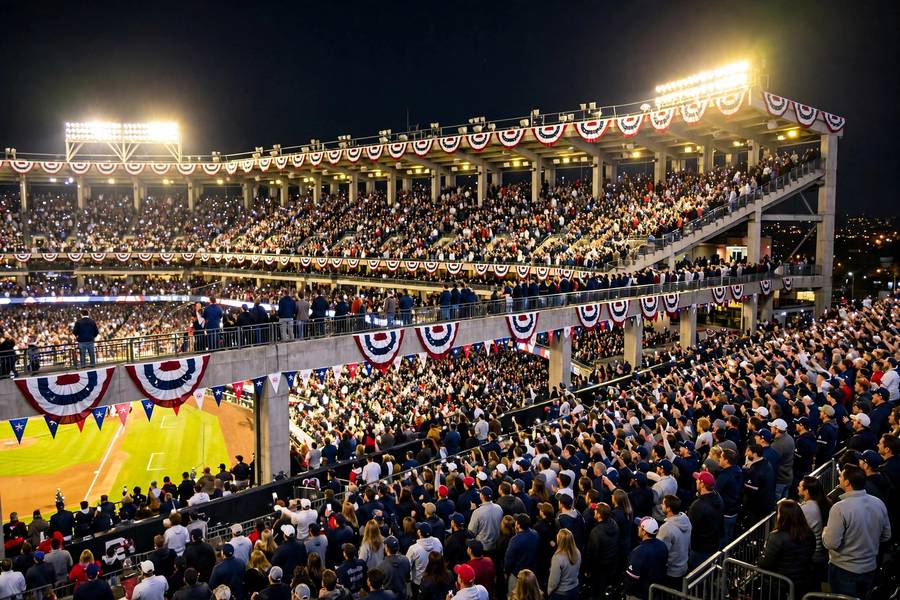
One hundred and twenty-plus years. Twenty-seven championships for the Yankees alone. A trophy with 30 flags on it and a Most Valuable Player award named for Willie Mays. The World Series is the oldest championship in American professional sports — first played in 1903, back when the automobile was still a novelty — and its format has barely changed since. That’s part of its power: every October, two teams play the same best-of-seven war their great-grandparents watched.
But if you’ve ever wondered about the mechanics — how teams actually get there, who gets home-field advantage, why the schedule looks the way it does — this is the full breakdown.
Table of Contents
- What the World Series Is
- How Teams Qualify: The Road to October
- The Playoff Ladder: Every Round Before the Series
- The World Series Format: Best-of-7, 2-3-2
- Home-Field Advantage: Who Gets It and Why It Matters
- The Rules: What Changes in the World Series
- How a Champion Is Decided
- A Short History of the Fall Classic
- Frequently Asked Questions
What the World Series Is
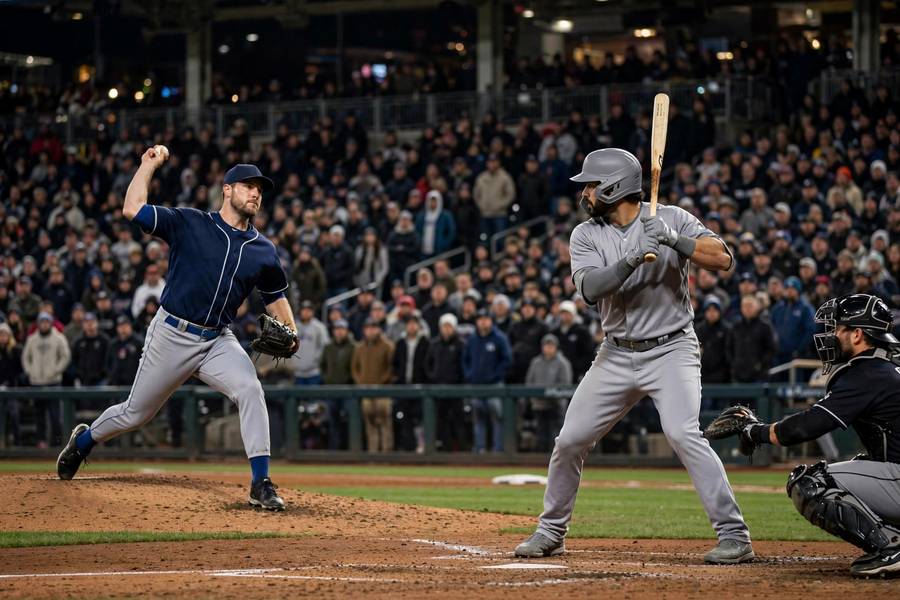
The World Series is Major League Baseball’s championship series, played each October or November between the champions of the American League (AL) and the National League (NL). The winner is crowned the champion of baseball for that season.
It’s a best-of-seven series: the first team to win four games takes the title. The nickname “Fall Classic” dates back decades, and the event still stops the sports world — World Series games routinely draw the largest television audiences of the baseball season, and the trophy presentation on the field is one of the iconic images in American sports.
How Teams Qualify: The Road to October
Thirty MLB teams start the season; twelve make the postseason. Here’s the path:
The regular season. Each team plays 162 games from late March through September. The leagues are each split into three divisions (East, Central, West), and the division winners automatically qualify for the playoffs.
The wild cards. The three non-division-winners with the best records in each league also qualify as wild-card teams. That makes six playoff teams per league, twelve total.
Seeding matters enormously. Division winners are seeded 1–3 by record, wild cards 4–6. The top two seeds in each league get a first-round bye — they skip the Wild Card Series entirely and rest while everyone else fights for survival. That bye is one of the most valuable prizes in the sport.
The Playoff Ladder: Every Round Before the Series
The postseason is a four-round gauntlet, and each round has its own format:
- Wild Card Series (best-of-3). The 3rd seed hosts the 6th seed; the 4th hosts the 5th. All games at the higher seed’s park, no travel. First to two wins advances. Lose twice and your season is over in about 72 hours.
- Division Series (best-of-5). The 1st seed plays the Wild Card Series winner with the worse record; the 2nd seed plays the other survivor. First to three wins. The format is 2-2-1: the higher seed hosts Games 1, 2, and 5.
- League Championship Series (best-of-7). The ALCS and NLCS. First to four wins, 2-3-2 format. The winners are crowned league champions and receive their league pennant.
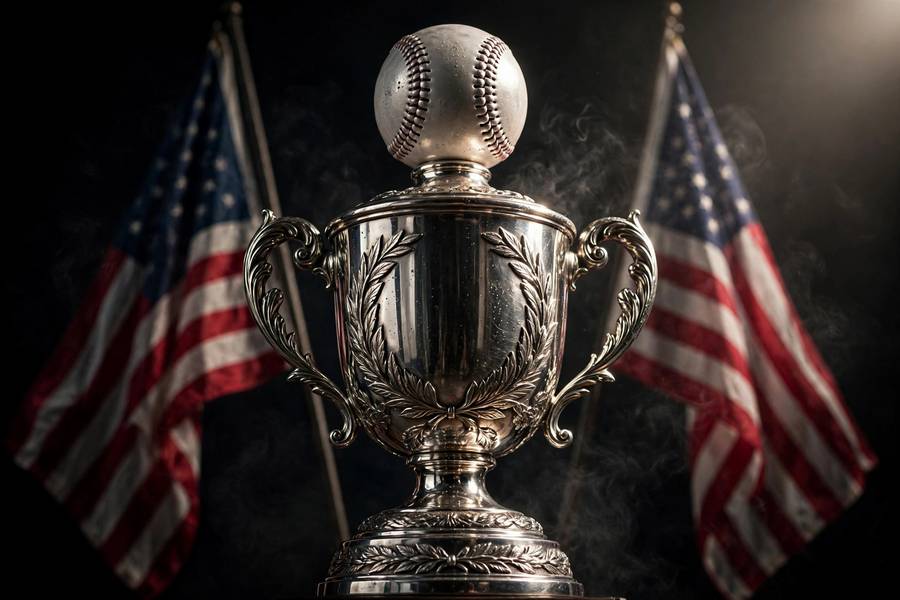
- World Series (best-of-7). The AL champion meets the NL champion. First to four wins takes the Commissioner’s Trophy.
Notice the escalating lengths: 3, 5, 7, 7. The deeper you go, the more the format rewards the better team and the less room there is for a fluke. A best-of-three can be stolen by two hot pitchers. A best-of-seven almost always finds the stronger roster.
The World Series Format: Best-of-7, 2-3-2
The Series follows a 2-3-2 format:
- Games 1 and 2: at the home park of the team with home-field advantage
- Games 3, 4, and 5: at the other team’s park
- Games 6 and 7 (if necessary): back at the first team’s park
The series ends the moment a team wins its fourth game — there’s no obligation to play all seven. If a team sweeps 4-0, it’s over in four games. Most series land at five or six games; Game 7s are the rarest and most dramatic outcome.
The schedule typically runs over 9–10 days with built-in travel and rest days: games on a roughly every-other-day rhythm, with an off day when the series switches cities. That spacing matters — it lets teams reset their starting rotations so aces can pitch twice in a series (Games 1 and 5, or 2 and 6).
Why 2-3-2? The middle three games at one park minimizes travel — in the days of train travel, bouncing back and forth was brutal. The format slightly favors the team without home-field advantage in one sense (three straight home games mid-series can build momentum), but the team with the advantage still gets the crucial Games 1, 2, 6, and 7 at home. Historically, the home-field team wins the Series more often than not.
Home-Field Advantage: Who Gets It and Why It Matters
Since 2017, home-field advantage goes to the team with the better regular-season record. Simple, merit-based, and easy to explain.
It wasn’t always this way. From 2003 through 2016, home-field advantage was decided by the All-Star Game — whichever league won the midsummer exhibition got the advantage in October. Fans and players largely hated it; an exhibition deciding a championship felt wrong, and the rule was scrapped after the 2016 season. Before 2003, it simply alternated between leagues each year.
Does home field actually matter? The numbers say yes, modestly. Home teams win roughly 54 percent of postseason games, and in winner-take-all Game 7s the home team has historically won about 60 percent of the time. Sleeping in your own bed, batting last, and feeding off 45,000 fans doesn’t guarantee anything — but over seven games, the edges add up.
Tiebreaker note: if both pennant winners finish with identical records, the advantage goes through a set of tiebreakers starting with head-to-head record.
The Rules: What Changes in the World Series
Almost nothing — and that’s deliberate. The World Series is played under standard MLB rules with a few notable points:
The designated hitter is universal. Since 2022, both leagues use the DH. Pitchers haven’t batted in the World Series since the rule change, ending decades of NL-vs-AL strategic asymmetry where NL teams had to decide whether to let their pitcher hit in October.
Rosters lock in. Teams set a 26-man roster for each postseason round and can only change it for injuries (with the injured player then ineligible for the next round). No September call-up cavalry.
No ties, ever. Regular-season games that can’t be finished are suspended and completed later rather than recorded as ties, and postseason games play until someone wins. Extra innings are played under traditional rules — the automatic runner on second base is a regular-season-only rule, so postseason extras start with the bases empty, which has produced some marathon World Series finishes.
Umpiring crews are the most experienced available, and since the expansion of replay review, every close call at the plate or on the bases gets a second look. The stakes are too high for a missed call to decide a championship.
How a Champion Is Decided
First to four wins. That’s it. There’s no points system, no aggregate score, no style marks — win four games before the other team does, and the Commissioner’s Trophy is yours.
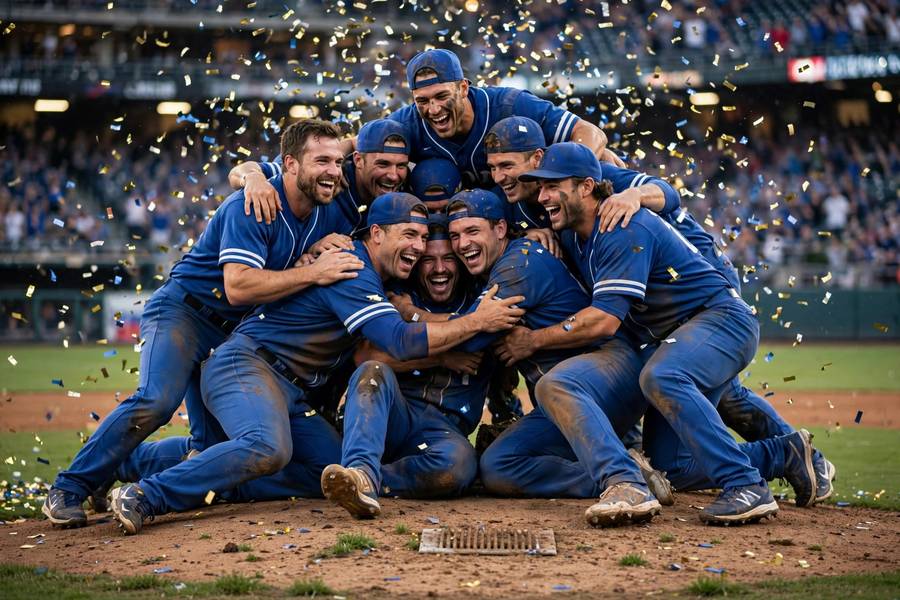
When the final out is recorded, the celebration is immediate and famous: the dogpile on the mound, the champagne in the clubhouse, the trophy presentation on the field. The Willie Mays World Series MVP Award (established in 1955) goes to the series’ standout performer — often a hitter who carried an offense, sometimes a pitcher who dominated twice.
The winning team also receives championship rings the following season — massive, diamond-covered affairs that players describe as the one piece of jewelry that actually means something.
A Short History of the Fall Classic
1903: The first World Series — the Boston Americans beat the Pittsburgh Pirates 5-3 in a best-of-nine. The modern best-of-seven format became standard soon after.
The Yankees’ empire: 27 championships, 40 pennants. No franchise in North American sports dominates its championship like the Yankees dominated the 20th century — including five straight titles from 1949 to 1953.
The droughts and curses: The Red Sox went 86 years between titles (1918–2004), the “Curse of the Bambino.” The Cubs waited 108 years (1908–2016). When those droughts ended, the celebrations shut down cities.
1994: The only year without a World Series in the modern era — a players’ strike canceled the postseason. The Montreal Expos, who had baseball’s best record, never got their shot.
2001: The Diamondbacks beat the Yankees in Game 7, weeks after 9/11, in one of the most emotionally charged series ever played.
2016: The Cubs’ Game 7 win over Cleveland in extra innings, ending 108 years of waiting, in a game many call the greatest ever played.
2020: The pandemic season — 60 games, neutral-site Series at Globe Life Field in Texas, the Dodgers’ first title in 32 years.
Through it all, the format has held: two league champions, best of seven, first to four. If you enjoy understanding how championships are structured, our guide to how the World Cup tournament format works covers soccer’s biggest prize — and how golf scoring works breaks down another sport where the format shapes everything.
Frequently Asked Questions
The World Series is a best-of-seven championship between the American League and National League pennant winners. The first team to win four games is crowned champion. It uses a 2-3-2 format: the team with home-field advantage hosts Games 1, 2, 6, and 7, while the other team hosts Games 3, 4, and 5.
Teams must survive MLB’s four-round postseason. Twelve teams qualify (six per league): three division winners and three wild cards. They play through the best-of-3 Wild Card Series, best-of-5 Division Series, and best-of-7 League Championship Series. The two league champions then meet in the World Series.
Since 2017, home-field advantage goes to the pennant winner with the better regular-season record. From 2003 to 2016 it was decided by the All-Star Game result, and before that it alternated between leagues each year.
The World Series is a best-of-seven, so it lasts between four and seven games. It ends as soon as one team wins four games — a sweep ends it in four, while a full series goes the distance to Game 7.
The New York Yankees have won 27 World Series championships, far more than any other franchise, along with 40 American League pennants. Their most recent title came in 2009.
The winner receives the Commissioner’s Trophy, a sterling silver trophy featuring 30 gold-plated flags — one for each MLB team — arranged around a baseball-shaped top. Players also receive championship rings, and the series’ best performer wins the Willie Mays World Series MVP Award.