
I’m Ava. I’ve sat in on casting sessions and interviewed dozens of casting directors, and here’s the secret they all share: by the time you audition, they want you to be the answer. Nobody enjoys watching 200 wrong fits. They’re rooting for you to walk in and solve their problem. Your job is to make that easy.
Auditioning is its own craft — separate from acting. Here’s how it actually works, from finding the audition to the moment you leave the room.
In This Guide
- How Movie Auditions Work (The Pipeline)
- Finding Auditions
- Preparing Your Sides
- The Self-Tape: Setup and Technique
- In the Room: What to Do (and Not Do)
- Callbacks and Chemistry Reads
- What Casting Directors Really Want
- After the Audition
- Frequently Asked Questions
How Movie Auditions Work (The Pipeline)
A film role gets cast through narrowing rounds:
- Breakdown release. The casting office sends character descriptions to agents (and sometimes public casting sites for smaller roles).
- Submissions. Agents submit clients; casting reviews headshots and reels.
- First round. Usually self-tapes now — actors record at home and submit video.
- Callbacks. 10–20 actors per role invited to read in person (or live virtual) for the casting director.
- Chemistry reads / director sessions. Finalists read with other cast members or for the director.
- Producer session / test. For significant roles, final approval from producers or the studio.
- Offer. The chosen actor gets the call — sometimes weeks after the last round.
Understanding the pipeline helps emotionally: a first-round rejection means nothing about your talent — you were one of hundreds. A callback means you’re genuinely in contention. Each round you survive is a real achievement.
Finding Auditions
- Through your agent (when you have one): the primary channel for professional film roles.
- Casting platforms: Actors Access, Backstage, Casting Networks — breakdowns for all levels, from student films to studio features.
- Casting office mailing lists: many offices maintain lists for direct submissions, especially for specific types.
- Your network: directors and producers you’ve worked with before bring you in directly — another reason every job matters.
Submit for everything you’re right for. “Right for” means honest type fit — submitting for roles wildly outside your casting wastes everyone’s time and trains casting directors to ignore your submissions.
Preparing Your Sides
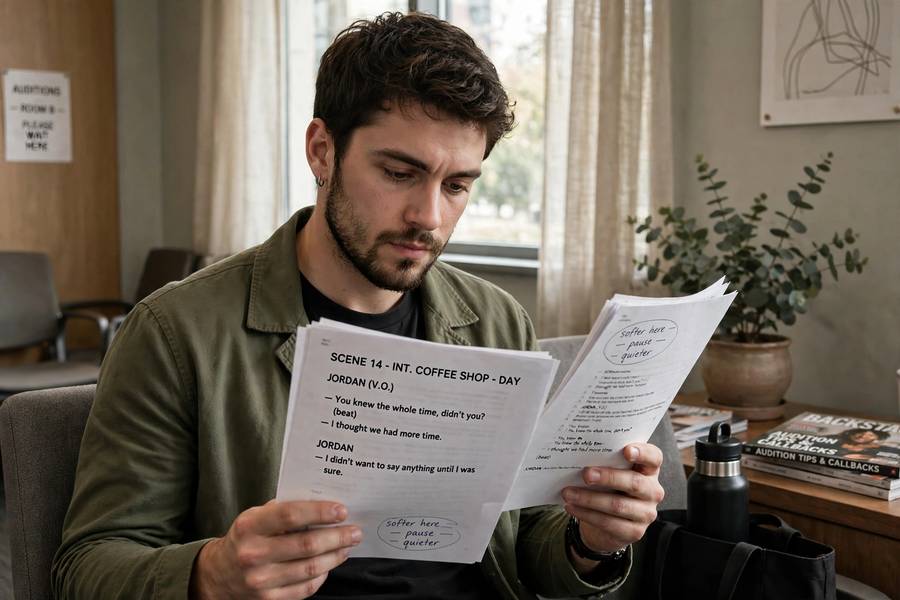
“Sides” are the script pages you’re given to perform — usually 2–5 pages, sometimes sent the night before.
The preparation method that works: 1. Read the full script if available. Context transforms sides from random pages into a story you understand. 2. Know it cold — then let it go. Memorize the words so thoroughly you can forget them and just think the thoughts. Reading off the page is acceptable in film auditions, but freedom beats paper. 3. Make strong, specific choices. A bold choice that’s wrong is more castable than a safe choice that’s bland. Casting directors remember actors who committed. 4. Understand the scene’s function. What’s your character trying to get? From whom? What’s at stake? Answer these and the performance organizes itself. 5. Prepare two contrasting takes if time allows — but lead with your strongest instinct.
What not to do: over-rehearse into rigidity, invent elaborate backstories nobody asked for, or “direct” yourself into a performance so polished it can’t breathe. Auditions reward alive over perfect.
The Self-Tape: Setup and Technique
Most first rounds are self-taped at home. Technical quality is part of the evaluation — a bad tape distracts from a good performance.
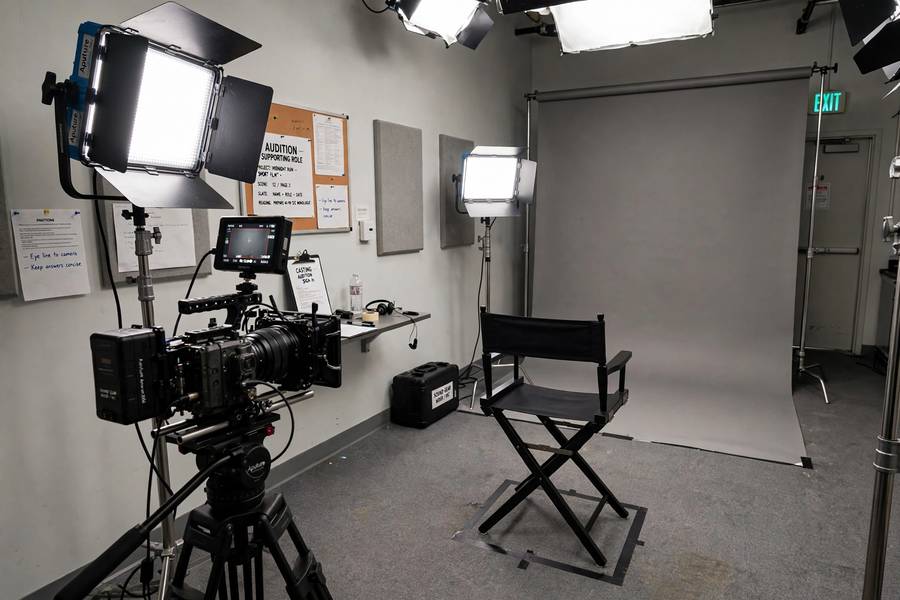
Setup: – Plain, neutral backdrop (gray or blue wall, or a backdrop stand) – Soft, even lighting on your face — a ring light or window light works; avoid overhead-only lighting – Frame: chest-up, camera at eye level, you looking slightly off-camera (not into the lens, unless directed) – Clean audio — a quiet room matters more than an expensive mic; turn off fans, AC, notifications – Reader (the off-camera voice): audible but not louder than you; a friend is fine
Slate: name, role, agency (if any), then begin. Keep it brief and professional.
Technique notes: tape the full scene in one continuous take when possible (edits are allowed but continuous reads feel more alive), do 2–3 full takes and submit your best, label files exactly as instructed, and submit before the deadline — late tapes often aren’t watched.
The biggest self-tape mistake I see: actors performing for the camera instead of for the scene partner. The camera is incidental. Play the scene with your reader.

In the Room: What to Do (and Not Do)
When you graduate to in-person auditions:
Do: – Arrive 15 minutes early, warm and ready – Bring a printed headshot and résumé (even in the digital age) – Greet everyone briefly and warmly — the room is small and moods are contagious – Take direction instantly and fully — this is the real test; talent got you in the room, directability books the job – Make eye contact with your reader, not the camera (unless told otherwise) – Thank them and leave promptly — don’t linger, pitch, or ask how you did
Don’t: – Apologize for anything (“sorry, I’m nervous” — never) – Ask for another take unless offered – Touch the casting director’s materials or rearrange the room – Launch into your life story — they’re on a schedule – Shake hands unless they extend first (post-2020 norms vary)
The direction test deserves emphasis. Casting directors often give an adjustment (“do it angrier,” “try it like you’re hiding something”) specifically to see how you take notes. Actors who incorporate direction immediately book disproportionately. It’s the closest thing to a cheat code in auditioning.
Callbacks and Chemistry Reads
Callbacks mean you’re one of a handful left. The dynamic shifts:
- You’ll read more material, sometimes new sides sent in advance, sometimes cold reads on the spot.
- The director is usually present. Now you’re auditioning for the person with final creative say — research their work and sensibility.
- Chemistry reads pair you with already-cast actors. The question isn’t just “are you good” but “do you two spark together.” Be generous as a scene partner — trying to outshine your partner backfires.
- Wardrobe and hair may be discussed — they’re visualizing you in the role. Take it as the compliment it is.
Between rounds: don’t spiral. The timeline is out of your hands — decisions involve schedules, budgets, and politics you’ll never see. Prepare, deliver, release.
What Casting Directors Really Want
After all my interviews, the wishlist is remarkably consistent:
- Someone who solves their problem. They need this role cast. Be the solution.
- Prepared but flexible. Know your stuff cold, then throw it away when directed.
- A real human being. They’re hiring someone they’ll see daily for weeks. Warmth and professionalism matter enormously.
- Type truth. The best auditions feel inevitable — “of course it’s them.” You can’t control type, but you can control authenticity within it.
- No drama. Reliability signals — punctuality, preparation, pleasantness — are heavily weighted because film sets are stressful and nobody hires a problem.
Notice what’s not on the list: being the “best actor” in some abstract sense. Casting is matchmaking, not a talent contest.
For the business side of getting these opportunities, my guide to how talent agents work explains the representation relationship — and how movies are made shows where auditions fit in the larger production machine.
After the Audition
- Send a brief thank-you (email, through your agent if you have one). Short and professional.
- Then let it go. Don’t follow up asking about decisions. If they want you, they’ll call.
- Track everything. What you auditioned for, when, for whom, what you wore, what worked. Patterns emerge that improve your hit rate.
- Every audition is a relationship. Casting directors remember good auditions for other roles. I’ve heard countless stories of actors booked a year later because a casting director remembered a great read. You didn’t “lose” — you got seen.
Auditioning for a movie is a pipeline: find the breakdowns, prepare sides with strong choices, nail the self-tape technically and artistically, behave like a pro in the room, take direction like you were born for it, and let go of outcomes. Casting directors want you to succeed — make it easy for them, and the rooms start opening.
Frequently Asked Questions
Through an agent (the primary channel for professional roles), casting platforms like Actors Access, Backstage, and Casting Networks, casting office mailing lists, and your professional network. Submit for everything that’s an honest type fit — volume matters.
A self-taped audition is a video you record at home — now the standard first round for film roles. You need a plain backdrop, soft even lighting, clean audio, chest-up framing at eye level, and a reader for off-camera lines. Technical quality is part of the evaluation, so invest in decent lighting and a quiet room.
A printed headshot and résumé, your prepared sides (even if memorized), water, and yourself warmed up and ready 15 minutes early. Don’t bring props, costumes, or elaborate setups unless specifically requested — film auditions favor simplicity.
Someone who solves their casting problem: prepared but flexible, able to take direction instantly, professional and pleasant to be around, authentic within their type, and reliable. Casting is matchmaking more than a talent contest — the “best actor” doesn’t always book; the best fit does.
Anywhere from days to weeks, and silence usually means you didn’t get it — the industry rarely sends rejections. If you’re in contention through callbacks, your agent will typically hear within a week of the final round. Don’t follow up asking for decisions; if they want you, they’ll call.