What Is a Plank Exercise? Benefits, Form & Variations

The plank is the simplest exercise that everyone overcomplicates. You hold your body straight — like a plank of wood — and gravity does the rest. No equipment, no gym, no excuses. Two minutes, your living room floor, done.
But simple doesn’t mean trivial. Done right, the plank builds the core stability that protects your back in everything from deadlifts to picking up your kid. Done wrong, it’s just lying on the floor while your lower back complains. Here’s what a plank actually is, which muscles it works, why it matters, and how long to hold it — from a trainer who programs these every week.
This is the explainer. If you want the detailed form tutorial, that’s a different article — I’ll point you to it where it matters.
What Is a Plank Exercise?
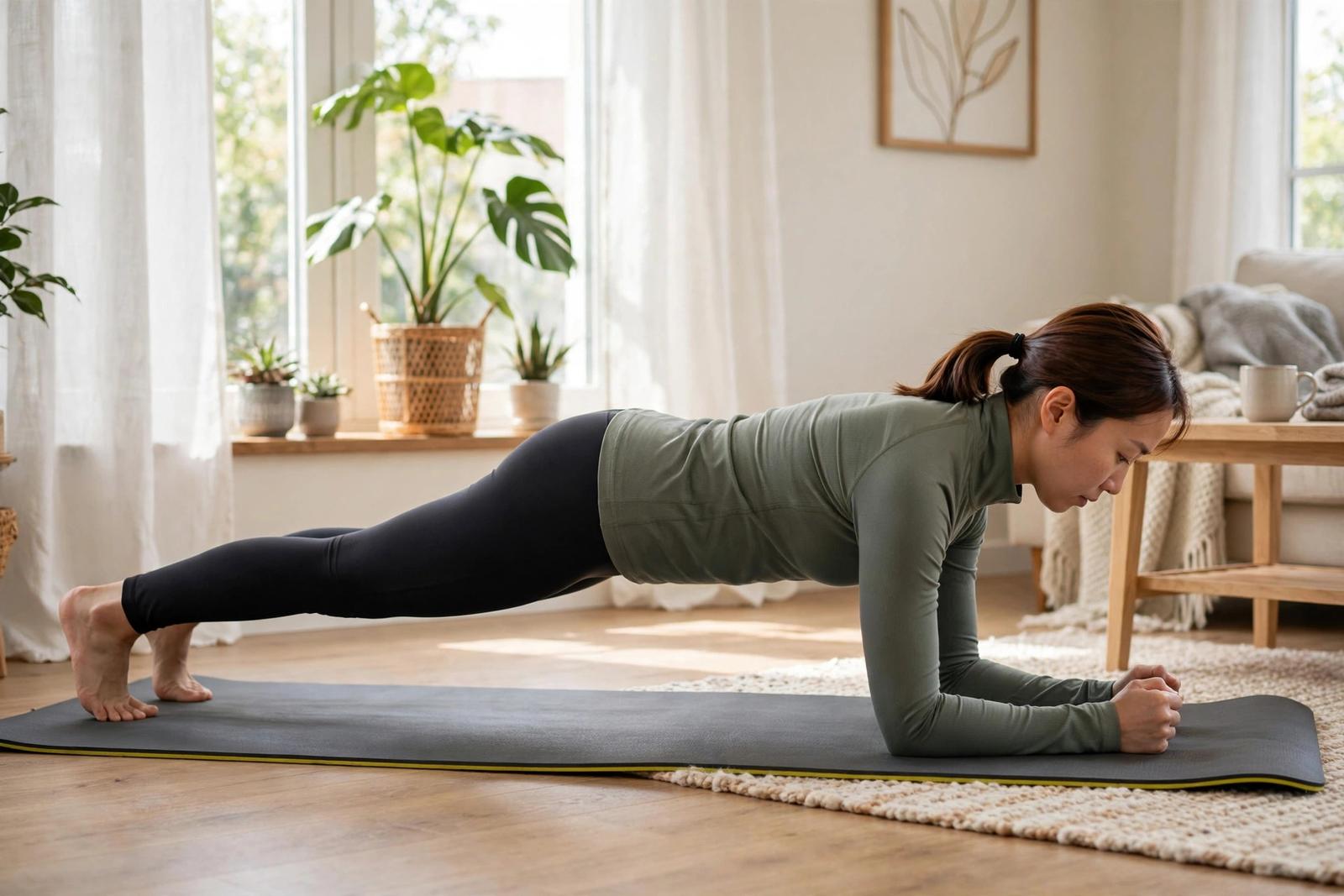
A plank is an isometric core exercise: you hold your body in a straight line — like a plank of wood — supported on your forearms (or hands) and toes, and you don’t move. The muscles work by resisting gravity, not by moving a weight.
That “don’t move” part is the whole point. Most core exercises involve crunching or twisting. The plank trains the opposite skill: keeping your spine stable while everything wants to sag. That stability is what your back needs when you lift, carry, run, or just sit at a desk all day.
Which Muscles Does a Plank Work?
More than people think. The plank is a full-torso exercise:
Primary — the core:
– Rectus abdominis — the “six-pack” muscle, running down the front
– Obliques — the side muscles that resist twisting
– Transversus abdominis — the deep corset muscle that wraps your midsection and stabilizes your spine
Secondary — the support crew:
– Glutes — squeeze them; they’re half the plank
– Hamstrings — keeping the legs rigid
– Lower back — working isometrically to prevent sagging
Here’s the trainer’s honesty: if you only feel it in your lower back, your form is off — your hips are sagging and your back is doing the core’s job. Reset, squeeze the glutes, and tuck the pelvis slightly. The work should live in the midsection.
One more thing about the muscle list: notice what’s not the star here. The rectus abdominis — the six-pack muscle — is only one of three core muscles working, and it’s not even the most important one for real-world strength. The transversus abdominis, the deep corset muscle, is the one that stabilizes your spine when you lift, twist, or carry. You can’t see it in the mirror. It’s the muscle that keeps you out of the physiotherapist’s office. Train for the invisible muscles; the visible ones come along for the ride. That’s the difference between training for the mirror and training for life — and the plank, done right, is firmly in the second camp. Start today: one honest 20-second plank, perfect form, and build from there.
5 Benefits of Planks
1. Convenience (the underrated superpower)
It’s free. It takes two minutes. It needs zero equipment and about six square feet of floor. There is no simpler effective exercise in existence. The best exercise program is the one you actually do — and nothing removes excuses like the plank.
2. Back protection and injury prevention
A strong, stable core is your spine’s bodyguard. The plank trains exactly the bracing pattern you need when you squat, deadlift, or lift anything heavy: spine straight, core locked, no wobble. Daily bracing practice in a plank transfers directly to safer lifting everywhere else.
3. Posture (with a caveat)
Planks strengthen the muscles that hold you upright, which helps posture. The caveat: posture is also a habit. A two-minute plank won’t undo ten hours of desk-slouching by itself — but it builds the muscular endurance that makes good posture possible, and that’s the necessary first step.
4. No-equipment strength
Travel, home workouts, hotel rooms, lunch breaks — the plank goes anywhere. It’s the anchor of every good bodyweight routine for a reason. Pair it with push-ups and squats and you have a complete workout with zero gear.
5. Visible progress (the motivation engine)
Here’s the psychological benefit nobody talks about: plank progress is measurable. Last month you held 20 seconds; today you hold 45. Watching that number climb is deeply encouraging — and encouragement is what keeps people training. The plank gives you a scoreboard for your core.
A word on what the plank doesn’t do, because honesty is the job: it doesn’t burn belly fat (no exercise targets fat loss from one area), it doesn’t replace full-body strength training, and holding a plank for five minutes isn’t five times better than holding it for one. The plank is a superb component — core stability, measurable progress, zero equipment — inside a balanced routine. Which is exactly what it should be.
The 3 Main Types of Plank
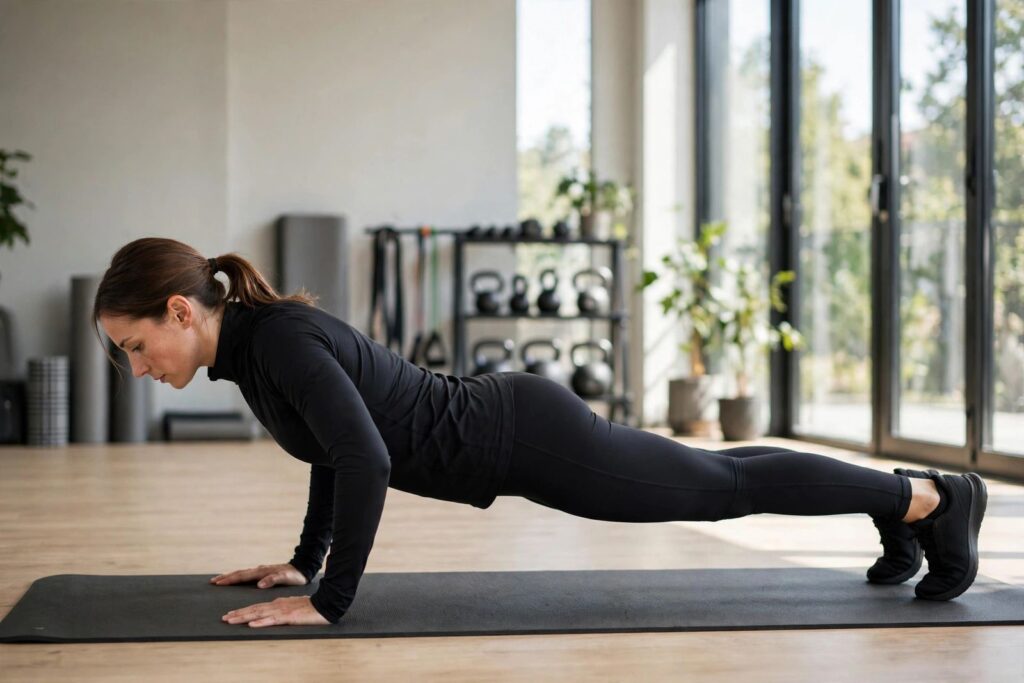
High Plank
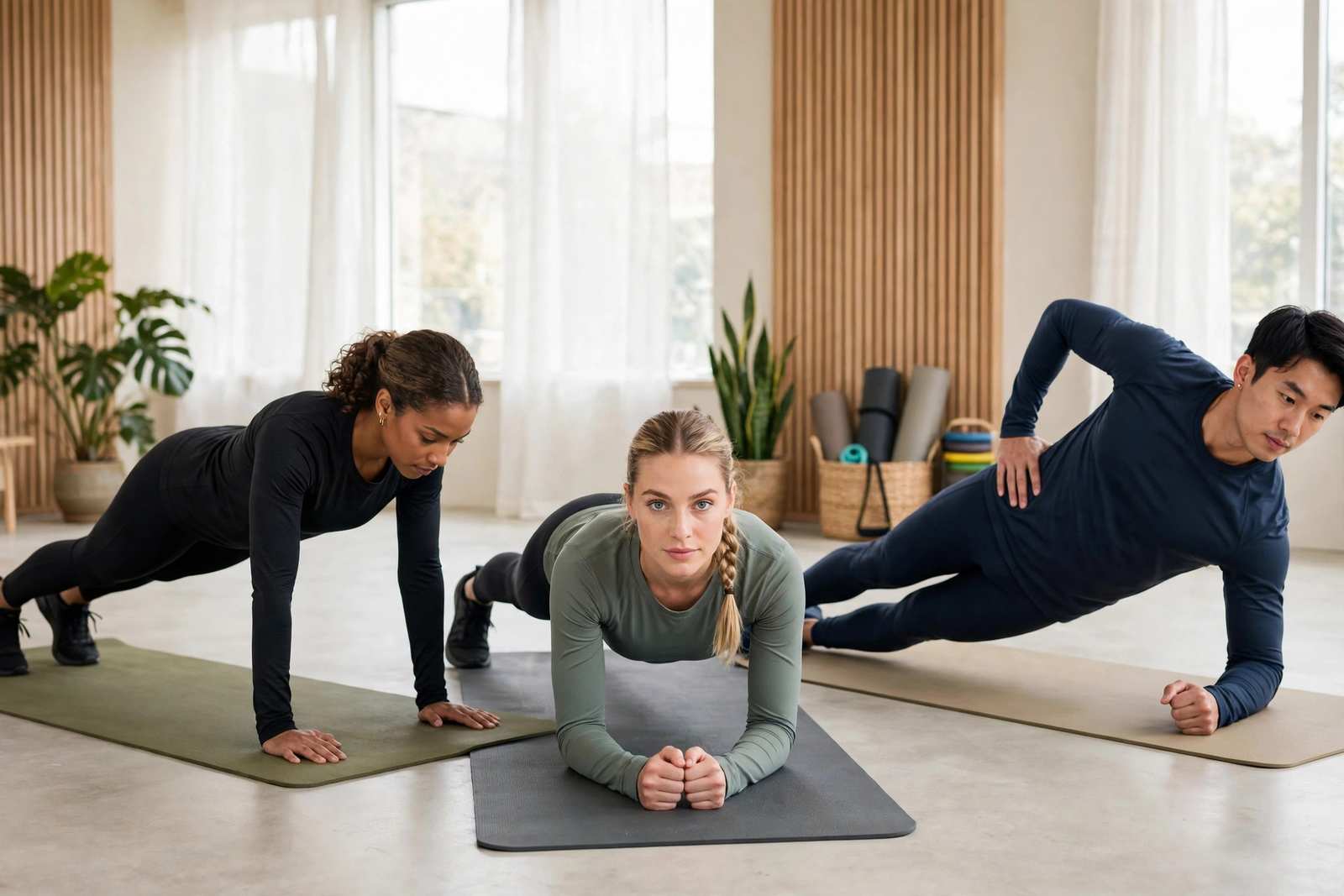
The push-up position, held: hands under shoulders, body straight, toes on the floor. This is the starting point most people know. Harder on the wrists and shoulders than the forearm version, easier on the core — a good entry point.
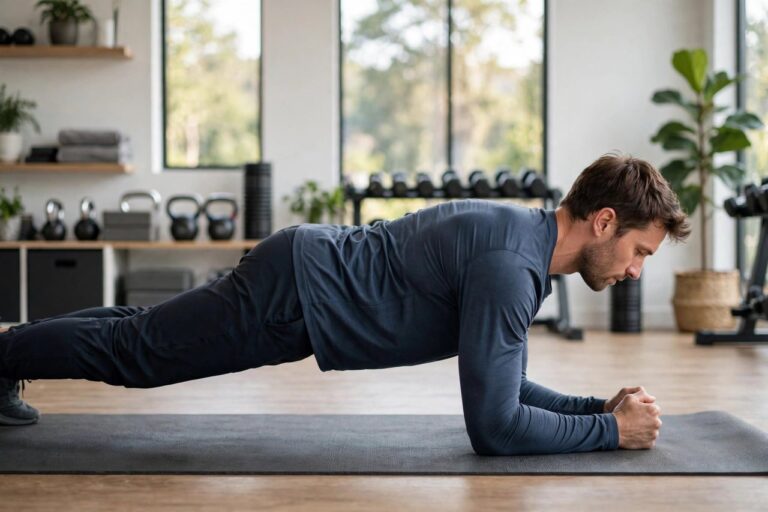
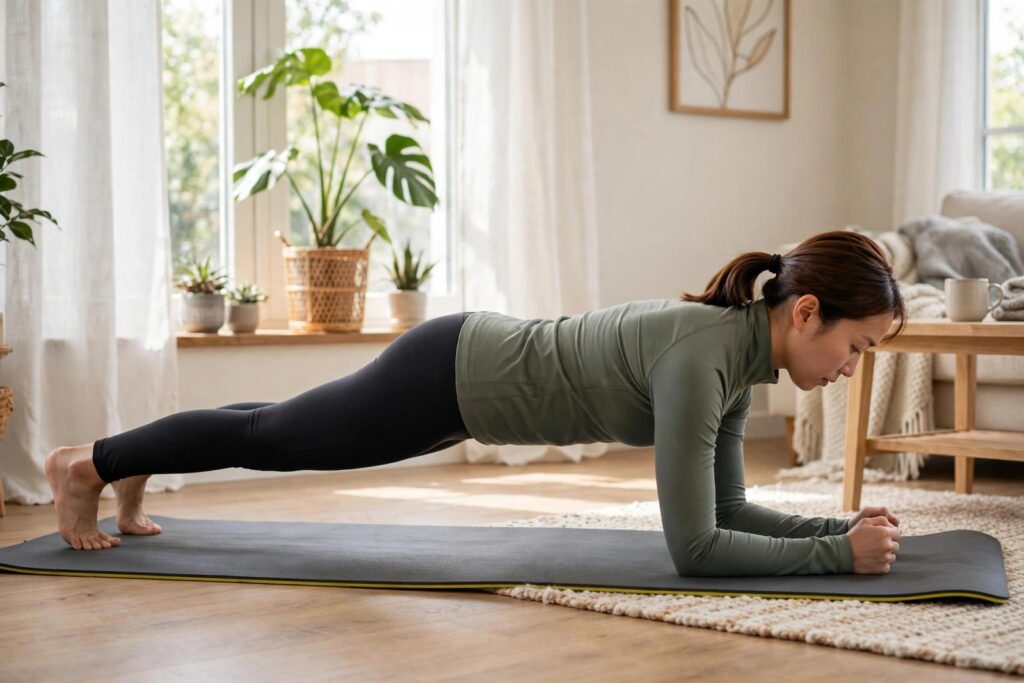
Low Plank (Forearm Plank)
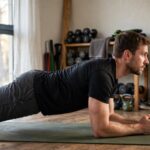
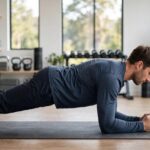
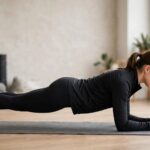
Forearms on the floor, elbows under shoulders, body straight. This is the classic. More core demand than the high plank, less wrist stress. When trainers say “do a plank,” this is usually what they mean.
Side Plank
Lying on your side, supported on one forearm, body in a straight line, feet stacked. This one targets the obliques specifically, plus the lateral stabilizers of the spine. It’s also the best diagnostic: most people discover one side is dramatically weaker than the other — that’s a strength imbalance worth knowing about, because imbalances are where injuries start. Work both sides, and don’t let the strong side do all the talking.
How Long Should You Hold a Plank?
The numbers, from Cleveland Clinic’s guidance:
- Beginners: start with the modified plank (knees on the floor). Work up to 3 sets of 1 minute. When you can do that with good form, graduate to the full low plank.
- Low plank: start with 3 sets of 30 seconds. Add 5–10 seconds per session as it gets comfortable.
- The ceiling: once you can hold a plank for more than 1 minute with perfect form, don’t just keep adding time — progress to a new movement (side planks, plank variations, weighted planks). Endless plank-holding has diminishing returns.
- Frequency: 2–4 times per week is enough. Your core needs recovery like any other muscle.
The honest trainer’s rule: a 30-second plank with perfect form beats a 2-minute plank with sagging hips. Time is the second metric. Form is the first. And when you test yourself, test fresh — not at the end of a workout when everything’s fatigued. Your best plank is the one you do with full focus, and that’s the number worth tracking.
For the full step-by-step form breakdown, the detailed guides live here: how-to-do-a-plank-correctly for the standard form, how-to-do-a-plank-for-beginners for the beginner path. To build the whole midsection around your planks, how-to-build-core-strength is the program-level companion, and best-bodyweight-exercises-at-home puts the plank in a full no-equipment routine.
Frequently Asked Questions
What is a plank exercise?
A plank is an isometric core exercise where you hold your body straight — like a plank of wood — supported on your forearms (or hands) and toes. Your muscles work by resisting gravity and keeping your spine stable.
How long should a beginner hold a plank?
Start with the modified (knees-down) plank and work up to 3 sets of 1 minute. Then move to the full low plank: 3 sets of 30 seconds, adding 5–10 seconds as it gets easier.
Will planks give me a six-pack?
No — visible abs depend far more on diet and body fat than on any exercise. Planks build genuine core strength and stability, which matters more than looks, but they don’t burn belly fat by themselves.
Can I do planks every day?
Two to four times per week is enough. Your core muscles need recovery like any others — daily max-effort planking stalls progress rather than accelerating it.
What is the side plank for?
The side plank targets the obliques and the spine’s lateral stabilizers. It’s also a great diagnostic: most people find one side much weaker, revealing a strength imbalance worth correcting.
What if my lower back hurts during planks?
Your form is off — your hips are sagging and your back is doing the core’s job. Reset: squeeze your glutes, tuck your pelvis slightly, and shorten the hold. Film yourself from the side to check.