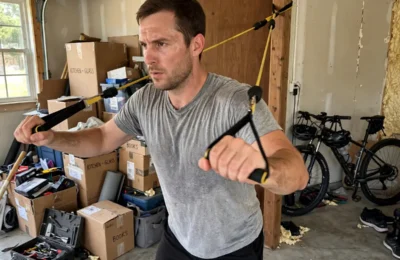

If I had to pick one piece of equipment for the rest of my life, it’d be dumbbells. Not the fancy adjustable ones (though those are great) — just plain dumbbells. They’re the most versatile tool in fitness: they train every muscle, fix imbalances, work in tiny spaces, and a solid pair costs less than two months of most gym memberships.
But here’s what drives me crazy: most “best dumbbell exercises” lists are 47 movements long, including six variations of the same curl. You don’t need 47 exercises. You need about a dozen done well. This is the short list — the movements that actually build a complete physique.
Table of Contents
- Why Dumbbells Beat Most Equipment
- Chest: Dumbbell Bench Press & Flyes
- Back: Rows and Pullovers
- Legs: Goblet Squats, Lunges & RDLs
- Shoulders: Overhead Press & Lateral Raises
- Arms: Curls and Extensions That Work
- Core: Loaded Carries and More
- The Full-Body Kings: Thrusters and Snatches
- How to Program Them
- Frequently Asked Questions
Why Dumbbells Beat Most Equipment
Three reasons dumbbells deserve their reputation:
- Each side works independently. Barbells let your strong side compensate; dumbbells expose and fix imbalances. If your left arm is weaker, you’ll know by rep three.
- Greater range of motion. Dumbbells let joints move naturally through fuller ranges than fixed-path machines or even barbells.
- Infinite scalability. From 2-pound rehab work to 100-pound presses, there’s a dumbbell for every level. They’re perfect for building muscle at home where space is limited.
Chest: Dumbbell Bench Press & Flyes
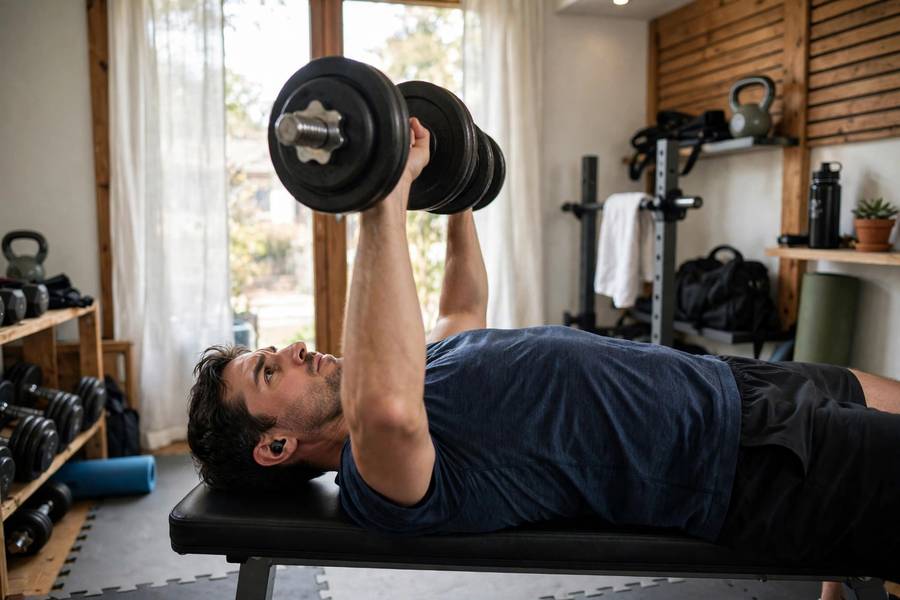
Dumbbell bench press is the king of dumbbell chest work. Lie on a bench (or floor), press the weights from chest to lockout. The independent movement recruits stabilizers that barbell pressing misses, and it’s far friendlier on shoulders.
Form cues: shoulder blades pinched together, slight arch, lower until you feel a stretch (not pain), press up without clanking the weights together at the top.
Dumbbell flyes (flat or incline) target the stretch position. Keep a soft bend in the elbows and think “hugging a tree” — this is a chest exercise, not an arm exercise. Go lighter than your ego wants; flyes punish heavy cheating.
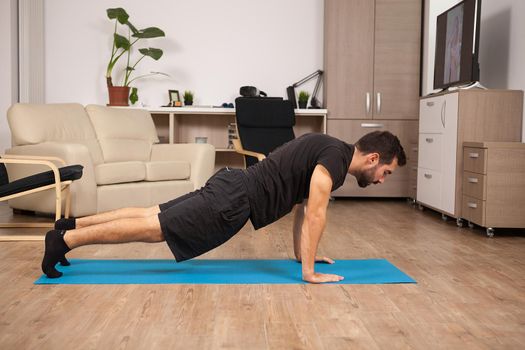
Pair these with push-ups done correctly and your chest is fully covered.
Back: Rows and Pullovers
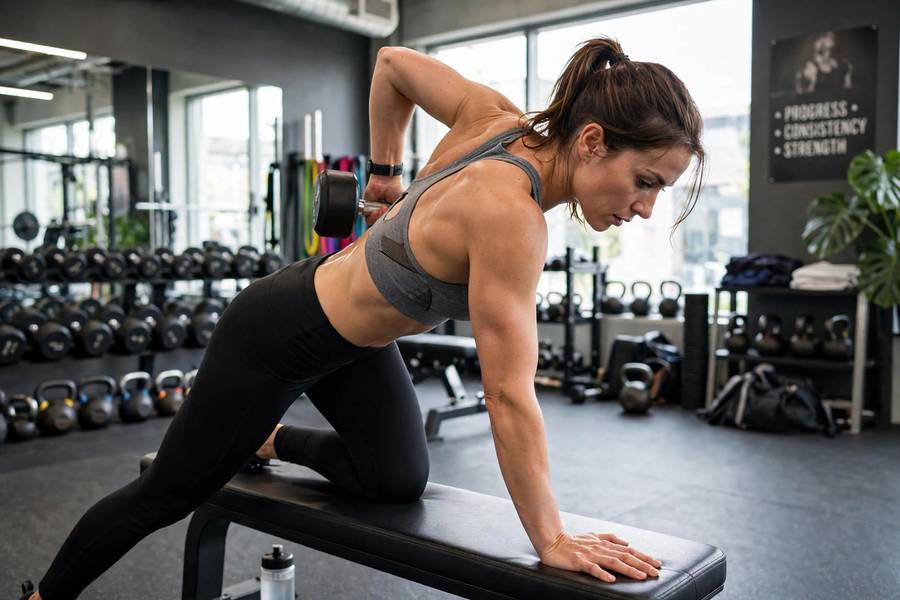
Single-arm dumbbell rows are arguably the single best back exercise with dumbbells. One knee on a bench, back flat, row the weight to your hip (not your chest — that shifts it to the upper back/traps). Squeeze for a full second at the top.
Chest-supported rows (lying face-down on an incline bench) remove momentum entirely — pure back work. If your gym has an adjustable bench, use it.
Dumbbell pullovers (lying on a bench, lowering one dumbbell behind your head) hit the lats through a huge range of motion. Keep the core braced and don’t let your lower back arch excessively.
Do twice as much pulling as you think you need. Most people are push-dominant, and back strength is what keeps shoulders healthy long-term.
Legs: Goblet Squats, Lunges & RDLs
Yes, you can build serious legs with dumbbells. No, you don’t need a squat rack to start.
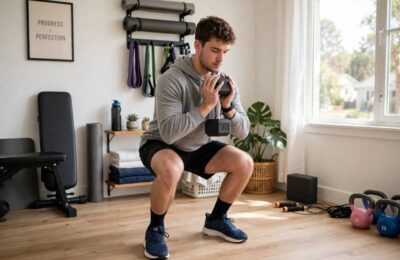
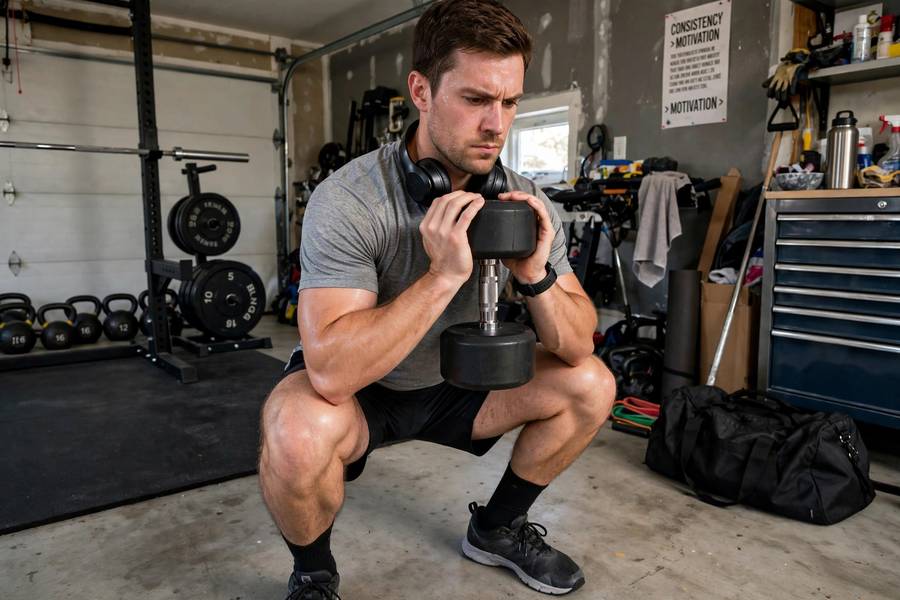
Goblet squats (one dumbbell held at chest) are the best squat variation for most people. The front-loaded position forces upright posture and deep range automatically. It’s nearly impossible to do these with terrible form, which makes them perfect for beginners and great for experienced lifters as accessory work.
Walking lunges and Bulgarian split squats build single-leg strength that transfers to everything athletic. Bulgarian split squats (rear foot elevated) are brutally effective — start light, because they’ll humble you.
Dumbbell Romanian deadlifts hammer hamstrings and glutes. Hinge at the hips, slight knee bend, lower until you feel a deep hamstring stretch, drive hips forward. This hip-hinge pattern protects your back in daily life more than any other movement.
Shoulders: Overhead Press & Lateral Raises
Standing dumbbell overhead press builds the whole shoulder plus core stability (standing forces your trunk to work). Press from shoulder height to lockout without leaning back excessively — if you’re turning it into a standing incline press, the weight’s too heavy.
Lateral raises target the side delts that give shoulders width. The key: light weight, controlled tempo, slight lean forward, and stop at shoulder height. This is a precision movement — swinging 30s with momentum builds ego, not delts.
Rear delt flyes (bent over) complete the picture. Most people neglect rear delts; don’t be most people.
Arms: Curls and Extensions That Work
Arms get enough indirect work from pressing and pulling that they don’t need much — but a little direct work helps.
Standing dumbbell curls with full range: let the arm fully extend at the bottom (that stretch matters), curl without swinging. Alternate or together — both work.
Hammer curls (neutral grip) hit the brachialis and forearms, adding arm thickness.
Overhead dumbbell extensions (one dumbbell held overhead, lowering behind the head) stretch the triceps fully — the long head of the triceps only grows when trained in the stretched position. This is the arm exercise most people skip and shouldn’t.
Two to three sets each, once or twice a week, is plenty. Your arms grow from the big lifts; this is the finishing touch.
Core: Loaded Carries and More
Farmer’s carries (heavy dumbbells, walk) might be the most underrated exercise in existence. Grip, core, traps, posture, conditioning — all in one brutally simple movement. Walk 30–40 meters, rest, repeat.
Dumbbell Russian twists and weighted dead bugs add direct core work. But honestly, heavy goblet squats, RDLs, and carries build more real-world core strength than a hundred crunches.
The Full-Body Kings: Thrusters and Snatches
Dumbbell thrusters (squat into overhead press) combine the two biggest patterns into one metabolic nightmare. Fantastic for conditioning days and full-body sessions.
Single-arm dumbbell snatches (floor to overhead in one motion) build explosive power. Learn the technique light first — this is a skill movement, and sloppy snatches beat up shoulders.
These two are perfect finishers or the backbone of a bodyweight-plus-dumbbell circuit when you’re short on time.
How to Program Them
Pick 4–6 movements covering all patterns (push, pull, squat, hinge, carry), 3–4 sets of 6–12 reps each. Train 3x/week full-body, or split across more days.
Progress by adding reps first, then weight. When you can do all sets at the top of the rep range with good form, go heavier. This simple progression works for years.
Sample Dumbbell-Only Full Body Workout
Here’s a complete session using nothing but dumbbells. Three times a week, 45–60 minutes:
- Goblet squats — 3 × 10
- Dumbbell bench press — 3 × 8–10
- Single-arm dumbbell rows — 3 × 10 per arm
- Romanian deadlifts — 3 × 10
- Standing overhead press — 3 × 8
- Farmer’s carry — 3 × 40 meters
Rest 60–90 seconds between sets. When you complete all reps at the top of the range with good form, increase weight next session. Run this for 8–12 weeks before changing anything — it covers every major muscle group and movement pattern with zero fluff.
Dumbbells vs. Machines: An Honest Comparison
Gym machines have their place, but for most goals, dumbbells win:
Dumbbells develop stabilizers. Every rep requires balance, recruiting small muscles machines ignore. This builds functional strength that transfers to real life.
Machines are safer for absolute beginners and useful for training around injuries. There’s no shame in them — they’re tools, not crutches.
The best approach: build your foundation with dumbbells and barbells, use machines as accessories for targeted work or when fatigued. A workout that’s 80% free weights and 20% machines gets the best of both.
If your gym time is limited, skip the machines entirely. The dumbbell movements in this guide deliver more per minute than any machine circuit.
Frequently Asked Questions
Yes. Dumbbells can train every major muscle group through full ranges of motion. With progressive overload (more weight or reps over time) and enough food, dumbbell-only training builds significant muscle.
Start with a pair you can overhead press for 10 clean reps — often 10–20 lbs for most beginners. Adjustable dumbbells are the best value since one set covers many exercises and progression.
Neither is universally better. Dumbbells win for unilateral work, joint-friendliness, and home training. Barbells win for maximum loading on big lifts. Most good programs use both.
4–6 exercises covering all movement patterns (push, pull, squat, hinge, carry) is the sweet spot. More than that usually means junk volume; fewer means gaps in development.
For most goals, yes — especially with adjustable dumbbells and a bench. You’ll eventually want heavier weights for legs, but a solid dumbbell setup covers 90% of training needs.
3–4 times per week works for most people. Full-body dumbbell sessions 3x/week is ideal for beginners; intermediates can split into upper/lower or push/pull/legs across 4–6 days.