How to Monetize a Blog Without Ads: 8 Smarter Income Streams


Most blogging advice about how to monetize a blog without ads starts with display advertising and ends there — which is a shame, because banner ads are the slowest, lowest-paying way to earn from a blog. I ran display ads for a year and made less than a nice dinner out per month; the month I replaced them with a single digital product, my income multiplied. This guide walks through eight ad-free income streams that real bloggers use, who each one suits, and how to start the one that fits your blog.
First, why skip ads at all? Display ads pay per thousand views, which means you need serious traffic before they matter — and they slow your site, annoy readers, and pay you pennies for your best content. The methods below flip the model: instead of renting your readers’ attention to advertisers, you sell something directly to the audience you have built. You need far less traffic, and you keep control of your reader experience.
How to Monetize a Blog Without Ads: 8 Income Streams
1. Digital products: the highest-margin option
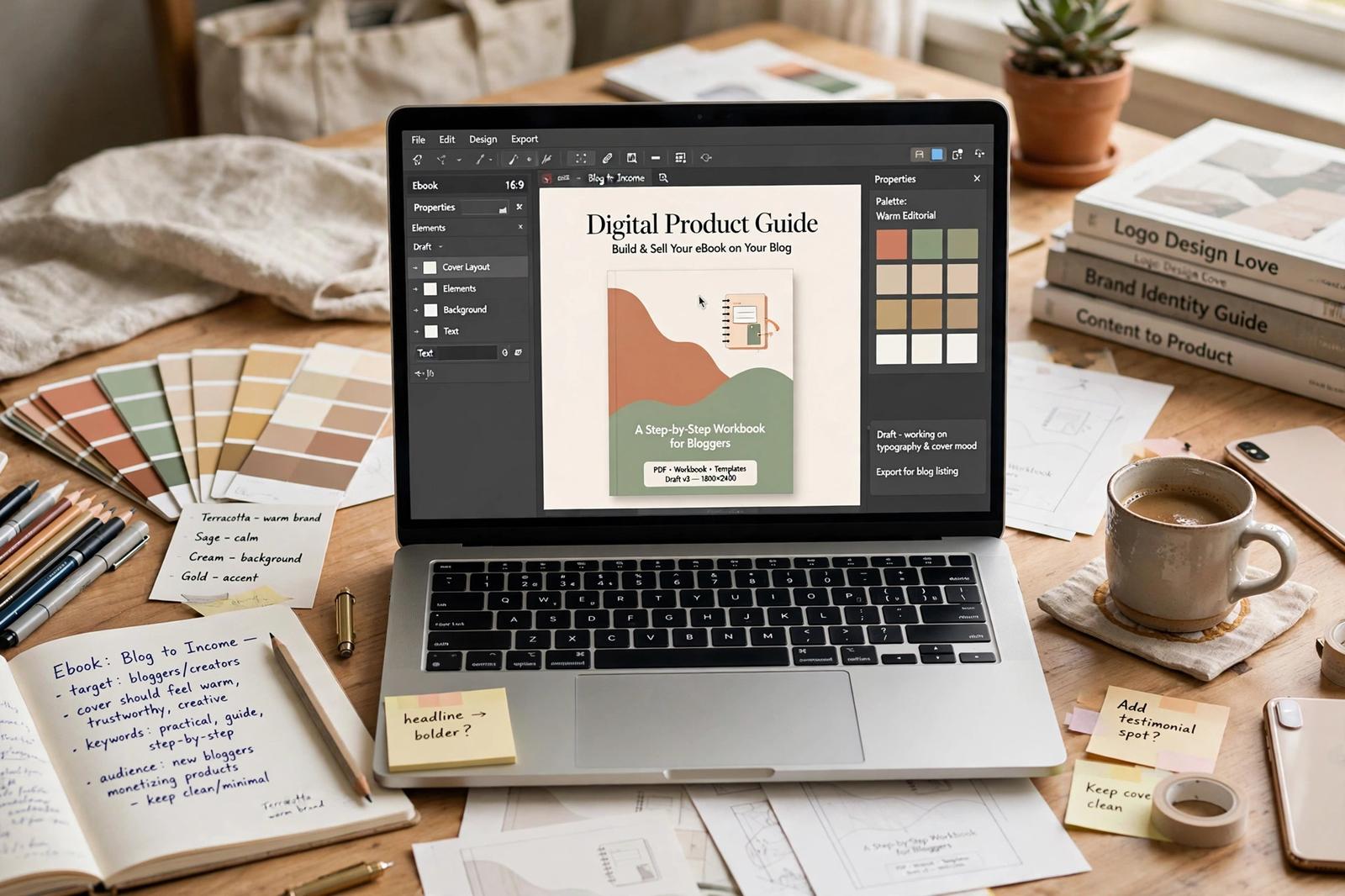
Ebooks, templates, printables, presets, planners, and mini-courses cost almost nothing to deliver and keep nearly all of the sale price. The secret is selling transformation in a box: take the outcome your readers want and package the shortcut. A food blogger might sell a 30-day meal plan; a productivity blogger might sell a Notion template system. Start with one small product priced accessibly, sell it from a simple checkout page, and let your existing posts do the marketing. One good product routinely outperforms a year of ad revenue.
2. Affiliate recommendations you genuinely believe in
Affiliate marketing means recommending products you use and earning a commission when readers buy through your link. Done honestly, it is simply helpful advice with a thank-you attached. The rules that keep it working: only recommend things you have actually used, disclose the relationship clearly, and write the review you would want to read — including the flaws. Readers reward this honesty with trust, and trust converts far better than hype. This pairs naturally with tutorial and review content you are probably already writing.
3. Sponsored content and brand partnerships
Brands pay bloggers to create content featuring their products — and a single sponsored post can pay more than months of display ads. You do not need a massive audience; brands increasingly prefer smaller blogs with engaged, niche readers over huge generic ones. Start by creating a simple media kit (your niche, audience description, traffic, and rates), then pitch brands you already use and love. Always disclose sponsorships and only accept partnerships that fit your readers, because one off-brand deal costs more trust than it pays in cash.
4. Memberships and paid subscriptions
If your readers would miss you, some will pay to support you. Memberships work beautifully for blogs with loyal followings: offer bonus posts, a private community, early access, or monthly Q&As for a small recurring fee. You do not need thousands of members — a few hundred paying readers at a modest monthly price is life-changing income for a solo blogger. The key is making free content so good that paying feels like a thank-you, not a toll booth.
5. Freelance services powered by your blog
Your blog is the world’s best portfolio. Writers get writing clients, designers get design clients, consultants get consulting calls — all from readers who already trust their expertise. Add a simple hire-me page describing what you offer, and mention availability naturally in relevant posts. For many bloggers, services are the first meaningful income, arriving long before traffic is big enough for anything else. If you are starting fresh, our guide on how to start a blog pairs well with thinking about services from day one.

6. Online courses and workshops
Courses are digital products with a premium price tag, because they promise a bigger transformation. If your blog teaches a skill — photography, coding, sourdough, budgeting — a structured course is the natural next step for readers who want the guided path. Start with a live workshop to validate demand before recording anything; teaching it live once shows you exactly what to include and what to cut. Price on the value of the outcome, not the hours of video.
7. Coaching and consulting
Some readers want your brain, not your content. One-on-one coaching or consulting packages let you charge for your time at rates no ad network can touch. This works best in niches where personalized advice matters — business, fitness, career, relationships, creative skills. Start with a handful of beta clients at an introductory rate, gather testimonials, then raise prices as demand grows. Even a few clients a month can surpass full-time ad income.
8. Physical products and merch (done carefully)
From niche merch to curated product lines, physical goods can work — but treat them as an advanced move. Inventory, shipping, and customer service are real work, so start with print-on-demand to test designs without upfront cost. The blogs that succeed here sell products their community genuinely asked for, not generic logo slaps. Listen for the requests in your comments; your readers will tell you what to make.
Which Ad-Free Method Should You Start With?
Match the method to your stage. Under 10,000 monthly visitors, freelance services and affiliate links are your fastest wins — they need trust, not traffic. Between 10,000 and 50,000, add a digital product and start pitching sponsorships. Above that, memberships and courses become serious options. Whatever you choose, start with one method and give it three months of real effort before adding another. Bloggers fail at monetization the same way they fail at content: by trying everything thinly instead of one thing well.
And build your email list from day one — it is the asset that makes every method above work better. Social algorithms change and search rankings fluctuate, but an email list is yours. Our primer on email marketing for small business beginners covers the fundamentals that apply just as well to bloggers.
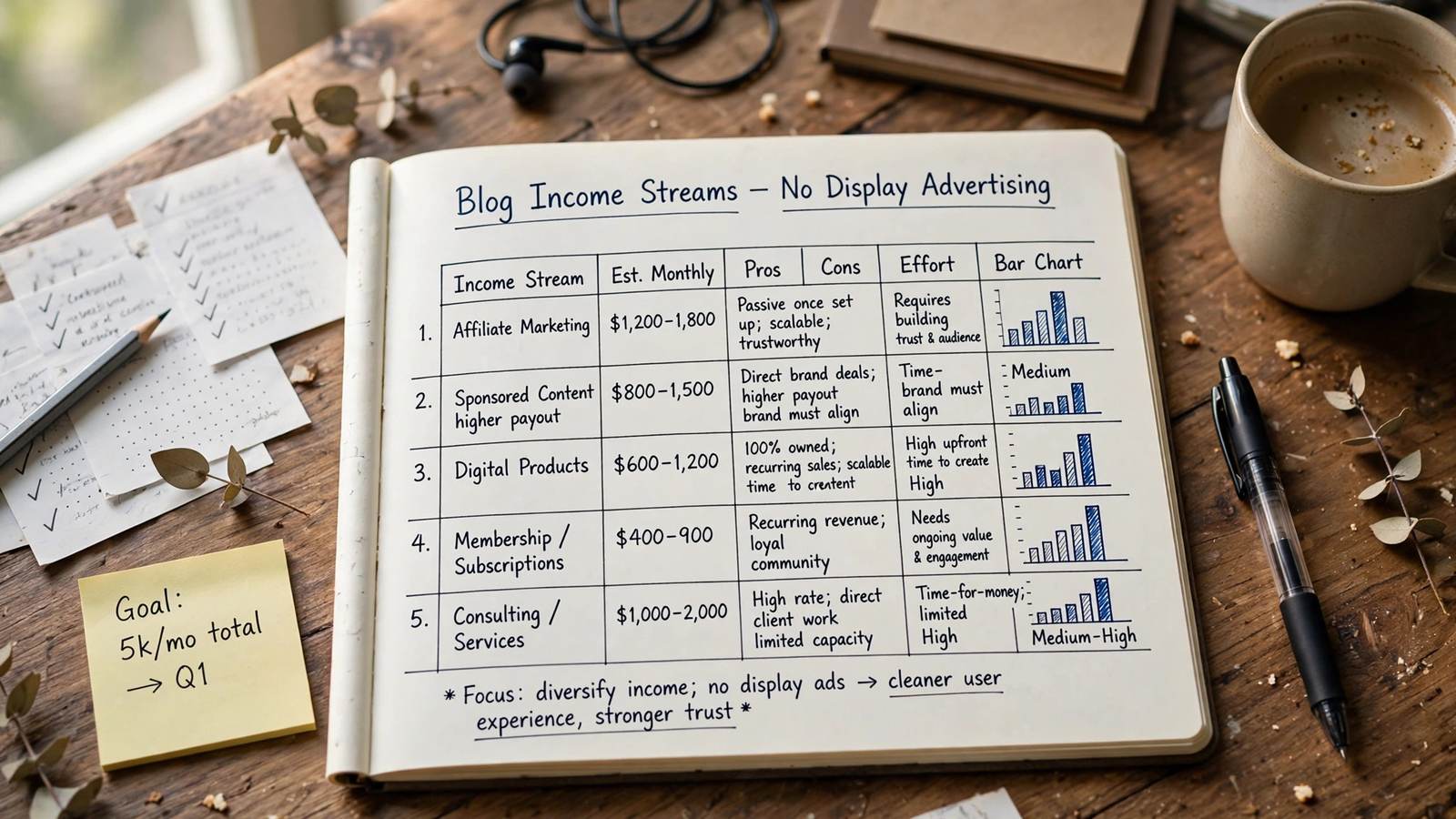
The Math That Makes Ad-Free Monetization Win
Consider the numbers. Display ads might earn a small blog a few dollars per thousand pageviews — so 10,000 monthly views could mean pocket change. Now imagine instead that 1% of those 10,000 visitors buy a $29 template: that is nearly $3,000 from the same traffic. Or five readers a month hire you for a $500 service package: $2,500. Direct monetization needs a fraction of the traffic because you capture far more value per reader. This is why bloggers with modest audiences often out-earn high-traffic sites stuffed with banners.
The same logic applies across content formats. Podcasters figured this out early — our breakdown of how podcasts make money shows the same pattern of sponsorships, products, and services beating pennies-per-listen advertising. The lesson is universal: own the relationship with your audience, and sell them something genuinely useful.
How to Price Your First Digital Product
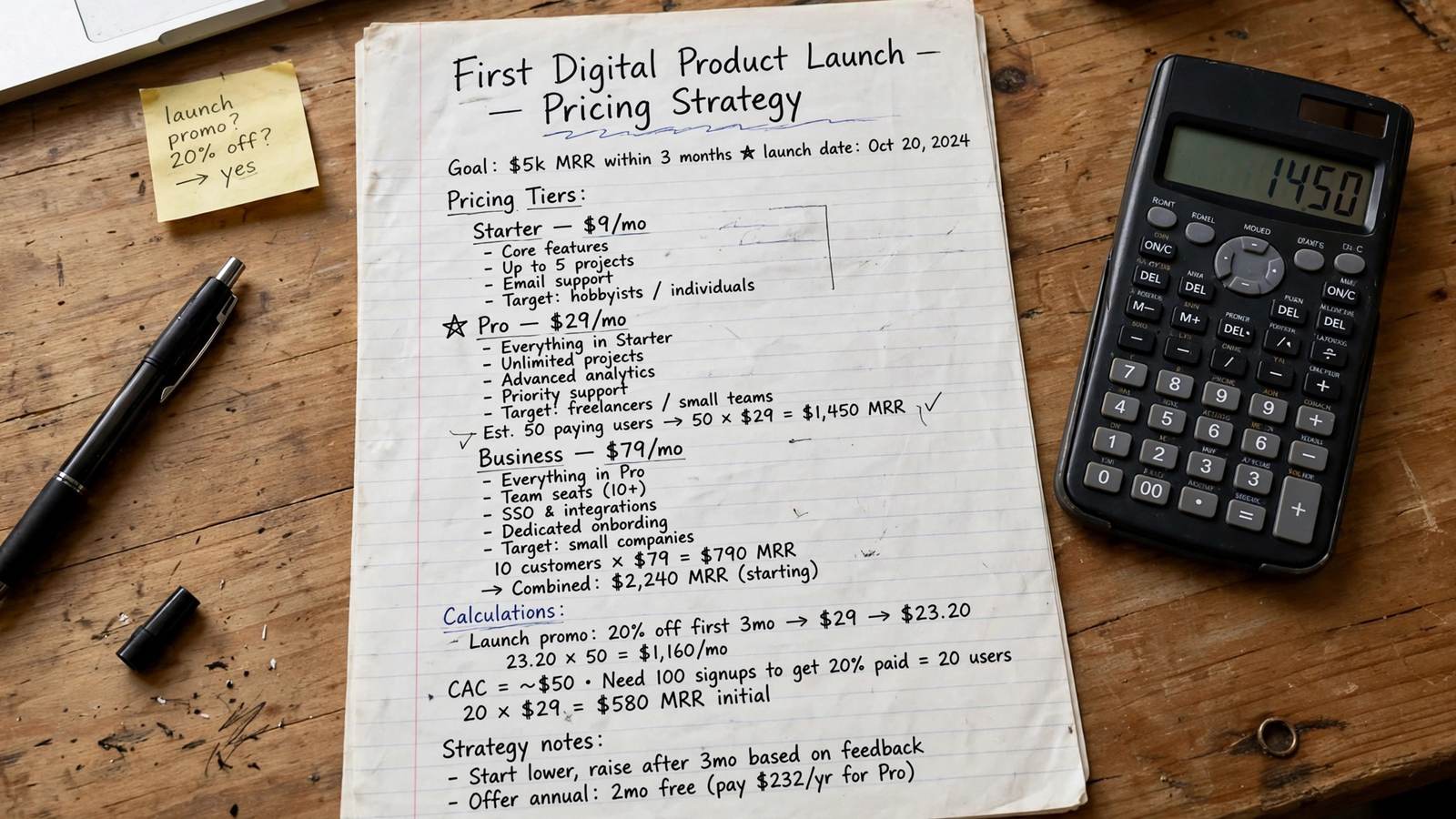
Pricing paralyzes new bloggers more than creating the product does. Here is a simple framework. Price on the value of the outcome, not your effort: a template that saves someone ten hours is worth far more than the afternoon it took you to make it. For a first product, the sweet spot is usually the impulse range — low enough that a trusting reader buys without agonizing, high enough to feel like a real product. You can always raise prices later as testimonials accumulate; starting accessible gets you buyers, and buyers give you the feedback and proof that justify higher prices.
Avoid the two classic errors. Underpricing signals low value and attracts the most demanding customers; overpricing with zero proof asks strangers for trust you have not earned yet. A practical middle path: launch at an introductory price, tell buyers it will rise, and raise it after your first twenty sales. Watch your conversion rate — if almost everyone who sees the offer buys, your price is too low. If nobody buys despite interested traffic, the problem is usually the offer or the sales page, not just the number.
A Realistic 6-Month Ad-Free Monetization Timeline
Month one and two: set up the foundations. Add an email signup to your blog, publish consistently, and add a simple hire-me or services page even if you feel unready — you can refine it as inquiries come. Months three and four: join two or three affiliate programs for products you already use, and weave honest recommendations into relevant posts. Pitch your first small brand for a sponsored collaboration, even a modest one; the experience teaches you the process.
Months five and six: build your first digital product based on your most popular content — your analytics will show you what readers want most. Launch it to your email list first, gather testimonials, then make it a permanent part of your site. By month six, a focused blogger can realistically have three income streams running: services or affiliates bringing steady trickles, and a product with growing sales. None of this requires huge traffic — it requires consistency, an email list, and the willingness to ask for the sale.
Frequently Asked Questions
How much traffic do I need to monetize without ads?
Far less than you think. Services and high-ticket affiliates can work with just a few hundred engaged monthly readers. Digital products typically start converting meaningfully around a few thousand monthly visitors. The common thread is trust and intent, not raw traffic numbers.
Is affiliate marketing considered advertising?
Not in the banner-ad sense most people mean. Affiliate links are recommendations embedded in your content — readers click because they want the product, not because an ad interrupted them. Always disclose affiliate relationships clearly; honesty is both the ethical choice and the better business strategy.
What is the fastest way for a new blog to earn money?
Freelance services, by a wide margin. A single client can pay more than months of ad revenue, and your blog posts serve as proof of expertise. Affiliate income builds more slowly but compounds as your archive grows.
Should I remove display ads if I already have them?
Not necessarily all at once. Many bloggers keep ads while building direct income streams, then drop the ads once products or services surpass them — readers notice the cleaner experience, and the blog often earns more. Test the transition rather than leaping blind.
Do I need an email list to monetize without ads?
It is not strictly required, but it multiplies everything. Email lets you launch products to warm readers, nurture trust over time, and sell without depending on algorithms. Start collecting emails from your first month of blogging; future you will be grateful.
Monetizing a blog without ads is not the harder path — it is the smarter one. Pick one income stream that fits your audience, build it properly, and let your traffic work ten times harder than banner ads ever could. Your readers get a cleaner blog, and you get a business instead of pocket change.