Best Party Games for Adults: Curated by Party Type


Every great party has a moment where the energy dips — dinner is done, the playlist is looping, and people start checking their phones. That is the moment games were invented for. But picking the right ones matters more than most hosts realize: the wrong game empties the room, the right one makes the night. I have hosted and attended enough gatherings to know that the best party games for adults are not about the fanciest box or the trendiest app — they are about matching the game to the party. This guide curates games by party type, with player counts and time needed, so you can pick winners before anyone arrives.
No product-list fluff here — just the games that actually work, organized by the kind of gathering you are hosting, with honest notes on group size, duration, and what can go wrong.
Icebreakers: For Groups That Do Not Know Each Other Yet
Mixing friend groups, work parties, plus-ones who know nobody — these parties need games that create conversation without putting anyone on the spot. Two Truths and a Lie remains undefeated for a reason: it takes zero props, works for any group size, and people genuinely enjoy the reveals. Give everyone two minutes to prepare, go around the circle, and let the group vote on the lie. Twenty minutes, endless conversation starters.
The Name Game (also called the sticky-note game) works brilliantly for mingling: everyone gets a famous person’s name stuck on their back or forehead and must ask yes-or-no questions to figure out who they are. It forces interaction with strangers in the least awkward way possible — everyone has an excuse to approach everyone. Best for 8-20 players, about 30 minutes.
For smaller groups, Would You Rather with a good question set beats small talk every time. The trick is curation: skip the tired questions and find a list with genuinely debatable scenarios. It reveals personality fast, which is the whole point of an icebreaker. Keep it to 15-20 minutes — icebreakers should warm the room, not become the evening.
Team Games: For Competitive Groups That Want a Battle
Some crowds want to compete, and team games channel that energy perfectly. Charades is the classic for a reason, but the adult upgrade is playing in teams with a points system and a timer — suddenly it is a sport. Split into two teams, use a phone timer, and let the shouting begin. Works for 6-20 players, 30-45 minutes, zero props needed.
Pictionary follows the same formula with drawing instead of acting — better for groups with shy performers. A whiteboard or big paper pad and markers are the only props. For word lovers, the head-to-head word games (think Taboo-style clue-giving without the forbidden words) create the best stories: watching a smart friend fail to describe “umbrella” without saying “rain” is peak party entertainment.
Trivia night is the heavyweight option: divide into teams of 3-5, prepare five rounds of ten questions across categories, and appoint a quizmaster. It takes the most prep (or a good trivia app), runs 60-90 minutes, and suits groups that like thinking as much as laughing. Mix easy and hard questions — a trivia night where one team dominates is a trivia night nobody enjoys.
No-Prop Games: Zero Setup, Maximum Fun
The best party game is sometimes the one you can start in ten seconds. Mafia (or Werewolf) needs nothing but people: secret roles, accusations, dramatic eliminations. It is the ultimate no-prop game for 7-15 players, runs 30-60 minutes, and generates the night’s best stories. One warning: it needs a confident moderator for the first round — volunteer yourself and learn the rules beforehand.
Twenty Questions in the party variant — one person thinks of something, the group asks yes-or-no questions — sounds simple and plays brilliantly with a competitive group keeping score. Categories (the game where you name items in a category until someone hesitates) works as a drinking-adjacent or sober game for any size group and takes zero explanation.
Story builder games, where each person adds a sentence to a growing tale, are perfect for creative crowds and hilarious with the right group. Set one rule — every addition must be one sentence — and watch a mundane prompt become chaos in ten minutes. These games share a virtue: when the energy dips later in the night, you can launch one instantly without hunting for pieces.
Classic Board and Card Games Worth the Table Space
Some parties are built around the table, and for those, a curated shelf beats a random pile. The party-game hall of fame for adults: the drawing-and-guessing games, the social-deduction games, and the quick-playing card games that take five minutes to teach. The teach time is the metric that matters — a brilliant game that takes 30 minutes to explain will never hit the table at a party.
House rules for board game parties: pick games that play in under an hour, cap the rules explanation at five minutes (if it takes longer, save it for game night, not party night), and have a second game ready for when the first ends. Nothing kills momentum like 20 minutes of “what should we play next?” while half the group drifts to their phones.
Card games deserve special mention for their portability and scalability — a deck of cards supports dozens of party games for any group size, and dedicated party card decks (the prompt-and-answer style) are practically designed for adult gatherings. Keep two or three options on hand; variety lets you match the game’s energy to the room’s mood.
Outdoor and Active Games: For Backyards and Big Spaces
Outdoor parties unlock a different category: cornhole, giant Jenga, bocce, ladder toss, and the whole family of lawn games. These share a perfect party profile — easy to learn in seconds, playable while holding a drink and a conversation, and naturally tournament-friendly. Set up two or three stations and let people rotate; the casual structure suits mingling better than one big organized game.
For larger groups, relay-style team competitions (silly challenges, not athletic ones — think “balance the egg” rather than sprints) get everyone involved including the non-sporty. Scavenger hunts, with photo challenges instead of collected items, work brilliantly for 10-30 players and double as entertainment and icebreaker. The golden rule of outdoor games: have a rain plan. The games that need a backup are the ones you will need the backup for.
Best Party Games for Adults: Matching the Game to the Party
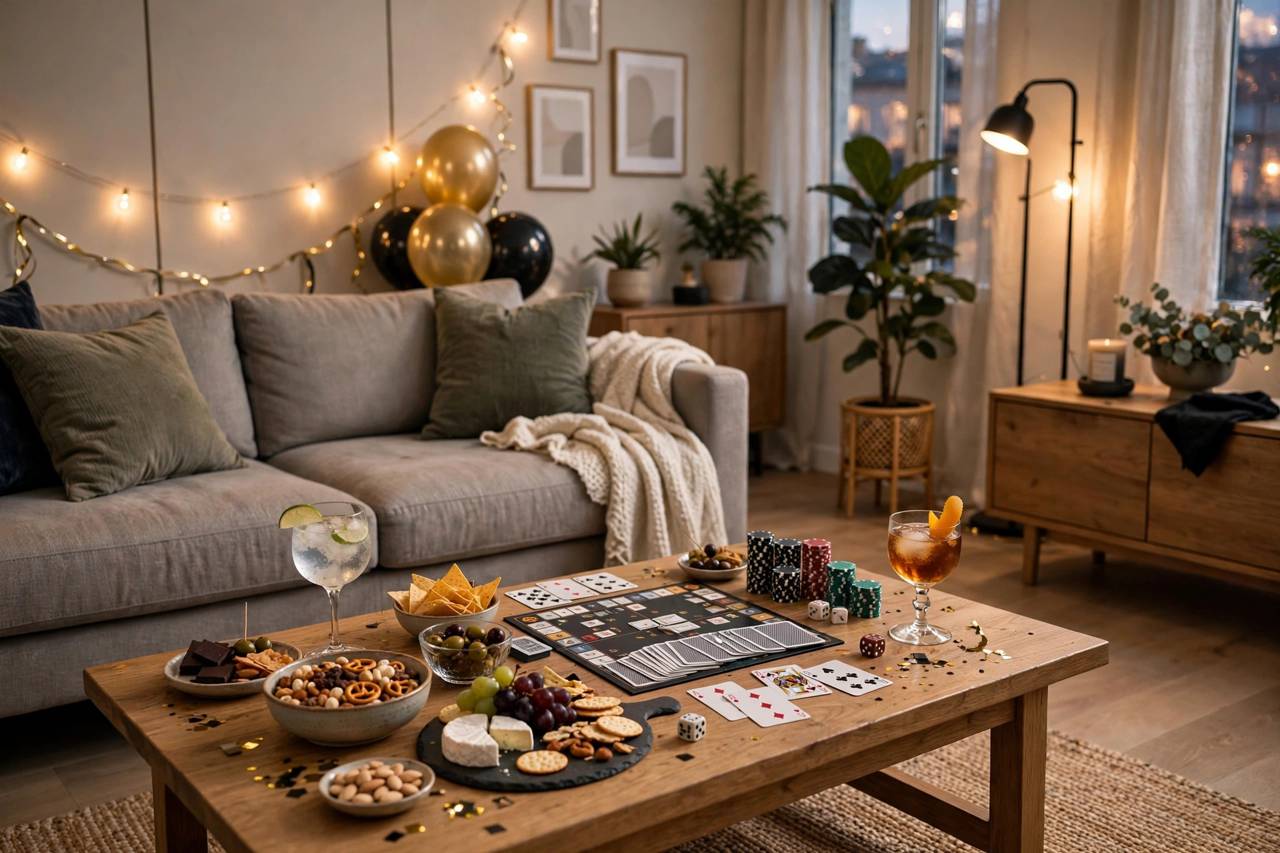
Here is the decision framework. Small dinner party (4-8, everyone knows each other)? One good board or card game after dinner, 45-60 minutes. Mixed crowd that needs mingling? Icebreakers first, then a no-prop game once people relax. Big casual gathering (15+)? Multiple lawn or station games running simultaneously — never one game that benches half the guests.
Work party? Keep it team-based and inclusive — trivia or Pictionary-style games where nobody is singled out. Avoid anything requiring personal revelation or physical dares; the HR incident is not worth the laugh. Birthday or celebration with a guest of honor? Games that celebrate them — trivia about their life, roast-style compliments — make the night personal.
And read the room on competition intensity. Some groups thrive on cutthroat play; others need cooperative or low-stakes games to have fun. When in doubt, start gentle — you can always escalate to the competitive stuff, but you cannot un-traumatize the guest who got aggressively targeted in round one.
Logistics: The Details That Make Game Night Work
Timing: introduce the first game 45-60 minutes after the party starts — after arrivals, drinks, and initial mingling, before the energy dip. One game per 60-90 minutes is plenty; back-to-back games exhaust people. End games while they are still fun — quitting at the peak leaves everyone wanting more, which is exactly how you want a party to feel.
Prizes: small, silly prizes dramatically increase engagement. A five-dollar trophy, a ridiculous certificate, the “championship” title for the night — the prize’s value does not matter; the stakes do. Teams and prizes together transform polite participation into genuine investment.
The graceful exit: not everyone loves games, and that is fine. Always make participation genuinely optional, have a non-game zone (the patio, the snack table) where opt-outs can socialize comfortably, and never, ever pressure the reluctant guest. The best party games for adults are the ones everyone chose to play.
If the occasion is a pre-wedding celebration, our bachelorette party ideas roundup pairs perfectly with these games for a full night plan.
Frequently Asked Questions (FAQ)
How many games should I plan for a party?
Plan two or three but expect to play one or two. One game per 60-90 minutes is the right pace, and having a backup ready beats scrambling when the first game ends early. Over-scheduling games makes the party feel regimented instead of fun.
What are good party games for people who do not know each other?
Start with icebreakers that create conversation without spotlight pressure: Two Truths and a Lie, the sticky-note name game, or curated Would You Rather. Team games come second, once people are comfortable — teams give shy guests a group to belong to.
How do I handle guests who do not want to play?
Make participation truly optional and provide a comfortable alternative space — good snacks and seating away from the game area. Never pressure or single out non-players. Many reluctant guests join in once they see others having fun; forced participation just creates resentment.
What is the best party game for a large group?
For 15+ guests, run multiple simultaneous options rather than one big game: lawn game stations, or split into teams for trivia or Pictionary-style play. Mafia/Werewolf handles up to 15 well. The key principle: nobody should be sitting out waiting for a turn.
How long should a party game last?
Thirty to 60 minutes is the sweet spot for most party games. Shorter games (15-20 minutes) work as icebreakers or energy resets; longer than 90 minutes and attention fades unless the group is deeply invested. Always end while it is still fun.
What if my guests have very different tastes in games?
Offer variety and let people self-select: run a competitive option (trivia teams) alongside a casual one (lawn games or a puzzle table) so strategists and socializers both find their place. Rotate who picks the next game, keep everything genuinely optional, and you will find the group naturally sorts itself into the fun it wants.
The Bottom Line
The best party games for adults are not the most elaborate — they are the best matched. Icebreakers for new groups, team battles for competitors, no-prop games for zero setup, and the right logistics underneath it all: good timing, silly prizes, and a graceful opt-out. Pick the game for the party you are actually hosting, launch it before the energy dips, and the night takes care of itself.