How to Find Your Gate at the Airport: A First-Timer’s Walkthrough

Your first time in a big airport can feel like being dropped into a small city where everyone else knows the rules. Signs point in five directions, the departure board is a wall of codes, and your boarding pass has numbers that do not obviously mean anything. Learning how to find your gate at the airport is really about learning to read three things: your boarding pass, the departure boards, and the terminal itself. Once you can read those, any airport in the world works the same way.
I still remember my first solo international connection, sprinting through an airport I had never seen because I did not understand that my gate number was on the boarding pass the whole time. Nobody teaches you this stuff. So here is the complete first-timer walkthrough, from the moment you enter the terminal to the moment you sit down at your gate.
Step 1: Decode Your Boarding Pass
Your boarding pass is your map. The pieces that matter for finding your gate are the flight number, the gate number, the boarding time, and the seat assignment. The gate is usually printed prominently, something like “B14” or “Gate 42.” The letter tells you the terminal or concourse, and the number tells you the specific gate within it.
Two times matter and they are different. The departure time is when the plane leaves. The boarding time, usually thirty to forty-five minutes before departure for domestic flights and up to an hour for international, is when you need to be at the gate. Airlines close boarding ten to fifteen minutes before departure, so “on time” at an airport means at the gate before boarding ends, not before the plane leaves. Screenshot your boarding pass as well as keeping it in your airline app, because airport wifi is unreliable and a dead phone at the worst moment is a classic rookie disaster.
Step 2: Read the Departure Boards
Departure boards are the airport’s source of truth. Your gate can change, and when it does, the board updates before your app does. Find the big screens near the entrance and look up your flight by flight number, not destination, because multiple flights can go to the same city. The board shows your flight number, destination, scheduled time, gate, and status: on time, boarding, delayed, or last call.
Check the board again after security and once more when you reach your gate area. Gates change more often than people expect, sometimes twice in an hour during disruptions. I make it a habit to glance at the nearest board every time I pass one. It takes five seconds and it has saved me from sitting at the wrong gate more than once. If the status says “boarding” and you are not at your gate, move now. Boarding means the process has started, and it ends sooner than you think.
Step 3: Navigate the Terminal
Airports are designed around a simple logic: check-in and security are centralized, and then the terminal splits into concourses or piers where the gates live. After security, follow the signs for your gate’s letter or number range. Signs are color-coded and consistent within each airport: follow your gate letter and you will get there.
Know the three things that slow you down. First, terminal changes: at large airports, your connecting flight may depart from a different terminal, which can mean a train ride or a bus transfer. Budget extra time. Second, passport control on international connections: some airports make transit passengers clear immigration, which adds unpredictable queues. Third, distance: in the biggest airports, the walk from security to the far gates can be twenty minutes or more. There are moving walkways and sometimes trains, but a far gate is a far gate.
If you are lost, ask. Airport information desks exist for exactly this, and staff at any gate can point you in the right direction. There is no prize for figuring it out alone, and asking early beats sprinting late.
How to Find Your Gate at the Airport During a Connection
Connections add one wrinkle: you skip check-in and usually skip security, but you still need to find your next gate in an unfamiliar terminal. When you land, do not follow the crowd to baggage claim or the exit. Follow the signs for “Transfers,” “Connections,” or your onward flight’s gate area. These signs are designed for exactly your situation.
Check the departure board in the arrivals area before you start walking, because your gate may have changed while you were in the air. Then walk with purpose. On a tight connection, skip the shops and the food court. You can eat at the gate. On a comfortable connection, you have time to explore, but set an alarm for forty-five minutes before boarding and head to the gate when it goes off. Comfortable connections become tight ones through nothing but distraction.
If your layover is long enough that you want real comfort while you wait, airport lounges near your gate area offer food, wifi, and quiet seating. Just make sure the lounge is in the same terminal as your departure gate, or you will trade comfort for a stressful sprint later.
Timing: When to Be Where
Here is the timing framework that works everywhere. Arrive at the airport two hours before a domestic flight and three hours before an international one. That sounds conservative until you hit a long security line or a terminal change. Clear security with at least an hour to spare before boarding. Reach your gate area thirty minutes before boarding starts, which means roughly an hour before departure.
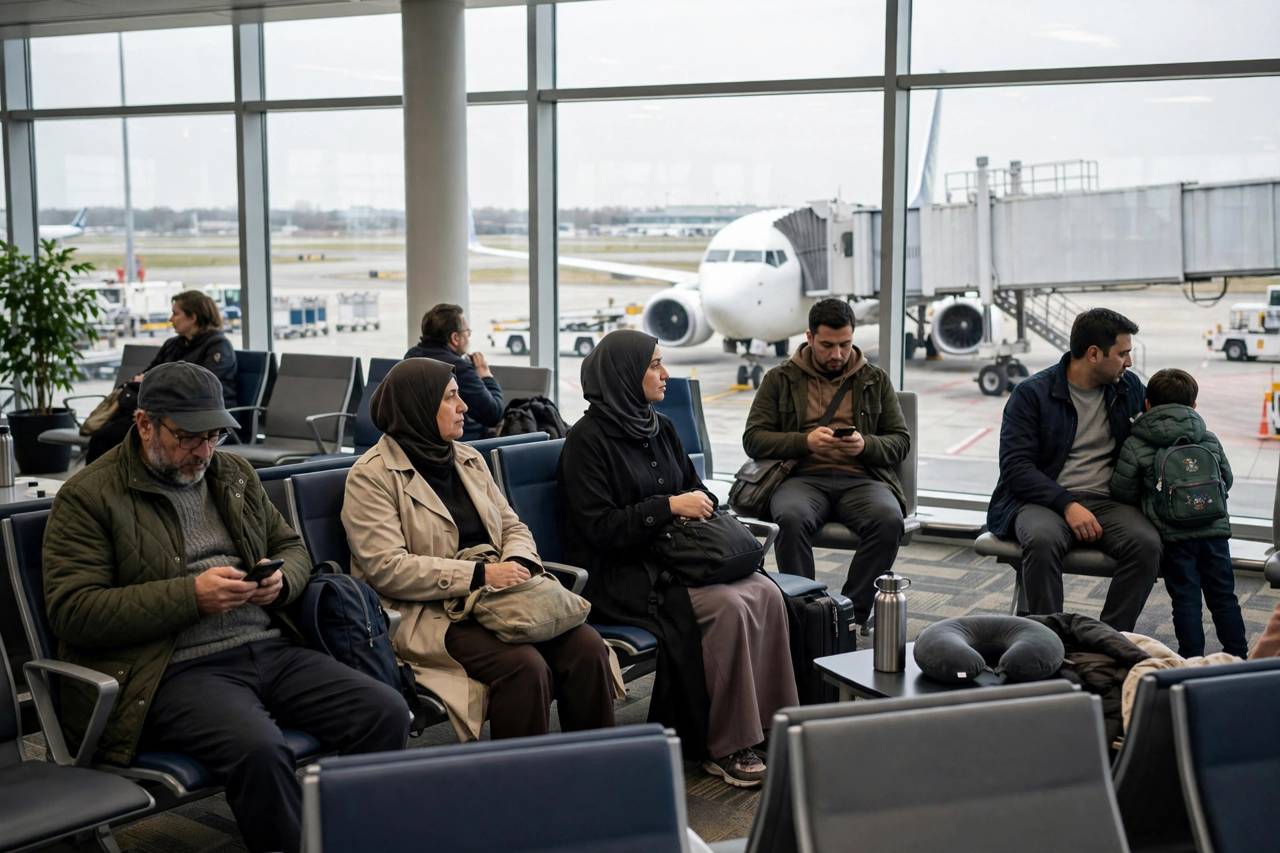
Once you are at the gate, stay in the area. Wandering off to explore is how people miss flights. If you want food, bring it back to the gate. Listen for announcements, because gate changes and boarding calls happen over the PA system, and keep one earbud out. Boarding usually starts with passengers who need assistance, then premium cabins and status holders, then the rest by group number. Your group is on your boarding pass. When your group is called, go.
Good timing starts before you leave home. Booking flights at the right time often lets you choose itineraries with comfortable connection windows instead of stressful sprints, and finding cheap flights does not have to mean accepting a forty-minute connection in an unfamiliar mega-hub.
Tight Connections and Traveling With Kids
Two situations make gate-finding harder: tight connections and traveling with children. Both are manageable with the right approach.
For tight connections, preparation starts before you land. While still on the plane, check your airline’s app for your connecting gate; it often updates before the cabin crew announces it. Sit as close to the front as you can for the first flight, because deplaning order matters when minutes count. Know whether your connection requires terminal changes, security re-screening, or passport control, because each adds time that the connection window may not include.
When you land on a tight connection, move with purpose and skip everything optional. Do not stop for food, shopping, or the bathroom unless it is urgent. Follow the transfer signs, not the exit signs. If you are genuinely at risk of missing the flight, tell the cabin crew before landing; they can sometimes arrange for you to deplane first or have ground staff meet you. And if the worst happens and you miss it, go directly to your airline’s transfer desk. On a single ticket, they will rebook you, and staying calm and polite gets you better options than panic does.
Traveling with kids changes the gate-finding equation. Everything takes longer: bathroom stops, snack stops, the slow walk of small legs. Build in extra time at every stage, and do not plan tight connections with children if you can avoid it. Use the time productively: let kids burn energy in play areas if the airport has them, because a tired child boards better than a restless one.
Keep the essentials accessible in your personal item: snacks, water, entertainment, and a change of clothes for little ones. Board when your group is called, not before; waiting in the gate area is more comfortable than waiting in the jet bridge. And remember that most airports and airlines are set up for families. Ask staff for help without hesitation. Getting your family to the gate calmly is a team effort, and the airport staff are on your team.
Frequently Asked Questions (FAQ)
What if my gate is not on my boarding pass?
Gates are sometimes assigned close to departure. If your boarding pass shows no gate, check the departure boards in the terminal, which update as gates are assigned. Your airline’s app usually updates too, but the boards are the most reliable source.
How do I know if my gate changed?
Watch the departure boards and listen for announcements. Gate changes are announced over the PA system and appear on the boards. Your airline app may send a notification, but do not rely on it alone.
Can I go to a different terminal after security?
Usually not without going back through security. Terminals are separate secure areas. If your gate is in another terminal, follow the airside transfer signs or shuttle trains rather than exiting to the public area.
What does “last call” mean on the departure board?
Last call means boarding is nearly finished and the gate is about to close. If you see last call for your flight and you are not at the gate, go immediately. The next status update is usually “gate closed.”
How early should I be at my gate?
Aim to be in your gate area thirty minutes before boarding begins. For most flights that means about an hour before the scheduled departure time. Set an alarm if you wander off to eat or shop.
The Bottom Line
Knowing how to find your gate at the airport comes down to three habits: read your boarding pass for the gate and boarding time, check the departure boards for changes, and follow the terminal signs for your gate’s letter or number. Do those three things, build in buffer time, and the biggest airport in the world is just a building with good signage. Make gate-finding automatic with a simple pre-flight routine: screenshot your boarding pass, check the departure board when you enter the terminal, check it again after security, and set a phone alarm for forty-five minutes before boarding. Four small habits, and you will never sprint through a terminal wondering where your gate went. The airport is designed to guide you; you just have to read the signs it gives you.