How to Stretch After a Workout: The Cool-Down Routine That Works

Learning how to stretch after a workout is one of those skills most people either skip entirely or get half-right. I have been coaching for over a decade, and I can tell you from experience: the people who stretch properly after training walk around less stiff, recover faster between sessions, and almost always have fewer of those mysterious aches that show up on Monday mornings. The problem is that most of what passes for post-workout stretching is rushed, random, and gone in ninety seconds. This guide gives you a real method: how long to hold each stretch, what order to do them in, and how to match your cool-down to the workout you just finished.
Before we get into the routine itself, one point matters more than anything else: stretching after a workout is about calming your body down, not improving flexibility. You can work on flexibility separately. Right now the job is to bring your heart rate down gently, return your muscles to their resting length, and give your nervous system the signal that the hard part is over. Everything below follows from that idea.
Why You Should Stretch After a Workout
During training, your muscles spend most of their time contracting — getting shorter and tighter. When you finish a session and walk straight to the car, those muscles cool down in a shortened state. The American College of Sports Medicine (ACSM) includes flexibility exercise as a core part of its activity guidelines and recommends static stretching after exercise as part of a proper cool-down. The practical benefits I see with my clients:
- Less next-day stiffness: a gentle cool-down keeps blood moving through worked muscles, which most people feel as reduced soreness the next morning.
- Your range of motion stays honest: muscles that always cool down tight gradually lose usable range. Regular post-workout stretching preserves it.
- It ends the session properly: five to ten minutes of quiet stretching is a psychological full stop. Your body shifts out of fight-or-flight mode.
- You actually do it: stretching after a workout works because it is attached to something you already do. Separate stretching sessions are great in theory; most people skip them.
One honest note: stretching after a workout does not magically erase delayed onset muscle soreness. Nothing does. It helps you recover comfortably; it does not make you invincible.
The Three Rules of Post-Workout Stretching
Get these three right and the rest is details.
1. Static only — save the bouncing for the warm-up
After a workout, your muscles are warm, fatigued, and slightly damaged. That is the perfect time for slow static holds and the worst time for ballistic bouncing. Move into each stretch slowly, hold it, and breathe.
2. Hold each stretch 30 to 60 seconds
Ten seconds is not a stretch, it is a greeting. The tissue needs time to relax into the position. I tell clients to aim for thirty seconds minimum per side, sixty for anything that feels especially tight. Longer than two minutes on one spot is not useful — move on.
3. Mild tension, never pain
You should feel a clear pulling sensation — about a six out of ten. Sharp pain means you have gone too far. Back off immediately. Stretching through pain after a workout is how strains happen.
The Order That Works Best
Stretch the muscles you just trained first, while they are warmest, then cover everything else. This is the order I program for my clients:
- Breathe for one minute. Walk slowly, take slow breaths through your nose. Let your heart rate come down before you get on the floor.
- Main muscles of the session. Trained legs today? Start with quads, hamstrings, glutes. Upper body day? Chest, shoulders, lats.
- The supporting cast. Hip flexors, calves, neck — the areas that tighten from everything you do, trained or not.
- One full-body reset. Finish with something like child’s pose or a standing side bend to signal you are done.
How to Stretch After a Workout: Upper-Body Session Routine
After a pressing or pulling day, run through this sequence — about six minutes:
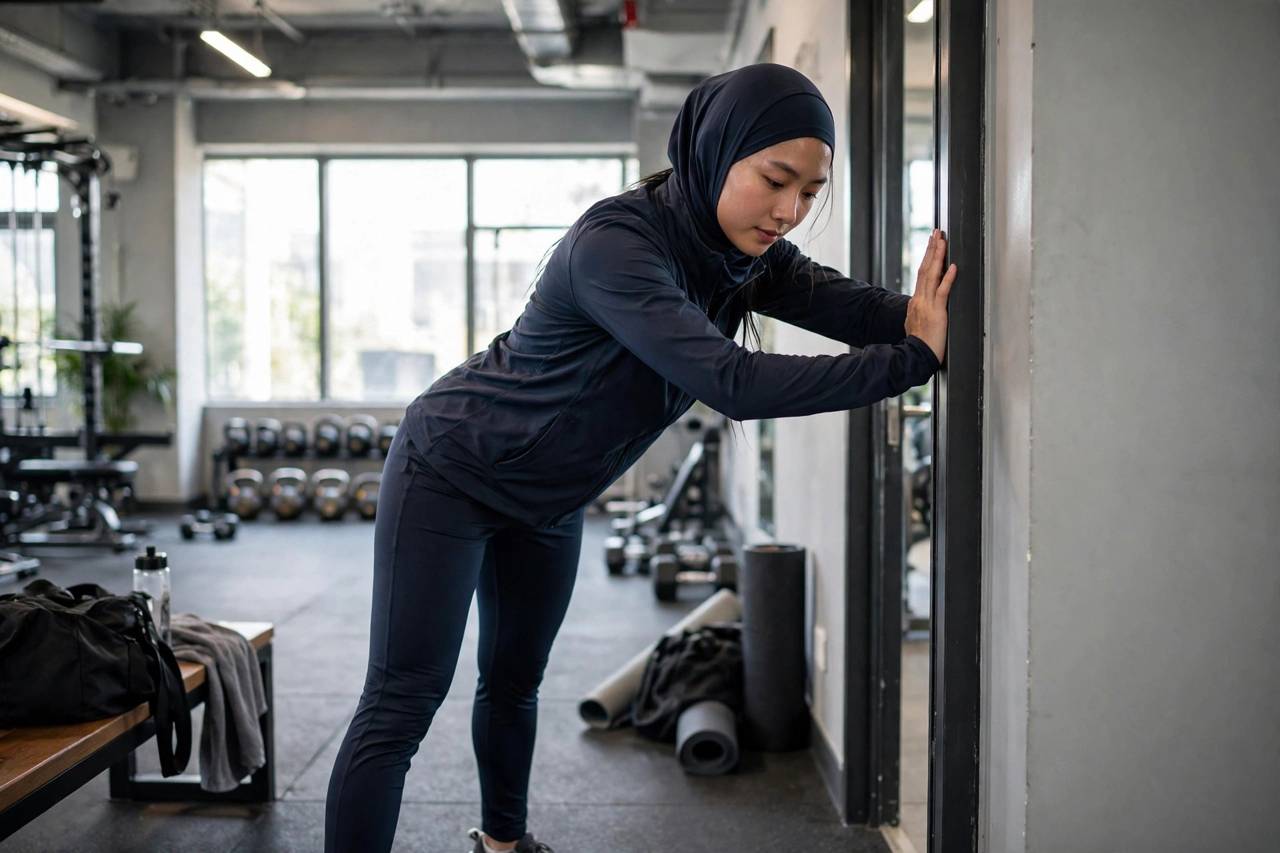
- Chest doorway stretch: forearm against a doorframe, step through gently until you feel the chest open. Thirty seconds each side. This is the stretch desk workers need most.
- Cross-body shoulder stretch: pull one arm across your chest with the other hand, keeping the shoulder down. Thirty seconds each side.
- Overhead triceps stretch: one hand behind your head, other hand gently pressing the elbow. Thirty seconds each side.
- Lat side bend: reach one arm overhead and lean to the opposite side. This opens the lats and obliques after pull-ups and rows. Thirty seconds each side.
- Cat-cow on the floor: ten slow cycles to mobilize the whole spine after loading it.
How to Stretch After a Workout: Lower-Body Session Routine
After squats, lunges, leg press, or a run, use this order:
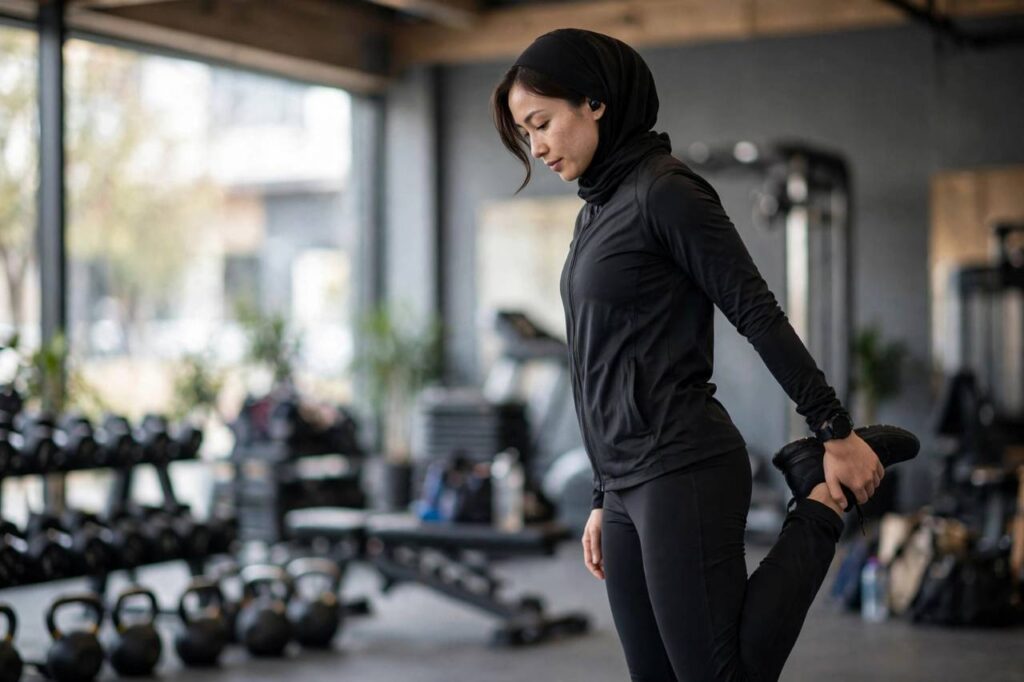
- Standing quad stretch: hold a wall for balance, pull one foot toward your glute. Keep your knees together and your torso upright. Forty-five seconds each side.
- Standing hamstring stretch: heel on a low bench, hinge forward at the hips with a flat back until you feel the back of the thigh. Forty-five seconds each side.
- Glute figure-four: lie on your back, cross one ankle over the opposite knee, pull the bottom thigh toward you. Forty-five seconds each side.
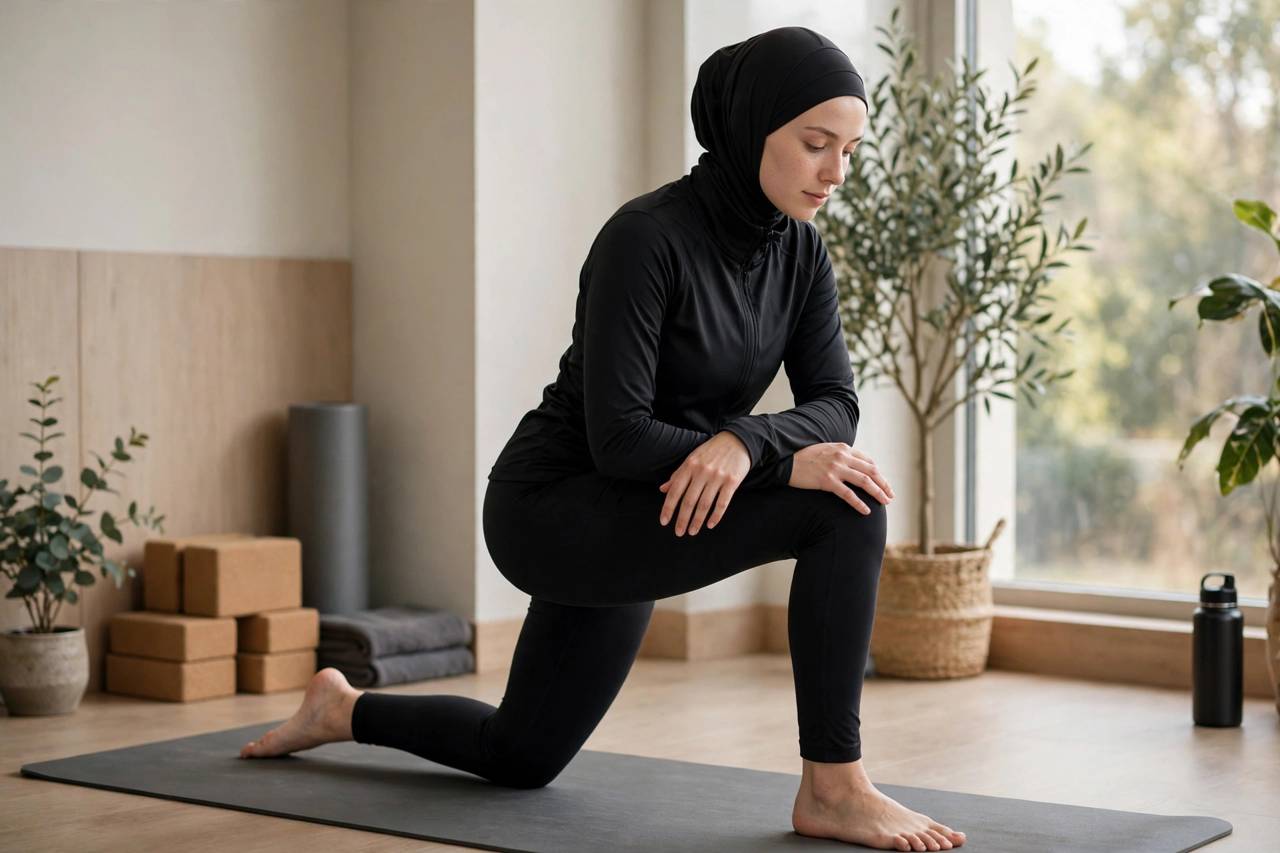
- Half-kneeling hip flexor stretch: one knee down, tuck your pelvis under and shift forward. Sitting all day makes these brutally tight — they deserve a full minute per side.
- Calf stretch against the wall: half against a wall, back leg straight, heel pressed down. Forty-five seconds each side.
Static vs. Dynamic: The 30-Second Refresher
People mix these up constantly, so here is the simple version. Dynamic stretching means moving through ranges of motion — leg swings, walking lunges, arm circles. Static stretching means holding a position still. Dynamic belongs in the warm-up, when your goal is to wake muscles up. Static belongs after the workout, when your goal is to calm them down. Doing long static holds before heavy lifting can temporarily reduce power output, which is why the order matters. After your session, though, your muscles are warm, pliable, and ready for exactly the slow holds described above. If you only remember one sentence from this section: move before, hold after.
How to Stretch After a Workout: Match It to Your Training
The generic routine above covers most sessions, but a few training types deserve special attention:
- After running: prioritize calves, hip flexors, quads, and the IT band area (a side-lying leg stretch or foam rolling — foam rolling pairs beautifully with stretching for runners). Runners live in hip flexor tightness; do not skip the half-kneeling stretch.
- After cycling: same lower-body emphasis as running, plus extra time on the hip flexors and lower back. Cyclists spend the whole ride folded forward, so finish with cat-cow and a standing back extension to unfold.
- After heavy lifting: spend more time on the muscles you loaded heaviest, and hold each stretch a full sixty seconds. Loaded muscles stay contracted longer and need more coaxing to release.
- After yoga or mobility work: a lighter cool-down is fine — your session was already mobility-focused. Five minutes of gentle holds is plenty.
- After swimming: shoulders and lats take the load. Add a cross-body shoulder stretch and a doorway chest opener even though your legs feel fresh.
How Long Should the Whole Cool-Down Take?
Be honest about your schedule and pick a tier:
- The minimum (3 minutes): stretch only the primary muscles you trained, thirty seconds each. Better than nothing, and enough to keep stiffness manageable.
- The standard (8–10 minutes): the full routines above. This is what I program for most clients, and it is the sweet spot of benefit per minute.
- The deluxe (15 minutes): add foam rolling before stretching and an extra round on your tightest areas. Save this for leg day or the day after a race.
The best cool-down is the one you will actually do after every session. Start with the minimum, make it automatic, then expand when the habit is solid.
Mistakes That Ruin Your Stretching
- Bouncing into stretches. This triggers the stretch reflex — your muscle tightens to protect itself. Slow and steady wins.
- Holding your breath. Breathing deeply into each stretch helps the muscle release. Exhale as you ease deeper.
- Stretching before you are warmed up. Post-workout you are warm — but if your workout was light, take a two-minute walk first.
- Only stretching what feels good. The tight, uncomfortable spots are the ones that need attention. Do not skip the hip flexors.
- Rushing through in two minutes. Budget five to fifteen minutes. If you cannot spare that, even three focused minutes on your main muscles beats nothing.
Should You Stretch on Rest Days Too?
Post-workout stretching covers your training days. On rest days, a separate short mobility session — ten minutes of gentle full-body stretches while you watch TV — keeps things from tightening back up. Think of it as maintenance rather than training. The people I coach who do this consistently report the same thing: they stop waking up stiff. It is a small habit with an outsized payoff, and unlike a workout, it requires zero motivation once it becomes part of an evening routine.
If you want a broader cool-down framework beyond stretching — including walking down your heart rate and what to eat next — see my guide on how to cool down after exercise. And recovery does not end at the gym door: what to eat after a workout covers the nutrition side of bouncing back faster.
Frequently Asked Questions (FAQ)
How long should I hold each stretch after a workout?
Thirty to sixty seconds per stretch, per side. Under thirty seconds the tissue barely responds; beyond two minutes you get diminishing returns. Spend more time on the muscles you trained hardest.
Should I stretch if my muscles are already sore?
Yes, but gently. Mild static stretching on sore muscles is fine and often relieves stiffness. Avoid aggressive deep stretching on very sore muscles — soreness means micro-damage, and yanking on it does not speed repair.
Is it okay to stretch after every workout?
Absolutely. Post-workout stretching is meant to be a daily habit, not a special event. Five minutes after every session beats one long flexibility session on Sunday.
Should I stretch before or after a workout?
Both, but differently: dynamic movement (leg swings, arm circles) before, static holds after. Long static stretches before heavy lifting can temporarily reduce power output, so keep them for the end.
Can stretching after a workout cause injury?
Only if you stretch aggressively into pain or bounce. Done slowly and within a comfortable range, post-workout static stretching is one of the safest things you can do in a gym.
Should I stretch both sides equally?
Mostly yes, but give extra time to the tighter side. Everyone has asymmetries — a tighter right hip flexor, a stiffer left shoulder. Spend sixty seconds on the tight side and thirty on the loose side until they even out.