How to Do Calf Raises Properly: Full Range-of-Motion Guide

Calf raises look like the simplest exercise on earth — stand up, go up on your toes, come down, repeat. And yet most people do them in a way that builds almost nothing: bouncing reps, half range of motion, no pause, done in 30 seconds while scrolling a phone. If you want to know how to do calf raises properly, the answer is less about the movement and more about how deliberately you perform it.
I’m Jake, and I’ve watched hundreds of clients treat calves as an afterthought. Here’s the thing: the calves are stubborn, they carry you all day, and they respond to exactly the kind of slow, full-range, high-volume work that most people skip. Let’s fix your calf raises for good.
How to Do Calf Raises Properly: The Step-by-Step
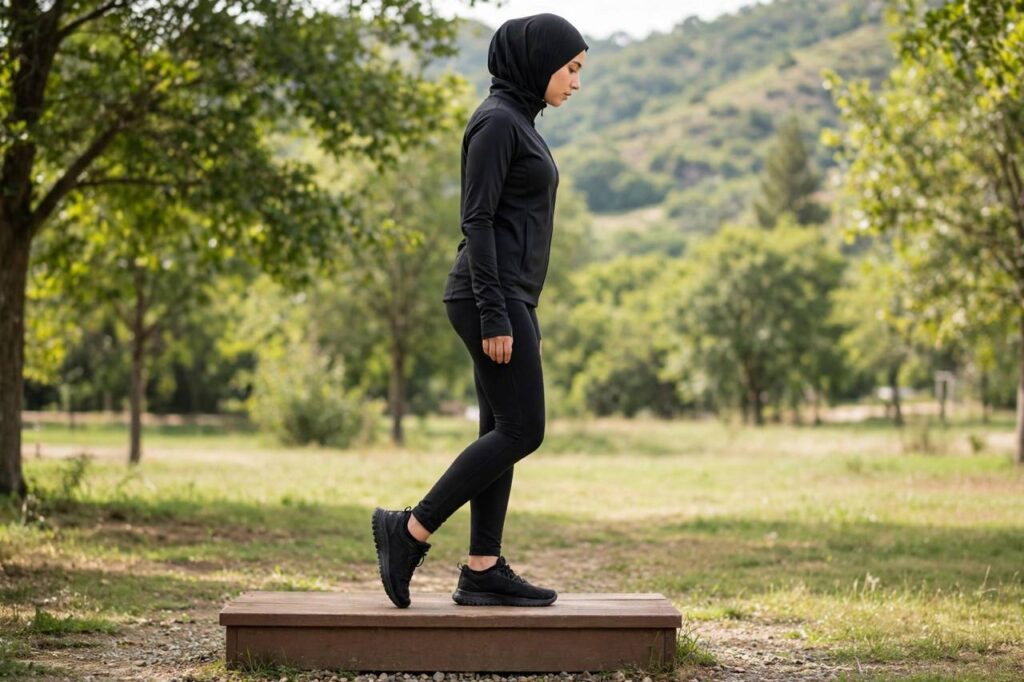
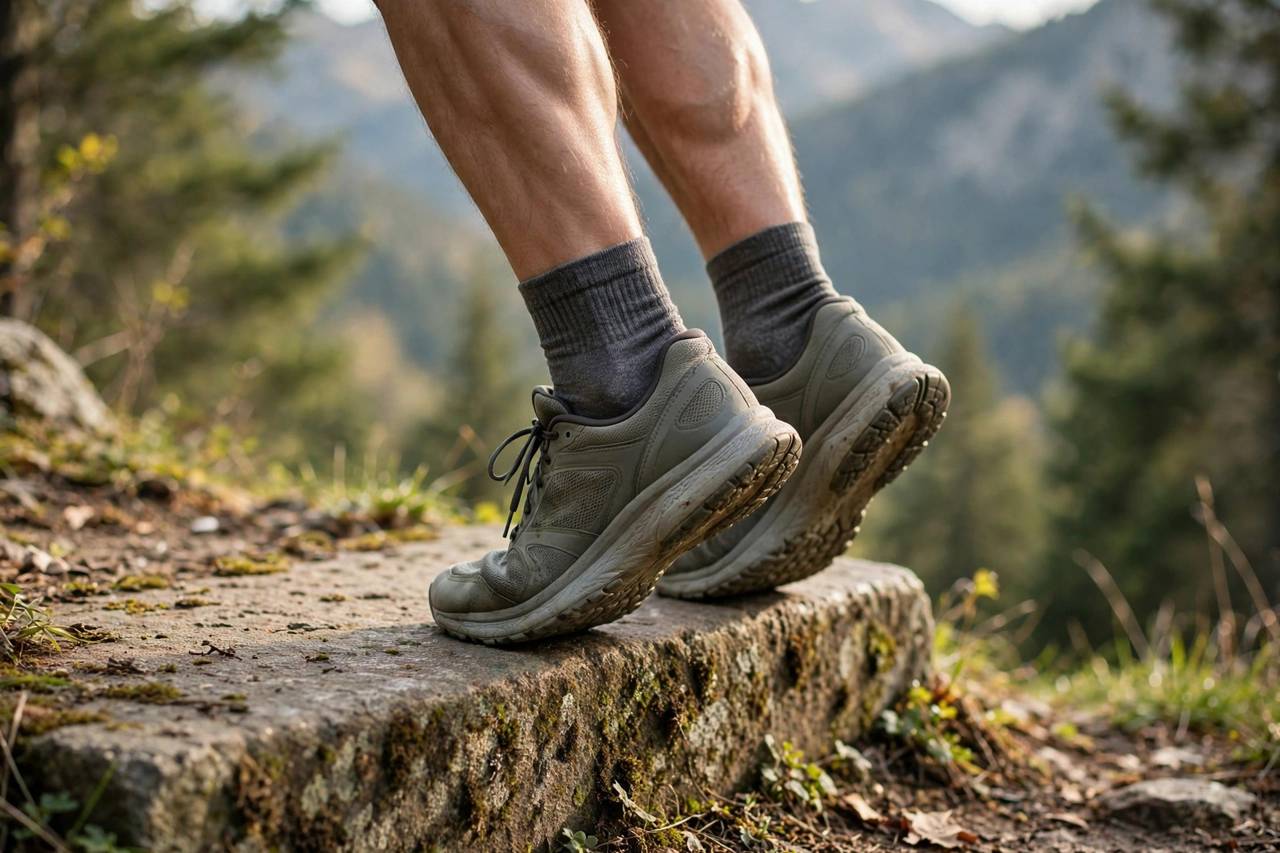
Setup: Stand with the balls of your feet on the edge of a step, stairs, or a weight plate. Your heels hang off the edge. Hold a wall or rack for balance — this is about the calves, not your balance skills.
- Lower fully. Drop your heels below the level of the step until you feel a deep stretch in the calves. This bottom position is where most people cheat — don’t.
- Pause. Hold the stretch for a full second. Kill all momentum. If you bounce out of the bottom, you’re doing a different (worse) exercise.
- Rise as high as possible. Drive up through the balls of your feet until you’re maximally on your toes — imagine trying to touch the ceiling with the top of your head.
- Squeeze at the top. Pause one to two seconds at peak contraction. Actually squeeze the calves; don’t just arrive at the top and fall back down.
- Lower slowly. Take two to three seconds on the way down. The eccentric (lowering) phase builds a huge share of the growth stimulus.
That’s one rep. It should take five to six seconds. If your set of 15 takes less than a minute, you’re going too fast.
Standing vs. Seated: Gastrocnemius vs. Soleus
Your “calf” is actually two main muscles, and they need different treatment:
- Gastrocnemius — the visible, diamond-shaped muscle. It’s most active when your knee is straight, because it crosses the knee joint. Standing calf raises target it.
- Soleus — the deeper muscle underneath. It takes over when your knee is bent, because the bent knee slackens the gastrocnemius. Seated calf raises target it.
Do both. Standing builds the visible shape; seated builds the deep thickness and contributes heavily to endurance (the soleus is famously fatigue-resistant and packed with slow-twitch fibers). A complete calf program includes straight-knee and bent-knee work every week.
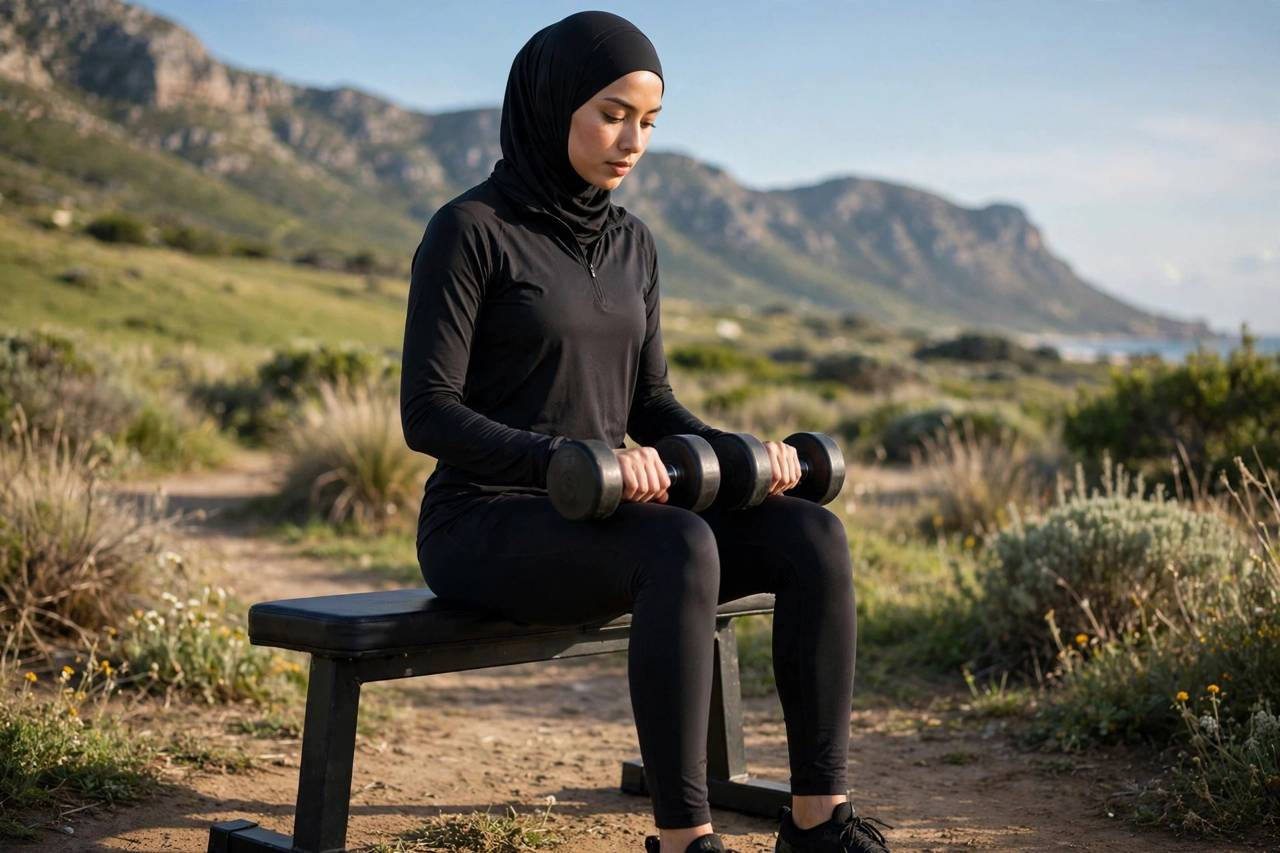
For seated raises, sit on a bench with weight on your knees — dumbbells work fine — feet flat on the floor or a low step, and perform the same slow tempo: deep stretch, pause, rise, squeeze, slow lower.
Tempo and Programming: What Actually Grows Calves
Calves are used to high volume — you take thousands of steps a day. To force adaptation, they need deliberate overload:
- Reps: 12–20 per set. The calves respond well to higher reps with strict form.
- Sets: 3–4 sets of each variation (standing and seated), 2–3 times per week.
- Tempo: Think “2 seconds up, 2 second pause, 3 seconds down.” Write it as 2-2-3.
- Progression: Add weight (dumbbells, a loaded backpack, a barbell) once you can do 20 clean reps. Calves need load to grow — bodyweight alone stalls fast for most people.
If you’re building a broader lower-body routine around this, bodyweight exercises has the full library of no-equipment movements that pair well with calf work. And for adding load without a gym, benefits of resistance band training are one of the simplest ways to make calf raises harder at home — loop a band under your feet and over your shoulders for standing raises.
Common Calf Raise Mistakes
Bouncing. Using the stretch reflex at the bottom turns the rep into a pogo stick. Pause every rep.
Half reps. Going from flat-footed to halfway up misses both the stretch and the peak contraction — the two most productive parts of the rep.
Too-fast tempo. If momentum is doing the work, the muscle isn’t. Slow down until each rep feels hard.
Only training one variation. Standing-only trainers underdevelop the soleus; seated-only trainers miss the gastroc. Train both.
Skipping calves entirely. Then wondering why your lower legs look like they belong to a different person. Train them like any other muscle: consistently, with progression.
Variations to Keep Progress Coming
- Single-leg calf raises: Double the load per leg, great for fixing left-right imbalances.
- Donkey calf raises: Bent-over position with hips flexed — old-school, brutally effective for the gastroc.
- Leg press calf raises: If you have gym access, heavy and safe.
- Toe-position tweaks: Toes slightly in or out shifts emphasis between the inner and outer calf heads — a minor fine-tuning tool, not a major difference-maker.
Why Calves Are So Stubborn: The Physiology
Understanding why calves resist growth makes the programming obvious. Three factors work against you:
Daily volume. Your calves handle thousands of low-intensity contractions every day just walking around. They’re among the most endurance-adapted muscles in your body, which means the stimulus needed to force growth is higher than for, say, biceps. Casual sets won’t cut it — you need genuine overload.
Fiber composition. The soleus is predominantly slow-twitch fibers — built for endurance, resistant to growth. The gastrocnemius is more mixed, with a meaningful fast-twitch population that responds to heavier loading. This is another reason to train both: the gastroc actually can grow substantially with heavy straight-knee work, while the soleus needs volume and patience.
The Achilles factor. The Achilles tendon is thick and stiff, which is great for running economy but means the calf muscles operate over a short range under high tension. Full range of motion matters enormously here — the deep stretch at the bottom is where the muscle experiences the most growth-signaling tension. Short, bouncy reps skip exactly the part that works.
The takeaway: calves aren’t genetic dead ends — they’re just muscles that demand more deliberate work than most. Train them with the same seriousness you’d give any other body part and they respond.
Sample Calf Workouts
Home session (no equipment): Single-leg standing calf raises on a step — 4 sets of 15 per leg, 2-2-3 tempo. Then bent-knee soleus work: seated with a loaded backpack on your knees — 3 sets of 20. Finish with 2 sets of tibialis raises (toes-to-shin against a wall) for shin balance — 15 reps. Total: about 15 minutes.
Gym session: Standing calf raise machine or Smith machine — 4 sets of 12, adding weight when you hit 15 clean reps. Seated calf raise machine — 3 sets of 15–20. Leg press calf raises — 3 sets of 12, heavy. Rest 60–90 seconds between sets. The whole thing takes 20 minutes and hits both muscles with real load.
Run either session 2–3 times per week. Track the weights and reps — calves progress slowly, and without a log you’ll never notice the small increases that compound into real growth over months.
Calf Training for Runners and Court Athletes
If you run or play field sports, calf training isn’t cosmetic — it’s armor. Strong calves and a conditioned Achilles are among the best protections against the calf strains and Achilles issues that sideline runners. The prescription shifts slightly toward the soleus: bent-knee work, higher reps, and eccentric emphasis (slow lowers) mirror the demands of running, where the soleus handles enormous repetitive load.
Runners should also train the tibialis anterior (the shin muscle) — it controls foot descent at footstrike, and weakness there contributes to shin splints. Toe raises against a wall, 3 sets of 15, twice a week, is cheap insurance.
One caution: don’t hammer calves hard the day before a long run or a match. Like any muscle, they need 48 hours after a hard session. Schedule calf work on easy days or after your key run, not before it.
Equipment: From Doorframe to Full Gym
You need almost nothing to start: a step or stair, something to hold for balance, and eventually something heavy. A loaded backpack works for months. Dumbbells are the natural next step — held at your sides for standing raises, across your knees for seated.
benefits of resistance band training are genuinely excellent for calves: loop a heavy band under the balls of your feet and over your shoulders for standing raises, and the tension curve (harder at the top) matches the strength curve of the movement beautifully. In a gym, the standing and seated calf machines let you load heavy with zero balance concerns — ideal for pushing the gastroc with real weight.
FAQ
How often should I do calf raises?
Two to three times per week is the sweet spot for most people. The calves recover quickly, so higher frequency works — but give them at least a day between hard sessions.
Why aren’t my calves growing?
Almost always one of three things: too little range of motion, too-fast tempo, or too little load. Fix all three — full stretch, slow reps, progressive weight — and give it 8–12 weeks.
Are calf raises bad for your knees?
No. Calf raises are a low-impact, joint-friendly exercise when done with control. If you feel knee pain, check that you’re not locking the knees aggressively or letting them cave inward.
Should I do calf raises every day?
You can do light bodyweight sets daily, but hard, loaded sessions need recovery days like any other muscle. Daily max-effort calf training is a fast track to Achilles irritation.
Standing or seated calf raises — which is better?
Neither — they train different muscles. Standing (straight knee) hits the gastrocnemius; seated (bent knee) hits the soleus. Do both for complete development.
Calves reward patience and punish rushing. Slow the reps down, use the full range, load them progressively, and train both muscles — standing for the gastrocnemius, seated for the soleus. Do that for three months and you’ll wonder why you ever did bouncy half-reps — and your lower legs will finally look like they belong to someone who trains really hard every week.