How to Prepare for a Debate: The Research-Both-Sides Playbook


Most debate preparation fails in the same predictable way: the team researches only their own side, writes a beautiful opening speech, and then gets dismantled in rebuttal by arguments they never saw coming. I have coached enough student debaters to say this with confidence — the team that prepares both sides almost always beats the team that prepares one side twice as hard. If you want to know how to prepare for a debate properly, the playbook has four parts: research both sides, build arguments with the PEEL structure, prepare a rebuttal bank, and run a night-before checklist.
This guide walks through each part with concrete methods. Whether it is your first classroom debate or a competitive tournament, the preparation system is the same — only the depth changes.
How to Prepare for a Debate: Understand the Motion First
Before researching anything, dissect the motion — the statement you are debating. Identify the key terms and define them explicitly, because debates are frequently won or lost on definitions. In ‘This house believes social media does more harm than good,’ what counts as ‘harm’? To whom? Over what timeframe? The team with the sharper definitions controls the ground the debate is fought on.
Then learn your format’s rules cold: how long are speeches, what is the speaking order, are points of information allowed (and when), how is rebuttal structured, and what are the judges scoring? A brilliant argument delivered in the wrong speech — new arguments in a summary speech, for example — can be penalized or ignored. Format ignorance has lost more debates than weak arguments.
Finally, know which side you are on and what your burden is. The proposition (affirmative) must prove the motion; the opposition must refute it or prove the counter. These are asymmetric jobs — the proposition builds a case, the opposition dismantles one (while usually offering an alternative). Your entire preparation flows from this assignment.
Research Both Sides: The Non-Negotiable
Here is the discipline that separates good preparation from great: spend at least 40 percent of your research time on the other side’s arguments. You need to know their three best arguments better than they do — their evidence, their examples, their emotional appeals — because you cannot rebut what you do not understand.
Research method: for each side, build an argument file with three columns — and if the reading load is heavy, reading faster with retention helps you cover more ground in the same prep time. — claim, evidence, and source. Aim for three to four strong arguments per side, each backed by at least one concrete piece of evidence: a statistic from a reputable source, a real-world example, or an expert quotation. ‘Many studies show’ is not evidence; ‘a 2023 survey by [reputable organization] found…’ is. Vague claims collapse under the first pointed question.
As you research the opposition’s side, write their arguments in their strongest form — the steelman, not the strawman. Then, for each one, draft your rebuttal in advance: the flaw in their logic, the counterexample, the missing context. This becomes your rebuttal bank (more below). Debaters who only prepare strawman versions of opposing arguments get a nasty surprise when the real thing shows up.
Organize everything on one page per side if you can — a ‘case file’ you can scan in thirty seconds during prep time. In tournaments with limited prep, this single page is worth more than a folder of printouts you will never open.
Build Arguments With the PEEL Structure
Every argument you make should follow PEEL: Point, Evidence, Explanation, Link. It is the paragraph structure of debate, and judges — consciously or not — listen for it.
Point: state your argument in one clear sentence. ‘Social media harms teenage mental health by replacing in-person interaction with curated comparison.’ Evidence: support it concretely. ‘A large-scale longitudinal study found that…’ or ‘In 2021, internal research from a major platform showed…’ Explanation: spell out why the evidence proves the point — do not assume the link is obvious. ‘This matters because adolescence is the peak period for social comparison, and algorithmic feeds intensify exactly that mechanism.’ Link: tie it back to the motion. ‘Therefore, on balance, the harms outweigh the benefits — which is what the motion asks us to judge.’
The E — explanation — is where most student arguments die. They state a point, drop a statistic, and move on, assuming the audience connects the dots. They do not. The explanation is the actual argument; the evidence is just its fuel. Practice delivering full PEEL arguments out loud until the structure is automatic — in the pressure of a live debate, structure is what keeps you coherent.
Prepare two to three PEEL arguments for your side, ordered strongest first. Your opening speaker delivers the framework and the first arguments; later speakers extend, rebut, and summarize. Everyone on the team should know all the arguments — speakers get sick, orders change, and rebuttal requires the full picture.
The Rebuttal Prep Bank: Win the Clash
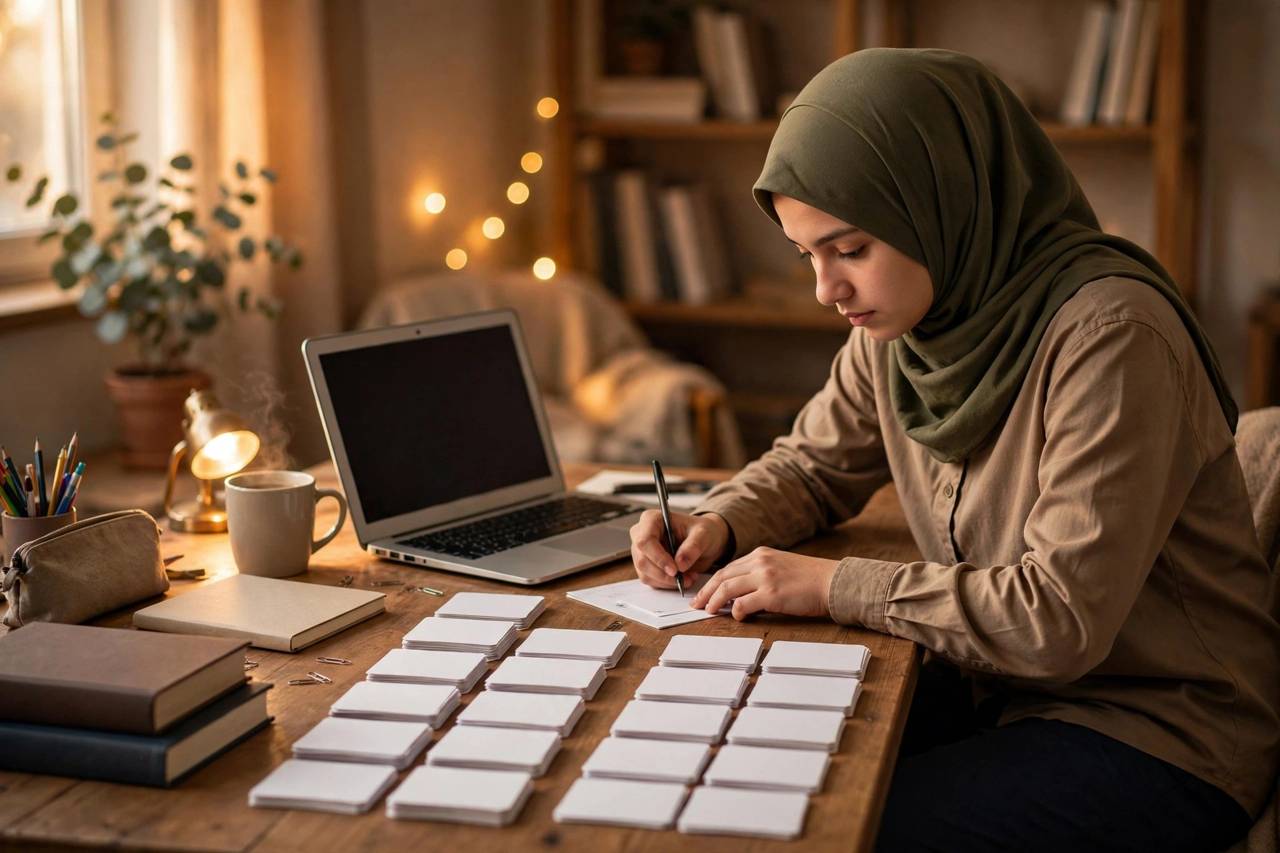
Rebuttal is where debates are decided, and it is the least prepared phase. Build a rebuttal bank before the debate: for each of the opposition’s likely arguments, pre-write your response using the ‘4 Rs’ — Restate their argument fairly (shows you listened), Refute with your counter-evidence or logic, Rebuild your own argument on that ground, and Remind the judges why this point matters to the motion.
Learn the common rebuttal moves. The counterexample: ‘They claim X always happens — but consider [case] where the opposite occurred.’ The missing context: ‘That statistic is real, but it ignores [factor], which reverses the conclusion.’ The logical flaw: ‘That is correlation, not causation’ or ‘that proves the problem exists, not that their solution fixes it.’ The turn: the advanced move — accept their evidence but show it supports your side. ‘They are right that regulation is hard — which is exactly why our approach of [Y] is more realistic than their proposed ban.’
During the debate, listen like a note-taker, not an audience member. Flow the debate — jot each opposing argument in a column with space beside it for your rebuttal. The team with the better flow sheet wins the rebuttal phase, because they actually heard what was said instead of rebutting what they expected. If your format allows points of information, prepare two or three sharp questions designed to expose weak spots — but use them surgically, not constantly.
Practice Delivery: The Performance Half
Arguments win on paper; delivery wins in the room. Practice your speeches out loud, timed, at least twice — reading silently does not count. Time yourself strictly: going over time in most formats means getting cut off mid-sentence, possibly mid-argument. Aim to finish with thirty seconds to spare.
Work on the three delivery fundamentals. Pace: nervous speakers rush — deliberately slow down, and pause after key points so they land. Eye contact: look at the judges, not your notes; glance down only for evidence details. Notes should be keywords and structure, never full sentences — reading a script kills persuasion and prevents you from adapting.
Do a full mock round if possible, with teammates playing the opposition using real opposing arguments. Nothing exposes preparation gaps like a live opponent. Record yourself on a phone at least once — the gap between how you think you sound and how you actually sound is always educational. And prepare for the worst case: if an opponent makes an argument you never anticipated, stay calm, buy time (‘My opponents raise an interesting point…’), and attack it with general rebuttal moves — question the evidence, the logic, or the relevance. Composure under surprise impresses judges more than perfection.
The Night-Before Checklist
The night before is for consolidating, not cramming. Run through this checklist and then stop — rested debaters beat exhausted ones.
- Case files complete? One page per side: your 2-3 PEEL arguments with evidence, their likely arguments with your pre-written rebuttals.
- Definitions settled? Your team’s definitions of key terms, written down, agreed by all speakers.
- Roles clear? Who speaks when, who covers which arguments, who handles rebuttal on which points.
- Evidence details memorized? You do not need every number, but know your two or three killer statistics cold — name, figure, source.
- Logistics handled? Format rules re-read, timing confirmed, materials packed (notes, water, pen for flowing).
- Sleep prioritized? No midnight research spirals. A sharp, rested brain rebuts better than a tired brain with one more article read.
Morning of: eat properly, arrive early, and do a five-minute team huddle — not to add new arguments, but to confirm the plan and settle nerves. Remind each other of the single most important rule: listen. Most debate mistakes come not from weak preparation but from not hearing what the other side actually said. For building the underlying research skills, a good research-paper outlining guide teaches the same evidence-organization habits debates reward.
Frequently Asked Questions
How long should I prepare for a debate?
For a classroom debate with a week’s notice, 4-6 focused hours total is plenty: 2 hours research (both sides), 1 hour building PEEL arguments, 1 hour rebuttal bank, 1-2 hours practice. For tournaments, preparation is ongoing across the season. More time helps, but only if it is structured — ten hours of unfocused reading loses to four hours of the system above.
What if I get assigned the side I disagree with?
That is normal — and valuable. Debating a side you disagree with builds intellectual honesty and is standard in competitive debate. Steelman the position: find its genuinely strongest arguments. You will understand the issue better than partisans of either side, which is the entire point of the exercise.
How do I rebut an argument I have never heard before?
Stay calm and use general moves: question the evidence (‘what is the source for that claim?’), question the logic (‘does that actually follow?’), question the relevance (‘even if true, does that prove the motion?’), or offer a counterexample. Judges reward composed, structural rebuttal over panicked brilliance.
Should I memorize my speech word for word?
No. Memorized speeches sound robotic and collapse when interrupted. Memorize your structure (argument order, key evidence, transitions) and speak from keyword notes. You want flexible command of the material, not a script — debates are conversations, not recitals.
What do debate judges actually score?
Typically: argumentation (are claims supported and logical), rebuttal/clash (did you engage the other side), organization, delivery, and sometimes research quality. Different formats weight these differently — ask for the judging criteria in advance and prepare to them, not to a generic ideal.
The Bottom Line: Prepare Both Sides, Structure Everything
Debate preparation is four disciplines: know the motion and format, research both sides with real evidence, build every argument in PEEL structure, and bank your rebuttals in advance. Then practice out loud, sleep well, and listen harder than you speak.
The team that prepares the opposition’s case usually wins — because they are never surprised, and surprise is what loses debates.