How Does a Government Shutdown Work? The Mechanics Explained

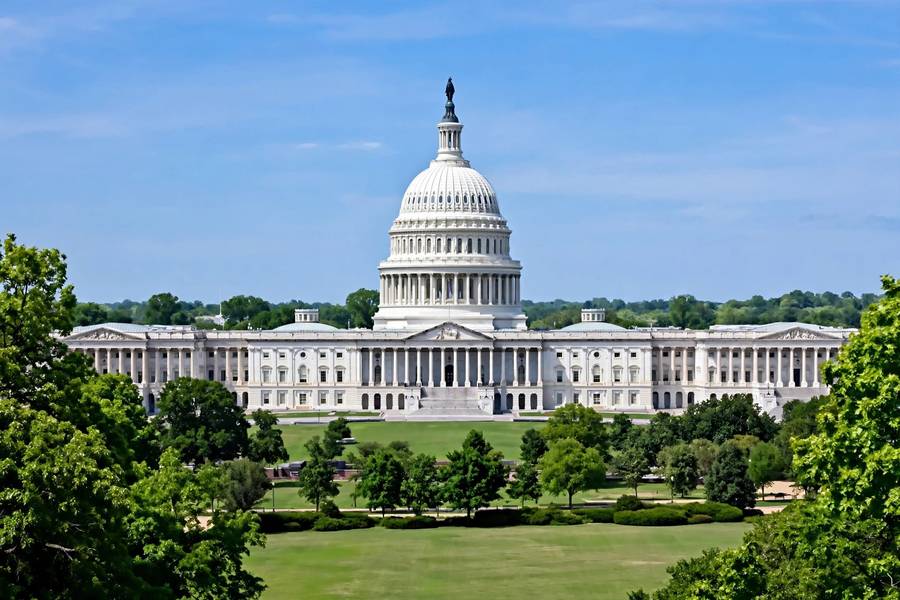
How does a government shutdown work? The phrase gets thrown around every budget fight, but the actual mechanics are specific and stranger than most people realize: when Congress fails to fund the government, federal agencies do not simply lock the doors and go home. A 19th-century anti-corruption law, a pair of legal opinions from 1980, and a classification system dividing federal workers into “essential” and “nonessential” combine to produce the shutdown ritual Americans have now watched more than twenty times. Here is how the machine works, what actually stops, and how it all ends.
I cover Washington and how the federal government actually functions, and my rule for explainers like this one is to describe the machinery, not the morality play. Shutdowns are political events with political causes, and I will note where the fights come from — but this guide is about the mechanism: what the law requires, who keeps working, and why some things close while others do not.
How Does a Government Shutdown Work: The Funding Gap
A shutdown starts with a funding gap. Under the US Constitution, no money can be drawn from the Treasury without an appropriation by Congress, and each fiscal year — which begins October 1 — Congress is supposed to pass twelve appropriations bills funding the various parts of the federal government. When it fails to pass those bills, or a temporary stopgap called a continuing resolution, before the old funding expires, the government legally loses the authority to spend money. That gap is the shutdown.
Here is the part that surprises people: funding gaps did not always cause shutdowns. For decades, agencies simply kept operating through gaps and Congress cleaned up afterward. That changed in 1980, when Attorney General Benjamin Civiletti issued two legal opinions interpreting the Antideficiency Act of 1884 — a law originally aimed at preventing agencies from spending money they did not have — as requiring agencies to shut down nonessential operations during a funding lapse. Since 1990, every funding gap lasting more than a few hours has produced a shutdown. The modern shutdown is, in other words, a legal interpretation barely older than the personal computer.
Shutdowns can be partial or full. If Congress passes some of the twelve bills but not others, only the unfunded agencies shut down — a partial shutdown. If none pass, it is a full shutdown. Either way, the mechanism is the same: without appropriated funds, the Antideficiency Act generally prohibits federal employees from working, even voluntarily, with narrow exceptions for emergencies involving the safety of human life or the protection of property.
Essential vs. Nonessential: Who Keeps Working
Every agency maintains contingency plans classifying its workforce, and the distinction drives everything the public actually experiences during a shutdown.
Excepted (often called “essential”) employees keep working, usually without pay until the shutdown ends. These are workers whose jobs involve the safety of human life or the protection of property: active-duty military, air traffic controllers, TSA screeners, FBI agents, Border Patrol, federal prison guards, and VA hospital staff, among others. Members of Congress also keep getting paid — their salaries are funded by a permanent appropriation, a fact that reliably infuriates the public every single time.
Non-excepted (“nonessential”) employees are furloughed — sent home and legally barred from working, including from checking work email. (Working voluntarily during a furlough can actually create legal problems for the agency.) In recent shutdowns, roughly 750,000 to 850,000 federal workers have been furloughed at a time. Furloughed workers have historically received back pay once funding is restored — Congress has authorized it after every major shutdown — but the paychecks stop during the lapse, which is cold comfort for anyone with a mortgage due.
A third category complicates the picture: programs with independent funding keep running regardless. Social Security checks still go out (the money comes from a trust fund, though new applications may slow). The Postal Service operates normally — it is self-funded. Agencies with multi-year appropriations or fee-based funding, like parts of the State Department funded by visa fees, can operate for a while on carryover balances. This is why shutdowns feel patchy rather than total: the government is not one machine but hundreds, with different fuel tanks.
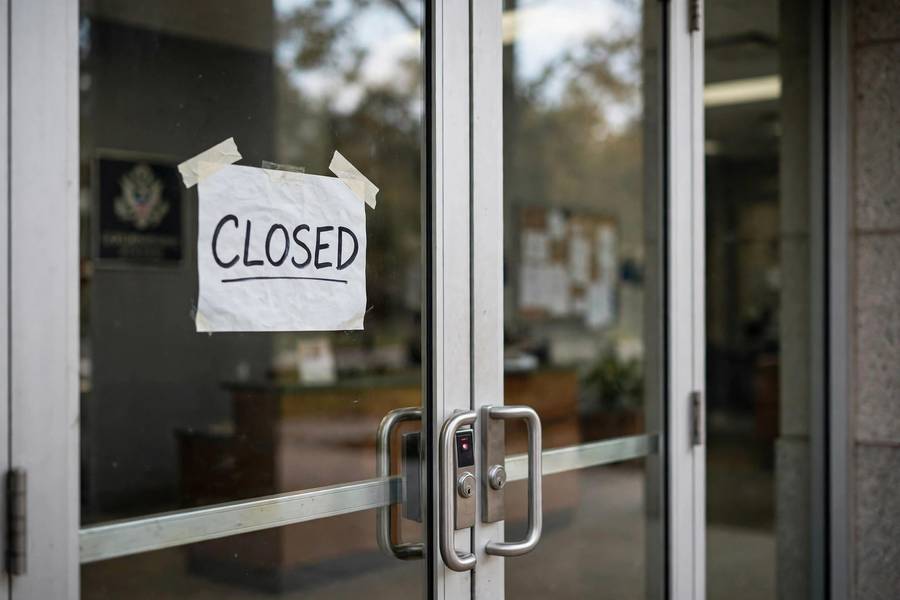
What Closes and What Stays Open
The visible face of a shutdown is the closures. National parks are the classic example: during full shutdowns, park gates close, campgrounds empty, and trash piles up at the entrances of parks that stay physically accessible but unstaffed. Museums run by the Smithsonian close. The IRS largely suspends taxpayer assistance and audits (though automated collection notices may continue, to everyone’s delight). Federal courts can operate for a time on reserve funds but eventually curtail operations. New federal hiring freezes, government data releases stop, and small-business loan processing stalls.
What stays open surprises people just as much. The military operates. Air travel continues — controllers and screeners work unpaid, which is why extended shutdowns raise genuine safety concerns as financial stress mounts. Federal law enforcement stays on duty. Emergency and disaster response continues. Entitlement payments — Social Security, Medicare, Medicaid, SNAP benefits already loaded — generally flow, though administrative functions behind them thin out, and a long shutdown can eventually disrupt benefit processing.
The economic effects compound with duration. A shutdown of a few days is mostly theater with real but contained costs. A shutdown of weeks — like the 35-day 2018–2019 shutdown, the longest at the time — costs the economy billions in lost output, delays federal contracts that small businesses depend on, and leaves furloughed workers and contractors (who, unlike employees, generally do not get back pay) digging out for months.
A Brief History of Shutdowns
Since the modern budget process began in 1976, there have been more than twenty federal funding gaps, about half of which produced furloughs. The notable ones form a pattern of escalating stakes. The 21-day shutdown of 1995–1996, during a standoff between President Clinton and House Speaker Newt Gingrich over spending cuts, ended when public opinion turned decisively against Congress. The 16-day shutdown of 2013 centered on Republican efforts to defund the Affordable Care Act. The 35-day shutdown of 2018–2019, over funding for a US-Mexico border wall, became the longest in history and ended after air traffic controllers’ absences began snarling air travel — a reminder that shutdowns tend to end when the pain reaches the politically undeniable.
The shutdown that began October 1, 2025, surpassed that record at 43 days, driven by a standoff over health care subsidies and spending levels. And as of October 2026, the country is in another one: funding lapsed again at the start of the fiscal year amid the same unresolved fights over health care funding and spending priorities, with roughly three-quarters of a million federal workers furloughed and both parties calculating, as they always do, who the public will blame. The issues change; the machinery does not.
How a Shutdown Ends
Shutdowns end the way they begin: with legislation. Congress passes either the outstanding appropriations bills or, far more commonly, a continuing resolution — a stopgap that funds the government at current levels for a set period while negotiations continue. The president signs it, the Antideficiency Act’s grip releases, furloughed workers return, and back pay is authorized.
What actually forces the end is rarely a sudden outbreak of comity. It is pressure: polling that assigns blame, economic damage that becomes impossible to ignore, a missed paycheck cycle for hundreds of thousands of workers, or a vivid failure — closed airports, unprocessed benefits, a crisis the skeleton crew cannot handle. Continuing resolutions have become the standard exit ramp precisely because they let both sides claim they are still fighting while the government reopens. Congress has passed at least two continuing resolutions in most years since the late 1990s, which tells you everything about how the budget process actually functions.
One reform idea surfaces after every shutdown: automatic continuing resolutions, which would keep funding flowing at prior levels if Congress misses the deadline, removing the shutdown weapon entirely. It has never passed. Which tells you something too — about how much both parties value the leverage that the threat of a shutdown provides, even as they denounce the other side for using it.

Frequently Asked Questions
How does a government shutdown work in simple terms?
When Congress fails to pass funding bills before the old funding expires, federal agencies lose legal authority to spend money. Under the Antideficiency Act, they must shut down nonessential operations and furlough nonessential workers, while essential workers stay on duty — usually unpaid until funding is restored.
Do federal workers get paid during a shutdown?
Essential workers keep working but are not paid until the shutdown ends; furloughed workers are sent home without pay. Congress has historically authorized back pay for furloughed employees after every major shutdown, but federal contractors generally do not receive back pay.
What stays open during a government shutdown?
The military, air traffic control, TSA screening, federal law enforcement, emergency services, the Postal Service, and entitlement payments like Social Security generally continue. National parks, Smithsonian museums, IRS taxpayer services, and new federal hiring typically stop.
What is a continuing resolution?
A continuing resolution is a temporary funding bill that keeps the government operating at existing funding levels for a set period while Congress negotiates full appropriations. It is the standard tool for both avoiding and ending shutdowns.
What was the longest government shutdown?
The 43-day shutdown from October 1 to November 12, 2025, is the longest on record, surpassing the 35-day shutdown of December 2018 to January 2019. Both ended when political and economic pressure became unsustainable.
Can a president end a shutdown alone?
No. Only Congress can appropriate funds, so only an act of Congress signed by the president — or a presidential signature on a congressional funding bill — restores funding. The president’s leverage is the veto and the bully pulpit, not unilateral spending power.
The Machine Keeps Running — Until It Doesn’t
A government shutdown is what happens when the world’s most powerful government collides with a 140-year-old anti-deficiency law and a budget process that Congress has not completed on time in decades. The machinery is precise: funding lapses, the law bites, workers are sorted into categories, doors close in a predictable pattern. The politics are anything but. Every shutdown is a negotiation conducted with the machinery of government as the hostage, and it ends the same way every time — when the cost of continuing exceeds the cost of folding. Understanding how it works does not make it less absurd. But it does make the next one easier to read while it unfolds.