How to Light a Candle Without a Lighter: 7 Ways

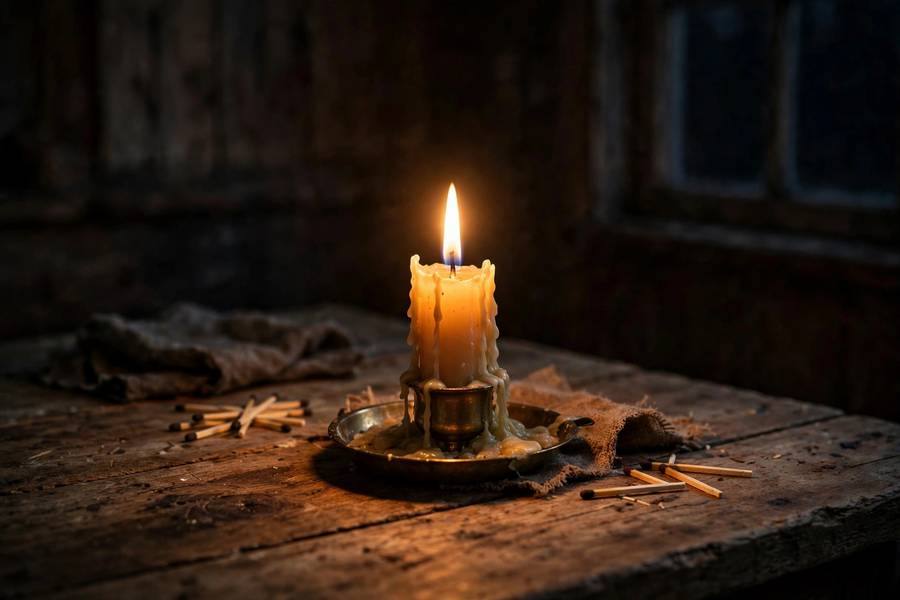
The power is out, the lighter is empty, or you are camping with a candle and no matches — whatever brought you here, you need flame and you need it safely. How to light a candle without a lighter is one of those oddly useful skills that ranges from the totally mundane (kitchen matches) to the genuinely survivalist (a battery and steel wool). I have lit candles every way on this list across blackouts, camping trips, and one memorable dinner party where the matches got wet.
This guide ranks seven methods from safest to most survivalist, with honest notes on what actually works, what is more trouble than it is worth, and the fire-safety rules that matter no matter which method you use.
Before Anything: Fire Safety Rules
Every method below involves open flame or heat, so the rules come first:
- Never leave a burning candle unattended. Not for a minute. Most candle fires start this way.
- Keep candles away from anything flammable — curtains, papers, dry leaves outdoors — with at least a foot of clearance.
- Place candles on stable, heat-resistant surfaces, away from edges where they can be knocked over, and out of reach of kids and pets.
- Trim the wick to about a quarter inch before lighting. Long wicks create tall, sooty, unstable flames.
- Have a way to put it out. A candle snuffer is ideal; blowing works for small candles. Know where your fire extinguisher is if you are using the more adventurous methods.
The 7 Methods, Safest First
1. Matches (the obvious champion)
If you have matches, the search is over. Strike away from your body, let the flame stabilize for a second, then touch it to the wick — tilting the candle slightly so the flame licks the wick’s tip. Wooden “kitchen” matches burn longer than paper ones and are easier to maneuver into deep jars. Keep a box in a dry spot and this article becomes unnecessary — which is the goal.
2. The Gas Stove or Cooktop
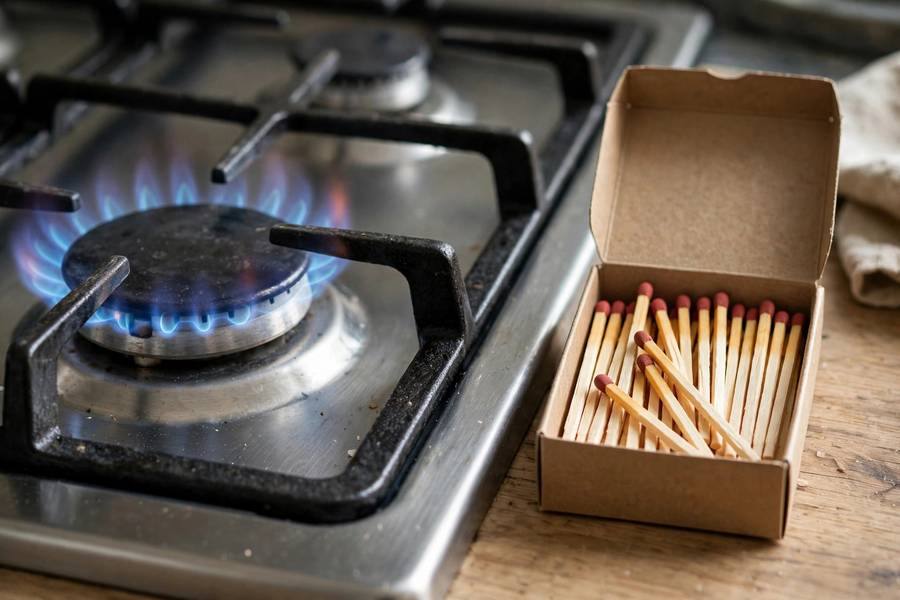
No lighter but a working gas stove? Turn a burner on, and use a long piece of dry spaghetti, a wooden skewer, or a tightly rolled strip of newspaper as a taper: light one end at the burner, carry the flame to the candle. Long fireplace matches are the purpose-built version of this trick. Never hold the candle itself over the burner — dripping wax near an open flame is asking for trouble.
3. Another Candle or Existing Flame
One lit candle lights the next. In a blackout, light one candle properly and use it as your “mother flame” for the rest — a taper or a long match carries the flame safely. This is also why keeping one good emergency candle with a long burn time is smarter than a drawer of tea lights.
4. The Toaster or Electric Stove Element
An electric coil stove or even a toaster can serve as a heat source: hold a wooden skewer or piece of dry spaghetti against the hot element until it catches, then transfer the flame. It is slower than gas and requires care — keep fingers and flammable bits well clear — but in a pinch it works. Do not press anything directly into a toaster’s slots; hold it above the heat.
5. A Magnifying Glass and Sunlight
The classic science-class trick works on candle wicks: focus sunlight through a magnifying glass onto the wick until it smolders, then coax the ember into flame. It requires bright, direct sun and patience — and a steady hand. More practical for lighting tinder or paper to then light the candle. File under “works, but you will only do it once for fun.”
6. Battery and Steel Wool
The survivalist method: touch both terminals of a 9V battery to a tuft of fine steel wool (grade 0000). The steel wool ignites almost instantly into glowing embers — use those to light a taper or twisted paper, then the candle. It is dramatic, effective, and genuinely dangerous if mishandled: the steel wool burns extremely hot, so do this over a non-flammable surface with water nearby. Know this method for emergencies; do not use it casually.
7. Flint, Ferro Rod, or Fire Steel
Campers and preppers know this one: strike a ferrocerium rod with a steel striker to shower sparks onto char cloth or fine tinder, nurse the ember, and transfer flame to the wick via a taper. It takes practice — your first attempts will be humbling — but it is the most reliable no-fuel method in the wild. If you camp often, learning this skill pays off far beyond candles.
Methods That Sound Good but Disappoint
A few ideas circulate online that I should save you from. Rubbing two sticks together is a legitimate primitive skill that takes hours to learn and is wildly impractical for a candle — skip it. Focusing your phone flashlight does nothing; it is not hot enough, obviously, but people try. Microwaving anything to make fire is a hard no — metal in microwaves is a fire hazard, full stop. And the “candle wax as fuel” tricks involving melting wax over open improvised flames create more risk than light.
Building a Real Emergency Candle Kit
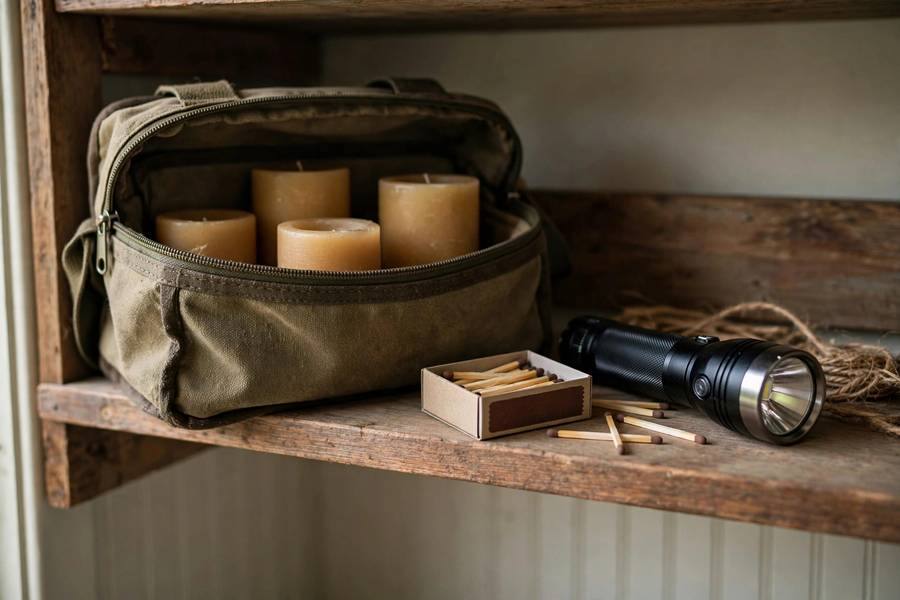
The best method is the one you prepared. My blackout kit lives in one drawer: a few long-burning pillar candles, a box of wooden kitchen matches in a sealed bag (moisture is the enemy), a candle snuffer, and a small flashlight so I am not fumbling in the dark. Total cost: a few dollars. Total value during the next outage: immeasurable.
Candles do more than light a room — they make it feel calm and human when the power is out. If you enjoy that atmosphere beyond emergencies, this guide to making your bedroom cozy has ideas for bringing that warm glow into everyday life.
Candle Care: Making Every Candle Last Longer
Now that you can light candles anywhere, make them last. The first burn matters most: let the wax melt all the way to the edge of the container on the first lighting — usually 2–3 hours for a standard jar. This prevents “tunneling,” where the wick burns a narrow hole down the middle and wastes half the wax. I know it requires patience during a blackout; it is worth it.
Keep the wick trimmed to a quarter inch before every lighting — a $3 wick trimmer is the best candle accessory that exists. Keep candles away from drafts, which cause uneven burning, flickering, and soot. Do not burn longer than 4 hours at a stretch; let the candle cool and solidify before relighting. And store candles cool and dark — heat warps them, sunlight fades colors and degrades scent.
For jar candles nearing the end: when a half inch of wax remains, stop burning (the glass can overheat). Freeze the jar, pop out the remaining wax, clean the glass, and reuse it — or place the jar on a candle warmer to enjoy the last of the scent safely.
When NOT to Light a Candle
Knowing the methods includes knowing when to skip them. Do not light candles while sleeping — ever, no exceptions. Do not use them near oxygen equipment or flammable medical supplies. Be cautious in homes with curious toddlers or cats (a tail near a flame is a classic disaster). During gas leak suspicions, do not create any flame at all — leave and call emergency services. And in extreme fire-risk conditions outdoors (dry brush, high wind, burn bans), the candle stays unlit no matter how romantic the campsite looks.
Candles are wonderful servants and terrible masters. Respect the flame, prepare the kit, and you will never sit in the dark wondering what to do.
Candle Alternatives When Flame Is Not an Option
Sometimes the right answer is no flame at all. LED flameless candles have become genuinely good — the flicker-effect ones look convincing from a few feet away, run for hundreds of hours on batteries, and are safe around kids, pets, and curtains. Keep a few with your emergency kit for the scenarios where real candles are unwise.
Headlamps and lanterns beat candles for actual illumination during outages — brighter, hands-free, and zero fire risk. And solar garden lights brought indoors work surprisingly well as ambient night lighting. I love real candles for atmosphere, but preparedness means having the boring, safe option ready too. The kit in my drawer has both.
How to Light a Candle Without a Lighter: Final Tips
The short version: matches first, the stove second, another candle third — and the survivalist methods stay in reserve for actual emergencies. Build the blackout kit before you need it, trim your wicks, never leave flames unattended, and keep the flameless alternatives handy for the scenarios where fire is the wrong answer. Prepared once, calm every outage after.
Frequently Asked Questions
How to light a candle without a lighter or matches?
Use a gas stove burner to light a wooden skewer or piece of dry spaghetti, then carry the flame to the wick. An electric stove element, another candle, or (in bright sun) a magnifying glass also work. The battery-and-steel-wool method is a last-resort survival option.
Can you light a candle with a battery?
Yes — touching fine steel wool to both terminals of a 9V battery ignites it into embers you can use to light a taper. It works but burns extremely hot, so only use it in genuine need, over a non-flammable surface, with water nearby.
Is it safe to light a candle from the stove?
Lighting a taper (skewer, spaghetti, long match) at the stove and carrying the flame to the candle is safe. Holding the candle itself over the burner is not — dripping wax near open flame is a fire risk.
Why won’t my candle wick stay lit?
Usually the wick is too long (trim to a quarter inch), too short (drowned in wax — pour off some melted wax), or damp. Drafts also kill fresh flames; shield the candle until the flame stabilizes.
How do you light a candle in a deep jar without a long lighter?
Use a long taper: a piece of dry spaghetti, a wooden skewer, or a tightly rolled strip of newspaper lit at one end reaches deep jars easily. Tilt the jar slightly to bring the wick closer.
What is the safest emergency candle setup?
Sturdy pillar candles on heat-resistant holders, placed away from anything flammable, with matches stored dry nearby and a snuffer for extinguishing. Never leave them burning unattended or while sleeping.