How to Keep Cut Flowers Fresh Longer: What Works

Figuring out how to keep cut flowers fresh longer is one of those small domestic skills that makes a disproportionate difference. A bouquet that lasts four days versus one that lasts ten is the difference between flowers feeling like a luxury and feeling like a waste of money. I used to watch my grocery-store bouquets droop by day three and assume that was just how it went — until a florist friend showed me that most of what I was doing was wrong, and most of what actually works takes about five minutes.
This guide separates what genuinely works (backed by how flowers actually die) from the myths that refuse to die (looking at you, penny in the vase). Plus a vase-life guide by flower type, so you know what to expect from your bouquet.
How to Keep Cut Flowers Fresh Longer: The Essentials
Cut flowers die for three main reasons: bacteria clogging the stems, air bubbles blocking water uptake, and ethylene gas accelerating aging. Everything that works targets one of these three. Everything else is folklore.
Step 1: Start With a Clean Vase
This is the step everyone skips and the one that matters most. Bacteria from your last bouquet linger in the vase and immediately start colonizing the new stems. Wash the vase with hot soapy water — a bottle brush for narrow necks — and rinse thoroughly. It takes two minutes and it is the single highest-impact thing you can do.
Use room-temperature water, not cold and not hot. Fill the vase about two-thirds full. Flowers drink more than you expect in the first 24 hours — a fresh bouquet can take up a surprising amount of water overnight, so check the level daily.
Step 2: Cut the Stems Properly
How you cut matters enormously:
- Cut at a 45-degree angle. The angled cut increases the surface area for water absorption and prevents the stem from sitting flat against the bottom of the vase, which would seal it shut.
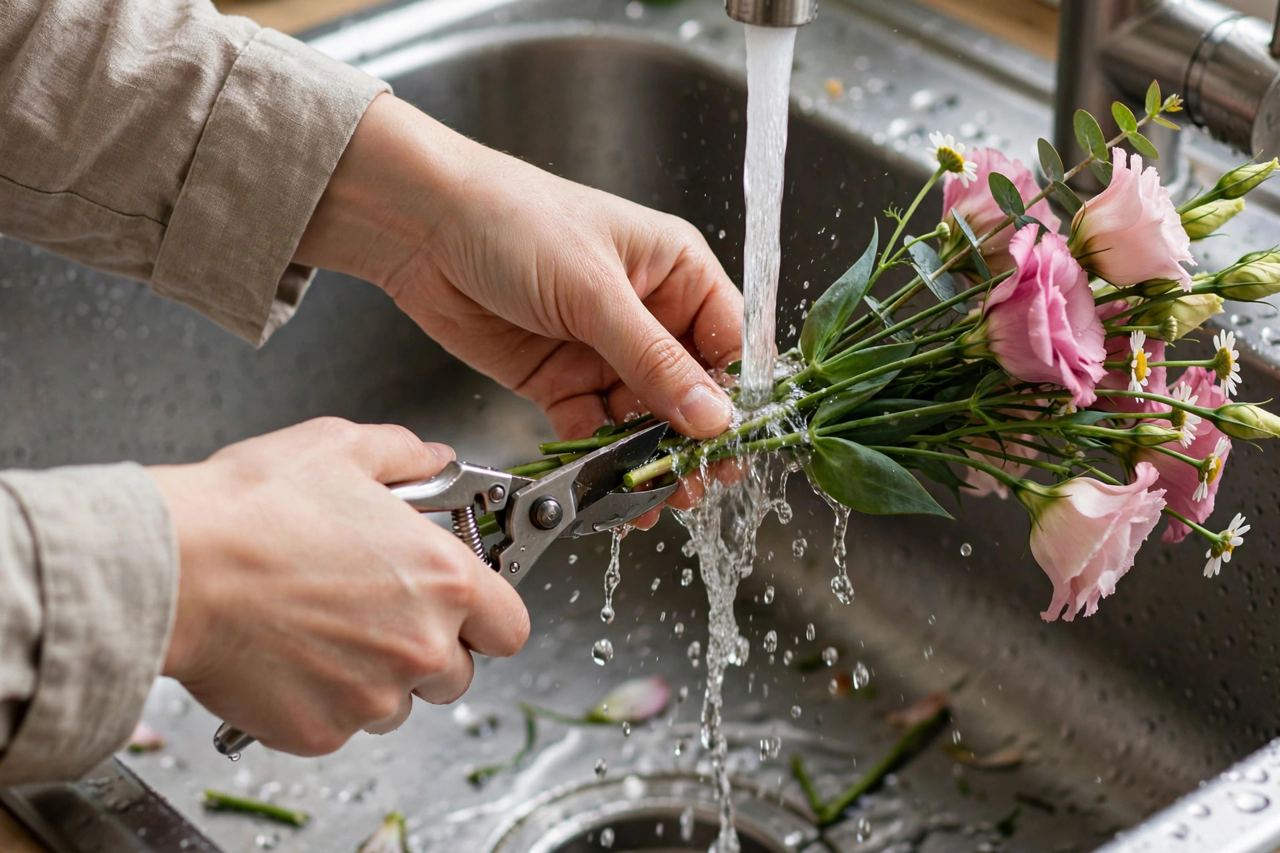
- Cut under running water or in a bowl of water when possible. Cutting stems in air lets tiny air bubbles into the water-conducting vessels, creating blockages. Cutting underwater prevents this. It sounds fussy; it makes a real difference, especially for roses.
- Remove leaves below the waterline. Any foliage sitting in the water rots quickly and becomes a bacteria farm. Strip every leaf that would be submerged. Be thorough — one forgotten leaf can cloud the whole vase.
- Use sharp scissors or a knife, not dull shears. Crushed stem ends cannot absorb water properly. A clean cut keeps the vessels open.
- Re-cut every few days. When you change the water, trim another half inch off each stem at an angle. Stems seal over time; fresh cuts reopen them.
Step 3: Feed Them (Yes, Really)
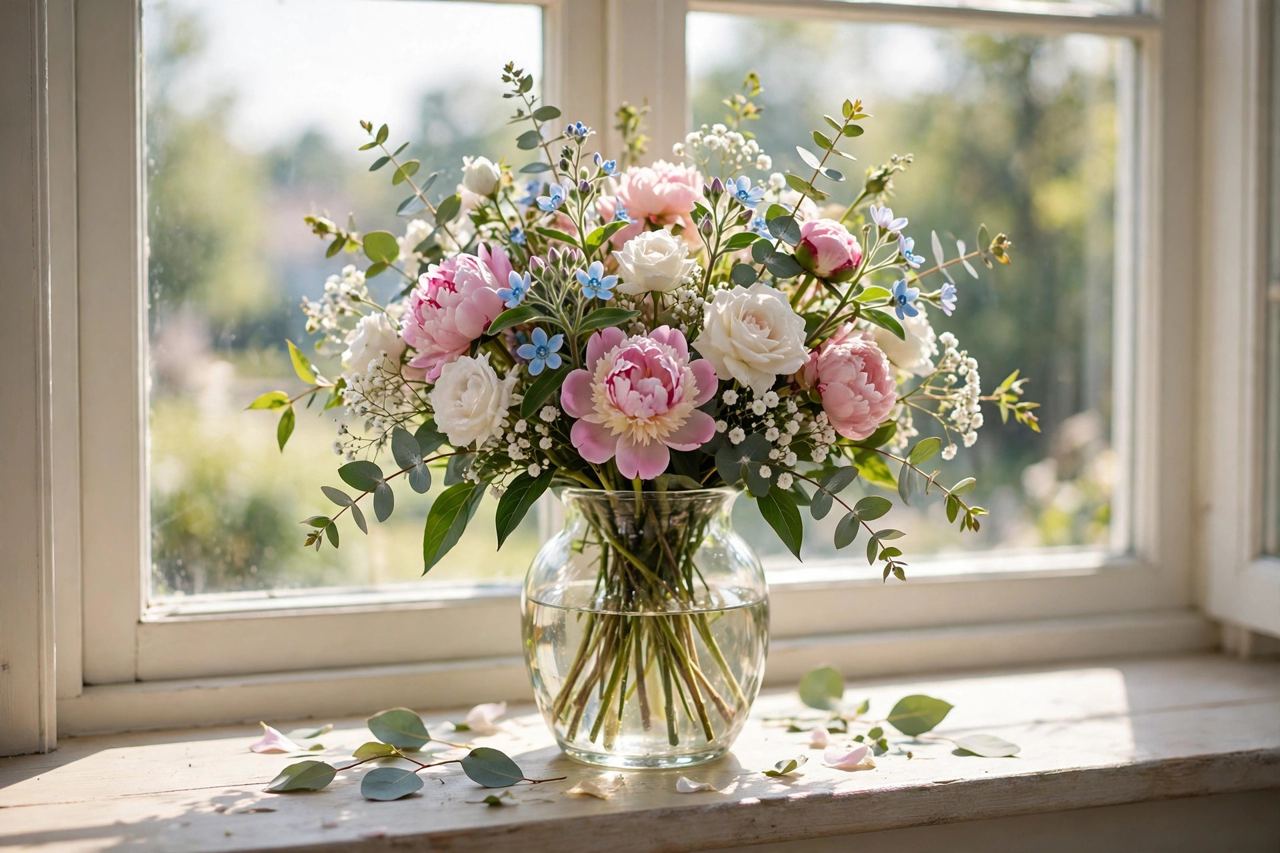
Those little packets that come with bouquets are not marketing — they are flower food, and they work. Commercial flower food contains three things: sugar (energy for the blooms), an acidifier (which helps water uptake), and a biocide (which suppresses bacteria). Use the whole packet in the recommended amount of water.
If you do not have a packet, you can approximate one: a teaspoon of sugar plus a few drops of bleach per quart of water is the commonly recommended home recipe — the sugar feeds, the bleach kills bacteria. A splash of lemon-lime soda (not diet) works similarly. What matters is the combination of food plus bacteria control, not any single magic ingredient.
What Actually Works vs. What Is a Myth
The internet is full of flower advice. Here is the honest breakdown:
Works: changing the water every 2-3 days
Fresh water means fewer bacteria. Every water change should come with a vase rinse and a stem re-trim. This alone can add days to a bouquet’s life.
Works: keeping flowers cool
Heat accelerates everything bad — bacterial growth, water loss, ethylene production. Keep bouquets away from radiators, sunny windows, and appliances that give off heat. Cooler rooms mean longer life. Florists refrigerate flowers for a reason.
Works: keeping flowers away from fruit
Ripening fruit emits ethylene gas, which triggers aging in flowers. That beautiful still-life of roses next to a bowl of apples is a murder scene. Separate them.
Works: misting delicate blooms
Flowers with delicate petals — like hydrangeas — benefit from a light misting, since they absorb some moisture through the petals. Do not soak them; a gentle spritz is enough.
Myth: aspirin in the water
This one persists despite thin evidence. Aspirin slightly acidifies water, which is mildly helpful, but it does not feed the flowers or control bacteria meaningfully. Flower food does all three jobs better.
Myth: pennies in the vase
The theory is that copper kills bacteria. In practice, modern coins contain very little copper, and the amount that leaches into water is negligible. It is harmless but essentially useless.
Myth: vodka or spirits
A few drops of vodka do inhibit bacteria slightly, but the effect is small and inconsistent — and too much alcohol damages the stems. Skip it.
Myth: hammering woody stems
Old advice says to smash the ends of woody stems (like lilac) with a hammer to increase absorption. Modern florists advise against it — crushing destroys the vessels you are trying to open. A clean angled cut is better.
Vase Life Guide by Flower Type
Not all flowers are created equal. Here is what to realistically expect with good care:
- Chrysanthemums: 2-3 weeks. The marathon runners of the flower world. Excellent value, huge variety.
- Carnations: 2-3 weeks. Unfairly maligned; they outlast almost everything and come in beautiful colors now.
- Alstroemeria: 10-14 days. Long-lasting and affordable. Remove spent blooms to keep the arrangement looking fresh.
- Roses: 7-10 days. The classic. Buy them when buds are just starting to open, not fully blown. Remove the outer guard petals.
- Lilies: 7-10 days. Remove the pollen anthers as soon as they appear — they stain everything and the flower lasts longer without them.
- Tulips: 5-7 days. They keep growing in the vase and will lean toward light — embrace the wildness or rotate the vase daily. Keep water shallow for tulips; deep water makes stems floppy.
- Sunflowers: 5-7 days. Big drinkers — check water daily. Support heavy heads if needed.
- Peonies: 5-7 days. Buy them tight in bud for maximum vase life. Worth every penny of their short season.
- Hydrangeas: 4-7 days. Notoriously thirsty. If they wilt, submerge the entire bloom in cool water for 30 minutes — they often revive dramatically.
- Daffodils: 4-6 days. Their sap is toxic to other flowers — condition daffodils separately for a few hours before mixing them into arrangements.
- Sweet peas: 3-5 days. Divinely scented, heartbreakingly short-lived. Enjoy them intensely.
When buying, choose bouquets with plenty of buds still closed — you are buying future days, not just today’s display. Avoid bouquets with slimy stems, cloudy water, or fully open blooms; those are already on their way out.
Reviving Wilting Flowers
Before you throw in the towel on a drooping bouquet, try resuscitation:
- The re-cut and deep water method: re-cut all stems at a sharp angle and place them in deep, room-temperature water for several hours. Many flowers perk up once the blockage is cleared.
- The hydrangea dunk: submerge wilted hydrangea blooms completely in cool water for 30-60 minutes. They absorb through petals and often revive fully.
- The rose revive: for drooping rose heads, re-cut the stem and place just the bloom in warm (not hot) water for a few minutes, then return to the vase. Some florists swear by wrapping the head in paper to hold it upright while it rehydrates.
- Know when to let go: if stems are mushy or translucent at the base, that flower is done. Remove spent blooms promptly — decaying flowers release ethylene that shortens the life of the survivors.
Buying Flowers That Last
Longevity starts at the shop, not at home. A few buying tips:
- Buy local and in season. Flowers that have not spent days in transit last longer. Farmers’ markets often beat supermarkets for freshness.
- Check the stems. They should be firm and green, not slimy or brown at the ends.
- Smell the water. If the bucket water smells off, the flowers have been sitting in bacteria — pass.
- Ask when they arrived. A good florist will tell you. Flowers delivered that morning will outlast ones that arrived last week.
- Consider hardy varieties. If longevity matters more than a specific look, chrysanthemums, carnations, and alstroemeria give you two-plus weeks of beauty for grocery-store prices.
Frequently Asked Questions
How long do cut flowers last in a vase?
It depends on the type: hardy flowers like chrysanthemums and carnations last 2-3 weeks, roses and lilies about 7-10 days, and delicate blooms like sweet peas 3-5 days. Proper care — clean vase, angled cuts, fresh water, flower food — gets you the top end of each range.
Should I put the flower food packet in the water?
Yes — always use it. Commercial flower food contains sugar for energy, an acidifier for water uptake, and a biocide against bacteria. It is the single most effective additive, far better than home remedies.
Why do my flowers droop after two days?
The most common causes are bacterial blockage in the stems (fix: clean vase, fresh water, re-cut stems), air bubbles from cutting in air (fix: cut underwater), or heat and ethylene exposure (fix: cool spot, away from fruit). Address all three and most bouquets recover.
Is it better to change flower water daily?
Every 2-3 days is the sweet spot for most arrangements. Daily changes are fine but unnecessary; what matters more is rinsing the vase and re-trimming stems at each change. Big drinkers like sunflowers and hydrangeas may need topping up daily.
Can you revive dead flowers?
Truly dead flowers — mushy, translucent stems — cannot be saved. But wilted flowers with firm stems often can: re-cut at an angle, place in fresh room-temperature water, and give them a few hours. Hydrangeas in particular revive dramatically from a full submersion soak.
Do flowers last longer in the fridge overnight?
Yes — florists do exactly this. Cool temperatures slow aging dramatically. If you have fridge space, putting the bouquet in overnight (away from fruit) can add days to its life. Just keep it away from the freezer compartment and from ripening produce.
Fresh flowers are a small, daily luxury, and they deserve better than a three-day lifespan. Clean vase, angled cuts, stripped leaves, fresh water, flower food, cool spot, away from the fruit bowl — that is the whole formula. Do it once and it becomes habit; do it as habit and your bouquets will outlast your expectations.