How Do Presidential Primaries Work? A Complete Guide

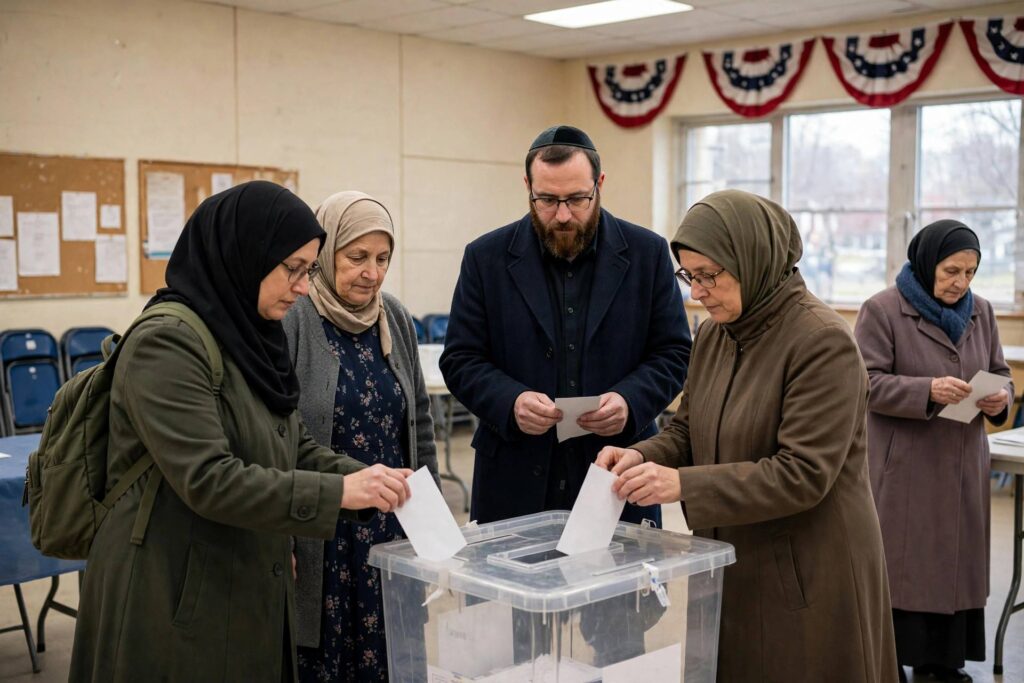
How do presidential primaries work? Every four years, Americans watch the presidential race unfold in a strange, staggered sequence: one tiny state votes in January, then another, then a giant pile of states all vote on the same Tuesday in March, and somehow this produces a nominee. If you have ever wondered how presidential primaries work — and how they differ from caucuses, conventions, and the general election — you are not alone. The system is genuinely complicated, because it is not one system at all. It is fifty-plus separate contests, each with its own rules, all feeding into a national outcome.
I cover elections for a living, and I will be straight with you about my ground rules here: I am describing the process as it is structured, not taking sides about who should win anything. Where rules vary by state — and they vary a lot — I will flag that, and I will clearly separate how the system is designed from the debates about whether it works well. Let us walk through it step by step.
Primaries vs. Caucuses: Two Ways to Choose a Nominee
The goal of the primary season is simple to state: each political party picks one nominee for president. The mechanism is where it gets complicated. States use one of two main methods, and a few use hybrids.
A primary is essentially an election run by the state government. Voters show up at polling places (or mail in ballots, or vote early) and cast secret ballots for their preferred candidate. It works like any other election you have participated in, and turnout is relatively high because voting is quick and private.
A caucus is a neighborhood meeting run by the party itself. Voters gather — traditionally in the evening, in school gyms and community centers — listen to short speeches, and then physically group themselves by candidate preference. In some caucus formats, supporters of candidates who fall below a viability threshold get a chance to realign with a second choice. Caucuses take longer, require public commitment, and historically draw much smaller crowds than primaries.
The trend has been strongly toward primaries. Over recent cycles, several states that once held caucuses have switched to primaries, largely because primaries are more accessible: shift workers, parents, military voters, and people with disabilities can all vote in a primary far more easily than they can attend a two-hour evening meeting. As of the most recent cycles, only a handful of states still use caucuses for presidential selection, and even those have been adding alternatives like mail-in options or party-run “firehouse” primaries.
Open, Closed, and Everything in Between
Who gets to vote in a primary is one of the most consequential — and most variable — rules in the system. States fall into several categories:
- Closed primaries: only voters registered with a party can vote in that party’s primary. Registered Democrats vote in the Democratic primary; registered Republicans in the Republican primary. Independents and unaffiliated voters sit out.
- Open primaries: any registered voter can participate in either party’s primary — though typically you must choose one, voting in both is not allowed.
- Semi-closed (or hybrid) primaries: party members vote in their party’s primary, and unaffiliated voters may choose which primary to vote in. Voters registered with the other party cannot cross over.
- Top-two or jungle primaries: used by a few states, all candidates appear on a single ballot regardless of party, and the top two finishers advance. This format is more common for other offices than for presidential selection.
Why does this matter? Because the electorate in a closed primary is, by definition, the party’s most committed members, while an open primary can include independents and even crossover voters from the other party. Candidates therefore face different strategic incentives: in closed-primary states, appealing to the party base matters most; in open states, broader appeal can pay off. When you see a candidate’s performance swing wildly between two states, the primary type is often part of the explanation.
Registration deadlines matter too. In many closed-primary states, you must be registered with a party weeks or even months before election day to participate. If you are reading this in an election year and thinking about voting in a primary, check your registration status and your state’s deadline now — not the week before.
How Do Presidential Primaries Work With Delegates?
Here is the part that confuses almost everyone: when you vote in a presidential primary, you are not directly voting for a candidate. You are voting for delegates — people pledged to support a candidate at the party’s national convention. The candidate who wins a majority of delegates becomes the nominee. It is an indirect system, and understanding delegates is the key to understanding the whole season.
Each state is allocated a certain number of delegates, roughly proportional to its population and its recent support for the party, with some bonus delegates thrown in for scheduling and party-building reasons. Big states send big delegations; small states send small ones. When candidates talk about the “delegate math,” this is what they mean: the race is not really about who wins the most states, but about who accumulates the most delegates.
The two parties allocate delegates very differently, and this is one of the most important structural facts of the system:
- Democrats use proportional allocation. In almost every state, delegates are divided proportionally among candidates who clear a 15 percent threshold. Win 40 percent of the vote and you get roughly 40 percent of the delegates. This keeps more candidates in the race longer and makes comebacks possible.
- Republicans allow winner-take-all. The GOP lets states choose: some award all their delegates to the statewide winner, some use proportional rules, and some use hybrids like winner-take-all by congressional district. Winner-take-all states can let a frontrunner build an apparently insurmountable lead quickly.
There is also the matter of superdelegates on the Democratic side — party officials and elected leaders who attend the convention as unpledged delegates. Their role has been reduced by reforms in recent cycles: under current rules, they generally cannot vote on the first ballot if their votes would decide the outcome. On the Republican side, each state sends a small number of automatic delegates too, but the system is less centralized.
The Calendar: Why Iowa and New Hampshire Vote First
The primary calendar is not random, though it can look that way. Two small states — Iowa and New Hampshire — have traditionally gone first, and their early position gives them outsized influence. A strong showing in an early state generates media coverage, donations, and momentum; a poor showing can end a campaign before most of the country has voted. Political scientists call this the momentum effect, and it is real: early wins change how later voters perceive the candidates.
After the early states comes the long slog, usually punctuated by Super Tuesday — a date, typically in early March, when a large number of states vote at once and a huge chunk of delegates is awarded in a single day. Super Tuesday is often the day the field narrows dramatically, because candidates who cannot compete across many states at once run out of money and rationale.
The parties try to control this calendar. Both national parties set windows during which states are allowed to hold their contests, and they penalize states that jump the line by stripping delegates. States, in turn, sometimes move their dates earlier to gain influence, which compresses the calendar and front-loads the race. The result is a calendar that is part design, part negotiation, and part accident — which is why it changes somewhat every cycle.
What Happens at the National Convention
After months of primaries and caucuses, each party holds a national convention in the summer — a multi-day event where delegates formally vote to nominate the candidate. In modern times, the nominee is almost always decided long before the convention, because some candidate has already secured a delegate majority during the primary season. The convention then functions as a ceremonial coronation and a week-long infomercial: speeches, the vice-presidential announcement, and the formal acceptance speech.
But the convention has a real constitutional function inside the party, and it matters when no candidate has a majority — a contested or brokered convention. In that scenario, delegates vote in rounds. Pledged delegates are generally bound to their candidate on the first ballot (rules vary by state and party), but if nobody wins outright, many become free to switch in later rounds, and backroom negotiations determine the outcome. Contested conventions were common in the first half of the twentieth century and have been rare since, but the rules for one still exist and still matter.
The convention also adopts the party platform — the formal statement of positions — and handles party business. And it is where the general election campaign effectively begins: the weeks after the conventions are when most voters start paying attention, which is why candidates time their vice-presidential picks and big speeches for maximum convention-week impact.
Primaries vs. the General Election: Key Differences
It helps to keep the primary season and the general election clearly separated in your mind, because they run on different logic:
- Who votes: primaries are contests within each party (with the electorate rules described above); the general election is open to all registered voters.
- What is at stake: primaries choose each party’s nominee; the general election chooses the president.
- How the winner is decided: primaries award delegates under party rules; the general election is decided by the Electoral College, where each state gets electoral votes roughly proportional to its congressional representation and most states award them winner-take-all.
- Timing: primaries run roughly January through June of the election year; conventions happen in summer; the general election is the first Tuesday after the first Monday in November.
One more distinction worth making: the primary system I have described is for the presidential nomination. Primaries for Senate, House, governor, and other offices follow similar principles but with their own state-specific rules, and in many states they happen on different dates — sometimes much later in the year. Your state might hold its presidential primary in March and its congressional primaries in August. Check your local election office for the full calendar.
Frequently Asked Questions
Do I have to be registered with a party to vote in a primary?
It depends on your state. In closed-primary states, yes — you must be registered with the party whose primary you want to vote in, often by a deadline weeks ahead. In open-primary states, no party registration is required; you simply choose which party’s ballot to take. In semi-closed states, unaffiliated voters can participate but members of the other party cannot cross over. Check your state’s rules with your local election office.
Why do Iowa and New Hampshire always go first?
Tradition, state law, and political leverage. Both states have laws or party rules protecting their early positions, and both national parties have historically granted them exceptions to the official calendar windows. Their first-in-the-nation status is periodically challenged — critics argue two small, unrepresentative states should not wield such influence — and the calendar order has shifted somewhat in recent cycles, but they remain the traditional starting line.
What is Super Tuesday?
Super Tuesday is the day in the primary calendar, usually in early March, when the largest number of states hold their primaries or caucuses at once. Because so many delegates are awarded on a single day, it is often the decisive moment of the nomination race — candidates who cannot compete nationally tend to drop out afterward.
Can delegates vote for whoever they want at the convention?
Mostly no, at least on the first ballot. Pledged delegates are bound — by state law, party rule, or both — to vote for the candidate they were elected to support. The details vary by state: some bind delegates for one ballot, some for more, some release them if their candidate drops out. Unpledged delegates, like Democratic superdelegates, have more freedom, though recent reforms limit when they can vote.
What happens if no candidate wins a majority of delegates?
You get a contested convention. Delegates vote in successive rounds, with pledged delegates becoming free to switch after the first ballot or two under most rules, while candidates and party leaders negotiate behind the scenes. It has not happened for a major party in the modern era, but the procedures are written into party rules precisely for that scenario.
Are primaries run by the government or by the parties?
Primaries are run by state and local governments, using public election infrastructure — polling places, ballots, vote counting. Caucuses are run by the parties themselves. This is one reason primaries are more accessible and why many states have moved from caucuses to primaries: the government-run process comes with the accessibility and security standards of regular elections.
Why the System Looks the Way It Does
The primary system is young by American standards — the modern version only dates to the reforms of the early 1970s, when both parties shifted power from convention insiders to voters after the chaotic 1968 Democratic convention. Every quirk you have read about here — the staggered calendar, the delegate math, the open-versus-closed fights — is the product of that ongoing negotiation between parties that want order and voters who want a voice. However you feel about the results it produces, understanding how presidential primaries work is the first step to judging whether the system serves the voters it claims to empower. Check your registration, learn your state’s rules, and vote like the calendar was designed around you — because in the early states, at least, it was.