What Is a Layover vs Stopover? Difference + Money-Saving Tips


Booking a flight with a connection, you’ll see two words that sound interchangeable but aren’t: layover and stopover. Knowing what is a layover vs stopover can be the difference between sprinting through an airport and spending two free days in Paris on the same ticket. I’ve used stopovers to add entire mini-trips to long-haul itineraries at zero extra airfare, and I’ve also misjudged layovers and spent miserable nights on terminal benches. Here’s the clear distinction, when each saves you money, and how to book them right.
The Clear Distinction
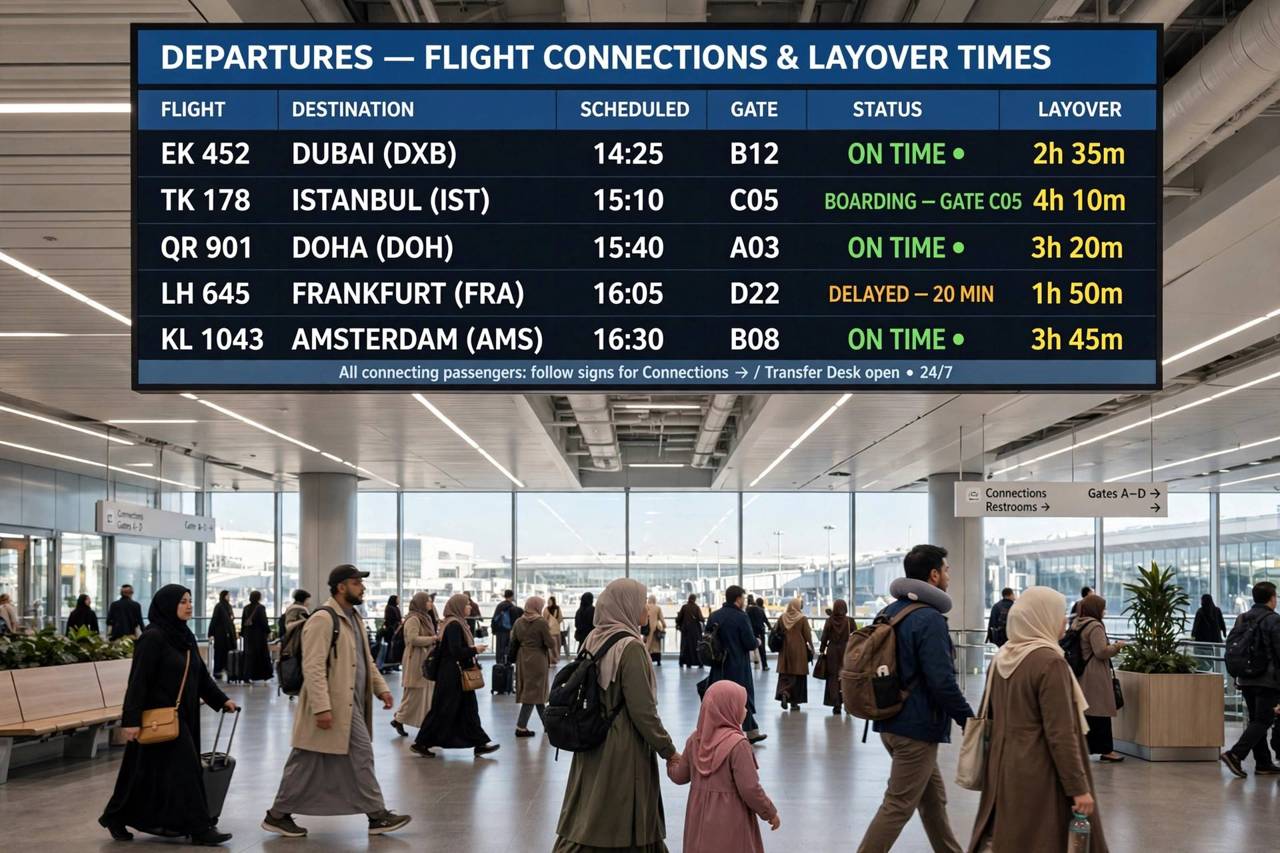
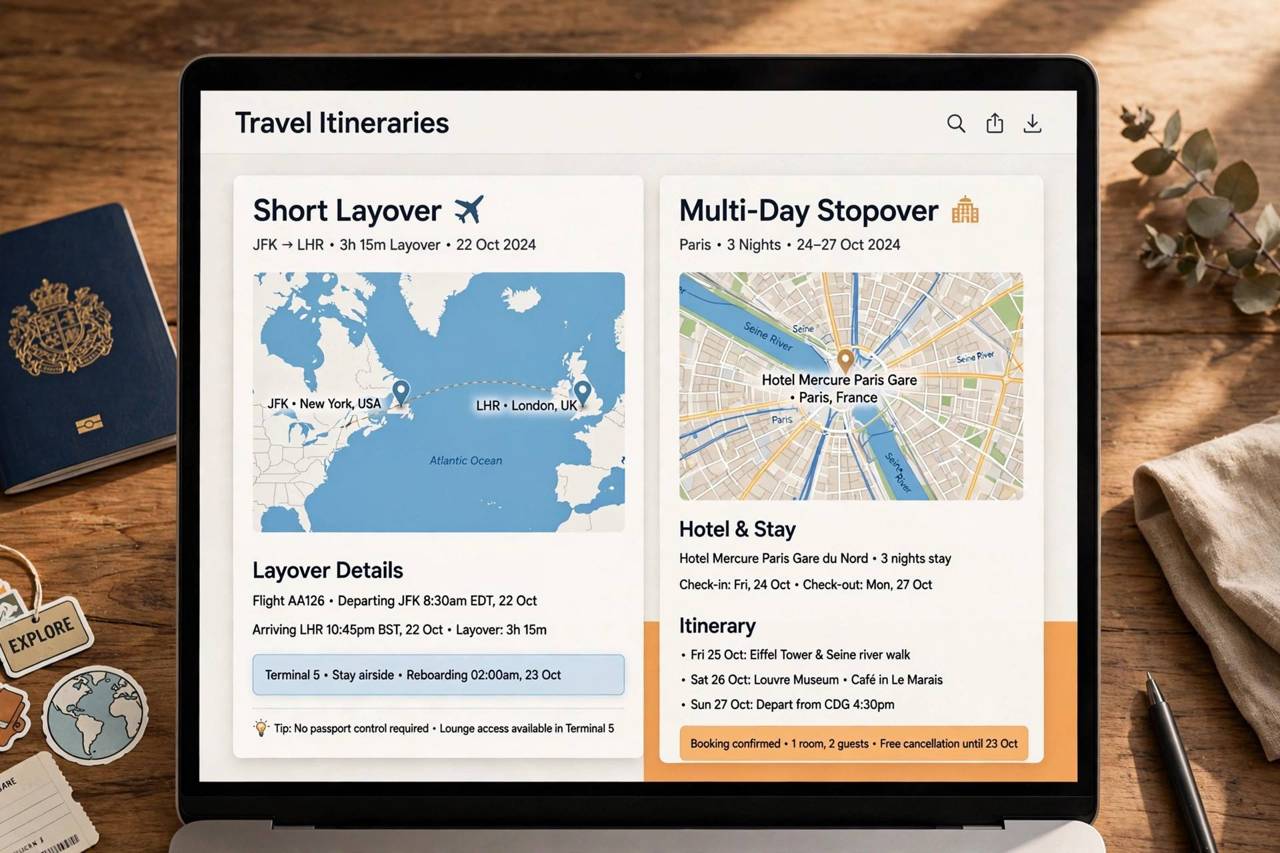
- Layover: A short connection between flights — typically under 24 hours on international itineraries (under 4 hours on domestic U.S. itineraries, by airline convention). You stay in the airport (or nearby), then board your next flight. It’s a pause, not a visit.
- Stopover: A deliberate break of 24+ hours (international) in the connecting city — long enough to leave the airport, get a hotel, and actually see the place. On many airlines, stopovers can last days or even weeks.
The practical difference: a layover is something that happens to you; a stopover is something you choose. Airlines price them differently, handle baggage differently, and — crucially — some airlines actively encourage stopovers as a selling point while layovers are just logistics.
When a Stopover Saves You Real Money
Here’s the trick the airlines don’t advertise loudly: a stopover lets you visit two destinations for the price of one ticket. Instead of booking New York → London and separately London → Rome, you book New York → Rome with a 3-day stopover in London — often for the same fare as the direct routing, or barely more. Timing matters too — see when is the best time to book flights for when fares are cheapest.
Several airlines have built entire programs around this. Icelandair pioneered the free Iceland stopover (up to 7 days, no extra airfare). TAP Air Portugal offers free stopovers in Lisbon or Porto. Emirates, Qatar Airways, Singapore Airlines, Turkish Airlines, and others offer subsidized stopover packages — sometimes including discounted hotels. These programs exist because the airline wants you to break your journey in their hub; it fills seats onward.
The math to check: compare the multi-city fare (A → hub, hub → B with days between) against the simple round trip (A → B). Use how to find cheap flights tactics to price both options fairly. If the difference is small — or zero — the stopover is essentially a free bonus trip. Just remember to budget the hotel and the extra time off.
Booking Tips: How to Actually Get a Stopover
- Use multi-city search. On Google Flights or the airline’s site, search A → hub and hub → B as separate legs with your desired dates. If the combined price looks close to the through-fare, you’ve found a stopover-friendly routing.
- Book with the airline directly for stopover programs — third-party sites often can’t construct the stopover fare rules properly.
- Check the airline’s stopover page first. Programs change; verify the current terms (max days, eligible routes, hotel deals) before planning around them.
- Watch visa requirements. A stopover means entering the country — check whether you need a visa or transit visa for the stopover nation, even if you wouldn’t need one for a pure airside layover.
- Confirm baggage handling. On stopovers, you typically collect and recheck bags; on short layovers, bags transfer automatically. Ask at check-in — assumptions here cause lost luggage.
Layover Strategy: Making Short Connections Work
Not every connection should be a stopover. For layovers, the game is buffer time. International connections: I won’t book under 2 hours, and 3 is comfortable — immigration, security re-screening, and terminal changes eat time. Domestic: 60–90 minutes minimum; 45 is doable only in small airports you know. Last flight of the day: add buffer — a missed connection with no later flight means a hotel night.
Long layovers (6–12 hours) are the awkward middle: too long for the terminal, too short for a real visit. My rule — if the city center is under 45 minutes from the airport and you have 6+ hours, go explore with a carry-on-only setup. Under that, find the lounge, the good coffee, and a power outlet. (Wondering if lounge access is worth paying for? See are airport lounges worth it.) Some airports (Singapore Changi, Seoul Incheon, Doha Hamad) even run free transit tours for long layovers — check before you resign yourself to the gate area.
What Is a Layover vs Stopover for Points and Miles?
Frequent flyers have known the stopover trick for decades, because award tickets often allow stopovers explicitly — sometimes even better than cash tickets. Several loyalty programs historically permitted a free stopover on round-trip awards: build New York → Tokyo with a stop in Seoul, all for the same miles as New York → Tokyo direct. Programs change their rules constantly (devaluations are the hobby’s weather), so verify current policy before planning — but the principle holds: when booking with miles, always check whether a stopover is allowed, because it’s the highest-value move in award travel.
The strategy: search your award program’s routing rules first, then construct the itinerary around the stopover, not the other way around. A stopover turns one trip’s miles into two trips’ experiences. And because award availability is per-segment, breaking the journey can actually make finding seats easier — you’re searching shorter segments with more options instead of one unicorn long-haul award.
One caution: stopovers on awards sometimes require calling the airline to book, since online tools can’t always construct the routing. An hour on the phone for a free extra destination is a trade worth making.
Stopover City Guides: Making 48 Hours Count
A two-day stopover is a different skill from a two-week trip. The rules: one base, one neighborhood. Don’t try to “see the city” — pick one great neighborhood near transit, stay there, and go deep. Two perfect days beat five frantic ones. Store luggage smart: most hub airports have left-luggage facilities, or use a luggage storage app — dragging a roller bag through a walking city ruins the stopover. Get connected fast: an eSIM or local SIM at the airport means maps, translation, and ride apps from minute one; airport Wi-Fi is not a plan.
Time your arrival: landing at 8 AM gives you two full days; landing at 10 PM gives you one and a jet-lagged morning. When choosing between similar routings, pick the daytime arrival — it’s worth more than a slightly shorter total trip. Eat like it’s your only chance — because it is. The stopover food strategy: one great local meal per day, street food between. You can sleep on the next flight.
Cities that reward the 48-hour stopover most: compact, transit-rich hubs where the airport connects fast to the center — think Singapore, Lisbon, Seoul, Amsterdam. Sprawling cities where the airport is an hour out punish short stopovers. Match the city to the clock.
Mistakes That Turn Layovers Into Nightmares
Most layover disasters are preventable, and they cluster around the same errors. Booking separate tickets: if your connection is on a different booking than your first flight, the airline owes you nothing when delays hit — no rebooking, no hotel. Through-tickets protect you; separate tickets strand you. The savings rarely justify the risk on tight connections.
Ignoring terminal changes: at mega-airports (Heathrow, JFK, Charles de Gaulle), changing terminals can mean a 30-minute bus ride plus re-clearing security. A 90-minute connection with a terminal change is really a 40-minute connection. Check the terminals when booking, not when landing. Forgetting immigration: connecting through the US from an international flight means clearing US immigration and customs even if you’re just passing through — budget a full extra hour. Many travelers learn this sprinting through Atlanta.
No buffer on the last flight: miss the last connection of the day and you’re sleeping in the terminal or paying for a hotel. If your itinerary’s final leg is the day’s last departure, add buffer or accept the gamble consciously. And assuming Wi-Fi and power: download offline maps, entertainment, and your boarding passes before you fly. The layover is not the time to discover the airport’s Wi-Fi needs a local phone number you don’t have.
Stopover vs. Layover: The One-Line Rule
If you take one rule from this article, make it this: under 24 hours, it’s a layover — plan for the airport. Over 24 hours, it’s a stopover — plan for the city. The mistake is treating one like the other: the traveler who tries to “see the city” on a 5-hour layover and misses the flight, or the one who sits in the terminal for a 30-hour stopover because they didn’t realize they could leave. Know which one you booked, plan accordingly, and the connection becomes part of the trip instead of an obstacle to it.
Frequently Asked Questions
What is the difference between a layover and a stopover?
A layover is a short connection (usually under 24 hours internationally) where you stay in the airport. A stopover is a deliberate 24+ hour break in the connecting city — long enough to leave the airport and explore.
How long can a stopover be?
It depends on the airline and fare — many allow several days, and dedicated stopover programs (Icelandair, TAP, Emirates) allow up to a week or more on a single ticket.
Do stopovers cost extra?
Often not, or only slightly more than the through-fare — that’s the whole appeal. Some airlines offer them free as a promotion for their hub city. Always compare the multi-city price against the simple round trip.
Can you leave the airport during a layover?
On international layovers long enough (6+ hours) with the right visa situation, yes — but factor in immigration both ways, security, and travel time to the city. For short layovers, stay put.
Do I need a visa for a stopover?
Possibly — a stopover means entering the country, which may require a visa even when a pure airside transit wouldn’t. Check the stopover country’s entry requirements for your nationality before booking.
What happens to my luggage on a stopover vs layover?
On short layovers bags usually transfer automatically; on stopovers you typically collect and recheck them. Confirm at check-in — policies vary by airline and airport.
What is a layover vs stopover? One is a wait; the other is an opportunity. Next time you book a long-haul flight, check the stopover option before you click purchase — the best travel deal is the free trip hiding inside the ticket you were already buying.