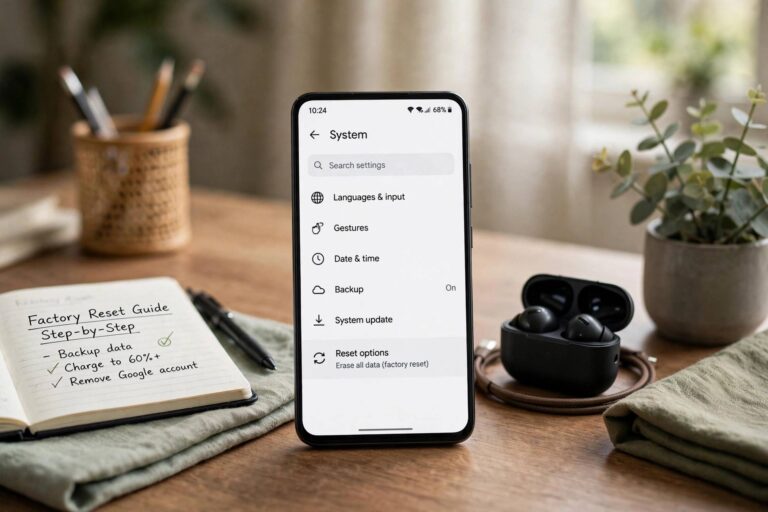
What Is 5G and Is It Worth It? The Plain-English 2026 Verdict

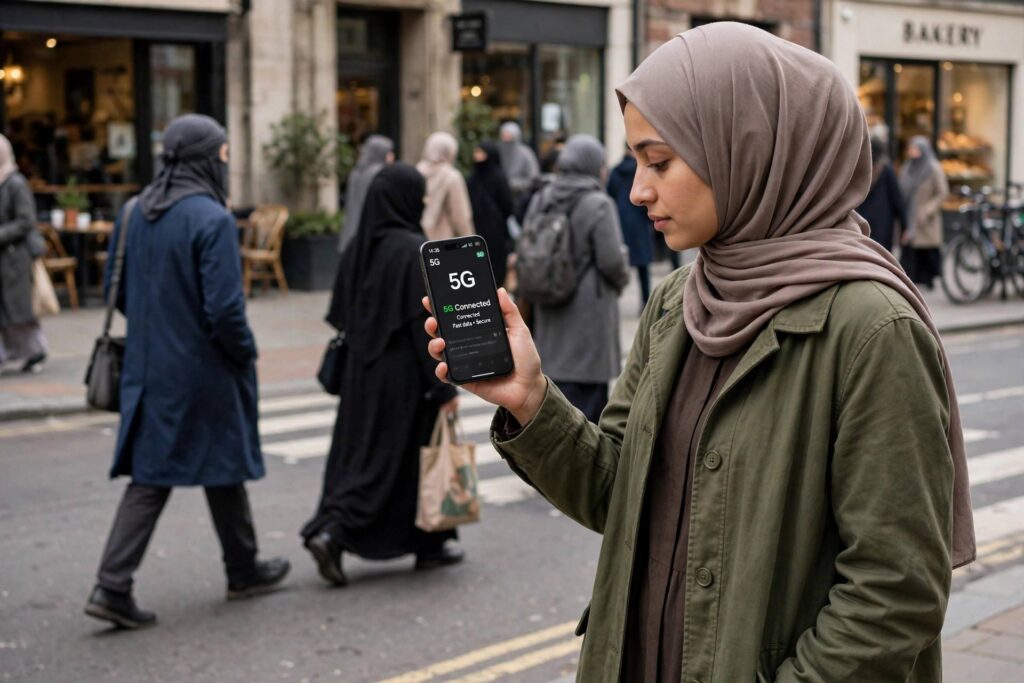
Every few years the phone industry declares a revolution, and for a while now that revolution has been 5G. But if you are standing in a store wondering what is 5G and is it worth it, the marketing has not been much help — it promises everything from instant downloads to remote surgery, most of which has nothing to do with your next phone. I have tested 5G across cities, suburbs and rural areas since the rollout began, and I can give you the plain-English 2026 verdict: what 5G actually changes in daily use, where 4G is still perfectly fine, and whether you should upgrade your phone for it.
The short answer: 5G is real, it is meaningfully faster in the right conditions, and for most people it is a nice-to-have rather than a reason to upgrade. The longer answer is more interesting, because “5G” is actually three different technologies wearing one name — and which one you get determines everything about your experience.
What 5G Actually Is (Without the Hype)
5G is the fifth generation of cellular network technology — the successor to 4G LTE. Like each generation before it, it moves data between your phone and the cell tower using radio waves, just with newer encoding, wider channels and smarter antennas. The headline improvements are speed (higher peak downloads), capacity (more devices served at once — crucial in stadiums and downtowns), and latency (faster round trips, which matters for gaming and real-time applications).
Here is the part the ads skip: 5G comes in flavors, and they perform nothing alike. Low-band 5G (the most common) travels far and penetrates buildings well, but is only modestly faster than good 4G — think 50–200 Mbps in practice. Mid-band 5G is the sweet spot: genuinely fast (200–900 Mbps) with decent range, and it is what most people mean when they say “5G feels fast.” mmWave 5G (millimeter wave) is the jaw-dropping demo tech — multi-gigabit speeds — but it is blocked by walls, windows, rain and sometimes your own hand, so it exists mainly in dense downtown cores, stadiums and airports. When someone’s 5G is amazing and yours is meh, you are almost certainly on different flavors.

What Is 5G and Is It Worth It? What Changes in Daily Use
Forget remote surgery. Here is what 5G actually does for a normal person with a normal phone in 2026.
Downloads and updates get fast — sometimes startlingly so. On good mid-band 5G, app downloads, OS updates and podcast syncs finish in seconds rather than minutes. It is the most noticeable everyday difference, and it is genuinely pleasant. If you download a lot on cellular, you will feel this constantly.
Congested places work again. This is the underrated win. At concerts, sports stadiums, festivals and busy downtowns, 4G networks historically collapsed under the load — everyone’s phone showing full bars and loading nothing. 5G’s extra capacity means your phone actually works where it used to give up. If your life involves crowds, this alone may justify caring about 5G.
Video calls and uploads improve. 5G typically offers better upload speeds than 4G, which means clearer video calls, faster photo backups and less painful cloud syncing. Not revolutionary, but noticeable if you work from your phone.
Hotspot use gets viable. Tethering a laptop to 5G on mid-band is legitimately usable as backup internet — I have worked full days on it. On 4G, tethering was an emergency measure; on good 5G, it is a plan B.
And what it does not change: streaming video looks the same (Netflix and YouTube cap quality well below what 4G already delivers), social media feels identical, web browsing is barely different, and battery life is slightly worse on 5G in weak-signal areas because the radio works harder hunting for signal. The mundane truth is that 4G was already fast enough for most of what phones do.
4G vs 5G: The Honest Comparison
Let us put them side by side on the things that matter. Speed: 5G wins, often by 3–10x on mid-band — but 4G’s 20–50 Mbps already covers streaming, browsing and calls. Coverage: 4G still wins in rural and many suburban areas; 5G low-band has largely caught up in cities but the fast flavors remain urban. Reliability: roughly even now — early 5G’s handoff glitches between 4G and 5G towers have mostly been ironed out. Battery: 4G edges it; 5G radios draw more power, especially hunting weak signal. Cost: effectively even in 2026 — carriers include 5G in standard plans, and 5G-capable phones are the default at most price points.
The practical upshot: 4G in 2026 is like a reliable sedan and 5G is the sportier model — faster and more capable, but the sedan still gets you everywhere you actually go. Nobody with good 4G coverage is suffering. The people who benefit most from 5G are those in congested urban areas, heavy downloaders, and mobile hotspot users.
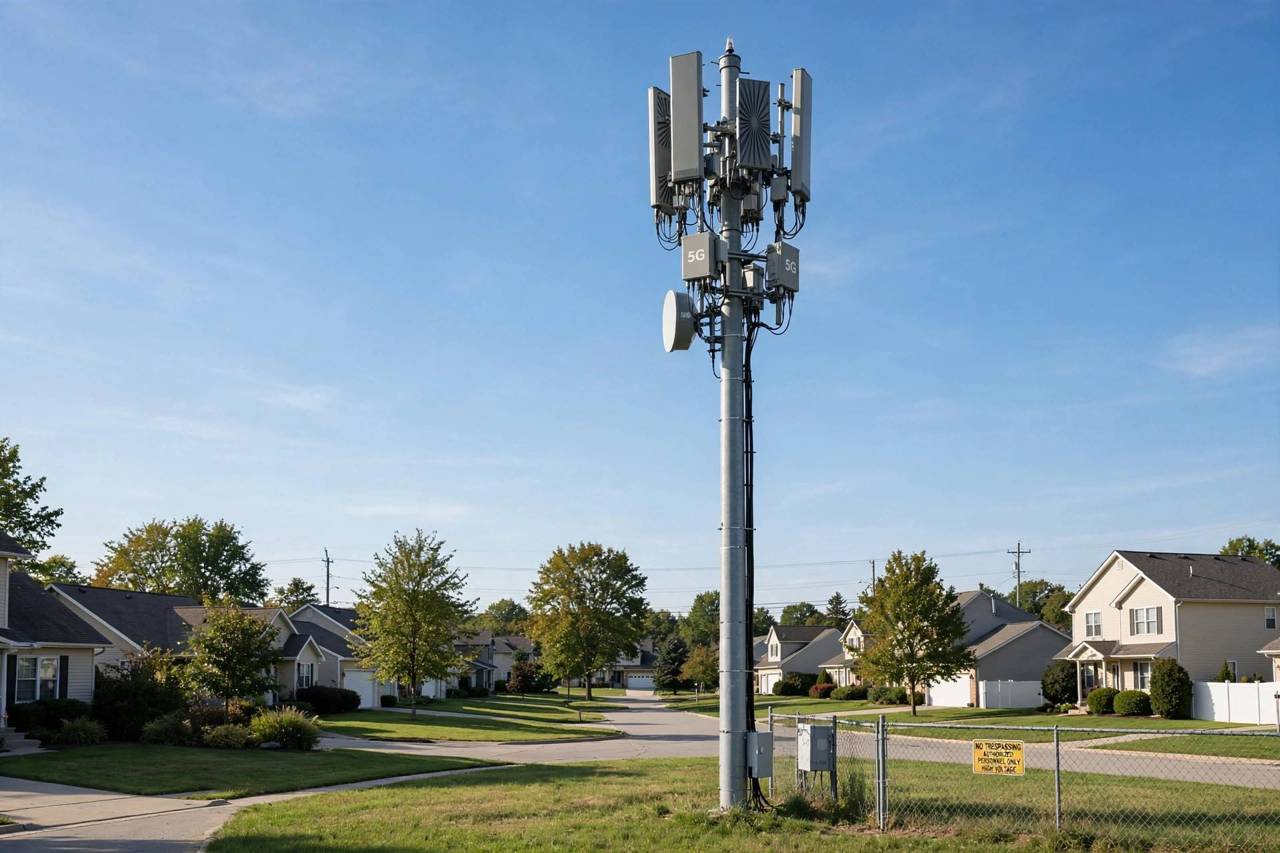
Should You Upgrade Your Phone for 5G?
Here is my decision framework, and I give it to friends exactly this way.
Upgrade for 5G if: your current phone is 3+ years old anyway (you will get 5G as a matter of course with any modern phone — do not pay extra for 5G, just do not avoid it), you live or work in a congested urban area where 4G struggles, you tether heavily, or your carrier is refarming 4G spectrum in your area (rural users: check this — some carriers are shifting rural spectrum to 5G, which can degrade the 4G experience over time).
Do not upgrade just for 5G if: your current phone works fine and is less than three years old, you are mostly on wifi anyway (most people’s phones spend 70%+ of their time on wifi — where 5G is irrelevant), your area only has low-band 5G (the improvement over 4G is marginal), or the upgrade would strain your budget. A phone bought for 5G hype and paid off over three years is a bad trade; a phone bought because yours is dying that happens to have 5G is just 2026.
The carrier question matters too: check actual coverage maps for your address and commute, not the national marketing map. “5G available” on a coverage map often means low-band — technically true, practically underwhelming. Ask specifically about mid-band coverage if speed is your goal.
5G Home Internet: Should Your House Switch?
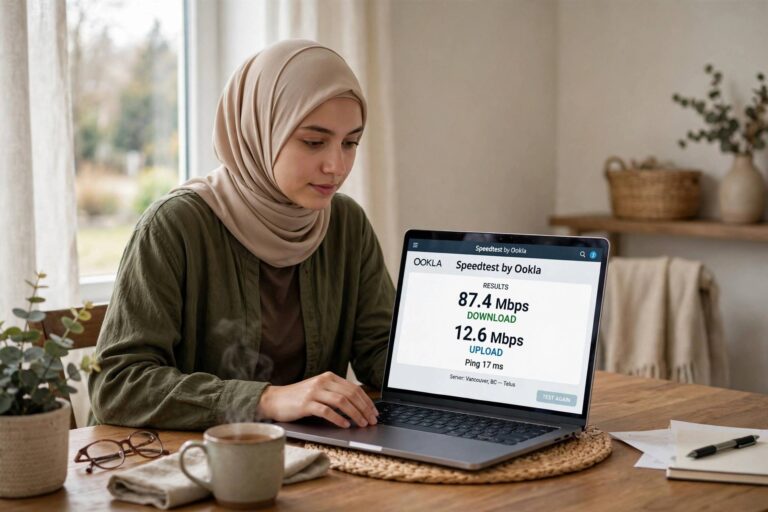
There is a second 5G question beyond phones: carriers now sell 5G home internet — a router with a 5G modem replacing your cable or fiber connection. In 2026 this is genuinely worth evaluating, with honest pros and cons. The case for: no installation appointments, no cables, simple flat pricing (often with no data caps and no annual contracts), and speeds that compete with mid-tier cable in good coverage areas — 100 to 300 Mbps down is typical on mid-band. For renters, rural users with poor wired options, and anyone who has fought their cable company, the simplicity is compelling.
The case against: speeds vary with tower congestion and signal — your neighbor’s experience predicts yours better than any advertisement — and 5G home internet is deprioritized behind phone traffic on busy towers, so evening slowdowns are real in congested areas. Upload speeds lag cable and fiber significantly, which matters if you work from home with heavy uploads. And the ultimate ceiling is lower: fiber’s gigabit-plus speeds are in a different league that 5G cannot touch.
My verdict: 5G home internet is an excellent disruptor option — ideal as competition that keeps cable honest, as a primary connection where wired options are bad or overpriced, and as a backup connection for remote workers who cannot afford outages. It is not a fiber replacement. Check your address’s real-world speeds (not the marketing), trial it during the return window, and run the same room-by-room tests from the wifi guide — because the router they ship you still has to cover your house.
The setup gotcha: 5G home routers need good signal where the router sits, which is often not where your old router sat. Place it near a window facing the nearest tower, elevated, and test speeds in that spot before running ethernet to the rest of the house. A 5G router stuffed in a basement closet performs like a different, much worse product than the same router on a second-floor windowsill — placement is the entire game, and the carrier’s app usually includes a signal meter to guide you. Get the placement right and the simplicity story actually delivers; get it wrong and you will blame the technology for a furniture problem.
Frequently Asked Questions
What is 5G in simple terms?
5G is the fifth generation of mobile network technology — faster, higher-capacity successor to 4G. It comes in three flavors (low-band, mid-band, mmWave) with very different real-world speeds, which is why experiences vary so much.
Is 5G worth it in 2026?
As a feature on a phone you are buying anyway: yes, it is the standard now. As a reason to upgrade an otherwise fine phone: usually not — the everyday differences (faster downloads, better crowded-place performance) are nice but not transformative for most users.
Is 5G faster than 4G in real life?
Yes, often significantly — mid-band 5G typically delivers 200–900 Mbps versus 20–50 Mbps on 4G. But low-band 5G (the most common type) is only modestly faster than good 4G, so your actual experience depends on which flavor your carrier provides locally.
Does 5G use more battery than 4G?
Slightly, yes — especially in weak-signal areas where the radio works harder. In strong 5G coverage the difference is negligible on modern phones. If battery is a priority and your signal is marginal, forcing 4G in settings is a legitimate tactic.
Will 4G stop working now that 5G is here?
No — 4G networks will operate for many years, and carriers are maintaining them as fallback. Eventually 4G will be retired the way 3G was, but that is a long way off, and your 4G phone is not becoming a brick anytime soon.
The Bottom Line
What is 5G: genuinely faster, higher-capacity cellular — best on mid-band, modest on low-band, spectacular-but-rare on mmWave. Is it worth it: as a standard feature, absolutely; as an upgrade reason alone, rarely. Buy the phone when you need the phone, check mid-band coverage at your address, and spend most of your time on wifi anyway — where none of this matters and everything just works.