What Is RNG in Video Games? Loot Drops, Crits, and Why Players Love to Hate It

If you have ever shouted at your screen after a boss dropped garbage loot for the tenth run in a row, you already know what is RNG in video games — you just might not know the name. RNG stands for “random number generator,” and it is the invisible dice roll behind loot drops, critical hits, card draws, and half the moments that make games thrilling or infuriating. Let me explain it properly, with real examples, and then we will talk about why players have such a complicated relationship with it.
At its core, RNG is simple: it is the system games use to produce unpredictable outcomes. When a game needs to decide something randomly — does this attack crit? which item drops? — it asks its random number generator for a number and maps that number to an outcome. Every “1% drop chance” you have ever farmed is RNG doing its job.
RNG in Action: Concrete Examples
Abstract definitions are boring. Here is where RNG actually lives in the games you play:
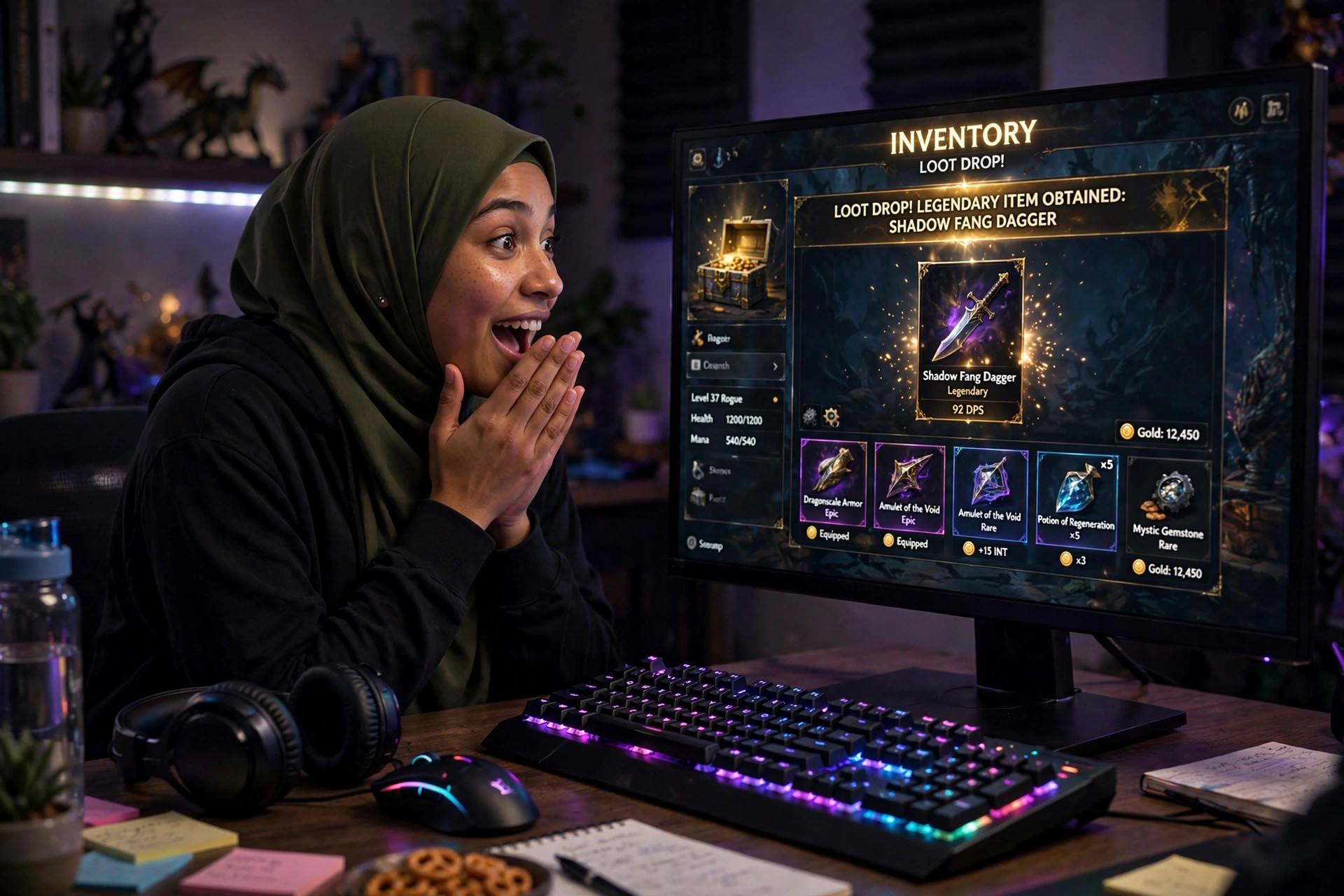
- Loot drops. The classic. You kill a boss, the game rolls its dice: 70% chance of common junk, 25% rare, 5% legendary. That mount you farmed for six months? Somewhere in the code, a random number kept landing on the wrong side of 1%. The pain is the point — rarity only feels rare because the dice usually say no.
- Critical hits. Your attack has a 20% crit chance. Each swing, the game rolls: 1–20 out of 100 means double damage. This is why two identical fights can feel completely different — in one, you crit three times and feel like a god; in the other, zero crits and you wonder what you did wrong. (Nothing. Dice.)
- Roguelike runs. Games like Hades or Slay the Spire are built on RNG: randomized room layouts, random upgrade choices, random enemy placements. No two runs are the same, which is the entire appeal — and why a “perfect build” sometimes never comes together. The randomness IS the game.
- Card draws and gacha pulls. Every digital card pack, every gacha banner, every loot box is RNG with presentation. The flashy animation is theater; underneath, a random number decided your fate the moment you clicked.
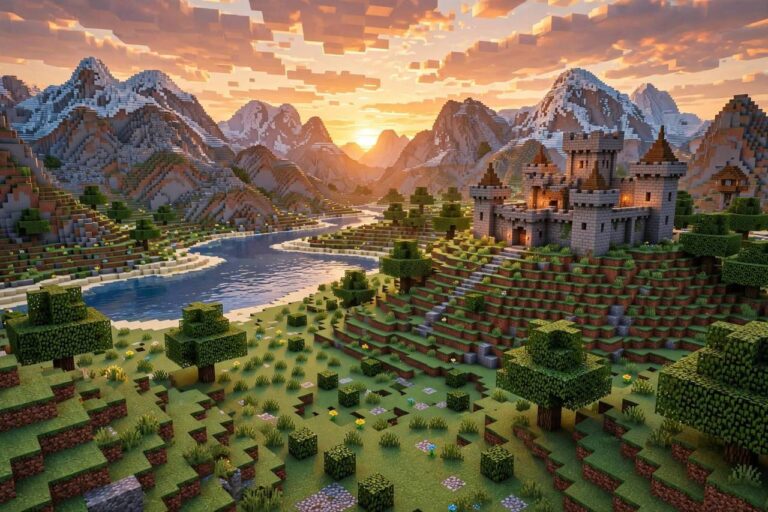
- Procedural generation. Minecraft worlds, No Man’s Sky planets, Diablo dungeons — vast content generated from random seeds. Technically this uses RNG too, just at world-building scale rather than moment-to-moment.
“Random” Has an Asterisk: Pseudo-RNG and Pity Systems
Here is something most players do not realize: game randomness is usually not truly random. Computers use pseudo-random number generators — algorithms that produce sequences that look random but are deterministic if you know the starting “seed.” Speedrunners exploit this: by manipulating the seed, they can predict “random” outcomes. It is deterministic chaos wearing a random costume.
More importantly, modern games quietly rig the dice in your favor more often than you think:
- Pity systems. Gacha games famously guarantee a rare pull after a set number of failures. Your “luck” on pull 90 was not luck — it was a scheduled mercy.
- Luck smoothing. Some games quietly boost your odds after a dry streak, or reduce them after a lucky streak, to keep outcomes near the advertised average. Dota 2’s pseudo-random distribution famously makes a 25% chance feel like 25% instead of the streaky mess true randomness produces.
- Bad-luck protection. MMOs increasingly guarantee that a coveted drop will appear within a certain number of kills. The grind has a ceiling, even if the game does not advertise it.
The irony: players demand randomness, then complain when randomness behaves randomly. True randomness includes brutal streaks — flipping ten tails in a row is normal for a coin. Game designers learned that players hate true randomness, so they sand down the edges and call it luck.
Why Players Criticize RNG
RNG is one of the most argued-about topics in gaming, and the criticisms are worth taking seriously:
It can undermine skill
The core complaint: when randomness decides outcomes, skill matters less. Losing a competitive match because the opponent high-rolled is infuriating in a way that losing to better play is not. This is why competitive games minimize RNG — chess has none, and esports titles carefully fence randomness into non-decisive corners.
It enables exploitative monetization
Loot boxes and gacha systems weaponize RNG psychology. Variable-ratio rewards — the same mechanism that makes slot machines addictive — keep players spending. Several countries have regulated or banned loot boxes for exactly this reason. When RNG is attached to your wallet instead of your gameplay, it stops being a game mechanic and starts being a business model.
It creates “feels bad” moments
Missing four 90%-chance shots in a row in XCOM is a rite of passage and a design failure at the same time. Humans are terrible at intuiting probability — we remember the streaks, not the averages — so even fair RNG feels unfair. Good designers know this and build in the smoothing systems described above.
But it also creates the best stories
Here is the defense: RNG generates moments no scripted design can. The 1% drop that finally appears. The crit that saves a doomed run. The roguelike build that comes together impossibly. Players complain about RNG constantly and would riot if it were removed — because without it, every playthrough is identical, and identical is boring. The love-hate relationship is the point.
Understanding how video games are made helps here — RNG systems are deliberate design choices, tuned and tested, not accidents. When randomness feels good, that is craftsmanship, not luck.
What Is RNG in Video Games vs Skill? Where the Line Sits
The deepest argument about RNG is not whether it exists — it is where the line sits between luck and skill. Every game draws this line somewhere, and where a game draws it defines its entire identity. Understanding the line makes you a smarter player and explains why certain games enrage you while others delight you.
Think of it as a spectrum, not a switch. On one end: chess, fighting games, competitive shooters — outcomes determined almost entirely by player decisions and execution. RNG is minimal or zero. On the other end: slot machines, gacha pulls — outcomes determined entirely by chance, skill irrelevant. Most games live in the middle, and the interesting design question is always: how much randomness, and where?
Good RNG creates variety; bad RNG decides outcomes. This is the design principle that separates beloved randomness from hated randomness. In a roguelike, RNG decides what tools you get — but your skill decides how you use them. The randomness creates the puzzle; you solve it. That feels great. In a competitive shooter, RNG deciding whether your bullet hits would feel terrible — the randomness would be overriding your aim, the core skill. Same mechanic, opposite receptions, because of where the line sits.
The “input randomness” vs “output randomness” distinction (from board game design, but it applies perfectly to video games): input randomness happens before you decide — the cards you are dealt, the loot that drops, the map you spawn on. You then make skillful decisions about it. Output randomness happens after you decide — you make the perfect play and the dice say no. Players tolerate input randomness happily and resent output randomness deeply. Missing a 95% shot in XCOM is output randomness, which is why it became a meme of suffering. Drawing a bad hand in Slay the Spire is input randomness, which is why it feels like a challenge instead of an insult.
What this means for you as a player: when a game’s RNG frustrates you, ask which kind it is. If it is input randomness, the skill is in adaptation — the best players of roguelikes and card games win by making good decisions with bad luck, and that is a learnable skill. If it is output randomness deciding competitive outcomes, your frustration is legitimate — the game is letting dice overrule skill, and you are allowed to bounce off it. Knowing the difference turns tilt into analysis, which is the first step to either improving or finding a better game.
Frequently Asked Questions
What does RNG stand for?
Random Number Generator. It refers both to the algorithm that produces random numbers and, by extension, to randomness as a game mechanic (“this game has too much RNG”). Gamers also use “RNG” as a noun for luck itself — “my RNG was terrible today” means “I got unlucky.”
Is RNG in games truly random?
Almost never. Games use pseudo-random number generators — deterministic algorithms that produce random-looking sequences from a starting seed. On top of that, designers add pity systems, luck smoothing, and bad-luck protection. What you experience as randomness is heavily curated.
Can you manipulate RNG in games?
Sometimes. Speedrunners famously manipulate RNG by controlling the seed — precise timing and inputs can force “random” outcomes to be predictable. In online games, server-side RNG is effectively unmanipulable. Single-player games with known RNG systems are the most exploitable, and entire speedrun categories revolve around it.
Why do gacha games use pity systems?
Partly regulation, partly retention. A player who never gets the rare character quits; a player guaranteed one eventually keeps spending. Pity systems cap the worst-case spending, which keeps the game legally defensible and keeps frustrated players from churning. It is kindness with a business model.
Which games have the most RNG?
Roguelikes and roguelites (Hades, Slay the Spire, Balatro) are built on it — randomness defines every run. Gacha games and loot-driven ARPGs (Diablo, Path of Exile) run on it economically. At the other end, fighting games, shooters, and chess-likes minimize it deliberately. The genre tells you the philosophy.
What does “RNG carried” mean in gaming slang?
It is a half-joking accusation that someone won through luck rather than skill — “you did not outplay me, the dice carried you.” You will hear it after a lucky crit chain, an improbable dodge streak, or a perfect loot drop at the perfect moment. It is usually said with a grin, but it reveals the genuine tension at the heart of RNG: players want to believe outcomes reflect skill, and randomness threatens that story. The appropriate response is to laugh, acknowledge the dice, and queue up again.
Embrace the Dice
So what is RNG in video games? The invisible dice behind the drops, crits, and runs — pseudo-random, frequently rigged in your favor, and responsible for both your best gaming stories and your worst. Next time the dice betray you, remember: the streak is the price of the thrill. And somewhere in the code, a pity counter is quietly making sure your suffering has a limit.