

Here’s a sentence I heard at least once a week when I was tutoring: “I read the whole chapter, but I don’t remember any of it.” The student wasn’t lying, and they weren’t lazy. Their eyes had moved across every word. The problem was that their brain had never shown up.
Reading comprehension isn’t about reading more. It’s about reading differently. The students I worked with didn’t need extra hours — they needed a different relationship with the page. These ten strategies are the ones that actually moved the needle, from middle schoolers to college freshmen.
Contents
- Why Reading Comprehension Breaks Down
- 10 Strategies That Actually Work
- For Parents: Helping Your Child Build Comprehension
- Making It a Daily Habit
- Frequently Asked Questions

Why Reading Comprehension Breaks Down
Most comprehension problems come from one of three places, and it helps to know which is yours:
Passive reading. This is the big one. Eyes moving, mind elsewhere — thinking about lunch, replaying a conversation, worrying about the test. The words go in and evaporate. If you finish a page and can’t say what it was about, you were passively reading.
Vocabulary gaps. Every unknown word is a tiny roadblock. One or two per page is fine — your brain fills them in from context. But when every paragraph has three words you don’t know, comprehension collapses. This is especially common with textbook language, which is denser than anything students read for fun.
No framework. Good readers constantly predict, connect, and question. Struggling readers just… proceed. They don’t have a mental habit of asking “wait, what did that mean?” so confusion compounds silently until the chapter ends.
The good news: all three are fixable with technique, not talent. Here’s how.
10 Strategies That Actually Work
1. Preview before you read
Spend three minutes surveying: read the headings, look at the pictures and captions, read the first sentence of each paragraph, and read the chapter summary if there is one. This gives your brain a skeleton to hang details on. Students who preview consistently tell me the actual reading feels “easier” — because it is. Your brain loves knowing where it’s going.
2. Turn headings into questions
Before reading a section, turn its heading into a question. “The Causes of the Civil War” becomes “What caused the Civil War?” Now you’re reading with a mission instead of wandering. Your brain is remarkably good at finding answers when it knows the question in advance — it’s the same reason you suddenly notice red cars everywhere after deciding to buy one.
3. Annotate — argue with the text
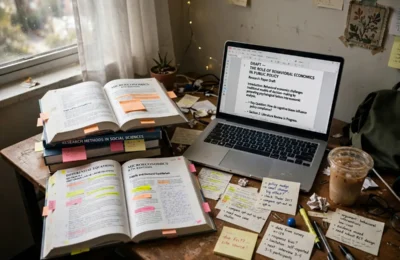
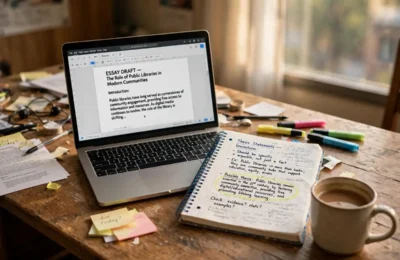
Underline sparingly (a highlighter-happy page where everything is yellow is the same as nothing highlighted). Instead, write in the margins: “why?”, “connects to chapter 3”, “this contradicts what she said Tuesday.” Annotation forces your brain to respond rather than just receive. If it’s a library book, sticky notes work the same way.
4. Summarize each section in one sentence
After each section, close the book and say out loud — in your own words — what it said. One sentence. If you can’t, you didn’t understand it, and that’s useful information: go back and re-read just that section. This is the single most powerful technique on this list, and the one students resist most because it feels slow. It’s slow the way sharpening an axe is slow.
5. Visualize as you go
Turn words into mental movies. Reading about a historical battle? Picture the terrain. Reading a biology process? Watch the molecules move in your head. The brain remembers images far better than abstract text, and the act of translating words into pictures forces real processing. Fiction readers do this naturally; textbook readers have to do it deliberately.
6. Attack unknown words strategically
Don’t stop for every unfamiliar word — it murders your flow. Circle or note it, guess from context, and keep going. Look it up afterward, but only the words that appeared more than once or seemed load-bearing. Then — this is the key step — use each new word in a sentence of your own within 24 hours. That’s what moves it into long-term memory.
7. Connect to what you already know
Before and during reading, ask: “What does this remind me of?” New information sticks to old information. A student who connects a history chapter to a movie they saw, or a science concept to something from last year’s class, will remember both better. This is also why background knowledge matters so much — the more you know, the easier new things are to learn. Reading widely, even for fun, literally makes future reading easier.
8. Read in focused chunks, not marathons
Comprehension degrades with fatigue. Twenty-five focused minutes beats two glazed hours. Read a section, summarize it, take a five-minute break, then continue. Your brain consolidates during breaks — that “aha” moment in the shower after studying isn’t a coincidence.
9. Discuss or teach what you read
Explaining a concept to someone else is the ultimate comprehension test. Study groups work when members take turns teaching sections, not when everyone silently re-reads. No study partner? Teach your dog. Teach an empty chair. The act of organizing the idea for someone else’s brain organizes it in yours.
10. Practice with slightly hard material
Here’s the uncomfortable truth: reading only easy material doesn’t build comprehension muscle. You need text that’s a small stretch — where you understand most of it but have to work a bit. Too easy and nothing grows; too hard and you drown. Aim for the level where you’re looking up a few words per chapter and re-reading occasionally. That’s the growth zone.
These strategies compound beautifully with a solid overall study system — if exam season is approaching, my guide on how to study for final exams shows how to fold them into a weekly plan.

For Parents: Helping Your Child Build Comprehension
If you’re a parent reading this because your child “hates reading” or brings home puzzlingly low reading scores, here’s what I told parents for years:
Read together, out loud, past the age you think you should stop. Even with 10- and 11-year-olds. Hearing fluent reading while following along builds the mental models of how text works. And it gives you natural openings to ask “what do you think happens next?” — which is comprehension practice disguised as conversation.
Ask questions that don’t have one-word answers. Not “did you like it?” but “what would you have done in her place?” and “why do you think he lied about that?” You’re training the prediction-and-inference muscles.
Don’t panic about speed. Slow, thoughtful reading beats fast, empty reading every time. Speed comes naturally as comprehension improves — never the reverse.
Model it. Kids who see parents reading — books, articles, anything — internalize that reading is what people do. You don’t need a lecture about it. Just be seen reading.
For younger learners especially, the environment matters enormously. The Montessori approach to learning has some lovely insights on building intrinsic motivation that apply well beyond preschool.
Making It a Daily Habit
Techniques only work if they become habits. The students who transformed their comprehension fastest did three small things daily:
Fifteen minutes of real reading. Not scrolling, not skimming headlines — fifteen minutes with a book or long article, using one strategy from this list. That’s it. Small, daily, non-negotiable.
One summary a day. After any reading — a news article, a textbook section — one sentence: what was that about? Say it, write it, text it to a friend. The format doesn’t matter; the retrieval does.
A running vocabulary list. Keep a note on your phone. New words go in with your own example sentence. Review it weekly. Within two months, you’ll feel the difference in every subject — including ones you didn’t expect. Vocabulary is the tide that lifts all academic boats.
Language learners get a double benefit here: every one of these strategies transfers directly. If you’re working on a second language, see how to learn a new language faster for the crossover techniques.
Start with just strategies 1, 3, and 4 this week — preview, annotate, summarize. Master those, and you’ll already read better than most of your classmates. Add the rest as they start feeling natural. Comprehension isn’t a gift. It’s a practice.

Frequently Asked Questions
The fastest wins come from three habits: preview the text before reading (headings, summaries), annotate actively in the margins instead of passively highlighting, and summarize each section in one sentence in your own words. Most students notice improvement within two weeks of daily practice.
Usually it’s passive reading — your eyes move but your brain doesn’t engage. Fix it by turning headings into questions before each section, pausing to summarize, and eliminating distractions. If vocabulary gaps are the issue (many unknown words), address those separately with a running word list.
Yes, but only if the reading is active. Mindless page-turning doesn’t help. Fifteen minutes of engaged reading with annotation and summarizing beats two hours of passive reading. Also important: read slightly challenging material — too easy and nothing grows.
Read the questions first so you know what to look for, then read the passage actively. Underline key names, dates, and turning points. For “main idea” questions, the answer is usually in the first or last paragraph. And always go back to the text — never answer from memory alone on detail questions.
Read aloud together regularly, ask open-ended questions (“why do you think she did that?”), and discuss what you read. Don’t focus on speed — comprehension first, speed follows. And model reading yourself: kids who see parents reading develop stronger reading habits.
Strongly. Every unknown word is a small roadblock, and too many per page collapses understanding. Keep a running vocabulary list with your own example sentences, review it weekly, and guess unknown words from context before looking them up — the guessing itself builds skill.