Walk of Fame Star Ceremony: How It Works

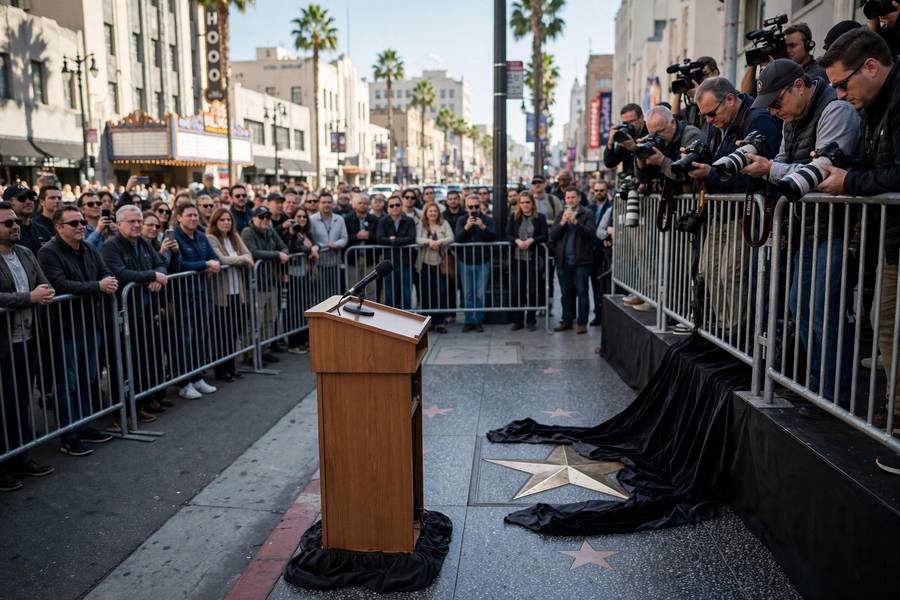
I’ve been to enough Walk of Fame star ceremonies to have the format memorized: the closed-off sidewalk, the podium, the drape over the star, the speeches that run exactly slightly too long, and then the moment — the honoree pulling the cover off their own name while a hundred cameras fire at once. It’s free, it’s public, it’s gloriously formulaic, and it’s one of the best shows in Los Angeles. Here’s exactly how a star ceremony works, from the announcement to the last photo.
In this article
In this guide:
The Announcement: Ten Days’ Notice
Star ceremonies are typically announced about ten days in advance on the Walk of Fame’s official website. Ten days. That’s the whole promotional window — a blink in an industry that plans premieres a year out.
The short notice is partly tradition and partly logistics: the date has to align the honoree’s schedule, the sponsor’s marketing calendar, and the Chamber’s availability, and by the time all three agree, there’s no time for a long buildup. The result is that ceremonies feel like delightful pop-up events. One day there’s no reason to be on Hollywood Boulevard; ten days later, Dwayne Johnson is pulling a drape off his name and you’re standing twenty feet away.
The timing is rarely accidental. Ceremonies are frequently scheduled to coincide with a film premiere, an album release, a show launch, or an anniversary. The industry understood decades ago that a star unveiling is also a press event, and the Chamber is happy to play along. When a ceremony date seems oddly specific, check what’s coming out that week. You’ll usually find your answer.
The Setup: Closing the Sidewalk
On the morning of the ceremony, a section of Hollywood Boulevard gets closed to foot traffic. Barriers go up, a podium is installed, and a small stage area takes shape around the star — which, by this point, is already in the ground, hidden under a drape or cover. (The star is installed before the ceremony, not during it. The “unveiling” reveals it; the jackhammer work happened days earlier, without an audience.)
Risers go up for the press photographers. A sound system is tested. The Chamber’s producer — the emcee for these events — runs through the program with the honoree’s team. Guest speakers arrive and get their instructions: keep it short, keep it warm, don’t upstage the honoree.
Meanwhile, outside the barriers, the crowd gathers. For a major star, fans start arriving hours early. For a beloved character actor, it’s a smaller, warmer crowd — industry folks, family, the genuinely devoted. I’ve always preferred the smaller ones. The love is denser.
The Program, Minute by Minute
The ceremony follows a format so consistent you could set your watch by it:
The emcee opens. The Chamber’s producer welcomes the crowd, thanks the sponsor, and gives the brief official history — the Walk, the category, the significance. This is the institutional part, and it’s kept mercifully short.
The guest speakers speak. Two or three people, usually co-stars, directors, collaborators, or family members, take the podium. The good ones tell a story — the audition, the all-night shoot, the kindness nobody saw. The bad ones read a list of credits. The audience can tell the difference instantly, and so can the honoree.
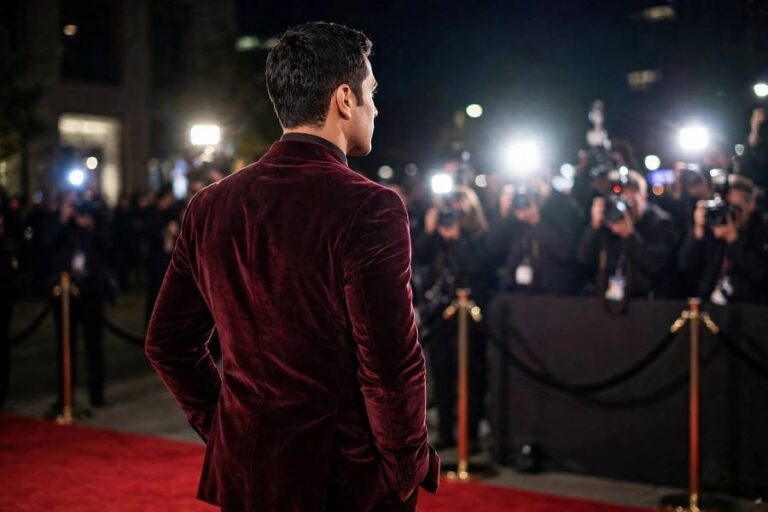
The honoree is introduced. Applause, sometimes thunderous. The walk to the podium is its own little red carpet — and for the fashion-watchers in the crowd, the ceremony outfit is absolutely part of the show. (I’ve seen acceptance looks discussed for weeks afterward. This is Hollywood; the sidewalk is a runway.)
The proclamation. Sometimes a city official presents a proclamation declaring the day in the honoree’s honor. It’s ceremonial in the most literal sense, and the honoree always looks genuinely touched, even the ones who’ve won Oscars.
The Unveiling: The Moment Itself
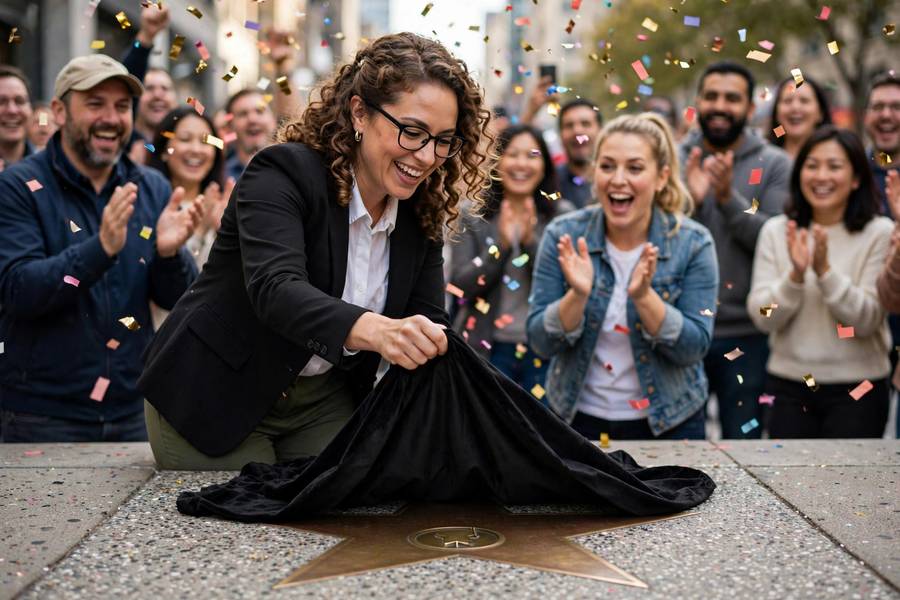
Then comes the reason everyone showed up. The honoree steps to the star, takes hold of the drape, and pulls. Cameras fire in a wall of white light. The crowd cheers. And there it is: the name, in brass, in terrazzo, in the sidewalk — permanent in a way almost nothing else in entertainment is.
I’ve watched this moment dozens of times, and it still gets me. There’s something about seeing a person confront their own name as a monument — while they’re alive to see it — that cuts through the PR machinery. Some honorees laugh. Some cry. Some just stare for a beat too long, and you can see them doing the math on everything it took to get here.
The acceptance speech follows, usually short. The best ones thank the unglamorous people — the acting teacher, the first agent, the spouse who worked double shifts. The worst ones thank “everyone who believed in me” without naming a single human. The crowd applauds either way, but only one kind gets remembered.
Then the posed photos: honoree with the star, honoree with the speakers, honoree pointing at their own name (mandatory), honoree kneeling beside it (traditional). The photographers call for the poses like directors. Everybody complies. It’s the most choreographed spontaneity in show business.
After the Cameras Stop
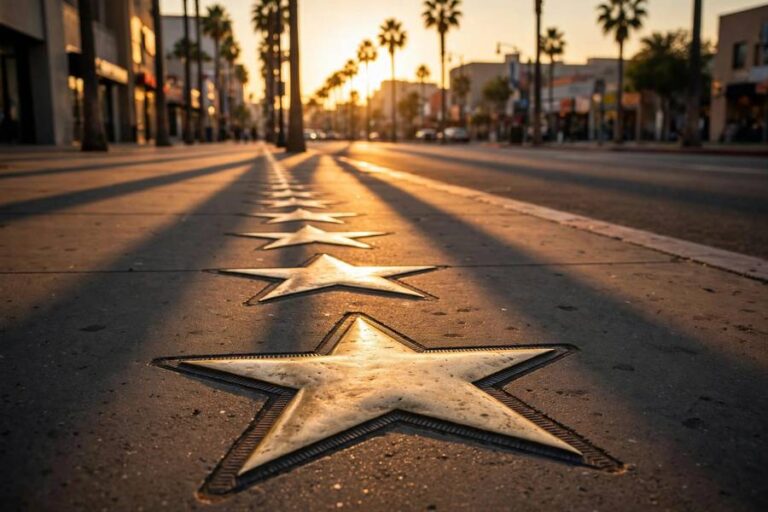
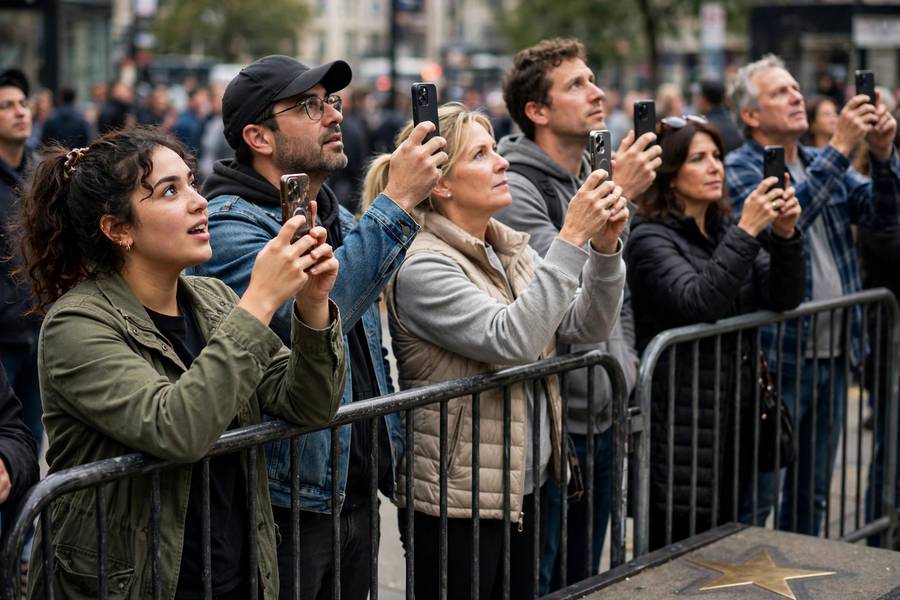
The whole thing usually runs under an hour. The barriers come down, the crowd disperses, and the boulevard goes back to its beautiful chaos — except now there’s a new star in the sidewalk, and tourists will be posing with it within minutes.
What happens afterward is unofficial: lunch, parties, the rest of the press day. The star itself needs no further ceremony. It’s in the ground, under the feet of millions, and per Chamber policy, it’s never coming out. The honoree goes back to work. The sidewalk keeps the name.
There’s a lovely coda that happens over the following days: fans visit the new star, leave flowers or notes, take photos. For the big names, the star becomes an instant pilgrimage site. The ceremony is an hour; the afterlife is forever.
How to Attend a Ceremony Yourself
Here’s the part I love telling people: you can just go. Star ceremonies are free and open to the public. No tickets, no invitations, no velvet rope for civilians. Check the Walk’s official site for upcoming dedications (remember the ten-day window), show up early, and stand outside the barriers with everyone else.
Arrive early. For A-list honorees, the crowd builds fast. An hour early is sensible; two isn’t crazy for the biggest names.
Bring sun protection. Hollywood Boulevard at midday is bright, hot, and shadeless. Hat, sunscreen, water. The ceremony won’t pause for your sunburn.
Manage your sightlines. The press risers get the best angles; the public gets the sides. A spot slightly to the side of the podium, near the front of the public area, is the sweet spot.
Be cool. It’s a public event, but it’s also someone’s career milestone. Cheer, applaud, take your photos — and let the honoree have their moment. The boulevard has seen enough chaos; a ceremony is one of its genuinely classy occasions.
The complete backstory — selection, categories, the $85,000 fee — is in what the Hollywood Walk of Fame is. Ceremonies are often timed to press cycles, and what a press tour is explains the machinery they plug into. For the fashion side of these events — because the ceremony outfit is absolutely a red carpet moment — the best red carpet looks are the natural companion.
Ceremonies People Still Talk About
A few dedications have transcended the format and become stories in their own right:
James Hong, 2022. At 93, the oldest person ever honored at the time, with Jamie Lee Curtis and Daniel Dae Kim as speakers. Hong’s speech — decades of “hey, it’s that guy” distilled into triumph — was one of the most emotional the boulevard has seen. The crowd wasn’t just celebrating a star; it was celebrating every working actor who ever waited.
Lisa Lu, 2025. At 98, breaking Hong’s record, accepting an honor she’d declined for decades. Her remarks about resilience and the next generation of Asian actors turned a sidewalk ceremony into a cultural moment.
Carrie Fisher and Debbie Reynolds. Mother and daughter, honored in a joint ceremony a day apart, their stars placed side by side — after they died a day apart. The Hollywood Chamber doesn’t stage-manage emotion, but sometimes the timing does it anyway.
The best ceremonies share a quality: they feel less like industry events and more like family gatherings that happen to have cameras. If you get the chance to attend one, take it. The ten-day notice is short, but the memory is long.
Frequently Asked Questions
Yes — completely free and open to the public. No tickets needed. Ceremonies are usually announced about ten days in advance on the official Walk of Fame website.
Usually under an hour: emcee welcome, two or three guest speakers, the unveiling itself, the honoree’s acceptance speech, and posed photos.
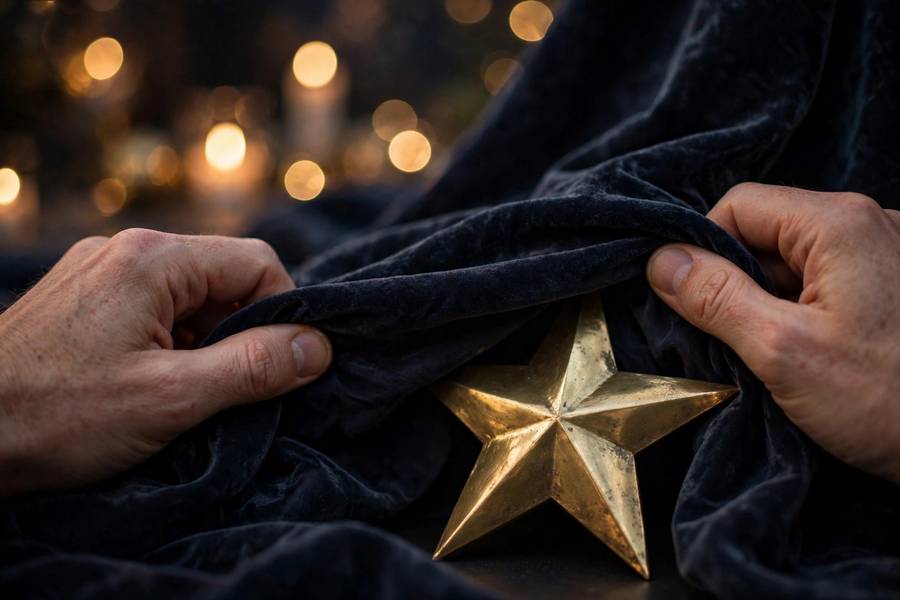
Before. The star is set into the sidewalk days earlier and hidden under a drape. The ceremony’s “unveiling” is the reveal, not the installation.
Typically two or three guest speakers — co-stars, directors, collaborators, or family members — plus the Chamber’s producer as emcee and sometimes a city official presenting a proclamation.
The unveiling doubles as a press event, so sponsors and publicists schedule it to coincide with a premiere, album release, or show launch for maximum media coverage. The Chamber is happy to accommodate.