Every car commercial now whispers the words “self-driving” like it’s a magic spell. But “self-driving” is doing an enormous amount of heavy lifting in those ads, because it can mean anything from “the car beeps when you drift” to “there is literally no steering wheel.” I kept getting annoyed by this — how is a buyer supposed to know what they’re actually getting? — until I learned that the industry solved this problem years ago. It’s called the levels of autonomy, a six-step scale from 0 to 5, and once you know it, car marketing can never fool you again.
This guide walks through all six levels of autonomy, explains where today’s cars actually sit on the scale (spoiler: almost everything you can buy is Level 2), and why the jump from Level 2 to Level 3 is the most important — and most misunderstood — line in the whole system. If you want the full technical picture, my overview of how self-driving cars work covers the sensors, software, and AI behind the magic.
Table of Contents
- The Scale: 0 to 5, Who’s Actually Driving
- Level 0 – No Automation
- Level 1 – Driver Assistance
- Level 2 – Partial Automation
- Level 3 – Conditional Automation
- Level 4 – High Automation
- Level 5 – Full Automation
- The Real Cliff: Level 2 vs Level 3
- Where Today’s Cars Actually Sit
- Why the Marketing Gets So Slippery
- What Your Next Car Will Probably Have
- Frequently Asked Questions
The Scale: 0 to 5, Who’s Actually Driving
The levels come from SAE International (the Society of Automotive Engineers). Their J3016 standard defines six levels, 0 through 5, and the classification hinges on one question: who is responsible for driving — the human or the system?
Notice that the scale is not about how fancy the technology is. It’s about the division of responsibility. A car with a hundred sensors and a supercomputer in the trunk can still be Level 2 if the human is legally the driver.
The levels also split cleanly in half. Levels 0–2: the human drives, and the system helps. Levels 3–5: the system drives, and the human (eventually) is optional. That midpoint is where everything gets interesting, and where the lawsuits live.
Level 0 – No Automation
Level 0 is your grandfather’s car, and honestly, still most of the cars on the road. The human does everything: steering, braking, accelerating, watching. A Level 0 car can have warning systems — a blind-spot beep, a backup camera, a lane-departure warning — because warnings don’t drive the car. They just nag you while you drive.
Level 1 – Driver Assistance
Level 1: the car can control either steering or speed, but not both at once. Adaptive cruise control is the classic example — it holds your speed and distance from the car ahead, but you steer. Or lane-centering that steers while you work the pedals.
Level 2 – Partial Automation
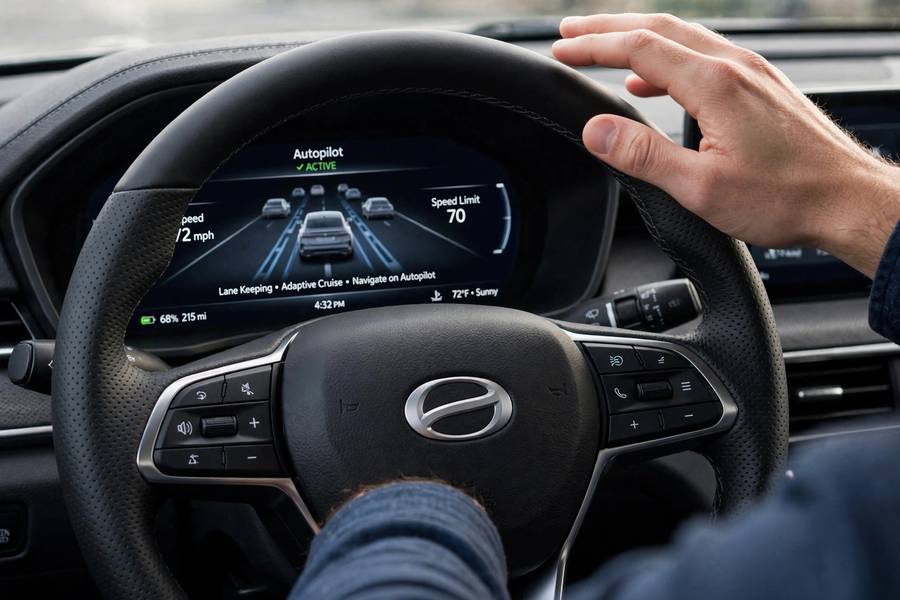
Level 2 is where modern driving changed. The car can steer and control speed simultaneously — think Tesla Autopilot, GM Super Cruise, Ford BlueCruise. It holds the lane, manages following distance, and on some systems changes lanes on its own.
Here’s the catch that defines Level 2, and I cannot stress this enough: the human must supervise constantly. Eyes on the road, hands on or near the wheel (depending on the system), ready to take over instantly. The system is assisting; you are driving. If it crashes while you’re watching a movie, that’s your fault — legally, morally, and in every insurance policy I’ve ever seen.
This is the level where the mismatch between capability and responsibility causes the most trouble. Level 2 systems are good enough to lull you into trust and not good enough to deserve it. The statistics on misuse are grim, and they keep getting grimmer. This is also where the question of AI accountability starts getting sharp: when the system and the human share control, failures get shared blame, and nobody is happy about it.
Level 3 – Conditional Automation
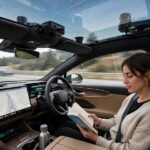
Level 3 is the cliff. At Level 3, the system drives — fully — within defined conditions. You can take your eyes off the road. You can check your phone. You can read a book. But you must be ready to take over when the system asks, with reasonable notice.
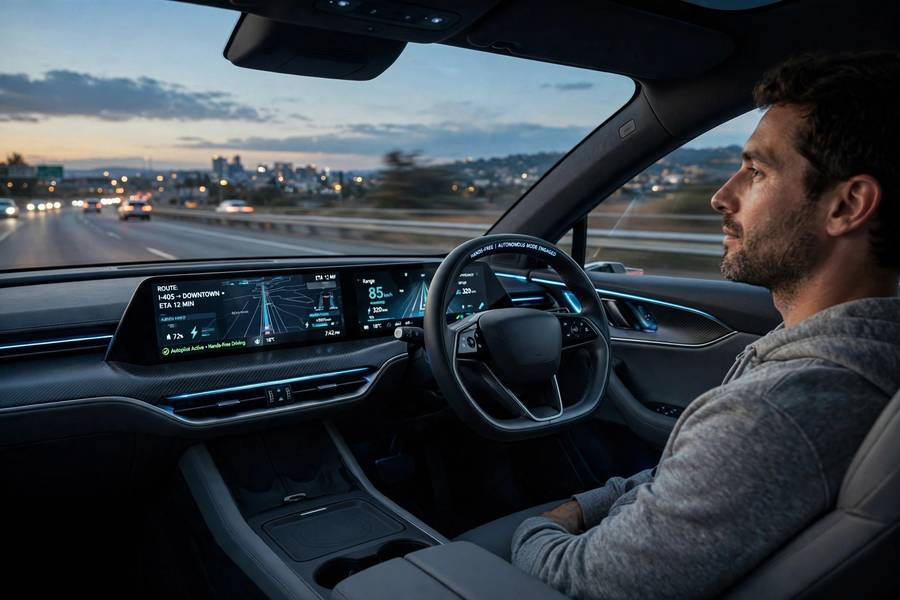
This is a genuinely different relationship with the car. Level 3 hands the driving task to the machine and the monitoring task to the human — which sounds similar to Level 2 but is categorically different, because the law in many places now treats the system as the driver while it’s active. Mercedes-Benz’s Drive Pilot is the famous example: certified for Level 3 operation in parts of Germany and some US states, at speeds up to around 60 km/h in heavy traffic on approved highways.
Level 3 is rare because the engineering problem is brutal. The system has to be good enough to drive unsupervised AND good enough to hand control back to a human who has been checked out for twenty minutes. That handoff — waking a relaxed human and making them road-aware in seconds — might be the hardest human-factors problem in automotive design.
Level 4 – High Automation
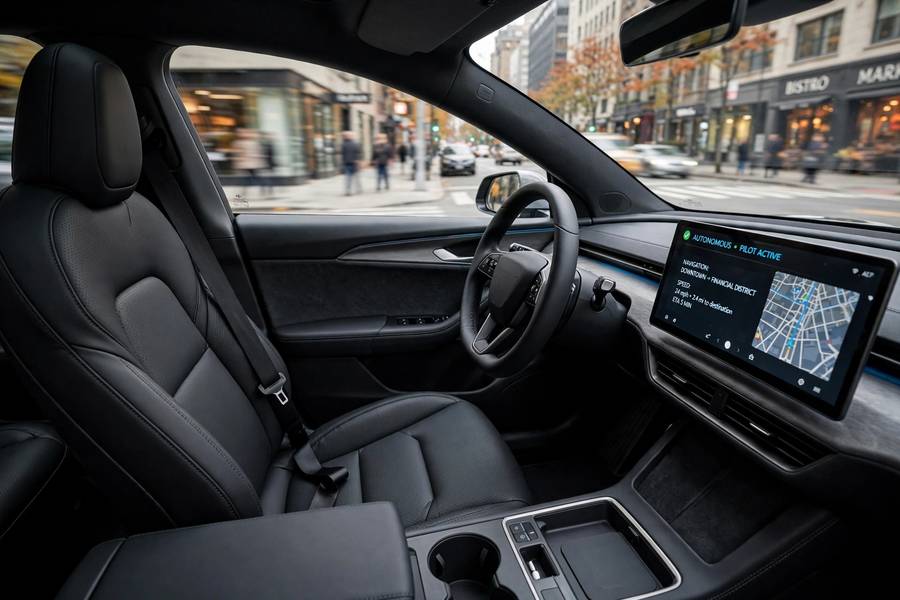
Level 4: the system drives, fully, within its operational design domain — a defined set of conditions like a specific city, specific weather, specific roads. The difference from Level 3 is that if something goes wrong, the system handles it. No human takeover required. If you’re asleep in the back seat when the car encounters a situation it can’t handle, it pulls over safely by itself.
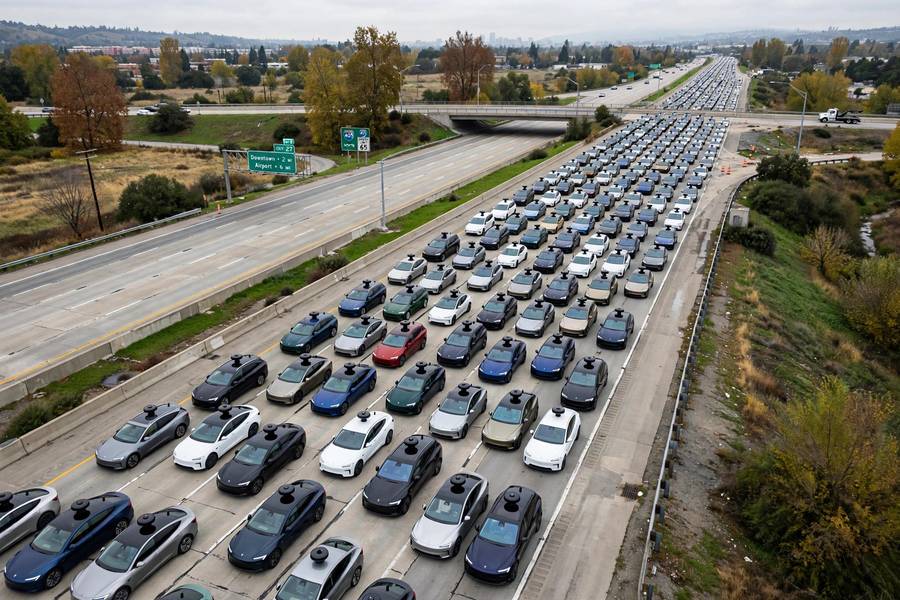
Waymo’s robotaxis in cities like Phoenix and San Francisco are the real-world Level 4 example. Geofenced, meticulously mapped, operating without anyone in the driver’s seat. They work, impressively well, within their domain — and “within their domain” is doing the work there, because a Level 4 car taken outside its mapped area is just an expensive paperweight.
Level 5 – Full Automation
Level 5 is the dream: full automation, everywhere, in all conditions. No steering wheel, no pedals, no human driver ever needed. The car drives like a perfect human chauffeur, on any road, in any weather, in any country.
No Level 5 vehicle exists, and no serious engineer will tell you one is close. It’s not just a technology problem — it’s a world problem. Level 5 requires handling every edge case on every road in the world, including roads with no markings, no maps, and no rules. It may eventually arrive, or it may turn out that “full automation everywhere” was always the wrong goal and Level 4 domains just keep expanding until they cover everything that matters.
The Real Cliff: Level 2 vs Level 3
I want to dwell on this boundary because it’s where almost all the real-world confusion concentrates. Here’s the cleanest way to think about it:
At Level 2, you are driving with help. At Level 3, the car is driving and you are the backup.
Everything flows from that. Liability shifts. Insurance shifts. What you’re allowed to do with your eyes and hands shifts. At Level 2, texting is reckless driving. At Level 3, Mercedes has said it will accept liability while Drive Pilot is engaged — the automaker, not you, takes the legal risk. That single commitment is arguably a bigger deal than any sensor upgrade.
The danger zone is the gap between the two: drivers who treat Level 2 systems as Level 3. Every headline about a driver asleep at the wheel with “autopilot” engaged is this confusion, weaponized. The systems have similar names, similar behaviors on easy highways, and utterly different expectations of the human. My rule of thumb: unless your owner’s manual explicitly says you can take your eyes off the road, you cannot. If it doesn’t say it, it’s Level 2, and you are the driver.
Where Today’s Cars Actually Sit
Let me ground this in reality, because the marketing haze is thick: the honest answer for 99% of consumers is Level 2 — the vast majority of new cars with driver-assistance packages (Tesla Autopilot, GM Super Cruise, Ford BlueCruise and dozens more). Level 3 is extremely rare (Mercedes Drive Pilot in select markets, Honda’s Traffic Jam Pilot in Japan). Level 4 means commercial robotaxis in geofenced areas — not something you can buy. Level 5 doesn’t exist; anyone claiming otherwise is selling something.
Why the Marketing Gets So Slippery
Car companies have a powerful incentive to blur the levels. “Autopilot” sounds like the plane flies itself (it doesn’t, quite — pilots monitor). “Full Self-Driving” is a product name for a system that is, at time of writing, Level 2. “ProPilot,” “Co-Pilot,” “Intelligent Drive” — the names all suggest more autonomy than the SAE classification allows.
Regulators have started pushing back. Germany’s rules on what can be marketed, California’s scrutiny of Tesla’s naming, and various advertising-standards rulings are all attempts to force the marketing to match the level. But the fundamental tension won’t go away: Level 2 sells better when it sounds like Level 4.
My advice is blunt: ignore the feature names entirely. Find the SAE level in the manual or the fine print. If the company won’t state a level clearly, treat it as Level 2 and drive accordingly.
What Your Next Car Will Probably Have
For the next few years, expect more and better Level 2 — smoother, more situations handled, better driver monitoring to keep you honest. Level 3 will expand slowly, confined to traffic-jam scenarios on approved highways, because that’s the only domain where the handoff problem is manageable. Level 4 will keep growing in the robotaxi world, city by city, map by map.
The leapfrog fantasy — skipping straight to Level 5 — is fading from serious roadmaps. The industry has quietly converged on a more honest plan: make Level 2 excellent, deploy Level 3 where it’s genuinely safe, and expand Level 4 domains until one day they just… cover the places you actually drive. No single moment of “the future arrives.” Just a slow, careful, well-documented climb up the scale. Which, given what’s at stake, is exactly how I’d want it.
If you want to understand what’s actually doing the driving at each level — the sensors, the neural networks, the decision-making — read my breakdown of how self-driving cars work and how they use AI to interpret the world.
Frequently Asked Questions
The SAE levels of autonomy run from 0 to 5: Level 0 (no automation), Level 1 (driver assistance — steering or speed), Level 2 (partial automation — steering and speed, human supervises), Level 3 (conditional automation — car drives, human is backup), Level 4 (high automation — car drives in defined areas, no takeover needed), and Level 5 (full automation everywhere).
Tesla Autopilot and Full Self-Driving (Supervised) are Level 2 systems. The driver must supervise constantly and remain responsible for the vehicle. Despite the names, no Tesla is Level 3 or above.
At Level 2, you are driving with assistance and must watch the road constantly. At Level 3, the car is driving and you may look away — but must be ready to take over when asked. Liability also shifts: at Level 3, the manufacturer typically accepts responsibility while the system is engaged.
Very few. Mercedes-Benz Drive Pilot is certified for Level 3 in parts of Germany and some US states, limited to heavy traffic on approved highways at low speeds. Honda has a limited Level 3 system in Japan. That is essentially the full consumer list.
No. Level 5 means full automation on any road, in any conditions, with no steering wheel or pedals. No vehicle anywhere meets this standard, and no serious roadmap puts it close. The industry focus is on expanding Level 4 operational areas instead.
SAE International defined the levels in its J3016 standard. The scale is based on who is responsible for driving — the human or the system — not on how advanced the technology is.