
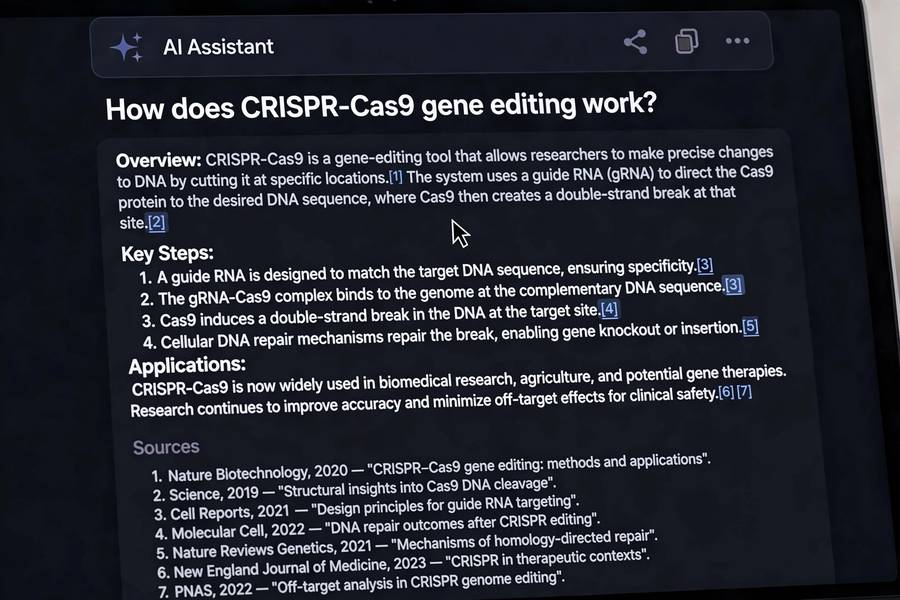
The little numbered links in AI answers — [1], [2], [3] — are the most important interface element in modern search, and almost nobody thinks about what they actually mean. I didn’t, until the day I clicked one and found a page that said the opposite of what the AI claimed it said. The citation was real. The page was real. The connection between them was fiction.
That moment taught me that citations in AI search aren’t what citations are in academia. They look the same — a claim, a little number, a source — but the machinery producing them is completely different, and understanding that machinery is the difference between verifying an answer and being fooled by the appearance of verification. This guide opens the hood: how AI search picks sources, what those numbers really guarantee, and how to actually check them. Background first: what AI search is.
Table of Contents
- What a Citation Is Supposed to Mean
- The Pipeline: From Query to Cited Answer
- How Sources Get Chosen
- How Claims Get Matched to Sources
- What the Numbers Actually Guarantee
- The Failure Modes: When Citations Lie
- How to Actually Verify a Citation
- Why This Matters More Than You Think
- Frequently Asked Questions
What a Citation Is Supposed to Mean
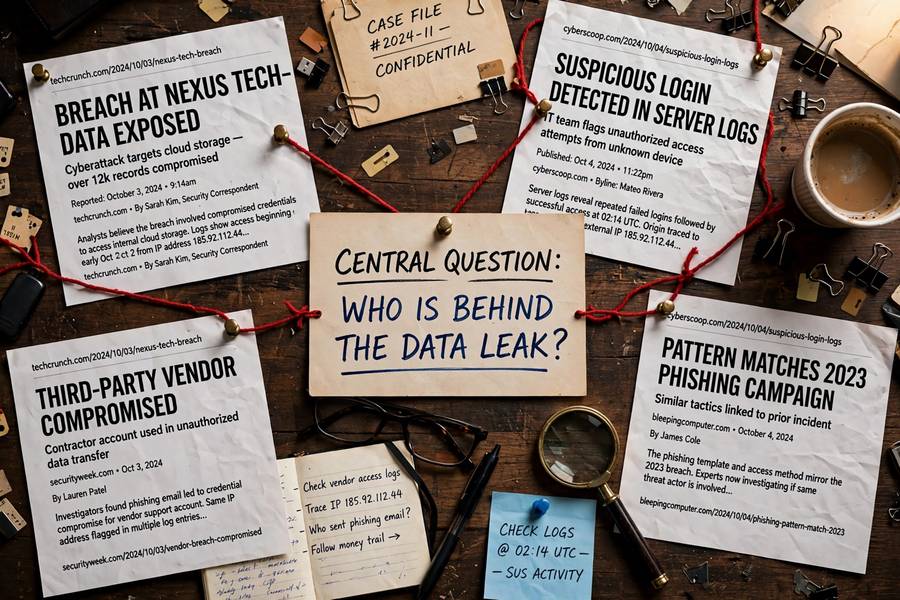
In academic writing, a citation is a promise: “this claim is supported by this source, which I read and understood.” The author is accountable. If the source doesn’t support the claim, that’s misconduct.
In AI search, a citation is a trace: “this claim was generated while this source was in context.” That’s a much weaker promise. The model may have read the source carefully, skimmed it, misread it, or merely had it nearby while generating from its own training data. The little number doesn’t distinguish between these cases.
This isn’t a criticism of any particular product — it’s a structural fact about how the technology works. A language model doesn’t “cite” the way a scholar does. It generates text, and separately, a mechanism attaches source references to passages. Understanding that these are two loosely coupled processes, not one careful act, changes how much weight you give the numbers.
The Pipeline: From Query to Cited Answer
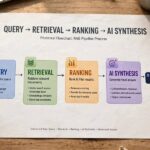
Here’s what happens between your question and those little numbers, simplified but accurate:
1. Retrieval. Your query goes to a search index (the tool’s own or a partner’s). The system retrieves a set of candidate documents — typically 5 to 20 — ranked by relevance. This is essentially traditional search, and how a search engine works underneath still applies.
2. Reranking and selection. A second pass narrows the candidates, sometimes using another model to judge which documents actually address the query. The survivors — usually 3 to 8 — become the working set.
3. Generation with context. The language model receives your question plus the content of the working-set documents, and composes an answer drawing on them.
4. Citation attachment. As or after generating, the system maps passages of the answer back to the documents. Different tools do this differently: some have the model emit citations inline as it writes, others run a separate attribution pass that matches answer sentences to source passages by similarity.
5. Presentation. You see the answer with numbered links, often with hover previews showing the quoted passage.
The key insight: steps 3 and 4 are where things get fuzzy. The model is generating fluent text and the citation system is doing its best to anchor that text to sources after the fact. Sometimes the anchor holds. Sometimes it’s decorative.
How Sources Get Chosen
Why these sources and not others? The selection blends several signals:
Relevance matching. The boring, important one. Documents whose content closely matches the query’s terms and intent rank higher. This is mostly keyword and semantic similarity — the same machinery as traditional search.
Authority signals. Domain reputation, link patterns, and content quality markers influence which candidates survive reranking. Established publications, official documentation, and well-structured pages have an edge. This is pattern-matching on the surface markers of trustworthiness, not actual verification of expertise.
Freshness. For queries with temporal intent — news, prices, recent developments — recency gets weighted heavily. A 2026 article beats a 2022 article on the same topic, sometimes even when the older one is better.
Diversity. Some systems deliberately include sources with different perspectives to avoid one-sided answers. In practice this is uneven — consensus topics get consensus sources.
Accessibility. Paywalled, JS-heavy, or bot-blocked pages can’t be read by the retriever, so they effectively don’t exist. The citable web is the crawlable web, which skews toward openly accessible content regardless of quality.
Notice what this means: the cited sources are the most retrievable relevant sources, not the best sources. The perfect source that’s hard to crawl loses to the decent source that’s easy to read. Keep that in mind next time a citation points somewhere mediocre.
How Claims Get Matched to Sources
This is the least understood part. When you see “the Eiffel Tower is 330 meters tall [2],” how did [2] get attached to that claim?
In the best implementations, the model generates the claim while attending to a specific source passage, and the citation records that attention. The number means “I was looking at source 2 when I wrote this.”
In weaker implementations, an attribution system takes the finished answer, breaks it into sentences, and finds the source passage most similar to each sentence. The number means “this sentence resembles something in source 2.” Resemblance isn’t support — a sentence can resemble a source while contradicting it, especially on nuanced topics.
And in the worst cases, the model generates a claim from its training data — no source involved — and the attribution system attaches the nearest plausible source anyway, because the interface demands every claim have a number. This is how you get my experience: a real citation on a real page that says the opposite of the claim. The machinery needed a number, so it found one.
What the Numbers Actually Guarantee
Let’s be precise about what a citation in an AI answer does and doesn’t promise:
It guarantees: the linked page exists (usually), it was retrieved for your query, and it contains text related to the claim. That’s it. That’s the whole guarantee.
It does not guarantee: that the page supports the claim, that the page is reliable, that the claim is the page’s main point rather than a passing mention, that the page is current, or that a better source wasn’t available but unretrieved.
This gap between appearance and guarantee is the single most important thing to understand about AI search citations. The interface borrows the visual language of scholarship — numbers, links, quoted passages — while delivering something much weaker. It’s not dishonest; it’s just a different thing wearing similar clothes.
The Failure Modes: When Citations Lie
From my testing and from documented cases, the recurring failure patterns:
The contradicting citation. The source says X; the answer claims not-X, citing the source. Usually a misread during generation — the model skimmed, or merged the source with its training data.
The tangential citation. The source is about the general topic but doesn’t contain the specific claim. The attribution system found the closest match and called it good enough. Common with statistics: the number appears in the answer but not on the cited page.
The dead citation. The link 404s, or points to a page that’s since changed. Link rot meets AI answers — the citation was valid at generation time and fiction now.
The circular citation. The source is itself AI-generated content, or a content farm that copied from another AI output. The citation traces back to the same machinery that produced the answer. This is getting more common as AI-generated pages flood the index.
The missing citation. The most dangerous: a specific, checkable claim with no number attached at all. No citation often means the claim came purely from training data — the model’s memory, unanchored. Treat uncited specifics as the least reliable sentences in any AI answer.
How to Actually Verify a Citation
The routine that actually works, refined from many burned fingers:
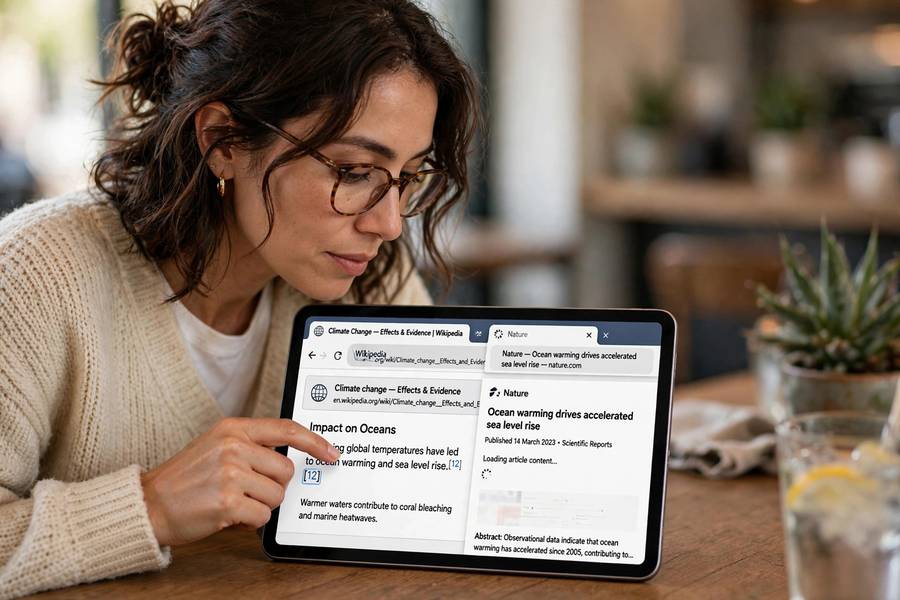
1. Click through. Don’t trust the hover preview — it shows the passage the system selected, which may be the one passage that supports the claim while the rest of the page undermines it. Read the source.
2. Check support, not just existence. Ask: does this page actually assert what the answer claims? Look for the specific fact, not the general topic. My contradicting-citation discovery took eleven seconds of reading.
3. Check the source’s date and nature. Is it current? Is it a primary source, a reputable publication, or a content farm? The citation tells you where the claim came from; you still have to judge whether “where” is good.
4. Spot-check the uncited claims. The sentences without numbers are where the bodies are buried. If an uncited claim matters to you, search it directly.
5. Watch for circularity. If the cited page reads like AI-generated filler — generic phrasing, no author, no dates, suspiciously smooth — the citation may be laundering the model’s own output back to itself.
This takes about two minutes for an important answer. It’s the price of the speed AI search gives you everywhere else. In my own testing, roughly three-quarters of AI answers survived this kind of scrutiny fully intact — which means a quarter didn’t, and that’s exactly why the routine matters.
Why This Matters More Than You Think
Citations are becoming the load-bearing wall of the information ecosystem. As AI answers replace link lists, the citation is increasingly the only bridge between the answer and the underlying web. If that bridge is decorative rather than structural, we get a world of fluent, plausible, occasionally fictional answers that everyone trusts because they have little numbers on them.
The fix isn’t to abandon AI search — it’s to treat citations as leads, not proof. A citation is the beginning of verification, not the end of it. Click through. Read the source. Keep your skepticism engaged, especially when the answer is telling you exactly what you wanted to hear.
The tools will improve. Attribution will get tighter, source quality signals will get smarter, and the gap between the appearance and the guarantee will narrow. But there will always be a gap, because generating fluent text and carefully supporting claims are fundamentally different operations. Knowing that is what keeps you on the right side of it.

Frequently Asked Questions
It retrieves candidate pages using traditional search ranking, narrows them with a reranking pass, then generates an answer from the survivors. Sources are chosen for relevance, authority signals, freshness, and crawlability — they’re the most retrievable relevant sources, not necessarily the best ones.
Treat them as leads, not proof. A citation guarantees the page exists and is topically related — it doesn’t guarantee the page supports the claim. Click through, check that the source actually asserts what’s claimed, and watch for uncited specifics, which are the least reliable sentences.
Because citation attachment is loosely coupled to generation. The model may misread a source, merge it with training data, or generate a claim from memory while the attribution system attaches the nearest plausible source. The number records proximity during generation, not scholarly verification.
Be extra skeptical of specific uncited claims — they likely came from the model’s training data rather than retrieved sources. If the claim matters, search it directly in a traditional search engine and verify it against a real source.