
A logistics firm I know spent nine months evaluating AI vendors. Demos were dazzling. Pilots were promised in weeks. Then reality arrived: their data lived in four incompatible systems, nobody owned the project, and the first “AI insight” turned out to be a spreadsheet their intern could have built. They nearly wrote the whole thing off as hype.
They were wrong about the hype part. AI genuinely works — I’ve seen enough deployments to be sure. But they were right that adopting it is hard, and the hardness is almost never the AI itself. The AI adoption challenges for businesses are unglamorous: data plumbing, people problems, vague goals, and legal fine print. This guide walks through the seven challenges I see most, and — more usefully — how the companies that get past them actually do it. If you want the broader picture first, start with my overview of how AI is used in business.
Table of Contents
- Challenge 1: The Data Is a Mess
- Challenge 2: Nobody Knows What to Build First
- Challenge 3: The Talent Gap Is Real
- Challenge 4: Staff Resist (and They Have Reasons)
- Challenge 5: ROI Is Hard to Prove
- Challenge 6: Legacy Systems Fight Back
- Challenge 7: Compliance and Legal Landmines
- What the Winners Do Differently
- The Build-vs-Buy Decision
- A 90-Day Adoption Roadmap
- Frequently Asked Questions
Challenge 1: The Data Is a Mess
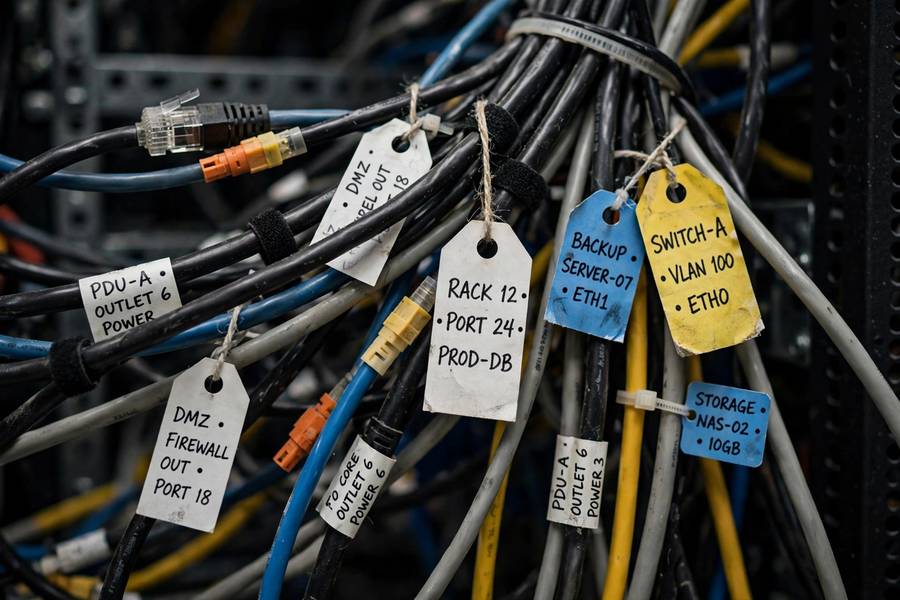
AI runs on data, and most companies’ data is a crime scene. Customer records duplicated across three systems. Sales figures in spreadsheets named “final_v2_REAL.xlsx”. Sensor data nobody ever labeled. When the data is fragmented, inconsistent, or simply missing, the AI model is being asked to learn from noise.
The fix is less exciting than any vendor pitch: an audit. Before buying anything, map where your data lives, who owns it, and whether it’s accurate enough to trust. I’ve seen companies spend a month on this unglamorous exercise and then discover their “AI problem” was actually a “nobody knows which spreadsheet is correct” problem. Clean, organized data doesn’t just make AI possible — it makes the business itself run better. Every dollar spent on data hygiene pays for itself whether you adopt AI or not.
Challenge 2: Nobody Knows What to Build First
The second challenge is strategy — or rather, the absence of it. Executives read about AI, feel competitive pressure, and issue a directive: “do AI.” Nobody defines what “do” means. The result is scattered experiments with no owner, no metric, and no path to production.
The companies that get it right start from pain, not from technology. Pick one expensive, repetitive, measurable problem: invoice processing, customer ticket triage, inventory forecasting. Give it an owner and a number to move. A single narrow win does more for organizational momentum than ten vague explorations. Once the first project shows results, the second one gets funded, and suddenly you’re not “adopting AI” anymore — you’re just solving problems with better tools.
Challenge 3: The Talent Gap Is Real
AI specialists are expensive and scarce, and most businesses can’t hire a machine learning team even if they wanted to. This stops a lot of companies cold: they assume AI requires PhDs, so they never start.
Here’s the thing — most business AI doesn’t need PhDs. The heavy lifting is done by off-the-shelf tools and APIs now; what you actually need is someone who understands your business deeply and can learn the tools. That’s a different profile: a curious operations manager, an analyst who likes new software, a team lead who’s tired of manual reports. Several of the guides on how to use AI at work are written for exactly this person. Train the people you have rather than chasing the people you can’t afford. The domain expertise they already possess is the rarer asset.
Challenge 4: Staff Resist (and They Have Reasons)
When employees hear “we’re adopting AI,” what they hear is “we’re replacing you.” Resistance follows — and honestly, dismissing it as Luddism misses the point. People’s livelihoods are at stake, and vague reassurances don’t pay rent.
The companies that handle this well do two things. First, they’re honest about what will change, including the uncomfortable parts. Second, they frame AI as removing the worst parts of jobs — the data entry, the copy-paste, the 200 emails nobody reads — not the jobs themselves. And they back it up: the first people trained on the new tools should be the ones whose daily grind improves most. Nothing converts a skeptic faster than an AI assistant that kills their most hated Friday-afternoon task.
Challenge 5: ROI Is Hard to Prove
AI investments are easy to mock in a board meeting. The costs are concrete — licenses, consultants, integration hours — while the benefits are often soft: “faster decisions,” “better insights.” Finance departments hate soft.
The antidote is boring measurement discipline. Before the pilot, write down the baseline: how long does this process take today, how many errors, what does it cost? After, measure the same things. One distributor I tracked cut quote-generation from three days to forty minutes — that’s a number no one argues with. If you can’t define the baseline, you’re not ready to buy; you’re ready to experiment on paper. And be honest about the timeline: most AI value compounds over quarters, not weeks. Anyone promising ROI in thirty days is selling you something else.

Challenge 6: Legacy Systems Fight Back
That logistics firm from my intro? Their core system was older than some of their employees. AI tools expect modern APIs and clean integrations; legacy systems offer neither. Ripping everything out is prohibitively expensive, but the old system can’t talk to the new tools.
The pragmatic middle path: don’t integrate the AI with the legacy system — integrate it alongside it. Run the AI on exported data, on a sidecar database, or on a new process that feeds results back. RPA bots, middleware, even scheduled CSV exports are deeply unsexy and completely effective. I’ve seen more successful AI projects built on “a nightly export and a script” than on “a full platform migration.” Solve the business problem first; modernize the architecture when it earns its own budget.
Challenge 7: Compliance and Legal Landmines
This one keeps general counsels up at night, and for good reason. Where does your data go when you paste it into a vendor’s tool? Who owns the outputs? Does the model leak customer information? In regulated industries, these aren’t edge cases — they’re the project.
You need answers before deployment, not after. Read the data processing agreements. Know whether your vendor trains on your inputs. Understand AI compliance obligations in your jurisdiction and industry. Establish who is responsible when the AI gets something wrong — the AI accountability question — because “the algorithm did it” is not a defense anyone accepts. This isn’t red tape for its own sake; it’s the difference between an AI project and an AI lawsuit.
What the Winners Do Differently
Stepping back, the companies that clear these hurdles share a pattern, and it’s refreshingly un-mystical. They start small and specific. They clean their data before shopping for models. They train insiders instead of hunting unicorns. They’re honest with staff. They measure baselines. They build alongside legacy systems instead of declaring war on them. They get legal involved early.
None of that requires a bigger budget — it requires better judgment. The AI adoption challenges for businesses aren’t technical impossibilities; they’re organizational disciplines. The technology is the easy part now. The hard part is everything around it, which is also the part your competitors are skipping. That’s your opening.
The Build-vs-Buy Decision
Sooner or later every company faces it: buy an off-the-shelf AI tool or build something custom. My advice is blunt — buy first, always. Off-the-shelf tools have already solved the hard engineering; your job is configuration and workflow design, not model training. A customer-service chatbot, a document processor, a forecasting dashboard: these exist as products, and they’ll be running in weeks.
Build only when you’ve proven the value with a bought tool and hit its limits. That’s the sequence that works: buy to learn what you actually need, then build to get exactly that. Companies that build first usually discover — expensively — that they built the wrong thing. The bought tool is market research you get paid to conduct; the usage patterns it reveals are the specification for anything custom later.
There’s a middle path worth knowing: buy the platform, customize the last mile. Most serious AI products offer APIs, integrations, and configuration layers that get you 90% of “custom” without the engineering team. That last 10% — your specific data, your specific workflow — is where your effort should go, not into reinventing the model.
A 90-Day Adoption Roadmap
Enough theory — here’s the timeline I’d give any company starting now.
Days 1–30: Foundation. Audit your data for the one problem you’ve chosen. Pick the tool. Assign an owner with real authority and a weekly hour budget. Set the baseline metrics. Get legal to review the data terms. Nothing generates yet; you’re building the runway.
Days 31–60: Pilot. Run the tool on real work but in parallel with the old process — no cold switches. Collect feedback weekly from the people actually using it. Fix the prompt, the configuration, the workflow — expect the first version to be wrong in instructive ways. Measure against your baseline at day 60.
Days 61–90: Decide. If the numbers moved, roll it out properly: train the wider team, document the workflow, set up monitoring. If they didn’t, you’ve spent little and learned exactly why — which is valuable intelligence for attempt two. Either way, write down what you learned; institutional memory is the compound interest of AI adoption.
Ninety days, one problem, honest measurement. That’s the whole program.
Frequently Asked Questions
Messy, fragmented data is the most common blocker. Most AI projects stall not because the models are weak but because company data is scattered across incompatible systems and spreadsheets. A data audit before buying tools prevents most failures.
Use off-the-shelf tools and train existing staff. Most business AI use cases need someone who understands the business and can learn the tools, not a PhD team. Start with one narrow, measurable problem and an employee who’s curious about new software.
Record baselines before the pilot: process time, error rates, and cost. Measure the same metrics after deployment. Concrete numbers like “quote time cut from 3 days to 40 minutes” beat vague claims about “better insights” every time.
They reasonably fear job losses and unclear change. Companies handle this by being honest about what will change, training staff on the new tools early, and positioning AI as removing tedious tasks rather than eliminating roles.
Yes. Instead of replacing legacy systems, successful companies run AI alongside them — using data exports, middleware, or sidecar databases. This “unexciting” approach delivers results without expensive full migrations.
Data privacy, unclear data ownership, vendor model-training on your inputs, and liability when AI errors occur. Review data processing agreements, know your compliance obligations, and establish clear accountability before deployment.
Keep reading: