Best Time to Book Flights: When to Buy for the Cheapest Fares

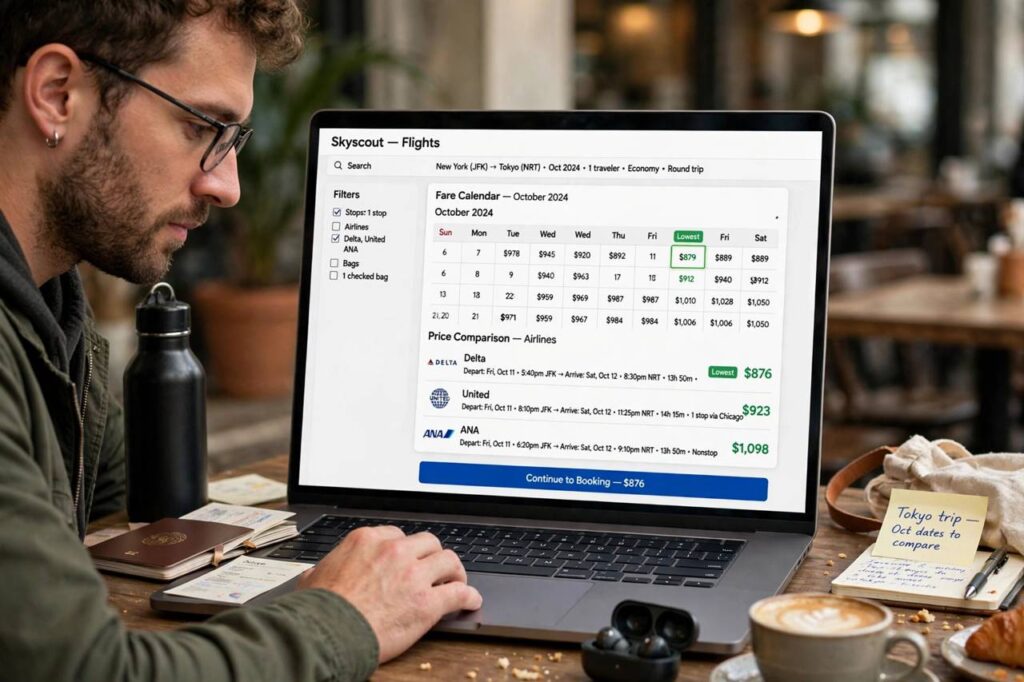
Here is a question I get more than any other: when is the best time to book flights? After years of chasing fares across six continents — and making every booking mistake so you do not have to — I can tell you the honest answer: there is no single magic day, but there are clear patterns. And once you understand them, you will stop overpaying for flights forever.
This guide covers how far in advance to book (domestic vs. international), which days are cheapest to fly, the seasons that punish procrastinators, and the practical strategies I use personally to find low fares. Let us make sure your next trip starts with a great deal, not a wince at checkout.
Best Time to Book Flights: The Short Answer
If you want rules of thumb backed by years of fare data analysis, here they are:
- Domestic flights: book roughly 1 to 3 months before departure. The sweet spot for many routes falls around 3 to 7 weeks out.
- International flights: book 2 to 6 months ahead. Long-haul fares reward planners; last-minute international tickets are rarely bargains.
- Peak season (summer, holidays): add extra lead time — book as early as you can commit, because the cheapest fare buckets sell out first.
- Off-peak travel: you have more flexibility; deals appear closer to departure when airlines need to fill seats.
Think of it as a curve: book too early and you may miss later price drops; book too late and you pay the procrastination premium. The windows above sit at the bottom of that curve.
Why Flight Prices Move the Way They Do
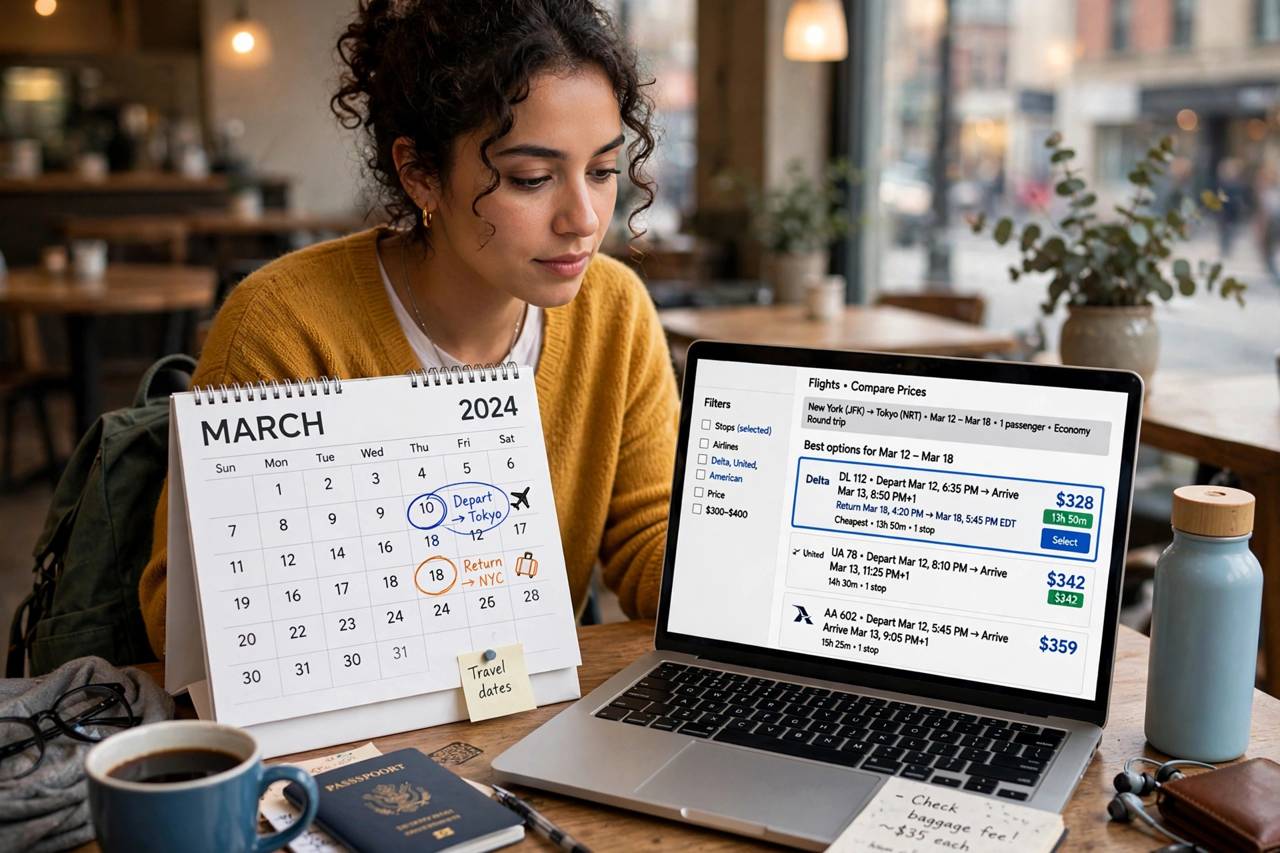
Airlines use dynamic pricing — sophisticated algorithms adjusting fares based on demand, remaining seats, competition, time to departure, and even day of week. Understanding the logic helps you outsmart it:
- Fare buckets: each flight has a limited number of seats at each price level. The cheapest buckets sell first. Once they are gone, only pricier ones remain — which is why “the price went up” usually means the cheap seats sold, not that the airline raised prices vindictively.
- Demand forecasting: algorithms predict how full a flight will get. High predicted demand = higher prices earlier.
- Competition: routes with multiple airlines (especially budget carriers) stay cheaper. Monopoly routes cost more — another reason to check alternate airports.
The takeaway: you are not fighting the airline; you are racing other buyers for the limited cheap seats. Booking in the sweet-spot window means arriving before the crowd.
Cheapest Days to Fly (and to Buy)
Days to fly
Midweek flights are consistently cheaper than weekend ones. Tuesday and Wednesday departures (and returns) typically offer the lowest fares, because business travelers fly Monday/Friday and leisure travelers fly weekends. Saturday can also be reasonable. If your schedule allows even one day of flexibility, shifting off Friday and Sunday can save significantly.
Early-morning and late-night flights also tend to cost less than prime-time departures. The 6 a.m. flight is cheaper for a reason — but it is also gloriously empty, so there is that.
Days to buy
You will hear myths about magical purchase days. The data-informed version: there is no single best day to buy, but Sunday purchases have shown slightly lower average fares in some analyses, while Friday purchases trend higher. The effect is small compared to when you fly and how far ahead you book. Do not delay a good fare waiting for a “better” weekday — fares move in hours, not weeks.
Seasonal Patterns: When to Book by Trip Type
- Summer vacations: book international trips 3–5 months ahead; domestic 2–3 months. Summer is peak demand nearly everywhere.
- Thanksgiving/Christmas: book as early as possible — these are the most price-inelastic travel days of the year, and fares only climb.
- Spring break: 2–4 months ahead for popular beach and city destinations.
- Shoulder seasons (spring/fall): the traveler’s secret weapon. Great weather, fewer crowds, lower fares — and booking 1–2 months ahead usually suffices.
- Off-season: maximum flexibility. Watch for fare sales and book when you see a price you like.
The meta-strategy: travel when others do not, and you will pay less while enjoying thinner crowds. Shoulder season is the closest thing to a travel cheat code.
My Personal Fare-Hunting Strategy
Here is exactly what I do before booking any flight:
- Start with flexible search. Use a flight comparison tool’s flexible-date or month view to see which days are cheapest around your target dates. Shifting by even a day or two often unlocks much lower fares.
- Check alternate airports. Secondary airports (and nearby cities) can be dramatically cheaper — factor in ground transport costs before deciding.
- Set price alerts. Track your route for a few weeks before buying. You will learn the normal price range, so you will recognize a genuine deal when it appears.
- Compare booking direct vs. third-party. I generally book direct with the airline — better customer service when things go wrong, easier changes. Use aggregators for discovery, then check the airline’s own site.
- Clear cookies / use incognito. The evidence for personalized price hikes is debated, but browsing privately costs nothing and removes the variable.
- Consider one-way combinations. Two one-way tickets on different airlines sometimes beat a round trip — especially mixing a budget carrier outbound with a legacy carrier return.
- Book when you see a fair price. Endless waiting for a lower fare is how people end up paying more. If the price is within the normal range for your route and dates, lock it in.
For more tactical detail on the search itself, our guide on how to find cheap flights walks through the tools and techniques step by step.

Mistakes That Cost Travelers Money
- Booking holiday flights last-minute. Thanksgiving and Christmas fares climb relentlessly — this is the one case where earliest is almost always best.
- Ignoring baggage fees. That budget fare plus $70 in bag fees is not the deal it appeared to be. Always price the total trip.
- Non-refundable everything. The cheapest fare class often cannot be changed. If your plans might shift, the flexible fare is cheaper than rebooking.
- Only checking one site. Prices vary across platforms. Compare at least two aggregators plus the airline direct.
- Forgetting points and miles. Even casual travelers accumulate value — check award availability before paying cash, especially for expensive routes.
What About Last-Minute Deals?
The romantic idea of rock-bottom last-minute fares is mostly a myth in the modern era — airlines would rather fly with empty seats than train customers to wait. Exceptions exist: mistake fares (rare pricing errors, book immediately and do not call attention), flash sales from budget carriers, and off-peak routes where airlines discount to fill planes. Follow airlines on social media and set up deal alerts; when a genuine mistake fare or flash sale appears, act fast and keep plans flexible.
Using Points and Miles Strategically
Even if you are not a frequent flyer, points and miles can slash your costs – and timing matters here too. Award seats on popular routes get claimed early, so the same “book ahead” logic applies: start looking the moment your dates are firm. Many loyalty programs let you hold or book with free cancellation, which removes the risk of committing early.
A few practical pointers: compare the cash price against the miles required before transferring any points – sometimes paying cash and earning miles is the better deal. Credit card transfer bonuses (extra miles when moving points to airlines) can tip the math dramatically in your favor. And do not hoard miles indefinitely; they devalue over time as programs adjust their charts. Think of miles as a discount tool to deploy, not a savings account to admire.
Booking for Families and Groups
Traveling with kids or a group adds wrinkles. Book early – you need seats together, and the cheap fare buckets that fit a family of four vanish fast. Many airlines seat young children with an adult for free if you call, but securing it at booking is far less stressful. For groups of 10 or more, ask about group booking desks: the per-person price may be slightly higher, but everyone is ticketed together with more flexible payment and name-change terms. And always double-check that every traveler’s name matches their ID exactly – fixing a misspelled name on a group booking is nobody’s idea of fun.
When Flexibility Is Your Superpower
If your dates are genuinely flexible, you unlock the deepest discounts in travel. Use fare calendar views to spot the cheapest travel days in a whole month, consider flying into one city and out of another (open-jaw tickets often price similarly while saving backtracking), and let deal alerts surprise you – some of my best trips started as “I saw a fare too good to ignore.” Traveling Tuesday-to-Tuesday instead of Friday-to-Sunday, or shifting a trip by a single week out of school holidays, routinely cuts fares by a third or more. Flexibility is the closest thing to a cheat code that fare hunting has.
FAQ
How far in advance should I book a domestic flight?
Aim for 1 to 3 months before departure, with many routes hitting their lowest fares around 3 to 7 weeks out. Booking earlier than 3 months rarely helps domestically; booking within 2 weeks usually costs more.
How far in advance should I book an international flight?
Plan for 2 to 6 months ahead. Long-haul international fares reward early planners, and last-minute international tickets are seldom discounted. For peak-season international travel, lean toward the earlier end of that range.
What is the cheapest day of the week to fly?
Tuesday and Wednesday flights are typically cheapest, followed by Saturday. Friday and Sunday command premium prices due to weekend travel demand. Shifting your trip by a day or two off-peak often yields the biggest single saving.
Do flight prices drop closer to departure?
Occasionally, but it is not a reliable strategy. Modern airline pricing generally rises as departure nears, especially once the cheap fare buckets sell out. Last-minute drops happen mainly on off-peak routes with unsold seats — do not count on them for important trips.
Is it cheaper to book flights on certain websites?
Prices are usually similar across major platforms for the same itinerary, but fees and fare classes differ. I recommend comparing on aggregators for discovery, then booking directly with the airline for better change policies and customer service. Always compare the all-in total including baggage fees.
Keep Reading
- When Is the Best Time to Book Flights? Data-Backed Answers
- How to Find Cheap Flights: 12 Tricks I’ve Used for Years
- AI Art for Book Covers: A Self-Publishing Guide