Digital Minimalism Explained: A Calmer Way to Use Tech


Last year I did something that felt mildly insane at the time: I counted my screen time. The number was 4 hours and 37 minutes a day — and I’m someone who thought of herself as “not that into her phone.” That’s 1,685 hours a year. Seventy full days. I spent seventy days a year looking at a six-inch rectangle, and I couldn’t tell you what 90% of those hours contained. That math broke something in me, in a good way.
Digital minimalism is the philosophy I found when I went looking for a better way — and I want to explain it properly, because it’s widely misunderstood. It’s not about throwing your phone in a lake or becoming a hermit. It’s about being as intentional with your digital life as minimalists are with their physical stuff (see what minimalism actually means for the physical version): keeping the technology that genuinely serves you, and ruthlessly cutting the rest. Here’s what it actually means and how to actually do it.
In this guide:
- What Digital Minimalism Actually Is
- What It Isn’t (Common Myths)
- Why Your Attention Is Under Attack
- The Core Principles
- The 30-Day Digital Declutter Plan
- What to Keep (the Good Stuff)
- Maintaining It Long-Term
What Digital Minimalism Actually Is
The term was popularized by Cal Newport in his 2019 book “Digital Minimalism,” and the core idea is simple: focus your online time on a small number of carefully selected activities that strongly support things you value, and happily miss out on everything else. Read that again — “happily miss out.” The goal isn’t deprivation; it’s curation. You don’t quit technology. You quit the parts of technology that use you.
In practice, digital minimalism means auditing every app, subscription, notification, and feed by one question: does this serve something I actually value? Your maps app serving your value of exploring new places: keep. The game you play for 40 minutes a day out of pure habit, serving nothing: cut. The group chat with your best friends: keep. The three news apps sending outrage notifications: cut. It’s minimalism’s “does it spark joy” applied to pixels.
The philosophy rests on three principles from Newport’s work: first, clutter is costly — every app and feed has maintenance costs in attention, even the ones you barely use. Second, optimization matters — it’s not enough to use less tech; you should deliberately shape how you use the tech you keep. Third, intentionality is satisfying — choosing your digital life deliberately is itself a source of contentment, the way choosing your possessions is.
What It Isn’t (Common Myths)
Myth one: digital minimalism means no smartphone. Nope. Most digital minimalists keep smartphones — they just configure them ruthlessly. A phone with 12 intentional apps and zero social media feeds is a completely different device from the same phone with 200 apps and 47 notification types. The hardware isn’t the problem; the defaults are.
Myth two: it’s about productivity and hustle. Some people use it that way, but the deeper goal is autonomy — owning your attention rather than renting it to advertisers. A digital minimalist might spend two happy hours on a Saturday playing a video game they love. The point isn’t optimizing every minute; it’s that those two hours were chosen, not defaulted into.
Myth three: you have to do it perfectly or all at once. The all-or-nothing approach fails for the same reason crash diets fail. Digital minimalism is a direction, not a destination — every feed you mute, every notification you kill, every app you delete is progress. I did mine in stages over three months, and each stage made the next one easier.
Why Your Attention Is Under Attack
A quick detour into why this is hard, because understanding the opponent helps. Your attention is the product being sold. Social media companies, news sites, and games employ thousands of brilliant people whose entire job is keeping you scrolling — infinite scroll, variable rewards (sometimes the next post is amazing, usually it’s not — that’s what makes it addictive), outrage-optimized algorithms, and red notification badges engineered to trigger the same brain circuits as slot machines.
This isn’t a fair fight between you and your willpower. It’s you versus an industry. That’s why “just use your phone less” fails like “just eat less” fails — the environment is engineered against you. Digital minimalism works because it changes the environment: fewer apps, fewer notifications, fewer entry points for the attention merchants. You don’t need more discipline when there’s less to resist.
The costs are real and documented: fragmented attention (the average person checks their phone 144 times a day), worse sleep (blue light plus bedtime scrolling), increased anxiety (comparison feeds, outrage news), and the opportunity cost — those 1,685 hours a year I mentioned. Your attention is your life, hour by hour. Whoever controls it shapes what your life contains.
The Core Principles
Principle one: clutter is costly. Every app on your phone, every newsletter in your inbox, every group you’re in has a cost — not just the time you spend, but the mental overhead of its existence. The 30 newsletters you never read still create inbox anxiety. The apps you never open still appear in search results and updates. Audit everything; the default answer is “remove.”
Principle two: optimize the keepers. For the technology you keep, deliberately design how you use it. That means: notifications only for humans (texts, calls) — never for apps seeking your attention. Social media (if you keep any) on a schedule, not on impulse — say, 20 minutes after dinner, not 47 micro-sessions. Email in batches, two or three times a day, not as a constant drip. The tool serves you on your schedule.
Principle three: intentionality is satisfying. There’s a deep contentment in choosing your digital life on purpose. Every time you delete an app and feel relief instead of FOMO, you’re collecting evidence that you were right. That evidence compounds. Within weeks, most people report the same thing: they don’t miss what they cut, and they can’t believe they tolerated it for so long.
The values-first filter
Before cutting anything, write down 3-5 things you actually value — mine were: deep work, real friendships, learning, health, and calm. Then every digital activity gets judged against that list. “Does Instagram serve my real friendships?” (For me: the group chat did, the feed didn’t — so I kept messaging, killed the feed.) Values first, apps second. Without the values list, decluttering becomes arbitrary.
The 30-Day Digital Declutter Plan
Newport’s method, adapted from my experience: for 30 days, step away from optional digital technologies — social media, news sites, entertainment streaming binges, games — while keeping what’s truly necessary (work tools, maps, messaging close friends and family). It’s not forever; it’s an experiment. Thirty days is long enough to break habits and short enough to commit to.
During the 30 days, actively rediscover analog alternatives: the activities you claim you’d do “if you had time.” Long walks, reading physical books, hobbies, face-to-face time with friends, learning something with your hands. Schedule these deliberately — nature abhors a vacuum, and so does your evening. If you don’t fill the time, the phone fills it.
At day 30, reintroduce technology selectively: for each optional tool, ask — does this serve a core value? And what’s the best way to use it to maximize the value and minimize harm? You might bring back one social platform but only on desktop, or news but only via a weekly digest. Everything that comes back comes back on your terms, with rules you set. Most people are shocked how little they reintroduce.
Week-by-week quickstart
Week 1: kill all non-human notifications, delete social apps from your phone (keep accounts if needed), unsubscribe from 20 newsletters. Week 2: set email to 2-3 daily batches, remove news apps, set up screen-time limits. Week 3: do the analog replacement — schedule the walks, buy the book, call the friend. Week 4: review what’s working, formalize your rules, and decide what (if anything) comes back.

What to Keep (the Good Stuff)
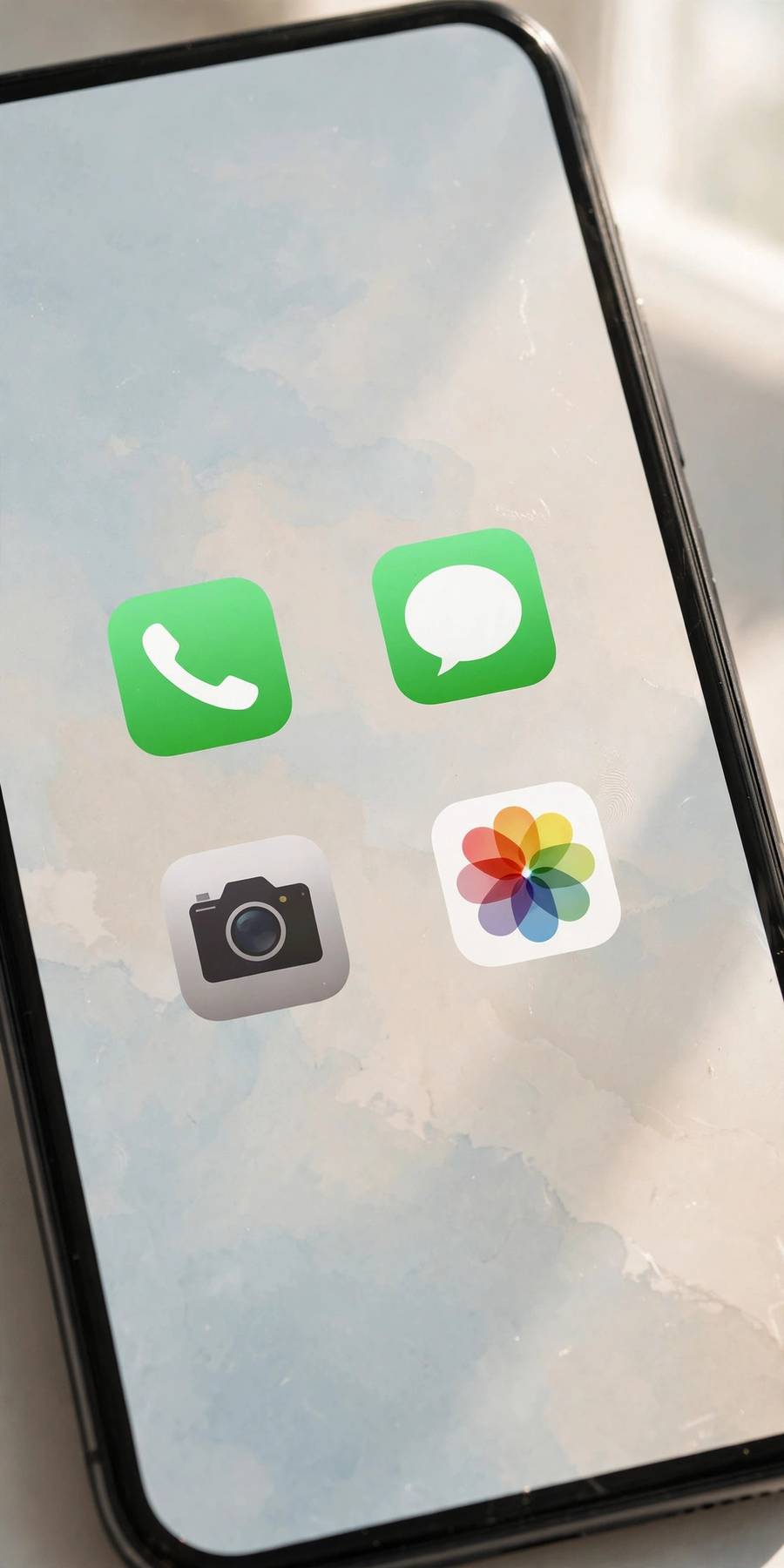
Digital minimalism isn’t anti-technology — it’s pro-intentional-technology. My keep list, which might spark ideas for yours: messaging apps for real relationships (limited to actual humans I know), maps and transit (genuinely useful), a notes app and read-later app (capturing ideas instead of losing them), one music/podcast app (intentional listening), banking and essential utilities, and a camera (a phone camera used deliberately is a wonderful tool).
Notice what’s not there: infinite feeds, algorithmic recommendations, autoplay anything, news push alerts, games designed for compulsion, and shopping apps (browsing is the habit; buying is the excuse). The pattern: keep tools, cut slot machines. A tool does what you ask; a slot machine asks things of you.
For work tech, apply the same filter with professional values: which tools serve deep, meaningful work, and which serve performative busyness? Many people discover that half their Slack channels, most meetings-that-could-be-emails, and the constant inbox monitoring serve anxiety, not output. Batch, mute, and bound them — your actual work will improve.
Maintaining It Long-Term
The declutter is the easy part; maintenance is the practice. My ongoing rules: a quarterly digital review (15 minutes — check screen time, prune apps, unsubscribe ruthlessly), a phone-free bedroom (alarm clock, $12, life-changing) — pair it with a best night routine for better sleep, no phone during meals or the first hour of the day (the foundation of my best morning routine for success), and a yearly “would I re-download this?” audit of every app.
Expect relapses and don’t moralize them. You’ll reinstall something in a weak moment, fall into a scroll hole during a stressful week, or get re-addicted to a feed. If how to stop being lazy with your screen time is your battle, start there. That’s not failure — it’s data. Notice it, remove the trigger again, and move on. The goal was never purity; it was a better ratio. My screen time went from 4:37 to about 1:15 daily, and honestly the last hour is mostly maps, messages, and deliberate reading. That’s a ratio I can live with.
Start today with the single highest-leverage move: turn off every notification except calls and texts from real humans. It takes three minutes, and by tonight you’ll feel the difference — a quieter mind in a quieter pocket. Digital minimalism begins the moment your phone stops demanding and starts waiting. Let it wait.
Digital minimalism is the philosophy of focusing your online time on a small number of carefully selected digital activities that strongly support your values, and happily missing out on everything else. It’s not about rejecting technology — it’s about using it intentionally: keeping the tools that serve you and removing the feeds, apps, and notifications that exploit your attention.
Start with the highest-leverage moves: turn off all notifications except calls and texts from real humans, delete social media apps from your phone, and unsubscribe from newsletters you never read. Then try a 30-day break from optional digital technologies while rediscovering analog activities, and reintroduce only what serves your core values — on your terms.
No — that’s one tactic, not the philosophy. Digital minimalism covers all optional technology: news feeds, streaming binges, compulsive games, shopping apps, notification overload, and inbox chaos. The principle is values-first curation of your entire digital life, not just one category.
Absolutely. Most digital minimalists keep smartphones — they just configure them ruthlessly: a dozen intentional apps, zero algorithmic feeds, notifications only for humans. A curated smartphone is a completely different device from a default one. The hardware isn’t the problem; the defaults are.
Reclaimed time (many people recover 2-3 hours daily), better attention and focus, improved sleep, reduced anxiety from comparison and outrage feeds, and a general sense of calm autonomy. Most practitioners report the same surprise: they don’t miss what they cut, and they can’t believe they tolerated it before.