How Often Should You Practice Handstands? The Frequency Guide

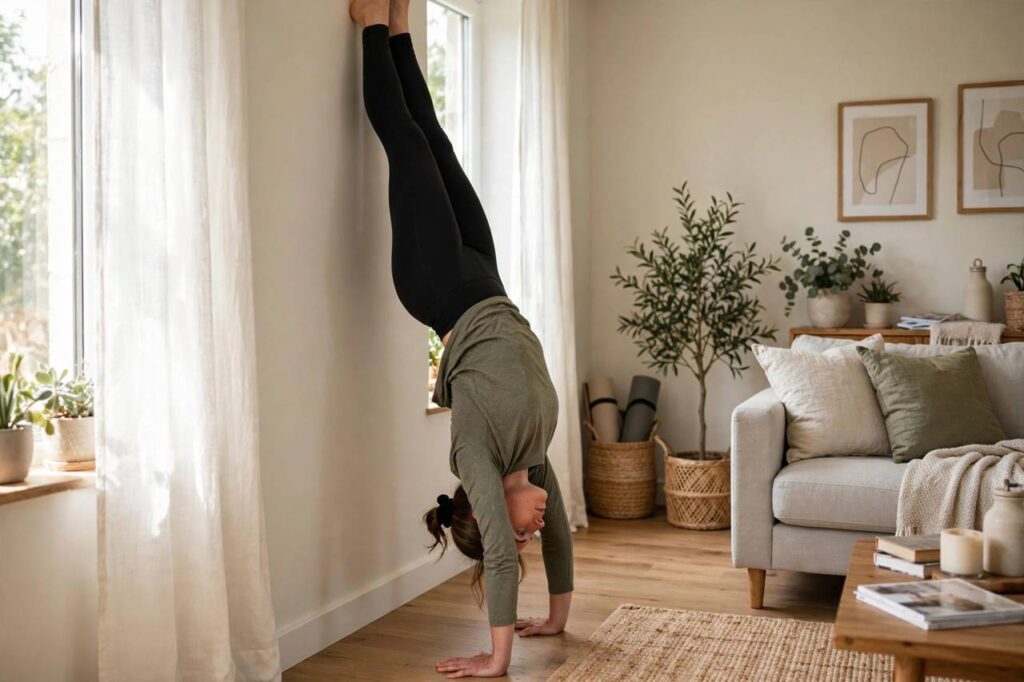
A client once asked me if practicing handstands for an hour every day would get him there in a month. I told him it would get him injured in three weeks and a handstand in roughly the same time as everyone else. Handstand practice follows the rules of skill learning, not the rules of workouts, and the rules say: short, frequent, fresh. This guide gives you the exact frequency I prescribe: how many days, how many minutes, when to rest, and the grease-the-groove method for busy people. The technique you are practicing lives in my how-to-do-a-handstand guide; this is the schedule that makes the technique stick.
The Short Answer
Practice 5 days a week, 10 to 15 minutes per session, always fresh. That is the prescription for roughly 80 percent of my clients. Beginners in the first month can start at 3 to 4 days while wrists and shoulders condition. Advanced practitioners working on 30-second-plus holds can go to 6 days with varied intensity. Daily maximal practice is for nobody; the joints need the off days more than the skill needs the extra reps.
Why Frequency Beats Duration
Balance is stored in the nervous system, and the nervous system learns like a language: a little every day beats a lot once a week. Each practice session writes a faint trace of the pattern; sleep consolidates it; the next day’s session deepens it. A 40-minute session does not write four times the trace of a 10-minute session, because fatigue degrades the quality of the later reps and the brain stops recording clean patterns. I have tested this directly: clients on 5×10 minutes progressed roughly twice as fast as clients on 2×40 minutes with the same total weekly time. This is the same principle behind how to build endurance in any skill: easy, frequent volume first, and intensity only after the pattern is grooved.

What a 10-Minute Session Looks Like
Minutes 0-2: wrist prep, circles, prayer stretches, fingertip planks. Minutes 2-4: easy review of the previous phase, wall holds or floats at half effort. Minutes 4-9: main work, the current phase drill, 5 to 8 quality sets with full rest between. Minute 9-10: one easy finisher set and done. The structure matters more than the content: warm joints, remind the pattern, train the edge, leave fresh. Sessions that run long always degrade at the end, and those degraded reps are worse than useless; they teach the wrong pattern. Set a timer. When it rings, you are done, even if the last hold felt amazing. Especially if it felt amazing; quit on a good rep and your brain remembers success.
The Grease-the-Groove Method
For busy people, grease-the-groove is the most practical handstand method ever devised. Pick one easy drill you own completely, like a 20-second chest-to-wall hold. Do it 4 to 6 times spread through the day, never close to fatigue, always fresh. Total daily time: under 5 minutes. The volume accumulates without ever creating fatigue, and the pattern gets grooved deeply. I had a client do wall holds in his office doorway between meetings for two months; his hold time doubled without a single “workout.” Rules: never to failure, never when sore, stop the moment quality drops. This method shines for maintenance too: once you own the handstand, 3 minutes of daily grease-the-groove keeps it for years.
Rest Rules: Days Off and Deloads
Take at least one full day off per week, two if you are over 40 or new. A rest day means no handstands at all, not “easy handstands.” Every fourth week, cut volume in half for a deload; practice the same drills at 50 percent of normal sets. Deload weeks feel like going backward and produce the biggest jumps, because adaptation happens during recovery, not during practice. Runners understand this intuitively from their training cycles; my strength training for runners article covers the same recovery logic applied to running. If you wake up with achy wrists that do not loosen in the warm-up, that is an unscheduled rest day. The schedule serves the joints, not the other way around.
Sample Weeks for 3, 5, and 7 Days
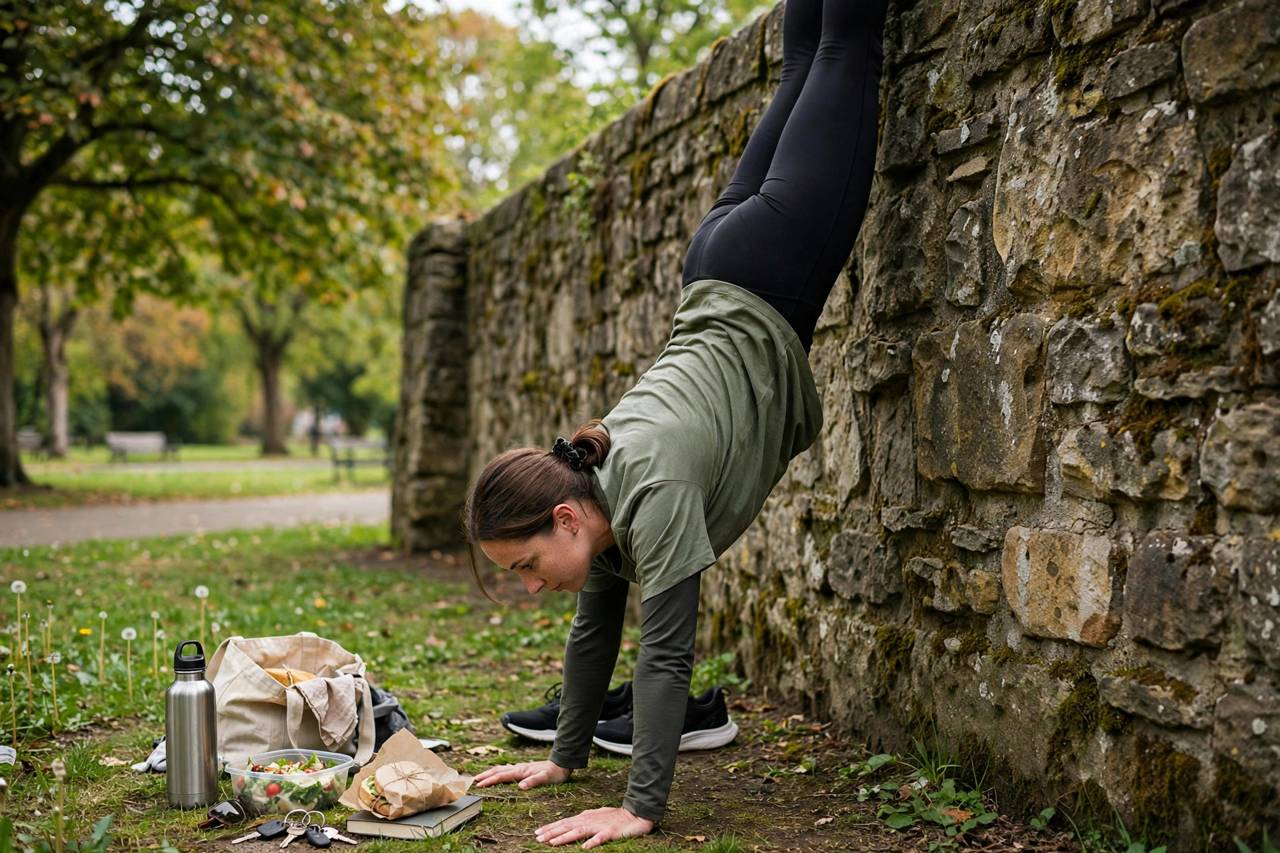
3 days (beginner or busy): Monday, Wednesday, Friday, 15 minutes each. Full session structure above. This is the minimum effective dose; progress will be steady but slow, roughly 8-10 months to a solid hold.
5 days (standard): Monday to Friday, 10-12 minutes each, weekends off. This is the sweet spot I prescribe most. Expect 5-7 months to a solid freestanding hold.
6 days (advanced): Monday to Saturday with varied intensity: three hard days, three easy grease-the-groove days, Sunday off. Only after you hold 20+ seconds freestanding and your joints are fully conditioned. Pair easy days with Turkish get-up practice for loaded stability without handstand volume.
There is no 7-day option on my programs. The body needs the off day, and the mind needs the break. Clients who insist on daily practice always end up taking forced weeks off instead.
Adjusting Frequency as You Improve
Your ideal schedule changes as the skill grows. In months 1-2, frequency matters most and intensity matters least: 5 easy days, short sessions, grease-the-groove style. The pattern is new and needs daily reminders. In months 3-5, as holds lengthen, add one harder day per week with longer holds and cut one easy day; the skill now needs some intensity to progress past the 5-second barrier. In months 6+, shift to 3-4 focused sessions with real volume plus daily 3-minute maintenance; the pattern is grooved and the limiter is now shoulder endurance, which responds to harder, less frequent work. Most people never adjust and wonder why month-1 scheduling stops working in month 5. It stops working because you are training a different problem now. Reassess your schedule every two months: if holds are stuck for three weeks, change the frequency structure before changing the drills. A practical way to run this: keep a simple weekly log with three columns, days trained, average session quality out of 10, and longest hold. When quality drops for two straight weeks, you are overcooked and need a deload. When quality is high but holds are flat for three weeks, you need more intensity, not more days. The log turns vague frustration into a specific prescription, and it takes thirty seconds after each session.
Signs You Are Overdoing It
Wrist ache that lasts into the next day. Shoulders that feel heavy before you start. Kick-ups getting worse across the week instead of better. Dreading practice. Needing longer warm-ups to feel normal. Any two of these together mean cut volume in half for a week. All five mean take four full days off. Overtraining in skill practice looks different from overtraining in lifting: there is no dramatic failure, just a slow erosion of quality that you mistake for a plateau. When a client stalls, the first thing I check is not their technique; it is their schedule. Nine times out of ten, they added volume to fix a stall that volume caused.

Frequently Asked Questions
You can practice easy, submaximal drills daily once your joints are conditioned (usually after 6-8 weeks), but keep at least one full rest day per week and vary intensity. Daily hard practice leads to wrist and shoulder overuse within weeks. The joints adapt slower than the skill.
Yes, if the 10 minutes are focused and fresh. Ten minutes gives you 5-8 quality sets, which is all the nervous system can productively absorb in one session. Longer sessions add fatigue, not learning, and fatigued reps teach bad patterns.
Before, always. Handstands are skill practice and need a fresh nervous system. After lifting, your shoulders are fatigued and your coordination is dulled; practice then is low quality and higher risk. If you must combine, separate them by at least four hours.
The balance pattern fades slowly: two weeks off costs you a little sharpness, a month costs noticeable control, three months and you are rebuilding. The good news is relearning is fast, usually twice as fast as the first time. Three minutes of daily grease-the-groove maintains it indefinitely.
About 10 minutes, three days a week: a few wall floats, a few freestanding attempts, done. Many of my clients maintain a solid 15-second hold for years on this minimum. The skill degrades slowly and rebuilds fast, so even a month off only costs you two to three weeks of rebuilding. Think of it as a subscription you pay in minutes, not hours.