How to Do Open Mic Comedy Without Bombing (Much)

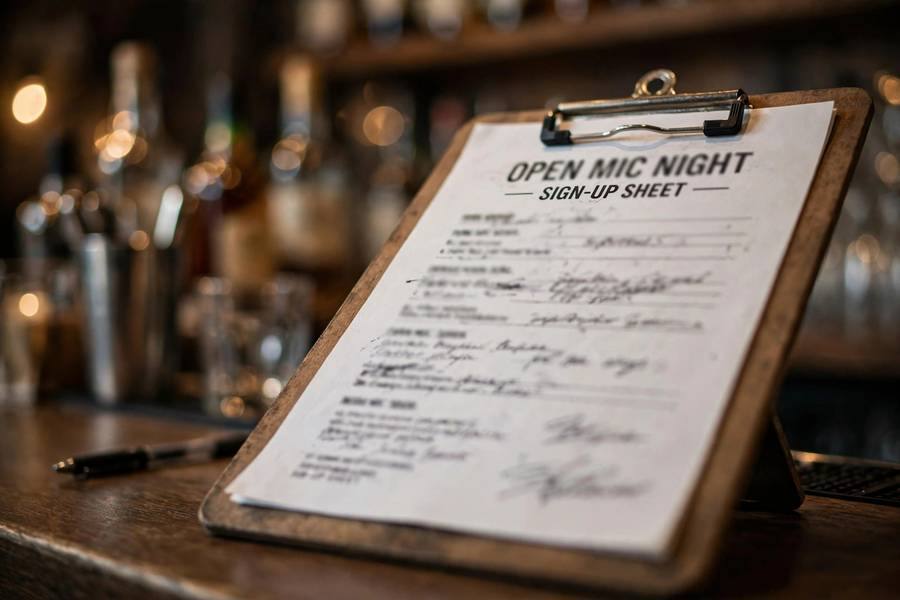
Your first open mic will be one of the most terrifying and most important nights of your comedy life. Mine was in a bar basement with eleven people, four of whom were other comics waiting their turn. I remember exactly two things: the mic was sticky, and three of my five minutes got actual laughs — which was enough to get me back the next week. That’s all an open mic needs to do: get you back.
Here’s everything about doing open mic comedy, from sign-up to survival.
Finding Mics and Signing Up
Find mics through local comedy Facebook groups, apps and sites listing open mics, or simply asking comics at shows. Most cities have several weekly; big comedy cities have multiple nightly. Each mic has its own culture — some are supportive rooms, some are brutal — and you’ll learn which suit you. what a cold open is
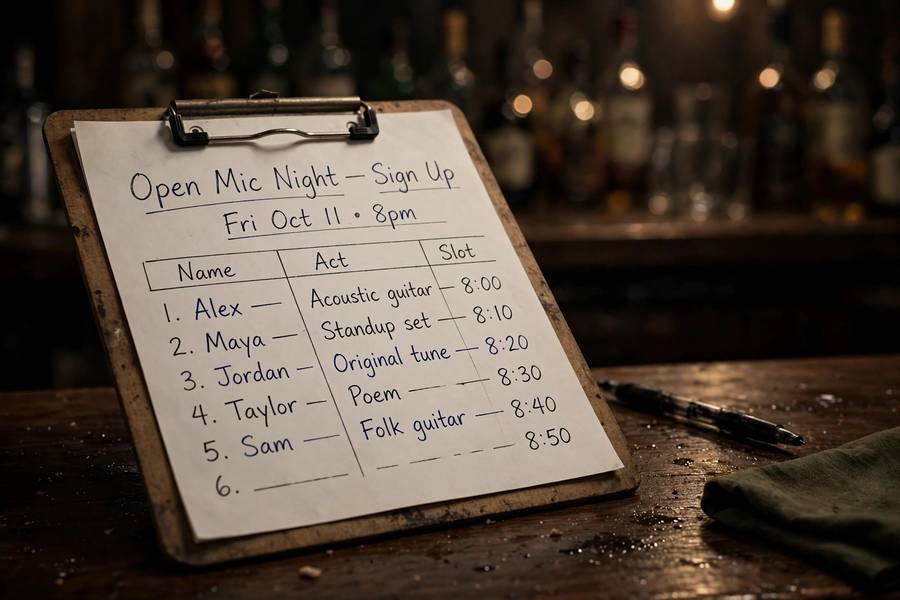
Sign-up mechanics matter. Many mics fill fast — popular ones cap at 15–20 slots and fill within minutes of sign-up opening. Learn each room’s system: online pre-signup, in-person list, lottery bucket. Arrive early for in-person signups; set alarms for online ones. Nothing stings like driving across town to find the list closed.
Know the room before you perform it. Visit once as an audience member first. Is it a listening room or a bar where nobody’s paying attention? How long are sets? Is there a theme or a regular crowd? Performing blind in a room whose culture you don’t know is avoidable suffering.
Preparing Your First Set
Bring 3–5 minutes of prepared material — written out, rehearsed aloud (not just read silently), timed. Rehearsing aloud is non-negotiable: jokes live in the mouth, and material that reads well often stumbles when spoken. Time yourself; aim for 30 seconds under the slot to leave room for laughs and nerves speeding you up. how comedians write jokes
Structure it simply: your strongest joke first (win the room immediately — first impressions set the ceiling), your developing material in the middle, and a planned closer (know exactly which joke ends your set, so you’re never stranded wondering how to get off). Bring the set list on an index card in your pocket — glancing at it is fine; reading verbatim from your phone is not.
Material selection for early mics: your most personal, specific stuff. The audience connects with realness faster than cleverness, and personal material is the only kind nobody else is doing. Leave the edgy experimental stuff for later — first, learn to get laughs reliably.
The Night: What Actually Happens
Arrive early, sign in, and settle. The host runs the show — introducing comics, managing the order, keeping energy up. You’ll wait through other comics’ sets (stay and watch — it’s etiquette and education). When your name is called, walk up confidently, adjust the mic stand to your height (don’t hunch), take one breath, and start.
The room will feel either supportive or indifferent — rarely hostile at a decent mic. Other comics are your audience; they’re generous laughers when something’s genuinely funny and silent when it isn’t. That silence is data, not cruelty. Perform your prepared set, hit your closer, thank the audience, and get off. Total stage time: the fastest five minutes of your life.
Afterward: the adrenaline crash is real. You’ll replay every second, catastrophizing the silences and minimizing the laughs. This is normal and meaningless — your memory of the set is fiction. That’s why you recorded it (you did record it, right?).
Performing: The Five Minutes
Talk to the audience, not at them. Make eye contact, react to the room, be present. The comics who treat the mic like a conversation get laughs; the ones who recite get silence. Commit fully — half-hearted delivery kills even good jokes. If you’re going to say the weird thing, say it like you mean it.
Handle death gracefully. Jokes will die — especially early on. When one does: don’t apologize, don’t explain, don’t freeze. Pause, move to the next joke with confidence. The audience forgives a dead joke instantly if you don’t dwell on it; they punish dwelling far more than failure. Some comics even acknowledge it lightly (“tough crowd of eleven”) — but only if it fits your persona. Never blame the audience.
Don’t do crowd work as a beginner. Talking to the audience off-script requires skills you don’t have yet — reading people, improvising, controlling a drunk stranger. Stick to your prepared material until you have fifty sets under your belt. The veterans making crowd work look easy earned it over years.

The Light: Respecting Time
Every mic has a light — a phone flashlight, a lamp, the host waving — signaling your time is up. When you see the light, wrap up within 30 seconds. Going over is the cardinal sin of open mics: you’re stealing stage time from comics waiting behind you, and hosts remember who respects the light. The comics who get booked are the ones who end on time.
Plan for the light: know which joke is your “light joke” — the one you’ll jump to when signaled, so you always end on a laugh instead of trailing off. Professionals can feel their time; until you can, watch the clock (most comics develop an internal timer within months).
After Your Set: The Real Work
Stay for the whole mic. Leaving after your set is the most disrespectful thing a comic can do — it empties the audience for everyone after you. Hosts notice, comics notice, and you’ll get fewer spots. Stay, watch, laugh genuinely at good bits. The community aspect isn’t optional; it’s the career.
Review your recording within 24 hours. Note: which jokes got laughs (keep and develop), which died (rewrite or cut), where you rushed, where the wording stumbled. Write the adjustments in your notebook now — tomorrow you’ll forget the specifics. Then bring the revised version to the next mic. This loop — perform, review, rewrite, repeat — is the entire engine of improvement, and it’s detailed in how comedians write jokes.
Ask for feedback sparingly. One trusted comic’s honest note beats ten polite “good sets.” But don’t pester — most comics will offer feedback if they have something useful. And take it gracefully; arguing with feedback marks you as uncoachable.
Open Mic Etiquette (Unwritten Rules)
Don’t steal jokes. Ever. Not “similar premises” — actual joke theft ends careers and reputations. If you accidentally do someone’s bit, apologize and drop it. Don’t heckle other comics — you’re colleagues, not audience. Buy something at bar mics; the venue hosts you for free, so be a customer. Don’t bring a disruptive entourage — five drunk friends “supporting” you ruins the room for everyone. Tip the staff, thank the host. These small courtesies compound into a reputation.
Support the scene: go to other comics’ shows, share their clips, celebrate their wins. Comedy scenes are ecosystems — the healthier the scene, the more stage time exists for everyone. The comics who give to the scene get back more than they give.
Getting Better: The Mic as Laboratory
Treat every mic as an experiment with a hypothesis: “I think this tag will work,” “I think reordering these bits improves flow.” Test one variable at a time — changing everything between sets teaches nothing. Keep a simple log: date, room, what you tried, what happened. Over months, patterns emerge that no single set reveals.
Milestones to watch for: your first consistent laugh (a joke that works three sets in a row), your first full set with no dead spots, the night another comic compliments your writing, the first time a host asks you back for a real show. Each one means the laboratory is working.
And when the five minutes become reliable, the next mountain is delivery — the stagecraft that turns jokes into performances. Study how the greats command a room in the best comedy movies, where club-honed stagecraft meets the camera.
Frequently Asked Questions
Write 3–5 minutes of material, sign up early (slots fill), and perform your prepared set without reading verbatim. Expect nerves, expect some jokes to die, and stay for the whole mic. Everyone’s first time is rough — surviving it is the achievement.
Typically 3–5 minutes, strictly timed — going over steals time from other comics and marks you as disrespectful. Bring slightly more material than the slot and have a planned closing joke so you can end cleanly on the light.
No — open mics are the training ground, and the payment is stage time. Some mics charge a small fee or require buying a drink; that’s normal. Paid work comes later, after you’ve built material and reputation.
Don’t go over time, don’t steal jokes, don’t heckle other comics, don’t leave right after your set, and don’t do material attacking the audience. Also: put your phone away while others perform.
As often as possible in your first year — 3–5 per week if your city supports it. Stage time is the only thing that develops material; everything else is preparation for stage time.