Best Online MBA With No GMAT: Waivers and Smart Choices


“Do I really have to take the GMAT?” It’s the question I hear most from prospective MBA students, usually with a tone of quiet dread. They’re accomplished professionals, good at their jobs, and the thought of spending three months relearning high-school math for a standardized test feels like a hazing ritual. I understand completely.
Here’s the good news I give them: the landscape has changed dramatically. A growing number of quality online MBA programs no longer require the GMAT or GRE, and this isn’t a lowering of standards, it’s a recognition that test scores are a weak predictor of graduate business success compared to work experience and undergraduate performance. This guide covers the best online MBA options with no GMAT requirement, how waivers work, and how to choose wisely.
In this guide:
- Why schools dropped the GMAT (and what replaced it)
- Waivers vs. test-optional: know the difference
- Who qualifies for GMAT waivers
- How to evaluate no-GMAT programs
- Strengthening your application without test scores
- Proving you’re quant-ready
- Should you take the GMAT anyway?
- Red flags in no-GMAT programs
- Your next steps
Why schools dropped the GMAT (and what replaced it)
For decades, the GMAT was the gatekeeper of business school. Then two things happened: research kept showing that undergraduate GPA and work experience predicted MBA success better than test scores, and schools competing for experienced professionals realized the test was deterring exactly the applicants they wanted. The pandemic accelerated the shift, and many temporary waivers became permanent policy.
Schools didn’t replace the GMAT with nothing. They replaced it with holistic review: deeper evaluation of your work history, undergraduate record, essays, recommendations, and interviews. For experienced professionals, this is arguably a fairer assessment. Your eight years of progressive responsibility say more about your readiness than a Saturday morning test ever could.
This shift is concentrated in online and professional MBA programs, which serve working adults. Full-time programs at the most selective schools still largely require tests. But if you’re a working professional considering an online MBA, you’re shopping in exactly the segment where no-GMAT options are strongest and most legitimate.
Waivers vs. test-optional: know the difference
Programs use confusingly similar language for different policies, and the distinction matters for your application strategy.
GMAT waiver programs have a formal waiver process: you apply for the waiver (usually with your application or just before), demonstrating that you meet criteria like a GPA threshold, years of work experience, or a relevant graduate degree. If granted, no test scores are required or expected. This is the most common model.
Test-optional programs don’t require scores from anyone, but you may submit them if you believe they strengthen your application. Here, strong scores can help (especially for scholarship consideration), but their absence doesn’t hurt. If you have a 720 GMAT gathering dust, submit it. If you don’t, don’t take the test just for this.
No-test programs simply don’t consider standardized tests at all. These are less common but growing, particularly among programs designed for senior professionals.
When researching, read the admissions page carefully and email the admissions office if the policy is ambiguous. I advise students to ask one direct question: “If I don’t submit test scores, am I at any disadvantage for admission or scholarships?” The honest programs answer clearly. Compare policies across the best online MBA programs to see which model each uses.

Who qualifies for GMAT waivers
Waiver criteria vary, but most programs look for some combination of:
Strong undergraduate GPA. Many programs waive the test for applicants with a 3.0+ GPA, sometimes higher for the quantitative components. A strong GPA in a rigorous major is the most common waiver basis.
Substantial work experience. Typically 3-5+ years of progressive professional experience, with more weight given to roles involving analytical or quantitative work. Seven years managing budgets waives more convincingly than three years in an unrelated role.
Advanced degrees or professional credentials. A prior master’s degree, CPA, CFA, or similar credential often qualifies automatically. These demonstrate graduate-level academic ability more directly than any test.
Military service. Many programs offer waivers or streamlined review for veterans and active-duty military, recognizing the leadership and analytical training service provides.
If you don’t clearly meet published criteria, ask anyway. Admissions offices have discretion, and a conversation about your specific background sometimes reveals a path the website doesn’t describe. The worst they can say is no, and you’ll have learned exactly what would change the answer.
How to evaluate no-GMAT programs
The critical question: does “no GMAT required” signal accessibility or low standards? Both exist, and telling them apart is your most important job.
Check accreditation first. AACSB-accredited programs with no GMAT requirement are making a deliberate, confident choice; they’re saying their holistic review works. Non-accredited programs with no requirements of any kind may simply be maximizing enrollment. Accreditation is the clearest signal that “accessible” doesn’t mean “easy.”
Look at the rest of the admissions bar. Quality no-GMAT programs still require strong GPAs, meaningful work experience, compelling essays, and solid recommendations. If a program requires essentially nothing, no test, no GPA threshold, no experience, instant admission, that’s not accessibility, that’s a business model. Your degree’s value depends on your classmates’ quality, and selective admissions protect that.
Examine career outcomes. This is the ultimate test. Where do graduates work, at what salaries, and in what roles? Programs confident in their no-GMAT policy publish this data proudly. Programs that hide it are telling you something.
Assess quantitative rigor. The GMAT tested quantitative readiness; without it, the program should demonstrate rigor differently. Look for required quantitative coursework, pre-term math modules, and honest descriptions of the analytical workload. A program that waves you in with no math preparation and then hits you with finance and statistics is doing you no favors.
Strengthening your application without test scores
Without a test score, every other component carries more weight. Here’s how to make each one count:
Essays that show analytical thinking. Since you can’t point to a quant score, demonstrate quantitative and strategic thinking in your essays. Describe decisions you made using data, budgets you managed, processes you improved with analysis. Show, don’t claim.
Recommendations that address readiness. Brief your recommenders: ask them to speak specifically to your analytical ability, intellectual curiosity, and capacity for graduate-level work. A recommender who writes “she’s great to work with” wastes the opportunity; one who writes “he built the forecasting model our division still uses” makes your case.
A resume that tells a story. Your resume should show progression: increasing responsibility, measurable impact, leadership. Quantify everything. For career changers especially, the resume must connect past achievements to future goals, a skill closely related to writing compelling application narratives generally.
An interview that closes the deal. Many no-GMAT programs interview all serious candidates. Prepare to discuss your goals specifically, your understanding of the program, and your quantitative readiness. Enthusiasm plus preparation beats polish; they want to see genuine motivation and self-awareness.
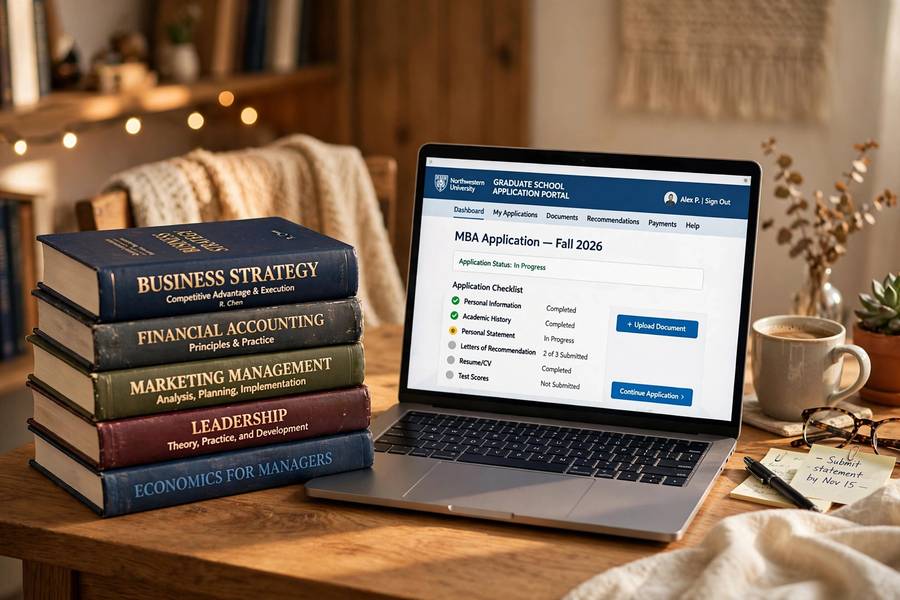
Proving you’re quant-ready
This deserves its own section because it’s the real concern behind the GMAT requirement. Business school is quantitatively demanding: accounting, finance, statistics, economics, operations. The test was partly a readiness check. Without it, you need to demonstrate readiness another way.
Take a pre-MBA quantitative course. Many programs offer or recommend these: short online courses in accounting, statistics, or business math. Completing one before enrollment both prepares you and signals seriousness to admissions. Some programs even require them for waived students, which I consider a sign of a responsible program.
Highlight quantitative work experience. Budget management, financial analysis, data-driven decision making, pricing, forecasting, any of these demonstrate the applied quantitative thinking business school builds on. Make this experience prominent in your application, not buried.
Consider a strong GRE quant score as an alternative. Some students find the GRE more approachable than the GMAT (its math is arguably more straightforward, and strong verbal skills can compensate). If a program accepts either and you’re a strong reader, the GRE might be the path of less resistance. My guide to GRE preparation covers the strategy if you go this route.
Be honest with yourself. If you haven’t done real math in fifteen years and the thought of statistics makes you anxious, that’s not a reason to avoid the MBA, it’s a reason to prepare properly. A summer of quantitative preparation before enrollment will make your first term dramatically less painful. I’ve seen waived students struggle badly in core finance because they skipped this step, and I’ve seen prepared ones thrive.
Should you take the GMAT anyway?
Sometimes, yes. Consider taking it if:
Your GPA is weak and you need countervailing evidence of academic ability. A strong GMAT score can neutralize a mediocre undergraduate record in a way that essays can’t.
You’re targeting scholarships. Many programs use test scores in merit aid decisions even when they’re optional for admission. A few weeks of prep could be worth thousands of dollars.
You’re considering selective programs that still require it. If your dream school wants scores, the waiver conversation is moot.
But don’t take it out of vague anxiety that your application is “missing something.” If programs on your list are genuinely test-optional and your profile is strong, your time is better spent on essays, recommendations, and quantitative preparation. Opportunity cost is real: every hour studying for an optional test is an hour not spent making the rest of your application excellent.
Red flags in no-GMAT programs
Admission with no meaningful criteria. As discussed: if everyone gets in, the credential’s value dilutes and your network suffers.
No quantitative preparation or support. A responsible program ensures waived students can handle the math. One that doesn’t is setting students up to fail core courses.
Outcomes data that’s missing or vague. “Our graduates succeed in many industries” without numbers is not data.
Pressure to enroll immediately. Legitimate programs have admissions cycles. High-pressure sales tactics indicate a recruitment operation, not an academic institution.
Costs far above comparable accredited options. Some programs charge premium prices while offering minimal selectivity or support. Compare total cost against accredited alternatives before committing.

Your next steps
This month: Identify 5-8 programs that fit your goals and check each one’s GMAT policy in detail. Note waiver criteria and whether scores affect scholarships.
Next 2-3 months: If pursuing waivers, strengthen the components that replace the test: refine your resume, brief your recommenders, draft essays, and complete any quantitative preparation. If taking the test after all, begin structured prep now.
Before applying: Have a candid conversation with each program’s admissions office about your specific profile. Ask directly about your waiver odds and scholarship implications. Their answers will tell you as much about the program’s culture as its policies.
The GMAT-optional landscape is good news for experienced professionals: your work history finally counts for what it’s worth. Choose an accredited program with real selectivity and real outcomes, prepare yourself quantitatively, and build an application that shows who you are beyond any test score. The degree you earn will be judged on what you learned and what you did with it, not on how you got in. If you’re still weighing whether graduate business education fits your trajectory, researching which degrees deliver real career payoff will ground the decision in outcomes, not anxiety.
Can I get an online MBA with no GMAT? Yes. Many quality online MBA programs now offer GMAT waivers or are fully test-optional, particularly those serving working professionals. Schools typically grant waivers based on undergraduate GPA, years of professional experience, advanced degrees, or professional credentials like the CPA. AACSB-accredited no-GMAT programs are making a deliberate choice for holistic review, not lowering standards. Do employers care if my MBA didn’t require the GMAT? No. Employers evaluate your degree based on the school’s reputation and accreditation, your skills, and your accomplishments, not your admissions path. Diplomas don’t indicate whether you submitted test scores. What matters is choosing an accredited program with strong career outcomes and making the most of it through projects, networking, and applied learning. How do I get a GMAT waiver for an online MBA? Most programs have a formal waiver process where you demonstrate qualifying criteria: typically a 3.0+ undergraduate GPA, 3-5+ years of progressive work experience, an advanced degree, or professional credentials. You usually request the waiver with your application. If you don’t clearly meet published criteria, contact admissions directly; offices often have discretion for strong candidates. Is a no-GMAT online MBA easier or lower quality? Not necessarily. Quality no-GMAT programs maintain rigor through selective holistic admissions (strong GPA, experience, essays, recommendations) and demanding coursework. The warning sign isn’t the missing test, it’s missing selectivity overall: no GPA threshold, no experience requirement, and instant admission suggest an enrollment business, not an academic program. Check AACSB accreditation and published career outcomes. Should I still take the GMAT if it’s optional? Consider it if your GPA is weak (a strong score offsets it), if you’re targeting merit scholarships (many programs use scores for aid decisions), or if your dream schools still require it. Otherwise, your time is usually better spent strengthening essays, recommendations, and quantitative preparation. Don’t take it from vague anxiety; take it for a specific strategic reason.