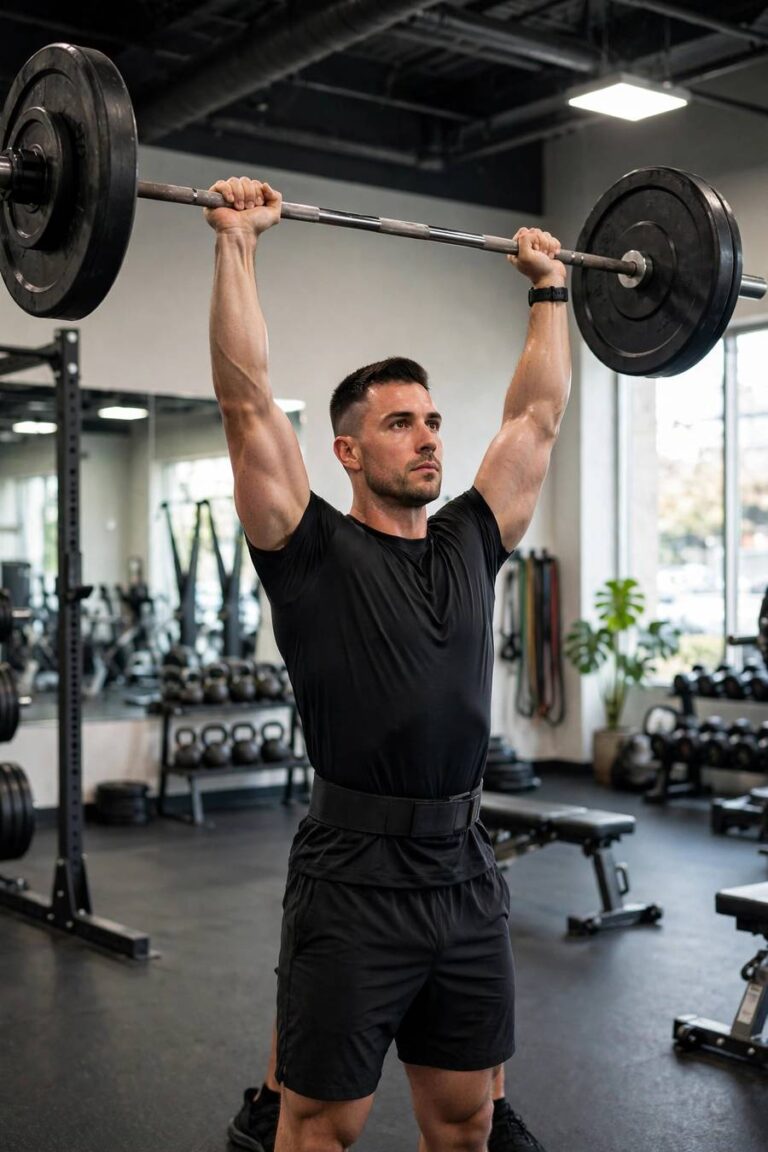
How Often Should You Train Shoulders? The Honest Answer


“How often should I train shoulders?” is one of the most argued questions in the gym, and most of the answers are useless because they ignore the one thing that matters: what else you are doing that week. A powerlifter who benches heavy three times a week is already training front delts three times a week. Telling him to add two shoulder days is how you manufacture an overuse injury. Context first, frequency second. That is the rule for everything in this guide.
I have coached lifters who grew shoulders on one focused session a week and lifters who needed three. Both were right, because their programs were different. Here is how to figure out your number: what the research suggests, how to read your own recovery, and exact templates for every common schedule.
In this guide:
- The Short Answer
- What the Evidence and Experience Say
- How to Tell If You Are Training Enough (or Too Much)
- Frequency Templates for Every Schedule
- Shoulder Recovery: The Unsexy Multiplier
- Frequently Asked Questions
The Short Answer
Train shoulders directly 2 times per week. That is the answer for most lifters, most of the time. Two sessions give you enough weekly volume to grow (roughly 12 to 20 sets across all three delt heads) with enough recovery between sessions for the joints and tendons to adapt.
One session a week works if your pressing volume is high or you are short on time; you will maintain and slowly grow. Three sessions a week works for advanced lifters chasing delt specialization, provided the volume per session is managed and the shoulders get at least one full rest day between hard sessions. More than three direct sessions is almost never productive for natural lifters; the shoulder joint accumulates fatigue faster than the muscles do, and joint fatigue does not show up until it is a problem.
These numbers assume direct shoulder work. Your front delts are also getting indirect work from every press, and your rear delts from every row. When I count a client’s weekly shoulder volume, I count all of it, not just the exercises with “shoulder” in the name. Our best shoulder exercises guide shows how pressing, lateral work, and pulling add up across a week.
What the Evidence and Experience Say
Training frequency research consistently finds that when weekly volume is equal, spreading it across two or more sessions beats cramming it into one. The mechanism is simple: muscle protein synthesis stays elevated for roughly 24 to 48 hours after training, so training a muscle twice a week keeps the growth signal on more of the time. This effect is strongest for smaller muscles like the delts, which recover faster than large muscles like the quads.
In practice, here is what I have observed across hundreds of client programs:
- Beginners: Frequency matters less than consistency. Two to three full-body sessions a week with some overhead pressing grows shoulders fine, because everything is untrained and responds to anything.
- Intermediates: This is where two dedicated shoulder sessions pull ahead of one. Volume needs rise, and splitting it keeps quality high.
- Advanced: Two heavy-ish sessions plus a light pump session (high reps, short rests) is the specialization sweet spot. The third session adds volume without beating up the joints.
One caveat the studies do not capture well: shoulder joints are cranky. Research measures muscle growth, not tendon happiness. In the real world, I cap most clients at two hard shoulder sessions because the third hard session is where elbows and AC joints start complaining, especially in lifters over 35 or anyone with a pressing-heavy program.
How to Tell If You Are Training Enough (or Too Much)
Forget formulas. Your body gives you clear signals if you know what to watch for. Check in every few weeks:
Signs you could train shoulders more often or with more volume:
- Shoulders feel fresh 24 hours after training, every time
- Pressing and lateral raise numbers climb steadily
- No pump or fatigue in the delts during sessions (the muscle is barely being challenged)
- Shoulders look the same month after month despite consistent training
Signs you are overdoing it:
- Achy, cranky shoulders that never quite feel fresh
- Pressing strength stalling or dropping while everything else climbs
- Clicking, pinching, or pain in the front of the shoulder during presses
- Needing more than 72 hours before shoulders feel ready again
- Sleep disrupted because you cannot lie on your side comfortably
That last one is the canary in the coal mine. If your shoulders hurt when you sleep on them, you are overreaching, and no amount of “pushing through” fixes it. Back the frequency or volume down by a third for two weeks. I have never seen a lifter regret a deload. I have seen plenty regret ignoring the warning signs for six months.
Recovery basics matter as much as programming. A proper how to cool down after exercise routine, enough protein, and actual sleep do more for shoulder recovery than any supplement. The boring stuff works.
Frequency Templates for Every Schedule
Training 3 Days a Week (Full Body)
Add one shoulder-focused block to two of the three sessions:
- Day 1: Overhead press 4×6-8 + lateral raise 3×12-15
- Day 3: Arnold press 3×10-12 + reverse fly 3×12-15 + face pull 2×15
Total: roughly 15 direct sets per week. Plenty for growth on a full-body schedule.

Training 4 Days a Week (Upper/Lower)
- Upper Day 1: Overhead press 4×6-8 (heavy) + lateral raise 3×12-15
- Upper Day 2: Seated press 3×8-10 + reverse fly 3×12-15 + lateral raise 2×15-20 (lighter, pump focus)
Total: roughly 15 sets. The second session is lighter by design; it adds volume without adding joint stress.
Training 5-6 Days a Week (Push/Pull/Legs or Bro Split)
- Push Day 1: Overhead press 4×6-8 + lateral raise 4×12-15
- Push Day 2 (or shoulder day): Arnold press 3×10 + lateral raise 3×15 + reverse fly 3×12 + face pull 3×15
- Pull days: Rear delts get indirect work from rows; add 2 sets of face pulls if they are a weak point
Total: 16 to 20 direct sets. This is the upper end of useful volume. Do not add a third shoulder day on top of this unless you are specializing and you drop pressing volume elsewhere.
Whichever schedule you run, it should fit a sensible split. Our best workout splits guide compares the options, and the best workout split for muscle gain breakdown shows exactly where shoulder volume sits in a hypertrophy-focused week.

The Specialization Block (Advanced, 6-8 Weeks)
If delts are a genuine weak point and everything else is maintaining:
- Day 1: Heavy press focus (overhead press 5×5, lateral raise 3×12)
- Day 3: Side-delt focus (lateral raise 5×15-20, upright row 3×12, face pull 3×15)
- Day 5: Rear-delt and pump (reverse fly 4×15, cable lateral 3×20, band pull-apart 3×25)
Reduce pressing volume for chest slightly during the block so total shoulder stress stays manageable. Run it 6 to 8 weeks, then return to normal programming. Specialization works because it is temporary; run it year-round and it is just overtraining with a fancy name.
Shoulder Recovery: The Unsexy Multiplier
You can have perfect frequency and still stall if recovery is garbage. The shoulder-specific recovery checklist:
- Balance pressing and pulling. Aim for at least as many pulling sets as pressing sets per week. Ideally more pulling. Every press-heavy lifter with cranky shoulders I have fixed was under-pulling.
- Warm up the joint, not just the muscle. Band pull-aparts, external rotations, and light presses before loading. Two to three minutes. Non-negotiable before heavy overhead work.
- Sleep on your back sometimes. Side-sleeping compresses the shoulder all night. If your shoulders ache in the morning, try back-sleeping for a week and watch what happens.
- Manage total pressing volume. Bench, incline, overhead press, dips, push-ups: it all counts toward shoulder stress. When you add a shoulder day, something else usually needs to come down.
- Deload every 4 to 8 weeks. Cut volume in half for a week. Shoulders, elbows, and tendons recover slower than muscles, and the deload is when the adaptation actually consolidates.

Yes, for most lifters. Two direct sessions per week provide 12 to 20 sets of total shoulder volume, which is the effective range for growth, while allowing full recovery between sessions. Combined with indirect work from pressing and rowing, twice a week is the sweet spot.
Yes, if you manage intensity. Three sessions work best as two moderate sessions plus one light pump session, or during a 6 to 8 week specialization block. Three hard sessions per week usually beats up the shoulder joints faster than the muscles can benefit. Watch for achy joints and stalled pressing strength.
It is enough to maintain and make slow progress, especially if you press heavy on other days. Beginners on full-body programs often grow shoulders fine with one focused session plus pressing. But if shoulders are a priority and you want faster growth, twice a week is noticeably better.
At least 48 hours between direct shoulder sessions. The delts recover relatively fast, but the shoulder joint, elbows, and tendons need the full two days, especially after heavy pressing. If shoulders still feel fatigued after 48 hours, you did too much volume.
Both work. On push day, shoulders get trained after chest pressing, which is time-efficient but means pressing performance on shoulders is slightly reduced. A separate shoulder day lets you hit delts fresh with more volume. If shoulders are a weak point, give them their own day; if not, push day is fine.