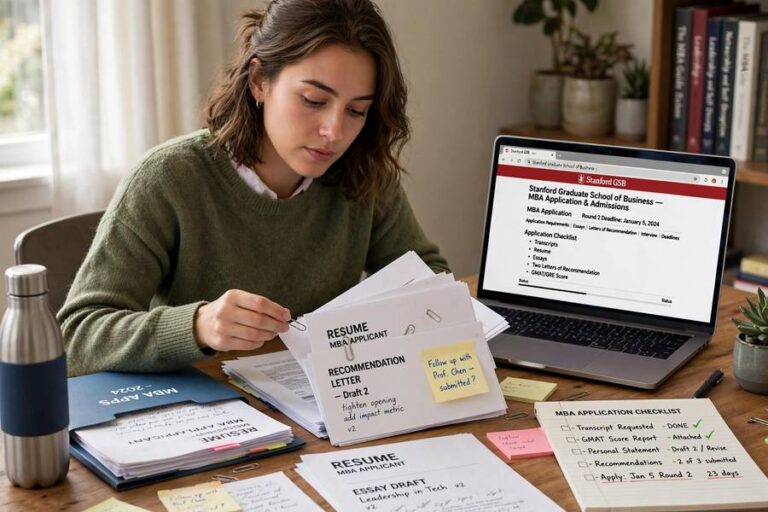
Online MBA vs Traditional MBA: An Honest Comparison

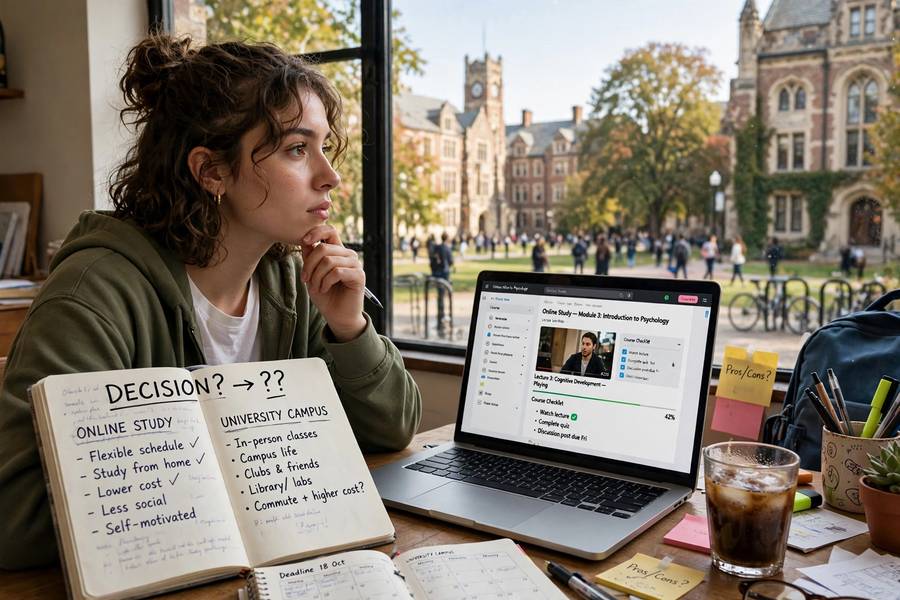
“But is it as good as a real MBA?” A prospective student asked me this last month, gesturing vaguely at her laptop as if the online program lived inside it and might be smaller than the campus version. I hear some version of this question constantly, and I always give the same answer: you’re asking the wrong question. The right question is which format fits your life, because the degree itself is the same.
I’ve advised students through both paths for years, and I’ve watched graduates of both succeed spectacularly and struggle unnecessarily. The differences that matter aren’t about quality, they’re about experience, logistics, networking style, and cost. This guide compares online MBA vs. traditional (on-campus) MBA honestly across every dimension that should factor into your decision.
In this guide:
- First: it’s the same degree
- Learning experience compared
- Networking: the real difference
- Career services and recruiting
- Flexibility and life fit
- Cost comparison
- How employers view each
- Who should choose which
- The hybrid middle path
First: it’s the same degree
Let’s clear the biggest misconception first. At accredited universities, the online MBA and the on-campus MBA are the same degree: same curriculum, same faculty, same accreditation, same diploma. Most diplomas and transcripts don’t indicate the delivery format at all. When people ask “is an online MBA respected,” they’re usually imagining a difference that doesn’t exist at reputable schools.
What creates confusion is that “online MBA” sometimes gets conflated with unaccredited or low-quality programs that happen to be online. That’s a school-quality issue, not a format issue. An AACSB-accredited online MBA from a respected university is a serious credential. An unaccredited on-campus program from a school nobody’s heard of is not magically better because it has classrooms. Judge the school, then judge the format.
So if the degree is the same, what actually differs? Everything about the experience of earning it: how you learn, who you meet, how recruiting works, what it costs, and how it fits your life. Those differences are real and decision-relevant. Let’s go through them.
Learning experience compared
Traditional MBA: Physical classrooms, real-time case discussions, spontaneous hallway conversations, in-person team meetings. The learning is immersive and social. You read body language, debate in real time, and build relationships through sheer proximity. For students who learn best through discussion and presence, this is powerful.
Online MBA: Recorded lectures you can pause and rewatch, structured discussion boards, live virtual sessions, and virtual team collaboration. The learning is flexible and often more reflective; asynchronous discussions give you time to compose thoughtful analysis rather than thinking on your feet. Students who process deeply before speaking often participate more online than they ever did in physical classrooms.
Neither is pedagogically superior in any absolute sense. Research on learning outcomes shows comparable results when programs are well-designed. The difference is which environment brings out your best: if you thrive on live energy and spontaneous interaction, campus has an edge. If you do your best thinking with time to reflect, online may actually serve you better. Be honest about which learner you are; I discuss the mechanics of effective digital learning in my overview of how e-learning works.
One genuine online advantage: the material is reviewable. Rewatching a difficult finance lecture three times is something campus students can’t do. One genuine campus advantage: serendipity. The conversation after class, the study group that forms over coffee, the professor you buttonhole in the hallway. Online programs try to engineer serendipity through virtual events, but it’s not quite the same.

Networking: the real difference
This is the dimension where the formats differ most, and where you should think hardest.
Traditional MBA networking happens through immersion: two years of daily contact with classmates, club leadership, social events, campus recruiting, and alumni weekends. Relationships form organically through repeated, unstructured interaction. The network is deep, broad, and often lifelong. For career switchers especially, this immersion builds the relationships that open doors in new industries.
Online MBA networking happens through intention: cohort-based courses, live sessions, virtual clubs and events, discussion participation, and in-person residencies where offered. The network can be equally valuable, but it doesn’t happen by accident. Students who keep cameras off, skip optional sessions, and never attend residencies graduate with a credential and no relationships. Students who engage deliberately build networks that genuinely advance their careers.
The cohorts differ too. Traditional full-time programs skew younger (average age around 27-28), with many students between jobs and open to relocation and career change. Online programs skew older and more experienced (average age 32-35+), with students employed full-time and usually advancing within their current trajectory. Neither is better, but they’re different professional communities. Ask yourself which peer group matches where you’re headed.
My honest assessment: campus wins on network depth and serendipity; online wins on network diversity (geographically distributed classmates across industries) and on fitting network-building around a working life. The gap narrows every year as online programs invest heavily in community-building.
Career services and recruiting
Traditional full-time MBAs have a structural advantage here: on-campus recruiting. Major employers, especially in consulting, investment banking, and tech, run structured recruiting pipelines on physical campuses with interviews, networking events, and internship programs designed around the two-year full-time cycle. If your goal is a top consulting firm or investment bank, the traditional full-time MBA remains the best vehicle.
Online MBA career services focus differently: executive coaching, advancement strategy, promotion support, and alumni networking rather than entry-level campus recruiting. This matches the online student population, which is mostly employed and advancing rather than seeking first post-MBA roles. The support is real but differently shaped.
For career switchers, this distinction matters enormously. Switching into consulting or banking through structured on-campus recruiting is a well-trodden path; switching through an online program requires more self-directed effort (networking, projects, targeted applications). It’s absolutely doable, I’ve seen it done, but go in with eyes open about the additional hustle required. Compare how the best online MBA programs handle career outcomes for switchers specifically.
Flexibility and life fit
This is online’s decisive advantage and the reason most students choose it.
Online: Keep your job, your salary, your home, your family routine. Study on your schedule. No relocation, no career interruption, no uprooting your life. For professionals with mortgages, partners with careers, children in schools, or simply good jobs they don’t want to leave, this isn’t a minor convenience, it’s the factor that makes the degree possible at all.
Traditional full-time: Requires quitting your job, often relocating, and living on savings or loans for two years. It’s a massive life disruption. The payoff is total immersion: you live and breathe the MBA, with internships, clubs, travel, and experiences that a part-time schedule can’t accommodate.
There’s also a middle option many overlook: traditional part-time or evening MBAs, offered by many universities in major cities. These give you physical classrooms and local networking while keeping your job, at the cost of commuting and fixed evening schedules. If you live near a strong business school, this hybrid deserves consideration.
Be realistic about what “flexibility” demands. Online flexibility means self-discipline; without the structure of physical attendance, your results depend entirely on your systems. The students who thrive online are organized, proactive, and consistent. If you need external structure to function, the campus environment’s built-in accountability is a genuine advantage.
Cost comparison
Sticker prices overlap more than people expect. Top traditional full-time MBAs run $150,000-$220,000+ in tuition alone. Top online MBAs run $80,000-$150,000+. But the real comparison must include opportunity cost, which is where the formats diverge sharply.
Traditional full-time total cost = tuition + two years of foregone salary + living expenses. For a professional earning $90,000, that’s $150,000 tuition + $180,000 lost earnings = $330,000+ before living costs. This is the number that should frame the decision, not tuition alone.
Online total cost = tuition + fees + incidentals, while you keep earning. A $70,000 online MBA completed while earning $90,000 annually costs $70,000 out of pocket against $180,000+ in retained earnings over the same two years. The financial profiles aren’t close.
This doesn’t automatically make online the better investment. The traditional MBA’s immersion, recruiting access, and network can produce career jumps that justify the cost, particularly for career switchers targeting structured-recruiting industries. But the online MBA’s economics are compelling for advancers: you get the credential and the learning while your career compounds uninterrupted.
Run both scenarios with your actual numbers. Include employer tuition assistance (common for online, rare for full-time since you’ve quit). Include the salary trajectory with and without each option. The spreadsheet usually surprises people, in both directions.
How employers view each
For accredited programs from reputable schools, employers view the degrees equivalently. Hiring managers care about the school’s reputation, your experience, and what you can do. The delivery format is a distant fourth, if it’s considered at all. And since diplomas don’t distinguish format, the question often never arises.
Where format subtly matters is in the story you tell. “I completed my MBA while working full-time and earning two promotions” tells a story of drive and time management that impresses employers. “I left work for two years to immerse myself at a top program” tells a story of commitment and transformation. Both are strong stories; they’re just different ones.
One nuance: in industries with heavy campus-recruiting traditions (consulting, banking), the traditional MBA’s recruiting pipeline is itself part of the value, and employers in those pipelines are accustomed to campus hires. Outside those industries, nobody distinguishes. If your target employers hire through campus recruiting, factor that in; if they hire experienced professionals through normal channels, format is irrelevant.
Who should choose which
Choose the traditional MBA if: you’re early-career and want maximum transformation; you’re switching into consulting, banking, or tech through structured recruiting; you can afford the career break financially and personally; you learn best through immersion and live interaction; and you want the deepest possible peer network.
Choose the online MBA if: you’re a working professional who can’t or won’t quit; your career is advancing and you want to accelerate it; you need geographic flexibility; you’re self-disciplined and learn well independently; or the total economics (keeping your salary) make campus infeasible. The study habits of top students translate directly to online success, by the way, consistency and active engagement matter more than format.
Consider part-time/evening campus if you live near a strong school, want physical classrooms without quitting your job, and can handle the commute. It’s the overlooked third option that suits more people than realize it.
Notice what’s missing from both lists: prestige anxiety. “Which looks better” is the wrong filter. Both are respected. Choose based on your life, your goals, and your learning style, not on what impresses people at dinner parties.

The hybrid middle path
Worth a final note: the lines are blurring. Many “traditional” programs now offer hybrid options with significant online components. Many online programs add residencies, immersions, and global experiences that replicate campus highlights. Some students even combine: starting online and attending residencies, or doing a campus program’s online electives.
When evaluating, look past the label to the actual experience: How much live interaction? How much in-person? How strong is the cohort community? How does career support work for someone in your situation? The best program for you might be marketed as either format but deliver the mix you need.
The online MBA vs. traditional MBA debate has a boring but liberating answer: the degree is the same, the experiences differ, and the right choice is the one that fits your career stage, your life constraints, and how you learn best. A working professional who thrives online and applies every course at work will outperform a miserable campus student who chose tradition over fit, and vice versa. If you’re weighing a strategic pause to study full-time, the framework in the pros and cons of taking time out applies to adults considering career breaks too. Choose deliberately, commit fully, and either path will serve you well.
Is an online MBA as good as a traditional MBA? At accredited universities, yes: the online and on-campus MBA are the same degree with the same curriculum, faculty, accreditation, and diploma. Employers view them equivalently. What differs is the experience: learning format, networking style, recruiting access, flexibility, and cost structure. Choose based on which experience fits your life and goals, not on quality concerns. Do employers respect online MBA degrees? Yes, when the program is accredited and from a reputable school. Hiring managers evaluate the school’s reputation, your experience, and your capabilities; delivery format is rarely a factor, and diplomas typically don’t indicate format. Completing a rigorous MBA while working full-time is often viewed positively as evidence of discipline and time management. What are the disadvantages of an online MBA? The main trade-offs are networking (requires deliberate effort rather than happening organically), limited access to structured on-campus recruiting (matters most for consulting and banking career switches), and the self-discipline demanded by flexible formats. You also miss the immersive campus experience: serendipitous conversations, clubs, and the intensity of living the degree full-time. Should I quit my job to do an MBA? Only if the benefits of full-time immersion outweigh two years of lost salary plus tuition, which typically totals $300,000+. Quitting makes sense for early-career professionals seeking maximum transformation or career switches into structured-recruiting industries. For most working professionals who are advancing well, an online or part-time MBA preserves income and career momentum while delivering the same degree. Can I switch careers with an online MBA? Yes, though it requires more self-directed effort than switching through a traditional program’s on-campus recruiting pipeline. Successful online career switchers combine the degree with targeted networking, relevant projects or internships, and strategic applications. It’s absolutely achievable, but go in expecting to drive the process yourself rather than riding a structured recruiting conveyor belt.