Dirty transmission fluid doesn’t announce itself with a single dramatic failure. It creeps up — a slightly lazy shift here, a weird hesitation there, things you almost talk yourself out of noticing. I’ve had customers describe it as “the car just doesn’t feel right” and then act surprised when I pull out black fluid. The symptoms were there for months; they just didn’t have a name for them.
Here’s the thing: every one of these symptoms has other possible causes too. A slipping transmission isn’t always dirty fluid. But dirty fluid is the cheapest cause to check and the cheapest to fix, so it should always be your first suspect. Learn the signs, confirm with the dipstick, and you’ll catch problems while they’re still cheap.
Table of Contents
- 1. Slipping Gears
- 2. Harsh or Delayed Shifting
- 3. Delayed Engagement
- 4. Transmission Overheating
- 5. Strange Noises
- 6. Dark or Burnt-Smelling Fluid
- 7. Shuddering or Vibrating
- 8. Surging or Lurching
- 9. Dashboard Warnings or Limp Mode
- How to Confirm It’s the Fluid
- What to Do Next
- Frequently Asked Questions
1. Slipping Gears
The classic. You’re accelerating, the engine revs climb, but the car doesn’t pick up speed to match — like the transmission can’t quite hold onto the gear. It might happen under load (uphill, merging onto the highway) or randomly.
Why dirty fluid causes it: the fluid’s friction modifiers are what let clutch packs grip precisely. Degraded fluid loses those properties, so clutches slip instead of locking firmly. Slipping generates heat, heat degrades the fluid further, and around you go.
Fair warning: slipping is also the symptom of worn clutch packs — actual mechanical failure. The difference matters enormously for what you do next, which is why you confirm with the fluid check before assuming anything.
2. Harsh or Delayed Shifting
Shifts that used to be invisible now announce themselves — a clunk, a jerk, a pause-then-bang. Or shifts happen late, with the engine revving higher than it should before the next gear engages.
Dirty fluid causes this because hydraulic pressure becomes inconsistent. The valve body meters fluid pressure to apply clutches with precise timing; contaminated fluid with the wrong viscosity throws that timing off. Think of it like trying to play piano with sticky keys — the mechanism works, but the response is wrong.
3. Delayed Engagement
You shift from Park to Drive (or Reverse), and… nothing. A second passes. Maybe two. Then a clunk as the gear finally engages. When the transmission is cold it’s worse; as it warms up it improves — that’s a telltale fluid symptom, because cold, thick, degraded fluid flows even worse than warm degraded fluid.
Some delay (under a second) is normal on many cars. When it stretches past that, or gets noticeably worse over weeks, the fluid is a prime suspect.
4. Transmission Overheating
Dirty fluid doesn’t cool as well as clean fluid — it’s thicker, its heat-transfer properties are degraded, and it’s often full of contaminants that insulate rather than conduct. The transmission runs hotter, which degrades the fluid faster, which makes it run hotter. Death spiral, as I never tire of saying.
Signs: a transmission temperature warning light (if your car has one), a burning smell after driving, or the transmission behaving worse the longer you drive (heat-soaked and unhappy). Towing or summer traffic makes it dramatically worse.
5. Strange Noises
A healthy transmission is nearly silent. Dirty fluid can produce:
- Whining that changes with engine speed — often the pump struggling with thick, contaminated fluid, or cavitating.
- Buzzing or humming from the torque converter area.
- Clunking on shifts or engagement — related to the harsh shifting above.
Noises are the symptom I take most seriously, because they’re the hardest to attribute to “just old fluid.” A new noise plus dirty fluid means service it now and listen carefully afterward — if the noise persists with fresh fluid, something mechanical is going on.
6. Dark or Burnt-Smelling Fluid
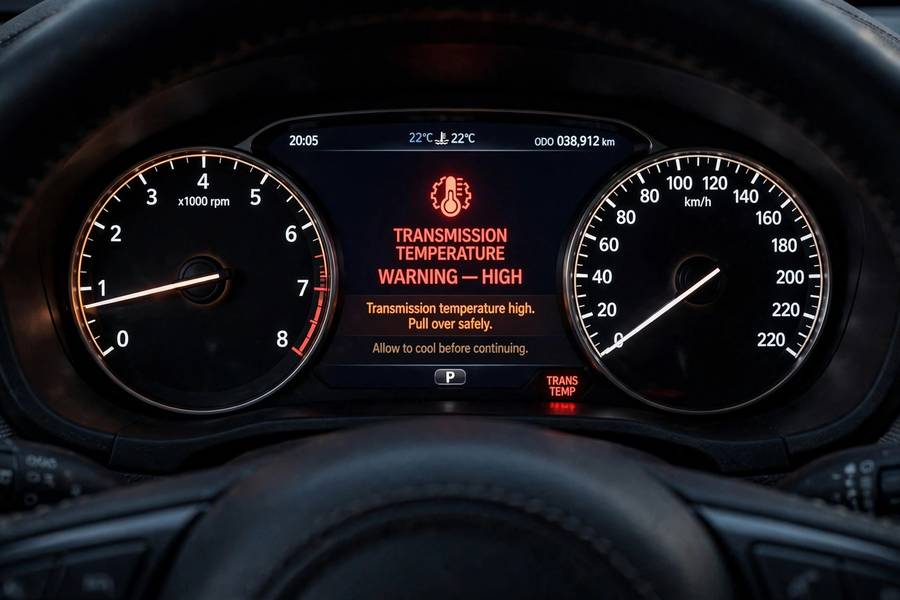
This one’s not a driving symptom — it’s what you find when you check. But it’s the most definitive sign, which is why it’s on the list. Pull the dipstick: if the fluid is dark brown or black instead of red, or smells burnt instead of faintly sweet, it’s spent. Doesn’t matter what the odometer says or when it was “supposed” to be changed. The fluid is telling you directly.
If you haven’t done the check before, my guide on how to check transmission fluid walks through the proper procedure. And for the smell test specifically, I’ve got a whole piece on what burnt transmission fluid smells like — your nose is a better diagnostic tool than you think.
7. Shuddering or Vibrating
A shudder — a rapid vibration, often felt through the seat or steering wheel, typically during light acceleration or when the torque converter locks up — is a well-known dirty-fluid symptom. It’s the clutch or converter clutch grabbing and releasing rapidly instead of engaging smoothly, because the fluid’s friction characteristics are off.
The famous version: torque converter shudder, which feels like driving over rumble strips at around 40-50 mph under light throttle. On many cars, a fluid change with the correct spec (sometimes plus a friction-modifier additive the manufacturer specifies) fixes it completely. I’ve seen this one cured by fresh fluid more times than I can count.
8. Surging or Lurching
The car surges forward or lurches at steady speed, or RPMs fluctuate up and down without your foot moving. It feels like the transmission can’t decide what it wants to do.
This is inconsistent hydraulic pressure in action — the valve body getting variable pressure from degraded fluid, causing clutches to apply unevenly. It’s unnerving to drive and hard on the transmission, because every surge is a little shock load on the components.
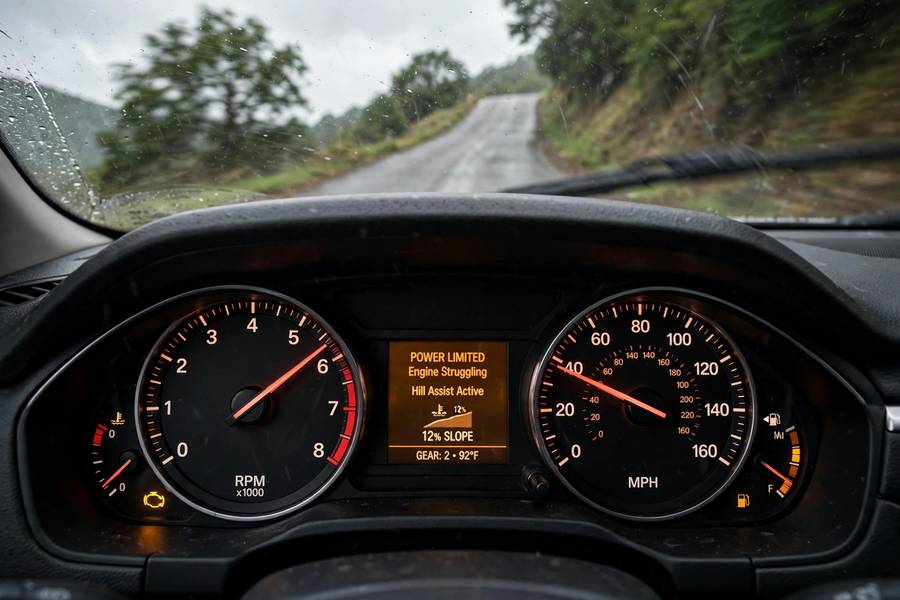
9. Dashboard Warnings or Limp Mode
Modern transmissions are monitored by the computer, and when things go wrong enough, it intervenes:
- Check engine light with transmission-related codes (gear ratio errors, solenoid performance, temperature).
- Transmission warning light or “transmission hot” message.
- Limp mode — the computer locks the transmission in a single gear (usually 2nd or 3rd) to protect it. You’ll have very limited speed and acceleration, but you can crawl to safety.
Limp mode with dirty fluid is the transmission’s way of saying “I’m protecting myself from you.” Get the codes read, check the fluid, and don’t just clear the codes and keep driving — the computer put it in limp mode for a reason.
How to Confirm It’s the Fluid
Symptoms point; the dipstick confirms. Here’s the confirmation sequence:
- Check the level — engine running, in Park, level ground, at operating temperature. Low fluid causes many of the same symptoms as dirty fluid, and the fix is different.
- Check the color — wipe it on a white rag. Red/pink and translucent is healthy. Brown is aging. Dark brown or black is spent.
- Check the smell — faintly sweet is fine; acrid and burnt is not.
- Check for particles — metallic glitter or grit on the rag suggests mechanical wear beyond just dirty fluid.
- Note the mileage and history — when was it last serviced? If the answer is “never” and you’re at 100,000+ miles, the fluid is guilty until proven innocent.
If the fluid looks and smells fine but symptoms persist, the problem is mechanical or electronic — solenoids, sensors, worn clutches — and needs proper diagnosis. Don’t keep changing fluid hoping it’ll fix a mechanical problem.
What to Do Next
Fluid is dirty but the transmission otherwise behaves: schedule a service. A drain and fill with filter change is the standard fix. If it’s been neglected a long time, consider a series of drain-and-fills rather than an aggressive flush — I break down the choice in transmission fluid change vs flush.
Fluid is dirty AND you’re having symptoms: service it, but go in with open eyes. Fresh fluid fixes fluid-caused symptoms. It doesn’t fix worn clutches. If symptoms persist after a proper service with the correct fluid, get a professional diagnosis — and do it before the problem gets worse.
Fluid is black, burnt, or full of metal: this needs professional judgment. On a high-mileage unit that’s never been serviced, there’s a real debate about whether servicing helps or hurts — I cover it in my article on changing fluid in high-mileage cars. Don’t just flush and hope.
The through-line: dirty fluid is the cheapest transmission problem to have. Catch it at the symptom stage and it’s a $150 service. Ignore it until the symptoms become failures and it’s a $4,000 rebuild. The dipstick is free. Use it — early and often. And once it’s serviced, put the next change on the calendar — the drivers who service on a schedule are the ones whose transmissions outlast their car payments.
Frequently Asked Questions
The main symptoms are slipping gears, harsh or delayed shifting, delayed engagement, overheating, strange whining or clunking noises, shuddering, surging, and dashboard warnings. The fluid itself will look dark brown or black and smell burnt instead of faintly sweet.
Yes — it’s one of the most common causes. Degraded fluid loses the friction properties that let clutch packs grip firmly, so they slip under load. However, slipping can also mean worn clutches, so check the fluid’s color and smell to distinguish fluid problems from mechanical ones.
If harsh shifting is caused by degraded fluid, yes — fresh fluid with correct hydraulic properties usually restores smooth shifts. If harsh shifting persists after a proper service with the right fluid spec, the cause is likely mechanical (worn clutches, valve body issues) or electronic (solenoids, sensors).
Pull the dipstick with the engine running at operating temperature and wipe it on a white rag. Healthy fluid is translucent red/pink with a faintly sweet smell. Dark brown or black color, a burnt acrid smell, or visible particles mean the fluid is spent.
Yes. The transmission computer monitors shift behavior, gear ratios, and temperature — all affected by degraded fluid. It can set codes for incorrect gear ratios, solenoid performance, or overheating, and in severe cases put the transmission into limp mode to protect it.