Ask this question at a dealership and you’ll get the owner’s manual answer. Ask it at a transmission shop and you’ll get a shorter number. Ask it on a forum and you’ll get a holy war. The truth is that “how often” depends on your transmission type, your driving conditions, and whether you believe the manufacturer’s “lifetime fill” claims (spoiler: I don’t, and neither does any transmission rebuilder I’ve ever met).
Here’s my honest breakdown of real-world intervals — the numbers I’d follow on my own cars — and how to adjust them for how you actually drive.
Table of Contents
- The Short Answer
- Why “Lifetime Fill” Is Misleading
- Intervals by Transmission Type
- Severe vs Normal Driving Conditions
- How to Know It’s Time (Beyond Mileage)
- Change vs Flush at Service Time
- What Skipping Service Actually Costs You
- Frequently Asked Questions
The Short Answer
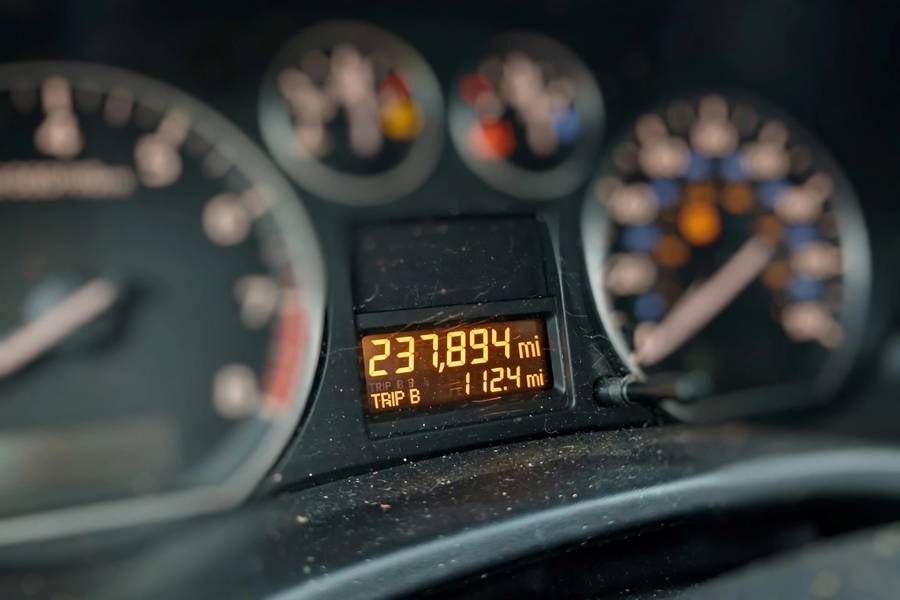
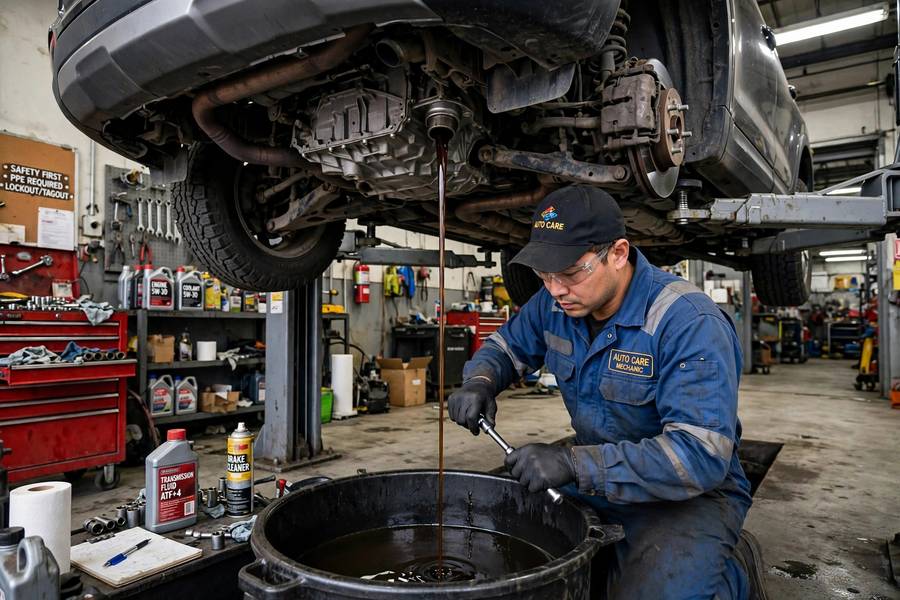
For most automatic transmissions: every 30,000 to 60,000 miles for a drain and fill, or every 60,000 to 100,000 miles for a full fluid exchange. That’s the range I’d defend to anyone. The specific number depends on the transmission type and how hard you drive — details below.
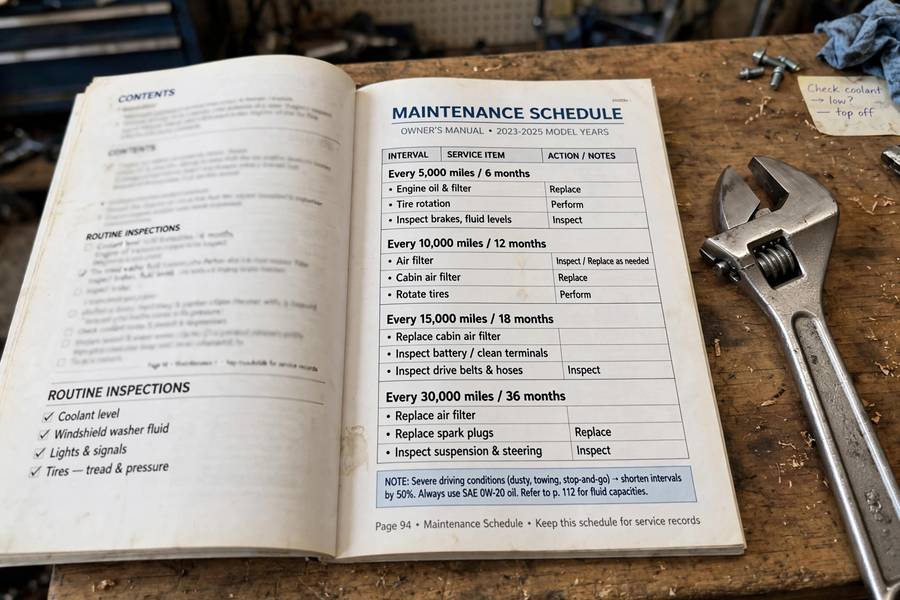
If that seems more frequent than your manual says, you’re noticing the gap between “the transmission survives the warranty period” (what the manufacturer optimizes for) and “the transmission lasts 200,000+ miles” (what you want). Those are different goals, and they produce different service intervals.
Why “Lifetime Fill” Is Misleading
A lot of modern cars — BMW, Mercedes, many others — ship with “lifetime” or “sealed” transmission fluid and no dipstick. It sounds like a maintenance breakthrough. It’s not. Here’s what’s actually going on:
“Lifetime” means the expected service life the manufacturer designs around — often 100,000 to 150,000 miles, or the warranty period plus a margin. It does not mean the fluid never degrades. Transmission fluid is a hydraulic fluid, a lubricant, and a friction modifier all at once, operating in a hot, high-shear environment. It breaks down. Chemistry doesn’t care about marketing.
The fluid degrades whether you service it or not. Heat cycles, clutch material, metal wear particles, and oxidation all take their toll. I’ve seen “lifetime” fluid drained at 120,000 miles that looked like used motor oil and smelled like a campfire. That transmission was living on borrowed time.
Transmission shops love lifetime fill. Not because it’s good for the car — because neglected transmissions generate rebuild work. Ask any rebuilder what “lifetime fill” did for their business.
My position: treat “lifetime” as “100,000 miles, then service it.” Your transmission will thank you by not dying at 130,000.
Intervals by Transmission Type
Different transmissions, different needs:
Conventional automatics (torque converter, planetary gears): Every 30,000-60,000 miles for a drain and fill. These are the most forgiving transmissions ever built — the old 4-speeds would run on neglect — but modern 8, 9, and 10-speeds run hotter and tighter, and they reward regular service. If you want one number: 50,000 miles.
CVTs: Every 30,000-60,000 miles, drain and fill only, exact OEM fluid. CVT transmissions are the divas of the transmission world — belt or chain riding on variable pulleys, extremely sensitive to fluid condition and level. Nissan, Honda, Subaru — they all have CVT service procedures, and skipping them is the number one cause of premature CVT failure I see. Don’t flush a CVT unless the manufacturer specifically says to.
Dual-clutch (DCT/DSG): Follow the manufacturer schedule closely — often every 40,000 miles. These have clutches that wear like a manual’s, and the fluid (or fluids — some have separate clutch and gear oils) is doing double duty. VW’s DSG 40k service is famous for a reason.
Manual transmissions: Every 30,000-60,000 miles for the gear oil, though many manuals go much longer without complaint. Manuals are simple and tough — the fluid mostly just needs to not be ancient.
Sealed units with no dipstick: Same intervals as their dipstick equivalents. “Sealed” changes the procedure, not the chemistry. Budget for a shop to do it if the procedure is complex — it’s still cheaper than a transmission.
Severe vs Normal Driving Conditions
Here’s the part the manual buries in a footnote. Almost everyone’s driving qualifies as “severe” by the manufacturer’s own definition. Severe conditions include:
- Frequent stop-and-go traffic. If your commute is 45 minutes of crawling, that’s severe.
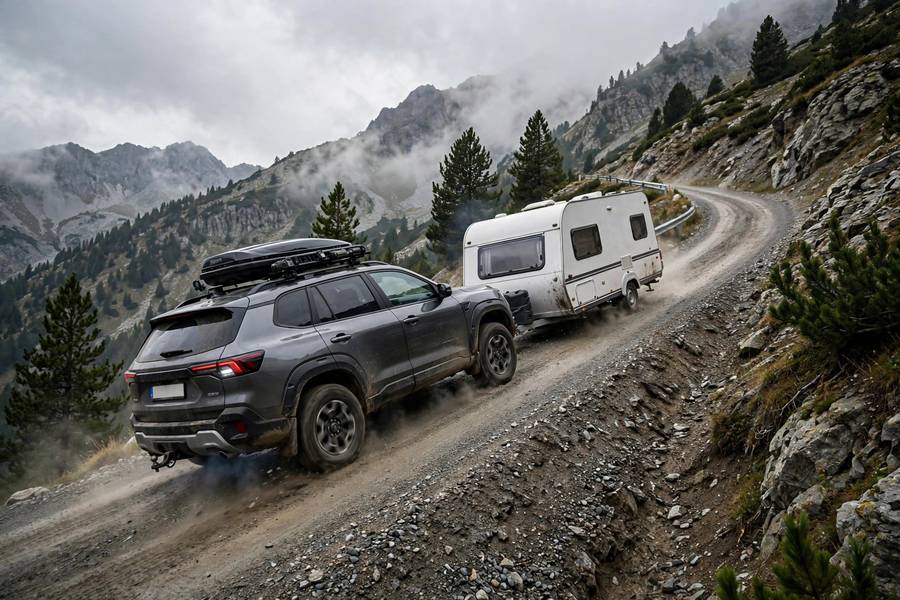
- Towing or hauling heavy loads. The obvious one.
- Mountain driving. Sustained grades heat the fluid fast.
- Hot climates. Ambient heat plus traffic heat stacks up.
- Short trips. The transmission never fully warms up, so moisture and contaminants accumulate.
- Aggressive driving. Hard acceleration generates heat. Heat kills fluid.
My rule: if any two of those apply to you, use the SHORTER end of the interval range. If you’re a highway cruiser in a mild climate doing long trips — congratulations, you’re one of the few “normal” drivers — you can use the longer end.
Most people should be servicing at the short end. I know that’s not what you wanted to hear, but transmissions are the most expensive thing to replace on the car after the engine. The math is simple: a $150 service every 30,000 miles versus a $4,000 rebuild at 130,000.
How to Know It’s Time (Beyond Mileage)
Mileage is the schedule, but the fluid itself is the truth. Check your transmission fluid and look for:
- Color shift from red toward brown. Fresh is pinkish-red; brown means aging; dark brown or black means overdue.
- Burnt smell. Fresh fluid smells faintly sweet. Burnt fluid smells acrid. Trust your nose.
- Shifting changes. Delayed engagement, harsh shifts, slipping, or hunting for gears — especially when the transmission used to be smooth. These can be fluid-related before they’re mechanical.
- It’s been more than 5 years regardless of mileage. Time degrades fluid too — oxidation and moisture don’t care about your odometer. Low-mileage garage queens still need service on a time basis.
If the fluid looks bad but the transmission shifts fine, you’re in the sweet spot — service it now and you’ll likely be fine. If it looks bad AND shifts badly, get a diagnosis before servicing (servicing a failing transmission needs professional judgment).
Change vs Flush at Service Time
When service time comes, you’ve got two options: a drain and fill (change) or a machine flush (exchange). The short version: a drain and fill replaces 30-50% of the fluid and is gentler; a flush replaces nearly all of it but is more aggressive.
For routine, on-schedule service on a healthy transmission, either works — I lean toward drain and fill with a filter change for most cars, or a flush if the fluid is moderately degraded and the transmission shifts perfectly. For high-mileage neglected units, gentler is safer.
As a rule of thumb: if the fluid is still reddish and the transmission shifts smoothly, a flush is fine. If the fluid is dark brown and you’ve gone 30,000+ miles past the interval, do a drain and fill, drive 500 miles, and repeat — that staged approach refreshes the fluid without the shock.
What Skipping Service Actually Costs You
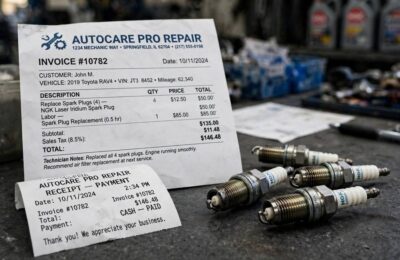
Let me put some numbers on neglect, because “change it on time” is easy to ignore until you see the bill. A transmission fluid service runs $150–$300 at most independent shops (fluid + filter + labor). A flush is in the same ballpark, sometimes a bit more.
A transmission rebuild? $2,500–$4,500. A replacement? $4,000–$7,000 depending on the car. The math isn’t close. And here’s the part nobody tells you: transmissions that fail from neglected fluid almost never fail suddenly. They give you months of warning — slightly rougher shifts, a little hesitation — and every one of those symptoms was a chance to spend $200 instead of $4,000.
There’s also a resale angle. When I look at a used car with 120,000 miles and the owner hands me a folder of maintenance receipts showing transmission services every 40,000 miles, that car is worth real money to me. When there’s no record at all, I assume the worst and price accordingly. Your $200 service intervals are literally building equity in the car.
One more thing people get wrong: changing fluid “too often” isn’t a thing. There’s no harm in a 30,000-mile interval on a car rated for 60,000. The fluid is the cheapest component in the entire transmission system — it’s the one place where overdoing maintenance has zero downside.
The warranty angle matters too. If your car is still under a powertrain warranty, follow the manufacturer’s severe-service schedule at minimum and keep every receipt — denied warranty claims over “lack of maintenance” are one of the most common fights I see, and a folder of fluid service receipts ends the argument before it starts. Out of warranty, the math above is the whole story: $200 on schedule, or $4,000 on a tow truck. I’ve never met a transmission that regretted fresh fluid.
Frequently Asked Questions
Every 30,000-60,000 miles for a drain and fill on most automatics, or 60,000-100,000 miles for a full exchange. CVTs need service every 30,000-60,000 miles with exact OEM fluid. Use the shorter interval if you tow, drive in stop-and-go traffic, or live in a hot climate.
No. “Lifetime fill” refers to the manufacturer’s expected service life (often 100,000-150,000 miles), not the actual life of the car. The fluid still degrades from heat and wear. Most transmission specialists recommend servicing “lifetime” fluid around 60,000-100,000 miles.
The fluid degrades into a poor lubricant with reduced hydraulic performance. Shifts get harsh or delayed, heat builds up, internal wear accelerates, and eventually clutch packs fail — leading to slipping and a rebuild or replacement costing thousands.
Every 30,000-60,000 miles with a drain and fill using the exact OEM CVT fluid. CVTs are more sensitive to fluid condition than conventional automatics, and most manufacturers recommend against power flushing them.
Yes. Oxidation and moisture accumulation degrade fluid over time regardless of mileage. If it’s been more than about 5 years since the last service, change it even on a low-mileage car.