“Free” is doing a lot of heavy lifting in AI marketing, so let’s be precise about Stable Diffusion: the software is free, the models are free, generating images is free, and you can even use the images commercially. But “free” comes with a license, a few conditions, and some costs that aren’t money. I’ve seen too many people assume “open source” means “no rules” — it doesn’t, and the rules are actually reasonable once you know them.
This guide covers exactly what costs nothing, what the license requires, where commercial use stands, and the hidden costs (hardware, electricity, your time) that “free” doesn’t cover. Quick context if you need it: my overview of what Stable Diffusion is explains the technology itself.
Table of Contents
- The Short Answer
- What’s Free: Software, Models, Generation
- The License: What It Actually Says
- Commercial Use: Can You Sell What You Make?
- The Hidden Costs Nobody Mentions
- Free vs Paid Alternatives: The Real Comparison
- Community Models: Free Too, With Caveats
- Running It in the Cloud: The Free Tiers
- My Honest Take: Is Free Worth the Effort?
- Frequently Asked Questions
The Short Answer
Yes, Stable Diffusion is free to use — genuinely, not “free trial” free. You can download it, generate unlimited images, and use those images commercially without paying anyone. The model weights are released under a license (the CreativeML Open RAIL-M license) that permits commercial use with a few behavioral conditions. The software interfaces around it are typically MIT or GPL licensed — fully open.
The asterisk: “free” refers to licensing cost. You still need a computer capable of running it, and your time has value. But no one will ever bill you per image, and no subscription is required. In an industry increasingly built on API meters and seat licenses, that remains remarkable.
What’s Free: Software, Models, Generation
Breaking down the stack:
The model weights. The trained Stable Diffusion models (1.5, 2.x, XL variants) are free to download and use, including commercially. This is the core asset — billions of parameters of trained capability — given away.
The interfaces. AUTOMATIC1111, ComfyUI, Fooocus, and most other front-ends are free and open source. No feature is paywalled; the community builds everything in the open.
Generation itself. Unlimited. No credits, no rate limits, no watermarks on your outputs. Generate ten thousand images if you want — the only cost is electricity and your GPU’s lifespan.
Most community models. The fine-tunes, LoRAs, and embeddings shared on model hubs are overwhelmingly free, though individual creators sometimes attach their own terms (more on that below).
This is structurally different from hosted AI art services, where you’re renting access to someone else’s GPUs. Local Stable Diffusion is ownership, not rental — and ownership has no meter.
The License: What It Actually Says
Stable Diffusion’s models use the CreativeML Open RAIL-M license (Responsible AI License). “Open” with conditions — here’s what matters practically:
You CAN: use it commercially, modify it, redistribute it, build products on it, fine-tune it. The license is designed to enable business use, not restrict it.
You CAN’T: use it to break the law, generate CSAM, harass or harm people, spread disinformation at scale, or do the other things listed in the use-restriction appendix. These are behavioral restrictions — they govern what you do with the model, not whether you pay.
The share-alike-ish bit: if you redistribute the model itself (not your images — the model), you should include the license. For normal users generating images, this never comes up.
Important nuance: the RAIL license is not OSI-approved “open source” in the strictest sense, because of the use restrictions. Purists note this; practically, for 99.9% of users, it functions as free-for-commercial-use software. Just don’t use it for the listed harmful purposes — which you shouldn’t be doing anyway.
Commercial Use: Can You Sell What You Make?
Yes. The license explicitly permits commercial use of generated images. People sell:
- Prints and posters of AI-generated or AI-assisted art
- Book covers (a huge market — indie authors love cheap custom covers)
- Marketing assets — ad creatives, social media images, thumbnails
- Game assets — concept art, textures, sprites
- Design mockups — client presentations, product visualizations
Two practical cautions, not legal advice:
Copyright of AI images is murky. In the US, purely AI-generated images without human creative input have been denied copyright registration. This doesn’t stop you from selling them — it means you may not be able to stop others from copying them. AI-assisted work with substantial human creativity is on firmer ground. The law is evolving; for serious commercial projects, this is worth understanding beyond a blog post.
Client expectations. If you’re selling AI-assisted work, be transparent with clients about the process. The ethics of disclosure are debated, but the business risk of a client discovering undisclosed AI use is real. Honesty is the better policy.
The broader question of can AI make art — and who owns it when it does — is worth reading if you’re building a business on this.
The Hidden Costs Nobody Mentions
“Free” doesn’t mean “costless”:
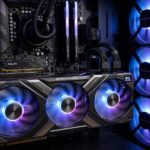
Hardware. The real price of admission. A capable GPU is the cost — whether you already own one or buy one. Amortized over thousands of free images it’s cheap, but it’s not zero.
Electricity. A GPU generating images draws 200–450W. Heavy use shows up on your power bill. Rough math: a few hours of daily generation might add a few dollars a month — trivial for hobbyists, worth noting for businesses running it constantly.
Time. Setup, troubleshooting, learning prompting, curating models — the time investment is the biggest cost for most people. It’s also the most rewarding part, but go in clear-eyed.
Storage. Models accumulate. 50GB of checkpoints is normal for an enthusiast. Storage is cheap, but it’s not free.
None of these are bills from anyone — they’re the natural costs of owning the means of generation. Compare against a $30/month hosted subscription: if you generate regularly for more than a few months, local wins on cost. If you generate occasionally, the subscription might actually be cheaper than the hardware.
Free vs Paid Alternatives: The Real Comparison
How does free Stable Diffusion stack up against paid options?
Vs. Midjourney ($10–60/month): Midjourney is more polished and often produces more beautiful images out of the box, especially for artistic styles. Stable Diffusion is free, private, unlimited, and far more controllable with extensions. Choose polish and ease → Midjourney. Choose freedom and control → Stable Diffusion.
Vs. DALL-E (pay per image / subscription): DALL-E follows complex prompts well and is dead simple. Stable Diffusion requires setup but gives unlimited generation and model choice. Casual users often prefer DALL-E’s simplicity; heavy users prefer SD’s economics.
Vs. Adobe Firefly (subscription): Firefly’s selling point is commercial-safety training data. If your business needs indemnification and clean licensing chains, that’s worth paying for. For personal and most commercial creative work, SD’s license is sufficient.
The honest summary: paid services sell convenience and polish. Stable Diffusion sells freedom. Neither is universally better — they’re different products for different priorities.
Community Models: Free Too, With Caveats
Thousands of community fine-tunes are free to download, but check each model’s page:
- Most use the same RAIL license or Creative Commons — free for commercial use.
- Some creators request credit or prohibit specific uses. Respect it; it’s their work.
- A few are restricted to non-commercial use. Read before using in client work.
- Merge culture means many models are blends of others — license chains can get murky. For critical commercial work, stick to well-documented models with clear licensing.
The community’s generosity here is extraordinary — thousands of hours of training compute, given away. The price of admission to that gift economy is basic diligence: read the license, respect the creator’s terms, and don’t be the person who causes a good creator to lock things down.
Running It in the Cloud: The Free Tiers
No GPU? You can still run Stable Diffusion free in the cloud. Free-tier notebook services give you GPU hours at no cost — enough for casual experimentation, with sessions that time out and queues during busy hours. Some community projects offer free hosted generation with daily limits.
The trade-offs are real: you’re borrowing someone else’s hardware, so expect waiting lines, session limits, and no guarantee your setup persists between visits. Privacy is weaker too — your prompts and images pass through someone else’s servers. For learning and occasional use, free cloud tiers are genuinely useful. For daily heavy use, they get annoying fast — and that’s the point where a local GPU or a paid service starts making sense.
My Honest Take: Is Free Worth the Effort?
Here’s my blunt assessment after years with this tool: Stable Diffusion’s “free” is the best deal in AI art if — and only if — you enjoy the tinkering. If setup, troubleshooting, and model-hunting sound fun, you’ll get unlimited generation for the price of hardware you may already own. Nothing paid matches that value.
But if you just want pretty pictures with zero friction, the free price is misleading — your time isn’t free, and a month of a hosted service costs less than an evening of driver debugging. Be honest about which person you are. The worst outcome is buying a GPU, fighting setup for a weekend, and never opening the interface again.
For the tinkerers, though? There’s nothing else like it. Free, private, unlimited, and yours. That combination doesn’t exist anywhere else in AI.
Frequently Asked Questions
Yes — the software, models, and generation are all free with no per-image costs or subscriptions. You need your own capable hardware, but nobody bills you for using it. The license permits commercial use with behavioral restrictions.
Yes, the license explicitly allows commercial use of generated images — prints, book covers, marketing assets, and more. Note that copyright protection for purely AI-generated images is legally uncertain in some jurisdictions.
The models use the CreativeML Open RAIL-M license, which allows commercial use, modification, and redistribution, but prohibits harmful uses like generating illegal content, harassment, or large-scale disinformation.
The main costs are hardware (a capable GPU), electricity for heavy use, storage for models, and your time for setup and learning. There are no licensing fees, subscriptions, or per-image charges.
Yes — businesses can use it commercially under the RAIL-M license at no cost. For projects needing legal indemnification or guaranteed clean training-data licensing, paid services like Adobe Firefly may be preferable.