Ask two people about self-driving cars and you will get two religions. The optimist sees the end of traffic deaths, the gift of mobility to everyone who cannot drive, and cities freed from parking lots. The pessimist sees mass unemployment, hackable two-ton robots, and a surveillance system on wheels. They are both describing the same technology. They are both partly right.
I have no religion here. I have spent enough time with the technology to think the optimists underestimate the timeline and the pessimists underestimate the trajectory. What follows is the honest ledger: the real advantages, the real costs, and my judgment on which ones actually matter. For the technical background, my guide on how self-driving cars work covers the machinery behind these arguments.
Table of Contents
- The Pros
- Fewer Deaths and Injuries
- Mobility for Everyone
- Time, Money, and Cities
- The Cons
- Jobs on the Line
- The Liability Maze
- Security and Privacy Risks
- The Transition Decades
- My Honest Verdict
- Frequently Asked Questions
The Pros
Let us start with what the technology genuinely promises, because the promises are substantial.
Fewer Deaths and Injuries
This is the strongest argument for self-driving cars, and it is not close. Roughly 1.3 million people die on roads worldwide every year. The overwhelming cause is human error: distraction, drunk driving, speeding, fatigue, aggression. Machines do not get drunk. They do not check their phones. They do not drive angry.
The data we have is encouraging but young. Waymo reports its driverless vehicles have dramatically lower crash rates than human benchmarks in the same areas — fewer injury-causing crashes, fewer airbag deployments. Critics correctly note the comparisons are imperfect: robotaxis drive in mapped, well-maintained areas, in good weather, while human benchmarks include every bad road and blizzard in the country. Fair point. But the direction is right, and the mechanism is obvious: remove the leading causes of crashes (impairment, distraction, recklessness) and crashes fall.
How much would deaths fall? Nobody knows. Estimates range from modest (20-30%) to dramatic (90%+). I am skeptical of the dramatic numbers — they assume near-total adoption and near-perfect technology, neither of which is imminent. But even the modest end represents hundreds of thousands of lives. If self-driving cars deliver nothing else, this alone justifies the effort.
Mobility for Everyone
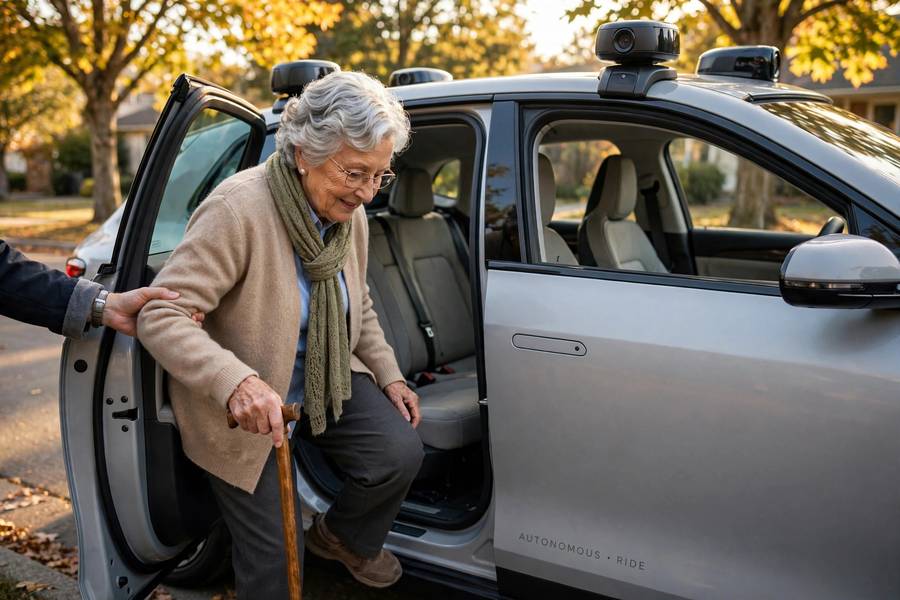
Think about who cannot drive today: the elderly who have surrendered their licenses, the blind, people with epilepsy or other conditions that make driving unsafe, teenagers too young for licenses, anyone who cannot afford a car and lives where transit is thin. For these people, a self-driving car is not a convenience — it is independence.
I find this the most emotionally compelling case for the technology, and the most under-discussed. We built a society where participation requires a car and a license, then told millions of people they cannot have one. Autonomous vehicles could undo that exclusion at a stroke: door-to-door transport for anyone, regardless of age, disability, or driving ability. The robotaxi fleets operating today already serve riders who describe exactly this freedom.
The caveat: affordability and access. If robotaxis cost as much as a chauffeured car, the mobility revolution serves the wealthy. The promise depends on the economics working at scale — which is plausible but not guaranteed.
Time, Money, and Cities
The secondary benefits stack up:
Reclaimed time. Commuters could work, rest, or simply not white-knuckle through traffic. Even partial automation (highway autopilot) already returns some of this.
Cheaper transport. Remove the driver — the most expensive component of a taxi or truck — and per-mile costs fall dramatically. Logistics gets cheaper; goods get cheaper; remote areas get better served.
Safer streets for everyone else. Autonomous vehicles do not speed through school zones or roll through crosswalks. Pedestrians and cyclists — the most vulnerable road users — benefit disproportionately.
Reclaimed space. Cars sit parked 95% of their lives, occupying vast tracts of urban land. Fleets of shared autonomous vehicles could slash the number of cars needed, freeing parking lots for housing, parks, and businesses. This is the urbanist dream, and it is genuinely plausible — if the shared-fleet model wins over private ownership.
Fewer traffic jams. Coordinated autonomous vehicles can smooth traffic flow — no phantom jams from one driver’s unnecessary braking, optimal merging, platooning on highways. The effect is real in simulations; the real world, with mixed human and machine traffic, will capture only part of it.
The Cons
Now the other side of the ledger — and it is heavier than the enthusiasts admit.
Jobs on the Line
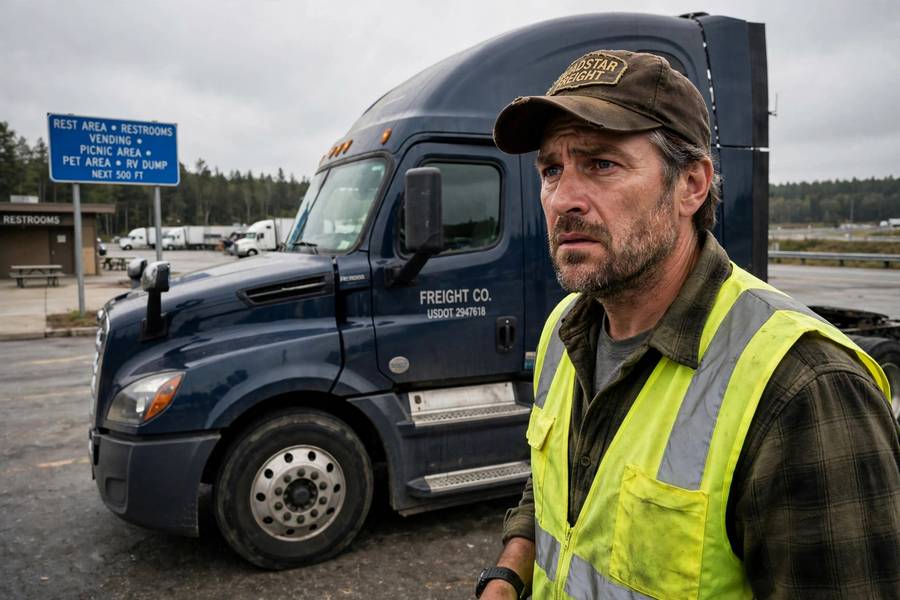
Driving is one of the largest occupations on Earth. In the US alone, millions of people drive for a living: truckers, taxi and rideshare drivers, delivery drivers, bus operators. Autonomous vehicles threaten these jobs directly and completely — this is not “AI assists the worker” but “the worker is unnecessary.”
Trucking will likely go first: long-haul highway driving is the most structured, most economically valuable, and most technically tractable use case. The transition will not happen overnight — it will happen route by route, company by company — but the direction is clear, and the workforce skews toward people with few alternative career paths.
The optimist’s reply is the historical one: the automobile displaced horse-related jobs and created more. True, eventually. But “eventually” took decades and caused real suffering in between, and there is no guarantee the new jobs go to the displaced drivers. Societies handle transitions badly; this one deserves planning, retraining, and honest acknowledgment — not hand-waving about the long run.
The Liability Maze
When a human driver crashes, liability is straightforward: the driver, their insurer, maybe the manufacturer if something broke. When an autonomous vehicle crashes, who pays? The passenger who was reading a book? The company that wrote the software? The company that built the sensors? The city whose faded lane markings confused the car?
This is not theoretical — it is the question courts and insurers are wrestling with right now, and the answers will shape the industry’s economics. If manufacturers bear full liability for every crash, costs could slow deployment to a crawl. If liability falls on passengers, adoption stalls because nobody will accept that risk. The likely outcome is a messy patchwork: new insurance products, new legal doctrines, years of litigation. I wrote more about the accountability dimension in my piece on AI accountability — the car is just the most visible case of a general problem.
There is also a darker variant: the unavoidable-crash problem. Human drivers face split-second dilemmas; autonomous vehicles will face them too, and their choices will be pre-programmed. Who decides the car’s ethics in a no-win scenario — and who is responsible for the outcome? Philosophers call this the trolley problem; engineers call it Tuesday.
Security and Privacy Risks
A self-driving car is a computer with wheels, cameras, and an internet connection. That means:
Hacking. Researchers have repeatedly demonstrated remote attacks on connected vehicles — taking over steering, brakes, and acceleration. Fleet-wide vulnerabilities are the nightmare scenario: one exploit, thousands of vehicles. Manufacturers take this seriously, with over-the-air security updates and isolated safety systems, but the attack surface is enormous and growing.
Surveillance. Autonomous vehicles record everything: high-resolution video of every street, precise location histories of every passenger, in-cabin cameras and microphones in some designs. Who owns that data? Who can access it? A fleet of robotaxis is also a fleet of mobile surveillance cameras, and the privacy frameworks have not caught up.
Systemic fragility. Centralized fleet management, cloud connectivity, HD maps served from data centers — the system has single points of failure that human driving never had. A network outage, a corrupted map update, a GPS spoofing attack: each could disable or misdirect thousands of vehicles simultaneously.
The Transition Decades
The most underrated con: the decades when humans and machines share the road. Mixed traffic is the worst of both worlds — unpredictable humans plus machines optimized for predictable environments. Early data suggests autonomous vehicles are disproportionately rear-ended by human drivers, who do not anticipate machine driving behavior (full stops at every stop sign, cautious merges). Until one mode dominates, the interaction problems persist.
There is also the equity question of who gets the benefits first. Robotaxis launch in wealthy, well-mapped urban areas. Rural areas, poor neighborhoods, developing countries — the places with the worst road safety — get the technology last, if ever. The safety dividend could widen the gap between the mobility-rich and the mobility-poor before it closes it.
And the environmental ledger is genuinely uncertain. Efficient driving and shared fleets cut emissions; but cheaper, more convenient car travel induces more travel — the rebound effect. Empty robotaxis cruising between fares (“deadheading”) add vehicle miles. Whether autonomy helps or hurts the climate depends on policy choices we have not made yet.
My Honest Verdict
Weighing it all: the safety and mobility arguments are strong enough that the technology should be pursued, and the job-displacement, liability, and security arguments are serious enough that it should be pursued carefully, with regulation ahead of deployment rather than behind it.
The mistake both camps make is treating this as imminent or impossible. It is neither. It is a multi-decade transition that has already begun — robotaxis in some cities, driver assistance everywhere, trucking next — and the choices we make now about liability, labor, privacy, and access will matter more than the technology itself. The cars are the easy part. The society around them is the hard part.
If you want to understand the AI making the driving decisions, that is the next thing worth reading — because every pro and con on this list ultimately flows from what that software can and cannot do.
Frequently Asked Questions
The biggest advantages are safety (eliminating human error, the cause of most crashes), mobility for people who cannot drive (the elderly, disabled, young), reclaimed commute time, lower transport costs, and potentially less traffic and less urban parking.
Job losses for millions of professional drivers, unresolved liability questions when crashes occur, hacking and cybersecurity risks, privacy concerns from constant recording, and the dangers of the decades-long transition with mixed human-machine traffic.
Not eliminate, but likely reduce substantially. Human error causes the vast majority of crashes, and machines do not get drunk, distracted, or tired. Early robotaxi data shows lower crash rates than human benchmarks, though comparisons are imperfect. Realistic estimates range from 20% to over 90% reduction at full adoption.
Long-haul trucking is the most likely early target for automation: structured highway environments, strong economics, and driver shortages. The transition will happen route by route over years, not overnight — but the direction is clear, and retraining planning is warranted now.
This is still being worked out in courts and legislatures. Candidates include the manufacturer, the software developer, the fleet operator, and the passenger. New insurance products and legal doctrines are emerging, but expect years of litigation before the rules settle.