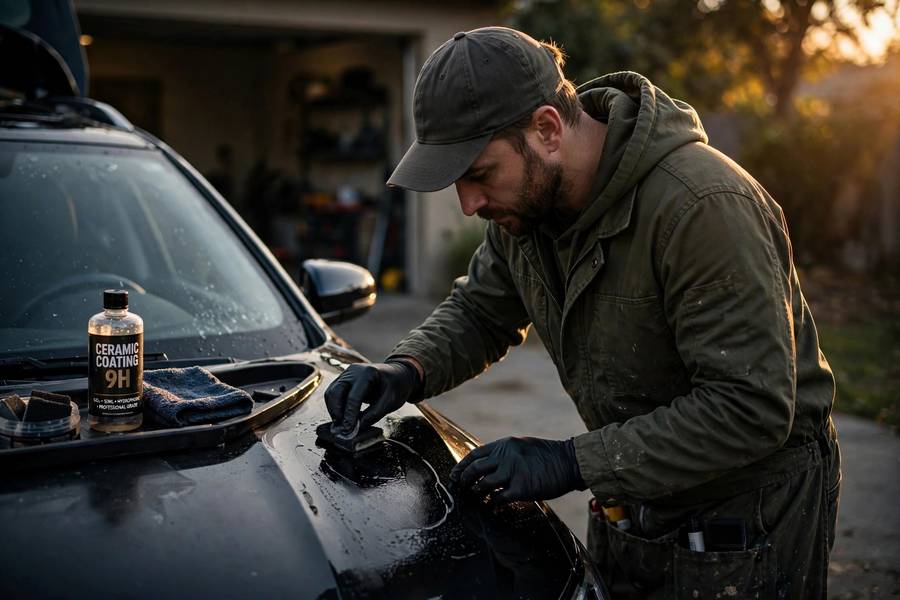
Ceramic coating is the most profitable service in car detailing — and the most demanding. A coating job sells for $500 to $2,000+, takes one to two days, and carries product costs of $50 to $300. The margins are extraordinary. The catch: you are selling perfection, applied to someone’s $60,000 car, with zero room for error. One high spot, one missed panel, one dusty environment, and your reputation takes the hit.
I have watched detailers double their income by adding coatings — and I have watched others destroy their reputation by offering coatings before their paint correction skills were ready. This guide is the honest playbook: what the business actually requires, how to price it, and how to build the premium positioning that justifies premium prices. (Start with how to start a car detailing business if you are new to the trade.)
Table of Contents
- Why Coatings Are the Margin King
- The Skill Prerequisite (Non-Negotiable)
- Equipment and Environment
- Choosing Your Coating Line
- Pricing: The Psychology of Premium
- The Service Process, Step by Step
- Marketing a Premium Service
- Warranties and Comebacks
- Scaling: From Solo to Coating Studio
- Frequently Asked Questions
Why Coatings Are the Margin King
The math is what draws everyone in. A two-day coating job at $1,200 with $150 in product and $100 in consumables grosses $950 before labor. Compare that to grinding out six $75 washes for $450 in a long day. Coatings let you work less and earn more — the holy grail of service businesses.
But the margin exists because the market pays for three things that are hard to deliver: skill (paint correction before coating), environment (dust-free application), and trust (you are making semi-permanent changes to expensive paint). The premium is compensation for risk and expertise. Businesses that treat coatings as “expensive wax” — skipping correction, rushing application — collect the premium briefly, then pay for it in comebacks and reviews.
The strategic insight: coatings are not an add-on to a detailing business. They are a different business that happens to share equipment — premium positioning, longer sales cycles, higher customer expectations, and completely different marketing.
The Skill Prerequisite (Non-Negotiable)
Do not offer coatings until your paint correction is excellent. This is the rule that separates successful coating businesses from cautionary tales. The coating locks in whatever is underneath — every swirl, every hologram, every imperfection becomes semi-permanent. A coating over uncorrected paint is a $1,200 mistake with your name on it.
The skill ladder: 1. Wash and decontamination mastery — if your prep is sloppy, nothing downstream works 2. One-step polishing — enhancement details, 50–70% defect removal 3. Two-step correction — compounding plus finishing, 85–95% defect removal 4. Coating application — only after 1–3 are second nature
How do you know you are ready? When you can correct a black car to 90%+ defect-free under inspection lighting, consistently, without burning edges or striking through. That takes most people 1–2 years of serious paint work. There are no shortcuts — though hands-on training ($800–$2,000 for a multi-day course) compresses the timeline significantly.
Practice panels. Buy junkyard hoods and practice. Coat them, inspect them, strip them, repeat. Your first fifty coating applications should not be on customer cars.
Equipment and Environment
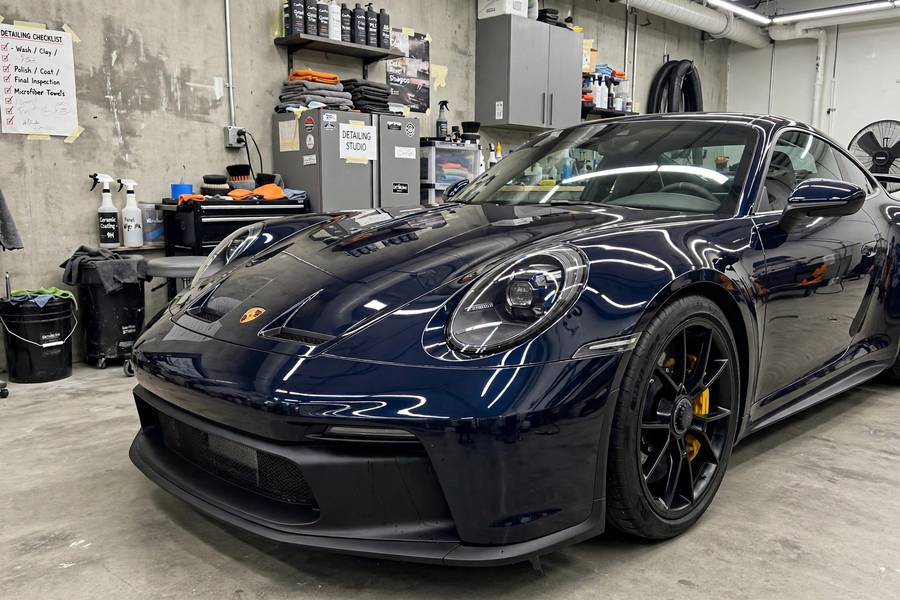
The space. Coatings demand a clean, enclosed, well-lit environment — dust landing in fresh coating creates nibs that require polishing out and re-coating. A dedicated bay with good ventilation, sealed floors, and excellent lighting is the standard; mobile application is possible but genuinely harder.
Lighting. Inspection lighting is not optional — it’s how you verify correction and catch high spots during application. Budget $300–$800 for swirl-finder and panel lights (see best car detailing equipment for startups for specifics).
Paint measurement. A paint depth gauge ($200–$600) is a professional necessity — it tells you how much clear coat you’re working with, critical on thin factory paint and a powerful trust statement with customers.
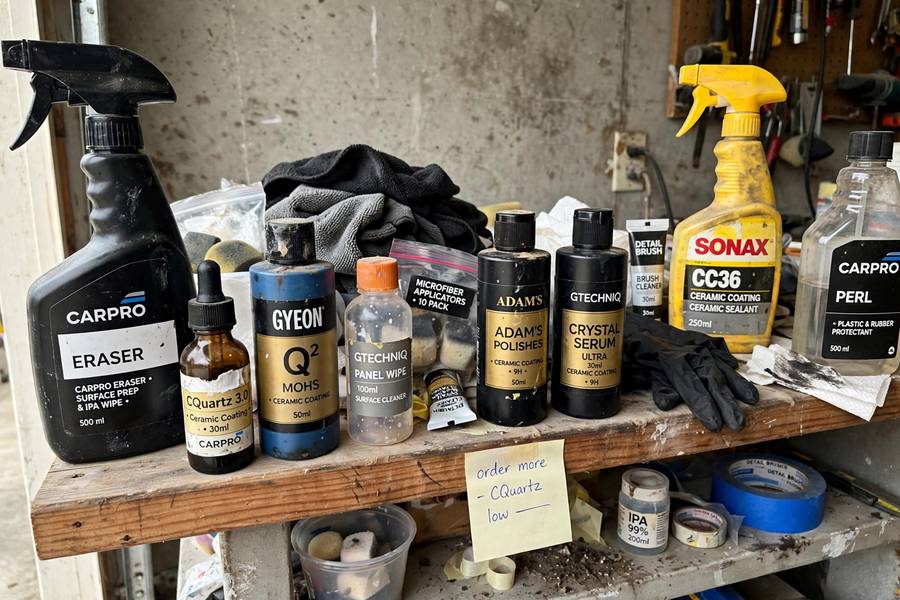
Application supplies. Coating-specific applicators, suede cloths, panel wipe / surface prep sprays, IR curing lamps ($300–$1,000 — accelerate curing and let you quality-check sooner). These are coating-specific costs on top of your correction equipment.
Climate control. Most coatings specify application temperature and humidity ranges. A bay that hits 95°F in summer or 40°F in winter limits your working calendar unless climate-controlled. Factor this into shop planning.
Realistic coating-specific investment on top of correction equipment: $2,000–$5,000.
Choosing Your Coating Line
Consumer vs professional coatings. Consumer coatings (available to anyone) last 1–3 years and cost $50–$100 per application. Professional coatings (restricted to certified installers) last 3–7+ years and cost $100–$300. The professional tier is where the business lives — certification programs give you training, marketing support, warranty backing, and exclusion from DIY competition.
Major professional lines operate on certification models: you train, you get certified, you buy their products, you offer their warranty. The certification is also marketing — “certified installer” badges convert browsers into buyers.
What to evaluate: warranty terms and who backs them, training quality, product consistency, marketing support, territory protection (do they certify unlimited installers in your area?), and minimum purchase requirements. Talk to three existing certified installers before committing — they will tell you the truth about support quality.
Do not chase every brand. Pick one line, master it, build your reputation on it. Installers who offer six competing coatings confuse customers and dilute their expertise story.
Pricing: The Psychology of Premium
Coating pricing is psychological as much as economic. The numbers:
Market ranges: $500–$800 for entry coatings (1–2 year, minimal correction), $900–$1,500 for mid-tier (3–5 year with one-step correction), $1,500–$2,500+ for premium (5+ year with multi-step correction). Your market and reputation position you within these bands.
Price the correction separately. “Coating: $900. Required paint correction: $400–$800 depending on condition.” This does two things: it educates the customer that coating without correction is malpractice, and it makes the total feel like two valuable services rather than one expensive one.
Never discount coatings. Discounting premium services destroys the positioning that justifies the price. Instead of discounts, offer value: free maintenance wash, free annual inspection, complimentary windshield coating. The price stays premium; the package gets richer.
The consultation close. Coating sales happen in consultations, not over the phone. Inspect the car together under your lights, show the customer the swirls they have never seen, explain what correction and coating will do. Customers who see the defects understand the price. Phone quotes for coatings attract price shoppers; consultations attract buyers.
For the pricing mechanics, see how to price car detailing packages.
The Service Process, Step by Step
The professional coating workflow — document this and follow it religiously:
- Consultation and paint assessment. Inspect under lighting, measure paint depth, photograph everything. Agree on correction level and coating tier in writing.
- Wash and decontamination. Multi-stage wash, iron remover, tar remover, clay treatment. The surface must be surgically clean.
- Paint correction. Compounding and polishing to the agreed level. This is 60–70% of the job’s labor.
- Panel wipe. Surface prep spray to remove polishing oils. Coating bonds to clean clear coat, not to polish residue — skipped panel wipe is the #1 cause of premature coating failure.
- Coating application. Panel by panel, with specified flash times, in proper lighting. This is the step everyone photographs; it is 10% of the work.
- Leveling and inspection. Remove high spots immediately — within minutes, not hours. Inspect every panel under multiple light angles.
- Curing. IR curing or controlled ambient cure per manufacturer specs. No water contact during initial cure — communicate this clearly to the customer.
- Final inspection and delivery. Walk the car with the customer under your lights. Hand over maintenance instructions in writing. Schedule the follow-up inspection.
Time budget: 8–16 hours for correction plus 2–4 hours for coating and cure management. Quote two days; deliver in two days. Rushing coatings is how reputations die.
Marketing a Premium Service
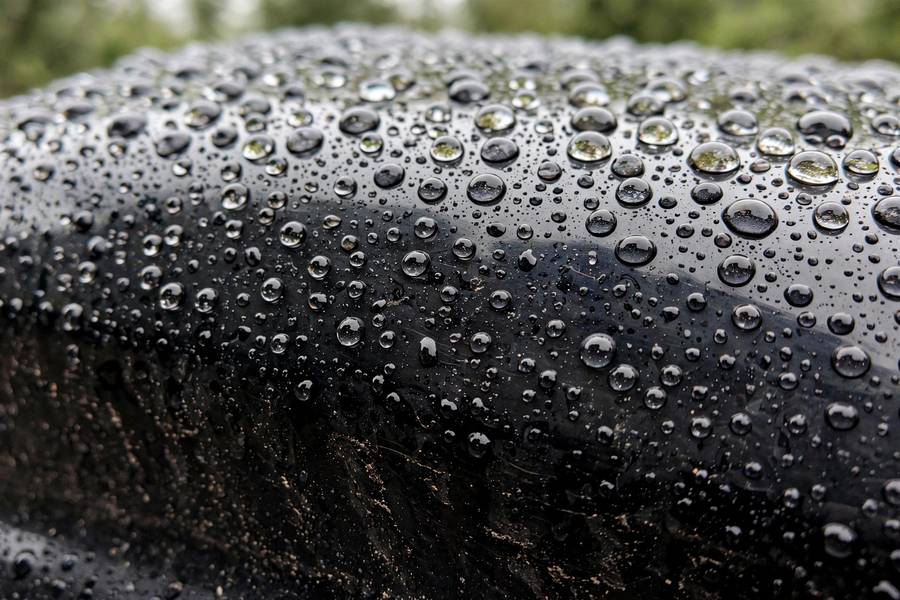
The portfolio is everything. Coating customers buy visual proof. Your marketing needs: 50/50 correction shots, paint-depth readings, water-behavior videos, and long-term update posts (“this coating at 18 months”). Video outperforms photos for coatings — water beading in slow motion sells itself.
Educate, don’t advertise. The content that converts coating customers: “why cheap coatings fail,” “what paint correction actually does,” “coating vs wax vs sealant honestly compared.” Educated customers buy premium; uneducated customers buy cheap.
The maintenance program. Offer annual coating inspections and maintenance details ($150–$300). This creates recurring revenue, catches issues early, generates testimonial content, and keeps customers in your ecosystem. It is also the honest thing to do — coatings need maintenance, and telling customers so builds trust.
Partnership channels. Luxury car dealerships, exotic car clubs, high-end body shops, paint protection film installers (coatings over PPF is a growing service). One dealership relationship can fill your coating calendar.
Price anchoring. Always present three tiers. The middle tier should be your target sale — most customers choose it, feeling they avoided both cheap and extravagant. This is standard premium-service psychology and it works.
Warranties and Comebacks
Offer a real warranty — 2 years on entry coatings, 5+ on premium, backed by your coating manufacturer where possible. The warranty is a sales tool: it transfers risk from the customer to you, which is exactly what premium buyers pay for.
Define the terms precisely. What voids it (automatic car washes, abrasive polishing, accidents), what it covers (loss of hydrophobics, premature failure), and the remedy (re-coat affected panels). Put it in writing. Vague warranties create disputes; precise ones prevent them.
Handle comebacks as marketing. A customer with a coating issue handled swiftly and generously becomes a more loyal advocate than a customer who never had a problem. Budget 2–3% of coating revenue for warranty work and treat it as a marketing expense.
Document everything. Before photos, paint readings, products used, batch numbers, cure conditions. When a warranty question arises in year three, your records answer it.
Scaling: From Solo to Coating Studio
The growth path: solo coating specialist → booked 3–4 weeks out → hire and train an assistant for prep work → second bay → dedicated coating studio with waiting lounge. Each step is funded by the previous step’s profits — the coating business model generates the cash for its own expansion if you resist lifestyle inflation.
The endgame for many is the coating and correction studio: 2–3 bays, premium positioning, $15,000–$30,000 monthly revenue, minimal advertising because reputation does the work. It is one of the best small businesses in the automotive aftermarket — for those with the patience to master the craft first.
Frequently Asked Questions
On top of paint correction equipment, budget $2,000–$5,000 for coating-specific needs: inspection lighting, paint depth gauge, IR curing lamp, application supplies, and initial coating stock. The bigger investment is skill — 1–2 years of correction practice first.
$500–$800 entry with minimal correction, $900–$1,500 mid-tier with one-step correction, $1,500–$2,500+ premium with full correction. Price correction separately, never discount, and sell through in-person consultations under inspection lighting.
For consumer coatings, no. For professional coatings (the profitable 3–7+ year tier), yes — manufacturers restrict them to certified installers, and certification brings training, warranty backing, and differentiation. Worth pursuing once your correction skills are ready.
Possible but significantly harder — dust, wind, and temperature swings are constant adversaries. Most successful coating businesses work from an enclosed, well-lit bay; mobile requires canopy setups and strict weather policies.
Offering coatings before correction skills are excellent — coating locks in every defect underneath. Master correction first (1–2 years), then add coatings. The second mistake is skipping panel wipe, the top cause of premature failure.