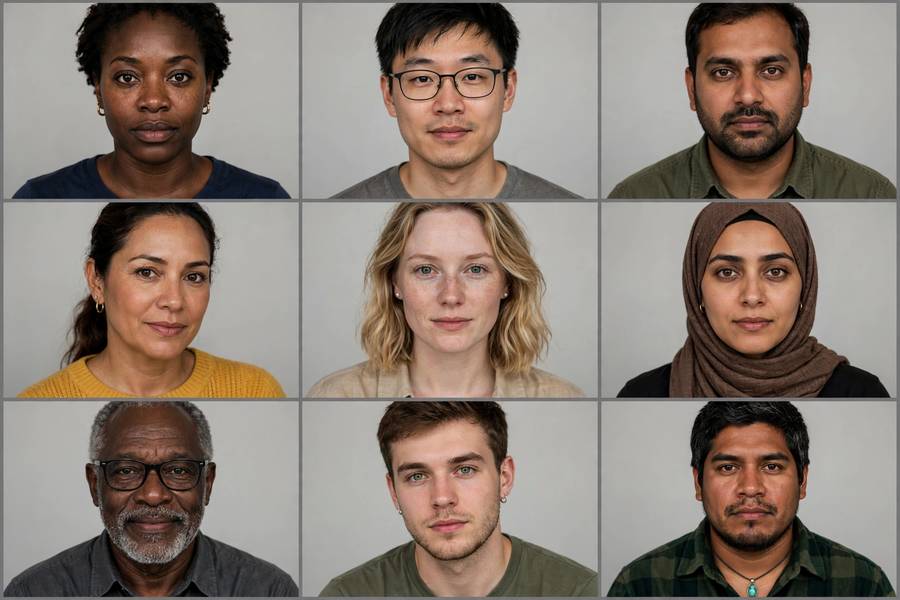
Few findings in AI have been as stark — or as consequential — as this one: commercial facial recognition systems that identify light-skinned men with near-perfect accuracy can fail on dark-skinned women more than a third of the time. This isn’t a theoretical concern. These systems decide who gets stopped by police, who boards planes, who unlocks phones. When accuracy depends on your face, that’s AI bias with immediate human cost.
Table of Contents
- The Short Version
- The Landmark Study
- Why the Gap Exists
- Where It’s Deployed
- Real-World Harms
- The Regulatory Backlash
- Has It Gotten Better?
- Frequently Asked Questions
The Short Version
Facial recognition systems show dramatic accuracy gaps across demographics: landmark 2018 research found error rates under 1% for light-skinned men but over 30% for dark-skinned women in commercial systems. The gap comes from training datasets dominated by light-skinned male faces. The technology is deployed in policing, airports, and phones. Several cities banned police use; the EU restricts it; accuracy has improved but disparities persist.
The Landmark Study
The paper that changed everything: “Gender Shades,” published in 2018 by Joy Buolamwini and Timnit Gebru at MIT. They did something simple and devastating — they tested three commercial facial recognition systems (from major tech companies) on a dataset balanced across gender and skin tone, and measured classification accuracy for each subgroup.
The results:
- Light-skinned men: error rates of 0-0.8%. Essentially perfect.
- Light-skinned women: errors up to ~7%.
- Dark-skinned men: errors up to ~12%.
- Dark-skinned women: errors of 20-34%. Up to a third of the time, the system got it wrong.
The intersectional finding was the key insight: looking at race or gender alone understated the problem. Dark-skinned women — at the intersection — faced by far the worst performance. Single-axis analysis had been hiding the severity for years.
A follow-up study by the US National Institute of Standards and Technology (NIST) in 2019 tested nearly 200 algorithms on millions of photos and confirmed the pattern at massive scale: most systems performed worst on women, the elderly, and dark-skinned faces, with false-positive rates varying by factors of 10 to 100 across demographics.
These weren’t obscure academic exercises. The tested systems were commercial products sold to governments and enterprises. The bias was in production.
Why the Gap Exists
The cause is almost embarrassingly simple, and it traces directly to how AI models are trained:
Training data composition. The large facial datasets used to train these systems were scraped from the web — celebrity photos, public image collections — and they skewed heavily toward light-skinned male faces. Some benchmark datasets were estimated at over 75% male and over 80% light-skinned. A model trained mostly on one demographic learns that demographic’s facial variation in detail and treats everyone else approximately.
Benchmark blindness. The industry’s standard accuracy benchmarks used the same skewed datasets. Systems scored 97%+ on benchmarks that barely contained the people they failed on. The headline numbers were real and meaningless at the same time — the classic aggregate-accuracy trap.
Feature engineering assumptions. Some systems relied on features (like certain contrast patterns) that work less reliably across skin tones. When the training population is homogeneous, these weaknesses never surface during development.
The intersectional data gap. Even “diverse” datasets often diversify along one axis at a time. A dataset can be 50% women and 30% dark-skinned yet contain almost no dark-skinned women — the exact subgroup with the worst performance. Buolamwini and Gebru’s methodological contribution was insisting on intersectional evaluation.
It’s worth noting what didn’t cause it: nobody programmed prejudice. The systems are pure pattern matchers. They failed on underrepresented groups for the same reason a student fails a test on chapters the textbook skipped.
Where It’s Deployed
Law enforcement. Police departments in multiple countries use facial recognition to identify suspects from surveillance footage or mugshot databases. This is the highest-stakes deployment: a false match can lead to wrongful arrest — and several wrongful arrests of Black men have been documented and attributed to these systems.
Airports and borders. Automated passport gates, boarding verification, and border screening use facial matching at massive scale. Errors here mean missed flights, secondary screening, and detention — distributed unevenly across demographics.
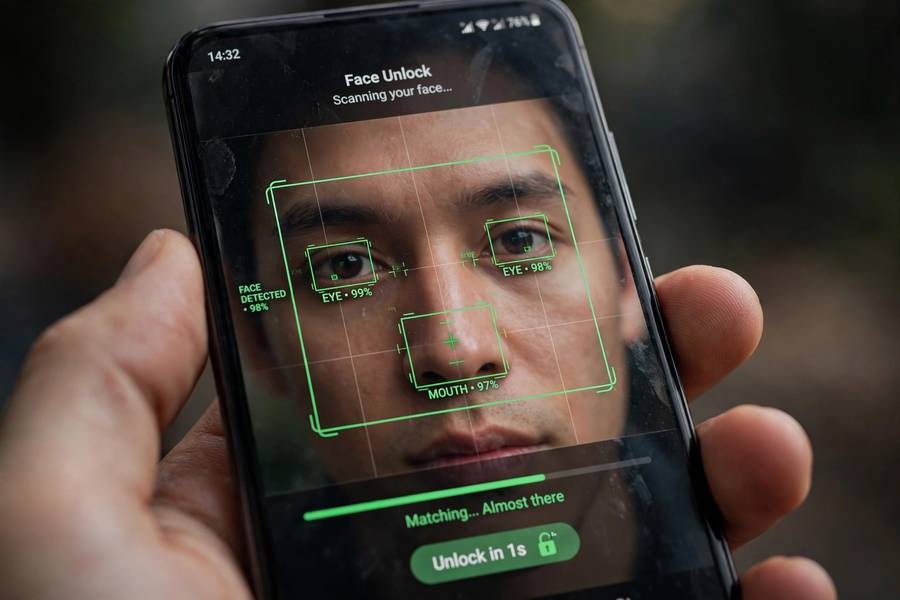
Consumer devices. Phone face-unlock is the most widespread deployment. The stakes are lower (your phone, your face), but the same disparities mean some users get a worse product.
Retail and private security. Stores use it for shoplifting prevention and “VIP” customer identification. Private deployment has the least oversight of all.
Employment and housing. Some landlords and employers have experimented with facial recognition for access control and identity verification — extending the bias into more life domains.
Real-World Harms
The harms aren’t hypothetical:
Wrongful arrests. Multiple documented cases of Black men arrested based on faulty facial recognition matches, held for hours or days before the error was caught. Each case represents a catastrophic failure with a clear demographic pattern.
Chilling effects. Communities that know they’re disproportionately surveilled and misidentified alter their behavior — avoiding public spaces, protests, or services. The harm extends beyond the misidentified to everyone who modifies their life around the risk.
Asymmetric benefit. Even where the technology “works,” its benefits flow to those it recognizes accurately while its errors burden those it doesn’t. A security system that’s 99% accurate for one group and 70% for another isn’t a neutral tool.
Compounding injustice. When facial recognition feeds into policing systems that already over-police certain communities, the errors compound: more surveillance, more false matches, more arrests, more training data skew — a feedback loop of the kind that makes biased systems self-reinforcing.
The Regulatory Backlash
The response has been unusually swift for tech regulation:
City bans. San Francisco, Boston, Minneapolis, and several other US cities banned police use of facial recognition. These were direct responses to the bias findings.
Corporate moratoriums. Following the 2020 racial justice protests, major vendors — including IBM (which exited the business entirely), Amazon, and Microsoft — paused or restricted sales to law enforcement.
EU AI Act. Real-time biometric identification in public spaces is effectively banned, with narrow law-enforcement exceptions requiring judicial authorization. The regulation treats the technology as too risky for general deployment.
State laws. Illinois’ Biometric Information Privacy Act has generated major settlements over facial data collection. Other states are following.
NIST ongoing testing. The US standards body continues large-scale demographic testing, creating public accountability through measurement — vendors now know their disparities will be published.
Has It Gotten Better?
Honestly? Partially. Vendors responded to the Gender Shades findings by diversifying training data, and subsequent NIST tests show the gaps narrowing for top systems. Some leading algorithms now show much smaller demographic disparities than the 2018 generation.
But caveats matter:
The best systems improved; the average deployment didn’t. Many police departments and private users run older or cheaper systems with the original disparities.
Narrowing isn’t closing. Even improved systems show measurable gaps, and the intersectional worst case — dark-skinned women — remains the weakest point.
The data got better; the oversight didn’t. Most deployments still lack the auditing, transparency, and redress mechanisms the research community called for.
New frontiers, same problem. Emotion recognition and “predictive” facial analysis (claiming to detect criminality or sexuality from faces) revive the same bias patterns with even shakier science.
What individuals can do. If you’re subject to facial recognition — at airports, workplaces, or events — know that you can often ask what system is used and whether alternatives exist. Privacy advocates recommend opting out where possible and requesting human review of any automated match that affects you. The technology’s error distribution means a mismatch is likelier for some faces than others, so skepticism toward a machine’s verdict is statistically justified, not paranoia. Documented cases of wrongful arrest all followed the pattern the research predicted — Black men held on faulty matches — which is why several civil rights groups now demand that any match above a threshold of doubt trigger human review, not automated action. That skepticism is the lesson the research was trying to teach.
The trajectory is positive but the destination isn’t reached. The lesson of facial recognition bias endures regardless: measure performance for everyone, not just the average — because the average is always somebody else’s face.
Frequently Asked Questions
Facial recognition bias is the dramatic accuracy gap across demographics in face-matching systems. Landmark research found error rates under 1% for light-skinned men but over 30% for dark-skinned women in commercial systems, caused by training data dominated by light-skinned male faces.
Because training datasets were scraped from sources skewing heavily light-skinned and male. Models learn the facial variation they see most; underrepresented groups get approximate treatment. It’s a data representation problem, not programmed prejudice.
Partially. Top vendors diversified training data and gaps narrowed, but disparities persist — especially for dark-skinned women — and many deployed systems are older versions with the original gaps. Oversight and auditing remain weak.
Several US cities (San Francisco, Boston, Minneapolis) banned police use. The EU AI Act effectively bans real-time biometric identification in public spaces. Major vendors paused law-enforcement sales after 2020.
Yes — multiple documented cases of Black men arrested on faulty facial recognition matches and held before errors were caught, following the exact demographic pattern the research predicted.