
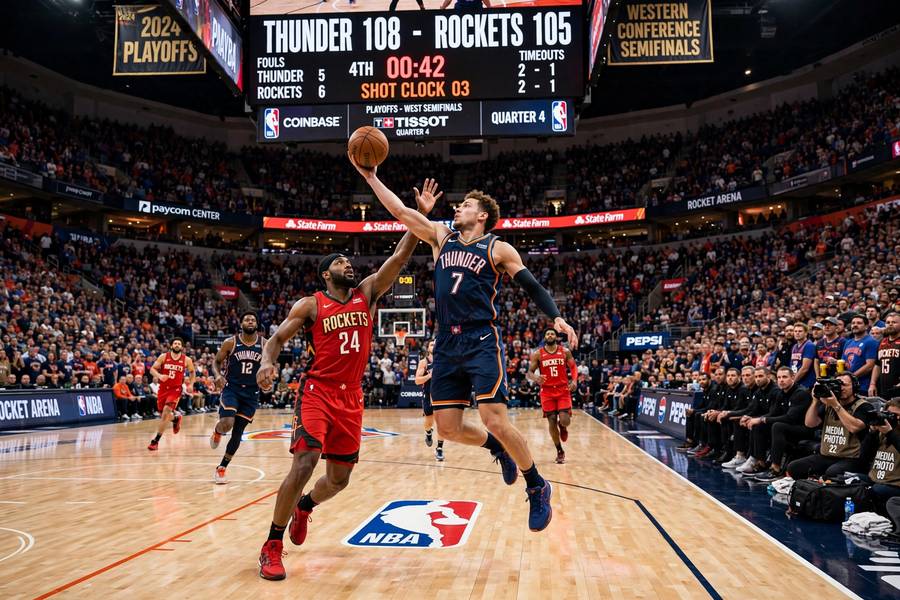
Ask someone “how long is a basketball game” and the most common answer is “48 minutes.” That’s technically true — for the NBA. But if you’ve ever watched a full game on TV, you know it takes a lot longer than 48 minutes to actually finish. The game clock is only part of the story.
I’m Ryan, and I’ve watched basketball at every level — NBA, college, high school, and my nephew’s youth league, where games somehow feel both shorter and longer than everything else. Here’s the real answer to how long a basketball game lasts, league by league.
Table of Contents
- The Short Answer
- NBA Game Length
- College Basketball (NCAA)
- High School Basketball
- Youth and Rec Leagues
- Why Games Take So Much Longer Than the Clock
- Playoff Games vs. Regular Season
- How Game Length Has Changed Over Time
- Frequently Asked Questions
The Short Answer
Here’s the game-clock length by level:
| Level | Game Clock | Real Time (approx.) |
|---|---|---|
| NBA | 48 minutes | 2–2.5 hours |
| WNBA | 40 minutes | ~2 hours |
| NCAA men | 40 minutes | ~2 hours |
| NCAA women | 40 minutes | ~2 hours |
| High school (US) | 32 minutes | 1.5–2 hours |
| Youth leagues | 20–32 minutes | 1–1.5 hours |
| FIBA (international) | 40 minutes | ~2 hours |
The pattern is simple: the game clock says one thing, but stoppages — timeouts, fouls, halftime, reviews — stretch real viewing time to roughly double the clock time. If you’re planning your evening around a game, budget for the real-time number, not the clock number.
NBA Game Length
An NBA game is 48 minutes of game time, split into four 12-minute quarters. That hasn’t changed since the league’s early days.
But a typical NBA game on television runs about 2 hours and 15 minutes, and nationally televised or playoff games can push 2.5 hours. Where does the extra time go?
- Timeouts: Each team gets 7 timeouts per game (in practice, the flow of mandatory TV timeouts dominates). Every quarter has built-in TV timeouts at the first stoppages under the 7-minute and 3-minute marks.
- Halftime: 15 minutes. Longer than college, shorter than a soccer halftime-plus-analysis segment.
- Fouls and free throws: Every shooting foul stops the clock for two or three free throws. Late in close games, intentional fouling (“Hack-a-Shaq” style or just standard endgame strategy) turns the last two minutes of game clock into twenty minutes of real time. Every basketball fan knows this pain.
- Reviews: Coaches’ challenges and officials’ replay reviews add minutes, especially in the final two minutes when every call gets scrutinized.
- Quarter breaks: About 2–3 minutes between quarters.
The last two minutes of a close NBA game are simultaneously the best and worst part of the sport — best because of the drama, worst because “two minutes” is a lie and you know it.
College Basketball (NCAA)
NCAA men’s basketball is 40 minutes: two 20-minute halves instead of four quarters. NCAA women’s basketball is also 40 minutes but plays four 10-minute quarters (matching the WNBA and FIBA format).
Real time: about 2 hours, sometimes a bit less than the NBA because college has fewer mandatory TV timeouts (though televised games still have plenty) and a shorter halftime (15 minutes for men, same as NBA; the women’s game keeps it tight too).
One quirk that stretches college games: the foul situation. In college, teams enter the bonus earlier in some situations, and the final minutes of a tight March Madness game can feel eternal — much like the drama you see in international tournaments, though the formats differ (if you’re curious how those work, here’s how the World Cup works).
High School Basketball
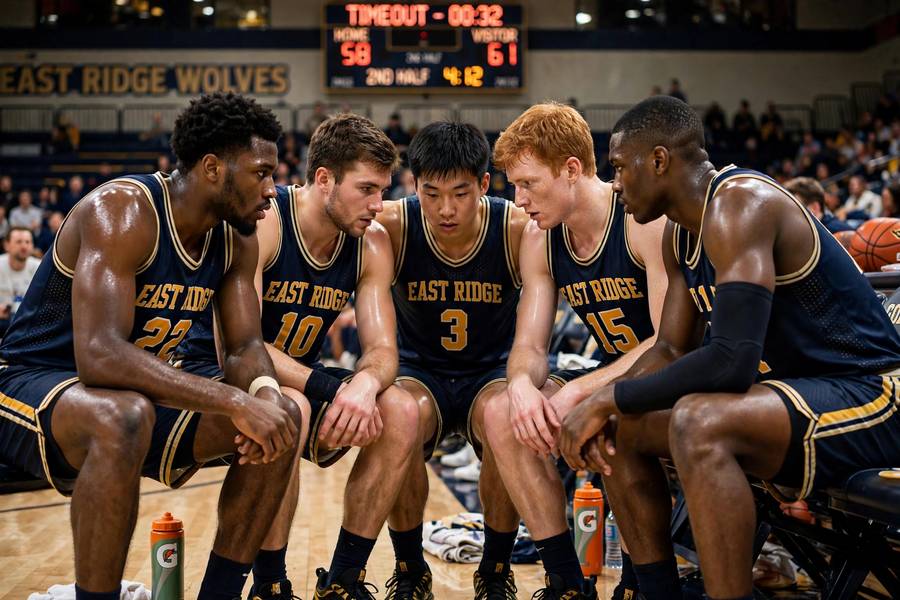
In most US states, high school basketball is 32 minutes: four 8-minute quarters. A few states use slight variations, but 32 is the standard under NFHS rules.
Real time runs 1.5 to 2 hours, depending on the pace of play and how many fouls get called. High school games have fewer TV timeouts (usually none), so they move faster relative to the clock than NBA games do.
Youth and Rec Leagues
This is where it gets variable. Youth leagues typically run 20 to 32 minutes of game time, often in running-clock format — meaning the clock doesn’t stop for every whistle, which keeps games moving and parents’ schedules intact.
Common setups:
– Running clock halves (e.g., two 12–16 minute halves) with the clock stopping only in the last couple of minutes
– Shorter quarters for the youngest age groups
– Total real time: usually under 90 minutes, which every parent of a 9-year-old appreciates
If you’re new to organized sports formats in general, the logic is the same across games — standardized timing with adjustments for the level. (For another example of how rules scale to the players, check out these pickleball rules.)
Why Games Take So Much Longer Than the Clock
The gap between “48 minutes” and “2 hours 15 minutes” comes from basketball’s stop-start nature. The clock stops for:
- Every timeout (and there are many in televised games)
- Every foul that results in free throws
- Out-of-bounds plays in the final two minutes (clock stops on made baskets too, in the last two minutes of NBA games)
- Halftime and quarter breaks
- Replay reviews and coaches’ challenges
- Injuries (rare, but they stop everything)
The NBA has actually tried to speed things up over the years — reducing timeouts, limiting the number of full timeouts teams can carry into the fourth quarter, tightening replay rules. It helps at the margins, but basketball is inherently a game of interruptions, and the drama of the final minutes is partly because every possession gets dissected.
Playoff Games vs. Regular Season
Playoff games run longer — typically 2.5 hours or more. More timeouts get used (coaches save them for crucial moments), more reviews happen, more intentional fouling occurs in close finishes, and national TV broadcasts have longer commercial breaks. If you’re planning around a Game 7, clear your whole evening.
Overtime adds 5 minutes of game time per period in the NBA, FIBA, and NCAA, plus all the associated stoppages. (The 4-minute overtime belongs to high school basketball.) Multiple overtimes can push a game past 3 hours — rare, but legendary when it happens.
How Game Length Has Changed Over Time
Basketball games haven’t always run this long. In the 1980s, an NBA game typically finished in just over 2 hours — noticeably snappier than today. What changed?
More timeouts, more commercials. The biggest driver is television. As broadcast rights deals ballooned into the billions, networks demanded more commercial inventory — which means more mandatory TV timeouts and longer breaks. The game adapted to the business, not the other way around.
More replay reviews. The coaches’ challenge (introduced in 2019-20) and expanded replay review added a new category of stoppage that didn’t exist twenty years ago. Each review takes 1–3 minutes, and close games now feature several.
The intentional foul era. Late-game fouling as strategy has always existed, but analytics made it more common — teams now foul in situations that “feel” wrong but math out correctly, stretching more finishes.
The league has pushed back. The NBA has experimented with fewer timeouts (cutting from 18 to 14 total in 2017, then to 7 per team with restrictions), shorter halftimes in some contexts, and tighter replay rules. College basketball switched the men’s game from 35-second to 30-second shot clocks to speed up play.
The irony: the actual basketball — the 48 minutes of game time — is the same as it was in 1946. Everything around it got longer. If you ever watch a classic game from the 80s, the pace feels almost rushed by modern standards — and honestly, a little refreshing.
Frequently Asked Questions
An NBA game is 48 minutes of game time (four 12-minute quarters), but with timeouts, fouls, and halftime it typically takes about 2 hours and 15 minutes in real time.
NCAA men’s basketball is 40 minutes (two 20-minute halves); women’s is 40 minutes in four 10-minute quarters. Real viewing time is about 2 hours for both.
The game clock stops for timeouts, fouls, free throws, halftime, replay reviews, and TV commercial breaks. These stoppages roughly double the real-time length compared to the game clock.
NBA halftime is 15 minutes. College halftime is also around 15 minutes. High school halftime is typically 10 minutes.
NBA overtime periods are 5 minutes each; FIBA and NCAA overtime is also 5 minutes. Games continue with additional overtime periods until there is a winner — there are no ties in basketball.
Most US high school games are 32 minutes of game time (four 8-minute quarters) and take about 1.5 to 2 hours in real time.