
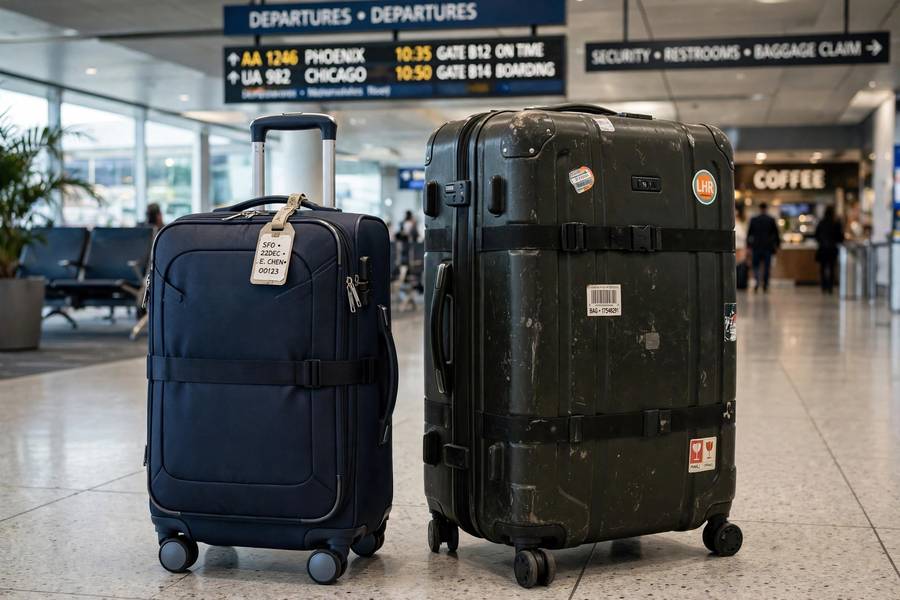
The carry-on vs. checked baggage debate is really a debate about how you want to travel. I’ve done both extremes — two weeks across three countries with just a backpack, and the “bring everything” trip where I checked two bags. Each has its place. Here’s how to decide.
I’m Emma, and I’m a carry-on convert who still checks a bag without shame when the trip calls for it. No judgment here — just the trade-offs.
Table of Contents
- The Quick Comparison
- Carry-On: The Case For
- Carry-On: The Downsides
- Checked Baggage: The Case For
- Checked Baggage: The Downsides
- Size and Weight Limits You Must Know
- How to Decide: A Trip-by-Trip Guide
- Packing Like a Pro (Carry-On Edition)
- Frequently Asked Questions
The Quick Comparison
| Carry-On | Checked Baggage | |
|---|---|---|
| Cost | Usually free | $30–$75+ each way (varies by airline) |
| Airport time | Skip baggage claim, walk out | Add 20–45 min for check-in + claim |
| Loss risk | Near zero (it’s with you) | Small but real (~6 bags per 1,000 lost/delayed) |
| Packing space | 35–45 liters | 70–120+ liters |
| Liquids | 3-1-1 rule (3.4oz max) | Full-size allowed |
| Flexibility | Easy flight changes | Bag may not follow rebooking |
Carry-On: The Case For
Speed. You deplane and walk straight out. No baggage carousel vigil, no 30-minute wait while everyone stares at the same three lonely suitcases. On tight connections, carry-on is the difference between making your flight and watching it leave.
Zero loss risk. Airlines mishandle roughly 6 bags per 1,000 passengers. That’s low — until it’s your bag with your medications and your presentation clothes. Carry-on eliminates the category entirely.
Cost. Most airlines include a carry-on free (even basic economy usually allows one personal item + carry-on; check your fare). Checked bags run $30–75 each way domestically, more internationally. A couple doing two trips a year can save $500+ by going carry-on only.
It forces better packing. Constraints are clarifying. When everything must fit in 40 liters, you pack what you’ll actually wear, not what you might wear. Most chronic over-packers are cured by one successful carry-on trip.
Mobility. Trains, cobblestones, stairs, crowded metros — a carry-on (especially a backpack) handles all of it. Dragging a 50-pound suitcase through a European old town is a special kind of misery.
Carry-On: The Downsides
The liquids rule. The 3-1-1 rule (3.4oz containers, 1 quart bag, 1 bag per passenger) is the biggest practical constraint. Full-size toiletries, sunscreen bottles, and contact solution don’t fit the regime.
Limited wardrobe. Two weeks in varying climates with 40 liters requires planning — layers, mix-and-match, laundry mid-trip. Doable, but it’s a skill.
No “just in case” items. The extra shoes, the backup jacket, the gifts — they don’t make the cut. Carry-on travel means committing to essentials.
Overhead bin wars. On full flights, late boarders may be forced to gate-check their carry-on anyway. Boarding early (or paying for priority boarding) solves this.
Checked Baggage: The Case For
Space. Moving, long trips, ski gear, formal events, traveling with kids — some trips genuinely need more stuff than a carry-on holds. No shame in it.
Full-size everything. Toiletries, sunscreen, hair tools, medications in original packaging — all the things the 3-1-1 rule forbids.
Sharp objects and odd items. Knives (kitchen or otherwise), tools, sports equipment — all must be checked. So must anything over liquid limits.
Souvenirs and shopping. If your trip involves bringing things back — wine, olive oil, gifts, that market find — checked baggage is your friend. (Pack a foldable duffel in your carry-on for the return trip — the hybrid move.)
Checked Baggage: The Downsides
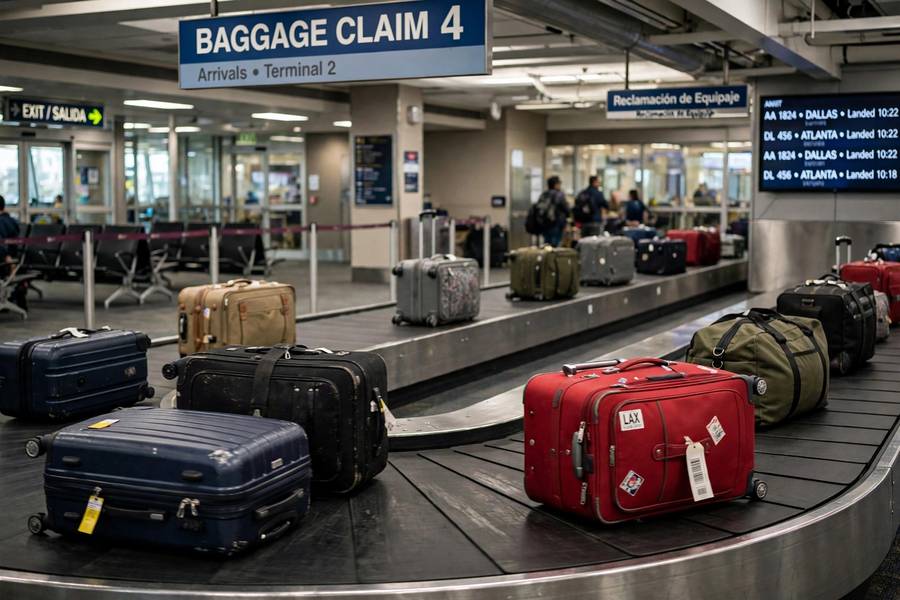
Time. Checking in (if you can’t do it online/without a bag drop line) plus baggage claim adds 30–60 minutes per airport. On a short trip, that’s a meaningful chunk of your vacation.
Cost. Budget airlines especially monetize checked bags aggressively. Always check the fee before booking — a $50 fare with a $70 bag fee is not a $50 fare.
Loss and delay. Rare but real. Mitigations: never check medications, valuables, or one night’s essentials; put an AirTag or tracker in the bag; take a photo of your bag (helps with lost-baggage reports); keep the claim tag.
Less nimble. Missed connection? Your rebooking is easy; your bag’s rerouting is the airline’s problem and your anxiety. Traveling light means traveling flexible.
Size and Weight Limits You Must Know
Carry-on (typical): 22 x 14 x 9 inches (56 x 36 x 23 cm), including wheels and handles. Weight limits vary — US airlines rarely weigh carry-ons; European and Asian budget airlines often enforce 7–10 kg strictly.
Personal item: Fits under the seat — backpack, tote, or laptop bag. Always free, even on the stingiest fares.
Checked (typical): 62 linear inches (length + width + height) and 50 lbs (23 kg) for economy. Overweight fees ($100+) are punitive — weigh your bag at home.
Always check your specific airline. Budget carriers (Ryanair, Spirit, EasyJet) have notably smaller free allowances than legacy airlines. The rules that matter are your airline’s, not the internet’s averages.
How to Decide: A Trip-by-Trip Guide
- Weekend trip: Carry-on, always. You don’t need more.
- 1–2 weeks, one climate: Carry-on with laundry mid-trip. The sweet spot of light travel.
- 2+ weeks or multi-climate: Either carry-on with planned laundry or one checked bag. Consider slow travel — longer stays mean laundry access, which means less packing.
- Business trip: Carry-on if possible (no lost suits before the big meeting). If you must check, carry the meeting outfit on board.
- Family with kids: Check bags. Kids need stuff, and you’ll be carrying enough already.
- Adventure/special gear: Check. Skis, dive gear, and golf clubs don’t do carry-on.
- Shopping-heavy trip: Carry-on there, buy a cheap checked bag there for the return. The oldest trick in the book.
For either choice, smart packing multiplies your capacity — here’s a full breakdown of what to pack for international travel.
Packing Like a Pro (Carry-On Edition)
If you choose carry-on, these techniques double your effective capacity:
The 5-4-3-2-1 rule. For a week: 5 tops, 4 bottoms, 3 pairs of shoes (wear the bulkiest), 2 layers (a light jacket + a sweater), 1 hat. Everything mix-and-match in a neutral palette. It sounds spartan; it covers every situation.
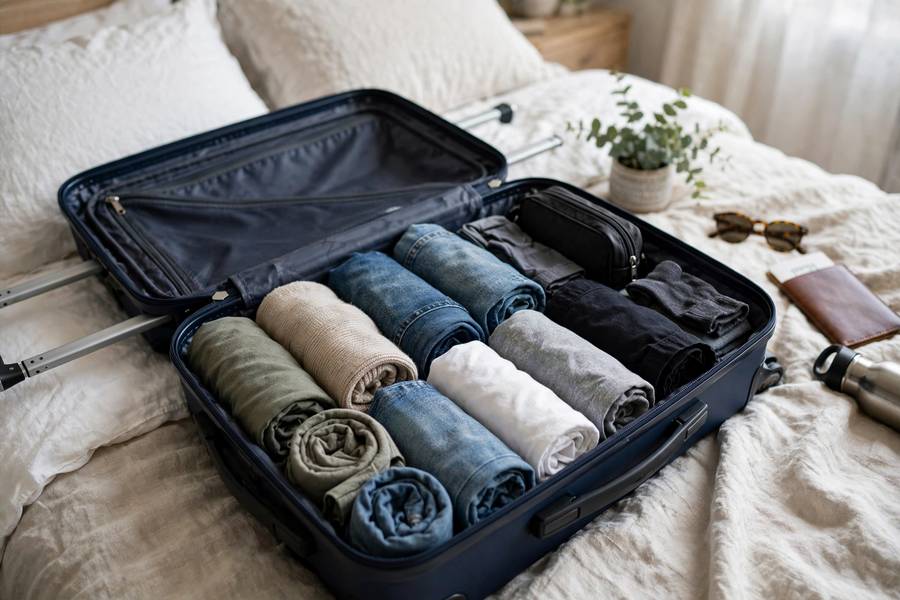
Roll, don’t fold. Rolling clothes saves space and reduces wrinkles versus folding. For bulky items, compression packing cubes are the real cheat code — they squeeze air out and keep the bag organized.
Bulky bedding eats luggage space fast — folding fitted sheets properly is a small skill with outsized packing payoffs.
Wear your heaviest items. Boots, jeans, jacket, sweater — on your body, not in the bag. Airport fashion is about practicality, not runway looks.
Decant toiletries. Small reusable bottles for shampoo, conditioner, and lotions. Solid alternatives (shampoo bars, solid deodorant) dodge the liquids rule entirely and last longer.
The personal item is free real estate. A roomy backpack or tote under the seat holds your “day one” essentials: medications, valuables, entertainment, a change of clothes. If your carry-on ever gets gate-checked, you’re still fine.
Laundry plan. For trips over a week, plan one laundry stop — hotel sink with travel detergent, a laundromat afternoon, or a laundry service. One mid-trip wash turns a 7-day wardrobe into a 14-day one.

Frequently Asked Questions
Carry-on is better for short trips, tight connections, and saving money — it’s faster and can’t get lost. Checked baggage is better for long trips, special gear, full-size toiletries, and bringing things home. Most experienced travelers default to carry-on and check only when the trip demands it.
The typical limit is 22 x 14 x 9 inches (56 x 36 x 23 cm) including wheels and handles. Weight limits vary: US airlines rarely weigh carry-ons, but European and Asian budget airlines often enforce 7–10 kg. Always check your specific airline’s rules.
Typically $30–$75 each way on major airlines for the first bag domestically, more for international and budget carriers. Fees rise for second bags and overweight luggage ($100+). Check fees before booking — they vary widely.
Each liquid container must be 3.4 ounces (100ml) or less, all containers must fit in 1 quart-sized clear bag, and each passenger gets 1 bag. It applies to carry-ons only — checked bags have no liquid size limits.
Airlines mishandle roughly 6 bags per 1,000 passengers — most are delayed rather than permanently lost, and the vast majority are returned within days. Never check medications, valuables, or essentials for your first night.
Yes — most airlines allow one carry-on (overhead bin) plus one personal item (under the seat) even on basic fares. Ultra-budget carriers sometimes restrict this, so verify with your airline.