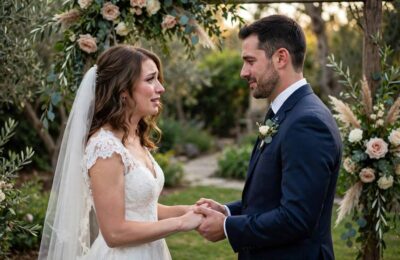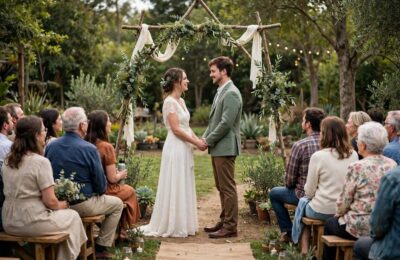

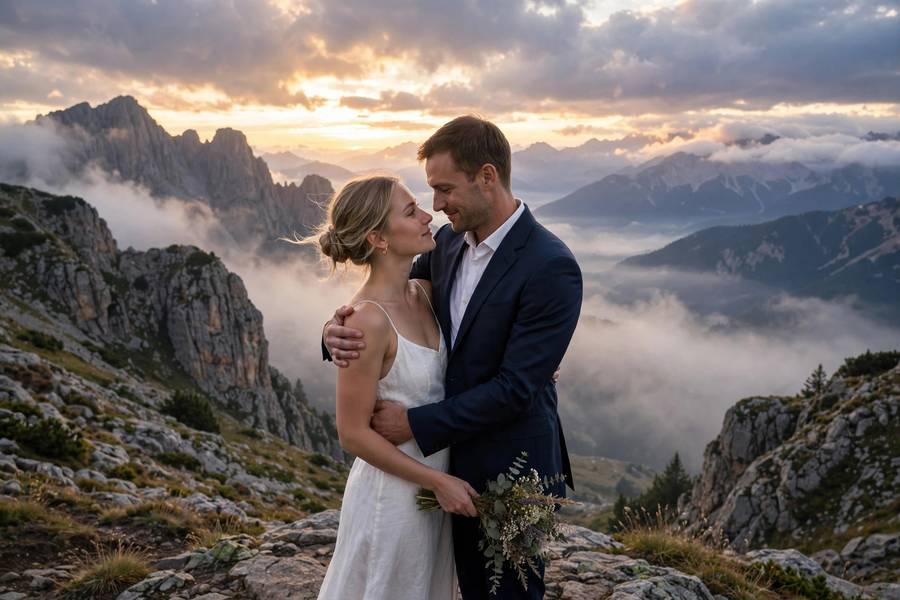
Eloping used to mean running off in secret. Now it means something better: choosing, on purpose, to get married your way — just the two of you, or with a handful of your favorite people, somewhere that means something.
I’ve planned big weddings for years, and I’ll tell you something the industry doesn’t advertise: some of my happiest couples eloped. Not because they couldn’t afford a wedding, but because a 150-person production wasn’t their idea of a good day. If you’re wondering how to elope — the real logistics, costs, legal steps, and the family conversation — this is the complete guide I give my own clients.
Table of Contents
- What Eloping Means Now
- Why Couples Elope (The Honest Reasons)
- How Much Does It Cost to Elope?
- Choosing Your Elopement Location
- The Legal Steps: Don’t Skip These
- Vendors You Still Need
- Telling Family and Friends
- Elopement Timeline: When to Do What
- Mistakes to Avoid
- Frequently Asked Questions

What Eloping Means Now
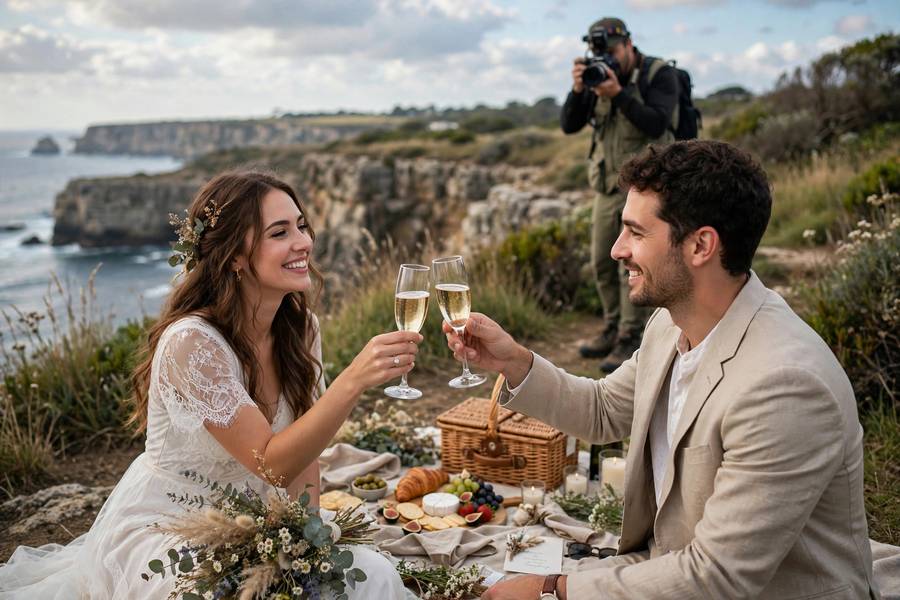
Forget the Vegas-drive-through stereotype (though Vegas elopements are genuinely great — more on that later). A modern elopement is an intentionally small wedding: typically just the couple, sometimes up to 10–20 guests, focused on the ceremony and the experience rather than the production.
Elopements come in a few flavors:
- Just-us elopement: The two of you, an officiant, a photographer. A mountaintop, a beach, a city hall.
- Micro-elopement: You plus a handful of guests — parents, siblings, best friends. Usually under 20 people.
- Adventure elopement: Hiking, helicopter, national park — the location is the event.
- Courthouse + celebration: Legal ceremony now, party with everyone later. The best of both worlds for many couples.
What they all share: the day is about the marriage, not the performance. That resonates with a lot of couples — and honestly, it’s closer to what a wedding is supposed to be.
Why Couples Elope (The Honest Reasons)
Couples tell me they want something “intimate,” but underneath that, the real reasons are usually:
- Money. The average wedding costs $30,000+. A beautiful elopement can cost under $5,000. That’s a house down payment, not a party.
- Stress. Planning a big wedding is a part-time job for a year. Eloping takes it from a 12-month project to a 2-month project.
- Family dynamics. Divorced parents who can’t be in a room together, 200 obligatory invites, relatives you haven’t seen in a decade — eloping sidesteps all of it.
- Authenticity. Some couples genuinely don’t want to say their vows in front of 150 people. They want to cry, laugh, and be weird with just each other.
- Privacy. Not everyone wants their wedding content-managed by 100 phones.
None of these reasons need defending. It’s your marriage.
How Much Does It Cost to Elope?
Elopements range enormously, but here are real numbers:
Budget elopement ($500–$2,000):
Courthouse ceremony, nice outfits you already own or buy affordably, a good photographer for 1–2 hours, dinner at a great restaurant after. Simple, legal, lovely.
Mid-range elopement ($3,000–$8,000):
This is where most of my eloping couples land. Travel to a meaningful location, an experienced elopement photographer (half or full day), flowers, hair and makeup, a nice dinner or private chef, an officiant. It feels special without the wedding-industry markup.
Luxury elopement ($10,000–$20,000+):
Helicopter to a glacier, private villa, videographer, designer dress, multi-day experience. Still often less than a traditional wedding — with a much better story.
The biggest cost driver is photography, and it’s the one thing I tell every eloping couple not to skimp on. When there are no guests, your photos ARE the wedding — they’re how you’ll share the day with everyone who wasn’t there. Budget $1,500–$4,000 for an experienced elopement photographer. It’s the best money you’ll spend.
Choosing Your Elopement Location
The location is the whole aesthetic of an elopement, so choose deliberately:
- Meaningful over photogenic. The place you got engaged, the trail you hike every fall, the city where you met — meaning photographs better than scenery alone.
- Check permit requirements. National parks, state parks, and many public lands require wedding permits ($100–$400 typically) and have guest limits, restricted areas, and leave-no-trace rules. Apply 2–6 months ahead.
- Consider the season honestly. That alpine meadow in July is a snowfield in October. Check historical weather, not just the forecast.
- Think about privacy. Popular overlooks at sunset have crowds. Sunrise, weekdays, and lesser-known spots buy you solitude.
- Have a plan B. Weather happens. Know the nearest covered alternative — a cabin porch, a restaurant private room, your Airbnb.
Some of my favorite elopement locations from real couples: a sunrise ceremony at Big Sur, vows in a New Orleans courtyard, a courthouse in their hometown followed by a rooftop dinner, a snowy cabin in the Catskills with just their dog as witness (the dog wore a bow tie).
The Legal Steps: Don’t Skip These
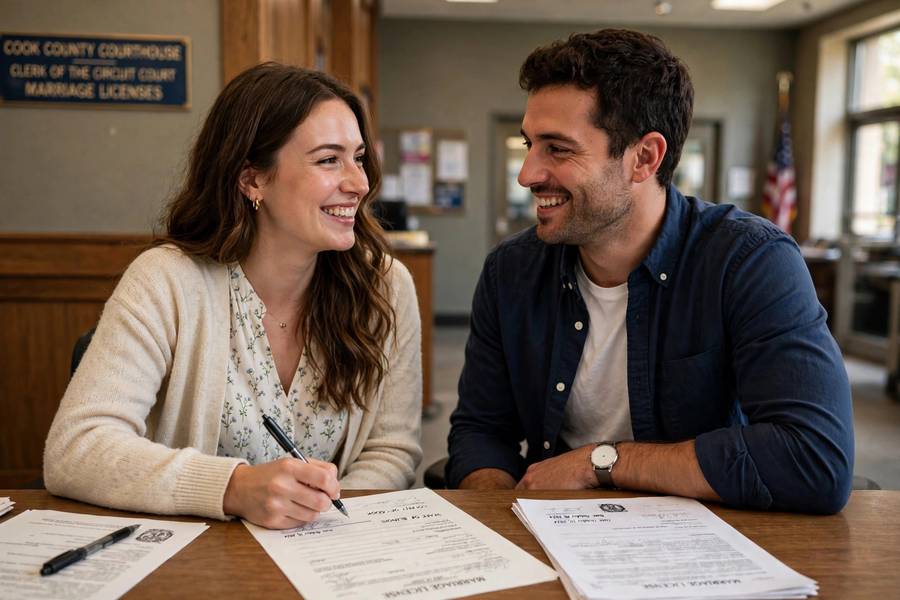
Romance aside, eloping is a legal process. Here’s the checklist:
- Get the marriage license in the state/county where you’ll marry. Requirements vary: waiting periods (0–5 days), expiration windows (30–90 days), and ID requirements. Check the county clerk’s website — don’t rely on blogs.
- Find an authorized officiant. Requirements vary by state. Some states let a friend get ordained online in 10 minutes; others are stricter. Confirm what your location accepts.
- Secure witnesses if required. Some states require one or two witnesses; some require none. Your photographer can often serve as one.
- Return the signed license. The officiant usually files it, but confirm — an unfiled license means you’re not legally married.
- Order certified copies ($10–$25 each) for name changes, taxes, and insurance.
If you’re eloping abroad, seriously consider getting legally married at home first and treating the destination ceremony as symbolic. Foreign marriage paperwork — translations, apostilles, residency requirements — is the least romantic part of eloping, and it’s entirely avoidable.
Vendors You Still Need
Eloping doesn’t mean vendor-free. The essentials:
- Photographer: Non-negotiable. Hire someone experienced with elopements specifically — they know how to scout locations, handle timeline-free days, and double as your coordinator.
- Officiant: Find one whose style fits — some are funny, some are tear-jerking, some just sign the paper. Interview them.
- Hair and makeup: Even for a mountaintop. Wind, hiking, and happy crying are harder on makeup than a ballroom.
- Florist: A bouquet and boutonnière go a long way in photos. Many florists offer elopement packages.
- Videographer (optional but worth it): For reading your vows back on anniversaries. Couples who skip this sometimes regret it.
Skip: DJ, caterer (book a restaurant instead), planner (your photographer often fills this role), rentals, stationery suite.
Telling Family and Friends
This is the hardest part of eloping for most couples — harder than any logistics. Here’s how to handle it:
Tell key people before, not after. Your parents finding out from Instagram is how relationships get damaged. Call them — don’t text — and tell them the plan before it happens. You don’t need permission, but they deserve to hear it from you.
Lead with the why, not the what. “We’ve decided to get married privately in the mountains because we want our vows to be just for us” lands better than “we’re eloping, don’t be mad.”
Give them a role. Ask your mom to help pick the bouquet. Have your dad write a letter to read that morning. Give your best friend the job of planning the celebration party. People handle exclusion better when they have inclusion somewhere.
Plan the share. Decide in advance how you’ll announce it — a beautiful photo post, a video call, mailed announcements. Controlling the announcement prevents the “wait, WHAT?” group chat.
Throw a party later. A casual celebration — backyard BBQ, restaurant buyout, house party — a few weeks after lets everyone celebrate without the wedding production. Many of my eloping couples say the party was more fun than a wedding reception would have been, because there was zero pressure.
Some people will be disappointed. That’s okay. Disappointment fades; a wedding planned to please everyone pleases no one. I’ve never had a couple tell me they regretted eloping. I’ve had many tell me they regretted the big wedding they planned for other people.
Elopement Timeline: When to Do What
Elopements need less time than big weddings, but not zero time:
- 6–12 months out: Choose your location, book your photographer (the best elopement photographers book out), research permits and legal requirements.
- 3–6 months out: Book travel and lodging, hire officiant/florist/hair and makeup, buy outfits, apply for permits.
- 1–3 months out: Get the marriage license (watch expiration windows), finalize the ceremony details, plan the announcement, pack your wedding day emergency kit checklist — elopements need one too, especially for outdoor locations.
- 1 week out: Confirm all vendors, check weather, charge everything, print backup copies of vows and documents.
Mistakes to Avoid
From watching elopements go sideways:
- Skipping the photographer to save money. The number one regret. Your future self wants these photos.
- Not checking permit rules. Getting shut down by a park ranger mid-ceremony is a story, but not a good one.
- Forgetting it’s still a wedding day. Eat breakfast. Drink water. Build in buffer time. Elopement days run on no one’s schedule but yours — which means no one will remind you to eat.
- Over-scheduling the day. The beauty of eloping is unscheduled time. Don’t pack it like an itinerary.
- Not telling anyone. Total secrecy sounds romantic until your mom cries because she found out on Facebook. Tell your core people first.
Frequently Asked Questions
Most couples spend $3,000–$8,000 on a mid-range elopement including travel, photographer, flowers, and dinner. Budget elopements can cost under $2,000 (courthouse + photographer + nice dinner), while luxury adventure elopements run $10,000–$20,000+. Photography is the one area not to skimp on.
A marriage license from the county where you’ll marry, an authorized officiant, and any required witnesses (varies by state). Check waiting periods and expiration windows on the county clerk’s website, and make sure the signed license gets filed — an unfiled license means you’re not legally married.
Call key people before it happens — don’t let them find out from social media. Lead with why the private ceremony matters to you, give them a role (helping choose details, planning a later party), and plan a casual celebration afterward so everyone gets to celebrate with you.
It depends on the state — some require one or two witnesses, others require none. Your photographer can often serve as a witness. Check your ceremony location’s requirements when you research the marriage license rules.
Yes, but most national parks require a wedding permit ($100–$400), have guest limits and restricted ceremony areas, and enforce leave-no-trace rules. Apply 2–6 months ahead, and always have a weather backup plan.
No — it’s your wedding. Choosing an intimate ceremony isn’t rejecting your loved ones; it’s choosing the experience that’s right for your marriage. Most families come around, especially when you include them in the announcement and host a celebration afterward.
A great wedding isn’t about the perfect day — it’s about starting a marriage right. If that means just the two of you on a mountaintop, that’s not a lesser wedding. In my experience, it’s often a better one. For more planning help, see our latest guides.